Unclean at Any Speed – IEEE Spectrum

See on Scoop.itGreen Energy Technologies & Development
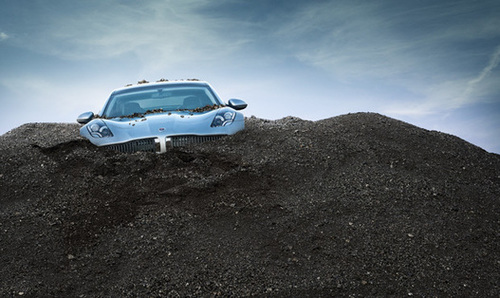
Electric cars don’t solve the automobile’s environmental problems

Duane Tilden‘s insight:

>Two dozen governments around the world subsidize the purchase of electric vehicles. In Canada, for example, the governments of Ontario and Quebec pay drivers up to C $8500 to drive an electric car. The United Kingdom offers a £5000 Plug-in Car Grant. And the U.S. federal government provides up to $7500 in tax credits for people who buy plug-in electric vehicles, even though many of them are affluent enough not to need such help. (The average Chevy Volt owner, for example, has an income of $170 000 per year.)

Some states offer additional tax incentives. California brings the total credit up to $10 000, and Colorado to $13 500—more than the base price of a brand new Ford Fiesta. […]

There are other perks. Ten U.S. states open the high-occupancy lanes of their highways to electric cars, even if the car carries a lone driver. Numerous stores offer VIP parking for electric vehicles—and sometimes a free fill-up of electrons. Mayor Johnson even moved to relieve electric-car owners of the burden of London’s famed congestion fee.

Alas, these carrots can’t overcome the reality that the prices of electric cars are still very high—a reflection of the substantial material and fossil-fuel costs that accrue to the companies constructing them. And some taxpayers understandably feel cheated that these subsidies tend to go to the very rich. Amid all the hype and hyperbole, it’s time to look behind the curtain. Are electric cars really so green?

It’s worth noting that this investigation was commissioned by the U.S. Congress and therefore funded entirely with public, not corporate, money.  […]

Part of the impact arises from manufacturing. Because battery packs are heavy (the battery accounts for more than a third of the weight of the Tesla Roadster, for example), […] Electric motors and batteries add to the energy of electric-car manufacture.

In addition, the magnets in the motors of some electric vehicles contain rare earth metals. […]

The materials used in batteries are no less burdensome to the environment, the MIT study noted. Compounds such as lithium, copper, and nickel must be coaxed from the earth and processed in ways that demand energy and can release toxic wastes. […]

See on spectrum.ieee.org

Colorado’s oil and gas boom is polluting the state’s air

See on Scoop.itGreen & Sustainable News

Drillers pump 600 tons of air pollution over Colorado every day, and three-quarters of the state’s air pollution enforcement cases are linked to drilling.

Duane Tilden‘s insight:

>The 50,000 oil and gas wells in the state are collectively pumping hundreds of tons of pollution into the air every day, making the drilling industry the state’s largest source of airborne volatile organic compounds and third-largest source of nitrogen oxides. That’s according to a report in The Denver Post: […]<

See on grist.org

Ethanol critics rev up efforts to repeal biofuel rules on gas

See on Scoop.itGreen & Sustainable News

The ethanol industry is again under fire from critics who want to eliminate the federal mandate that oil companies blend biofuels into the gasoline supply.

Duane Tilden‘s insight:

>“There will be a push in our committee by some, Republicans and Democrats, to do away with the RFS, saying that it’s just completely unnecessary today, that we have enough gas and oil, that we just don’t need another fuel source, let alone subsidizing it,” Terry said.

An Environmental Protection Agency analysis found that the renewable fuel requirements will displace billions of gallons of petroleum-based fuel consumption, reduce domestic motor fuel prices and increase U.S. farm income. But it also found the potential for higher food prices.

In 2000, ethanol accounted for about 6 percent of the nation’s corn crop. Last year, it accounted for 40 percent of the corn crop.

That’s why the standard’s critics include the grocery industry and some livestock producers that want cheaper grain to feed their animals.<

See on www.omaha.com

The science of time perception: stop it slipping away by doing new things – – The Buffer Blog

See on Scoop.itTwitter & Social Media

Time perception is related to how our brains process new information. More familiar information takes less time, making time seem to pass faster.

See on blog.bufferapp.com

IBM Uses Hot Water To Cool Supercomputer, Saves Energy by 40%

See on Scoop.itGreen Building Design – Architecture & Engineering

IBM, in collaboration with the Leibniz Supercomputer Center in Munich, is using hot water to its SuperMUC supercomputer. This is not new for IBM. It

Duane Tilden‘s insight:

>The system, called LRZ “SuperMUC”, is based on an IBM System x iDataPlex Direct Water Cooled dx360 M4 server. It is said to feature 150,000 cores and provides peak performance of up to three petaflops. In layman’s language it could be described as something equivalent of the processing power of 110,000 personal computers.

IBM claims that the technique needs 40% less energy to cool this machinery as compared to the other air-cooling systems. The heat is then used for the heating systems of the Leibniz Supercomputing Center campus. This accounts for an annual savings of $1.25 million on their heating bills.<

See on www.greenpacks.org

Scientists Adding Color to Solar Panels

See on Scoop.itGreen Building Design – Architecture & Engineering

If you have noticed the design and layout of solar panels around, you would have thought a minute or two about its aesthetics. Though not too bad, the dark

Duane Tilden‘s insight:

>The Institute is developing a SIS (semiconductor-insulator-semiconductor) variety solar panel. The package consists of a silicon substrate which absorbs light and converts it into electricity.[…]

The change in color does not make solar cells less efficient. The cell’s working is also not affected by the thickness of the conductive oxide layer. The SIS cell has the same simulated efficiency of around 20%.

The technology might later on use a type of inkjet printing that deposits the oxide layer with more flexibility, which would allow complex designs too. With this, solar cells could turn out to be part of beautiful architectural designs in future.<

See on www.greenpacks.org

Solar Impulse successfully completes cross-country flight

Solar Powered Drone completes USA cross country flight …

vrzonesg's avatarTech News for Geeks

Solar Impulse is a solar-powered drone-plane that has just completed a trans-continental flight from north-western USA to New York City on the east coast.

Two months ago, Solar Impulse took off from Washington state in the north-western United States, with the mission to fly across the…

Read more: http://vr-zone.com/articles/solar-impulse-successfully-completes-cross-country-flight/44048.html

View original post

Fairware – Code of Conduct

See on Scoop.itTwitter & Social Media

From our inception, Fairware has had a code of conduct that has guided our selection of suppliers.

See on www.fairware.com

Predictive Analytics And The Power of Prediction – Small Business Trends

See on Scoop.itTwitter & Social Media

Predictive Analytics And The Power of Prediction
Small Business Trends
Another interesting correlation experiment is the “Anxiety Index,” a correlation of blog mentions against S&P 500 performance. Fun correlated …

Duane Tilden‘s insight:

>“PA [predictive analytics]  in and of itself does not invade privacy – its core process is the opposite of privacy invasion. Although it’s sometimes called data mining, PA doesn’t “drill down” to peer at any individual’s data. Instead, PA actually “rolls up” learning patterns that hold true in general by way of rote number crunching across the masses of customer records.”<

See on smallbiztrends.com

The 21st century data center: You’re doing it wrong | ZDNet

See on Scoop.itGreen Building Design – Architecture & Engineering

Outdated designs are keeping data centers from reaching their full potential.

Duane Tilden‘s insight:

>One example of this are data centers that use raised floors for cooling. Many IT pundits have discredited this method of cooling as wasteful, including Schneider Electric’s territory manager for the Federal government and the ACT, Olaf Moon.

[…]

Cappuccio notes that engineering firms that are consulted to build data centers know about the newer and more efficient ways to do things. But rather than try something new, they prefer the stock standard cookie-cutter approach to creating data centers because it’s fast and easy, he said.

[…]

“I’ve seen a lot of data centers being built that are too big,” says Cappuccio. “We’re finding people with data centers that are three to four years old when they realise they have far too much space, and are still providing air conditioning to those areas. So they begin to shrink them, putting up walls, bringing down the ceiling so they don’t air condition the extra space.”

See on www.zdnet.com