Portfolio-wide Energy Management for Affordable Housing, Energy

See on Scoop.itGreen Energy Technologies & Development

Portfolio-wide Energy Management for Affordable Housing – \94NESEA” is a Registered Provider with The American Institute of Architects Continuing Education Syst…, Portfolio-wide Energy Management for Affordable Housing, Energy.

Duane Tilden‘s insight:

A slide show on Energy Management.

See on energy.wesrch.com

UK Energy Minister defends fracking comments

See on Scoop.itGreen & Sustainable News

Energy minister Michael Fallon defends comments about fracking, in which he appeared to suggest the process would affect those living near drilling sites.

Duane Tilden‘s insight:

>Mr Fallon said fracking would only be allowed if “absolutely safe”.

In an exchange with the BBC Mr Fallon confirmed he had made the remarks but said the newspaper report had “completely misconstrued a light hearted remark”.

He said “no fracking will be allowed in the Weald unless it is absolutely safe and the environment is fully protected”.

[…]

But demonstrators from across the UK have gathered in the area saying they fear test drilling could lead to the search for shale gas and fracking at the site.

In a separate development, Cuadrilla chief executive Francis Egan revealed he had received an anonymous email saying the company would receive “pipe bombs delivered by express mail to its premises” unless the company ceased its activities in the UK.

“Fracking kills and so do we,” the message said.<

See on www.bbc.co.uk

A Republican Case for Climate Action

See on Scoop.itGreen & Sustainable News

By WILLIAM D. RUCKELSHAUS, LEE M. THOMAS, WILLIAM K. REILLY and CHRISTINE TODD WHITMAN Published: August 1, 2013The United States must move now on substantive steps to curb climate change, at home and internationally.

Duane Tilden‘s insight:

>Mr. Obama’s plan is just a start. More will be required. But we must continue efforts to reduce the climate-altering pollutants that threaten our planet. The only uncertainty about our warming world is how bad the changes will get, and how soon. What is most clear is that there is no time to waste.<

See on www.nytimes.com

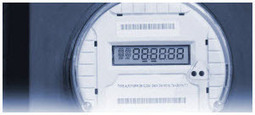
Smart Grid: Utility sued due to Smart Meter opt-out program

See on Scoop.itGreen Energy Technologies & Development

Smart Grid – BC Hydro offered customers who didn’t want to participate in its smart meter program the choice of opting out in mid-July. But that didn’t protect the utility from a lawsuit

Duane Tilden‘s insight:

>Just days after BC Hydro finally agreed to an opt-out program for smart meters, a customer is suing the utility for installing a smart meter last year even though she didn’t want one on her property. […]

The suit claims the installations caused the plaintiff “emotional distress,” because it “interfered with the quiet enjoyment of her property,” which she used to host yoga and meditation retreats. Opponents of smart meters believe the devices’ radio waves have health risks. The lawsuit further alleges that BC Hydro unlawfully leveraged its monopoly powers by imposing a smart meter on the plaintiff.

[…] The utility says that smart meters only broadcast several times a day, and that living next to a smart meter for 20 years would expose a resident to the same level of radiation as a 30-minute cell phone call.<

See on www.smartgridnews.com

Bakken Oil: North Dakota flaring burns 4 times Total National Consumption (2011 figure)

See on Scoop.itGreen & Sustainable News

NEW YORK (Reuters) – Oil drillers in North Dakota’s Bakken shale fields are allowing nearly a third of the natural gas they drill to burn off into the air, with a value of more than $100 million per month,…

Duane Tilden‘s insight:

An alarming state of affairs.  As per the article the flared Natural gas in North Dakota is reported to be 266,000,000,000 cfd (cubic feet per day) flared methane or 2750 x 10(9) cu m/year.

According to Wiki the 2011 US annual consumption for natural gas was 689.9 x 10(9) cu m, so apparently Bakken is actually burning 4 times the total 2011 national requirements.

>Roughly 29 percent of natural gas extracted in North Dakota was flared in May, down from an all-time high of 36 percent in September 2011. But the volume of natural gas produced has nearly tripled in that timeframe to about 900,000 million cubic feet per day, boosting flaring in the state to roughly 266,000 million cubic feet per day, according to North Dakota state and Ceres data.<

See on www.reuters.com

Dept of Interior Holds Inaugral Lease Sale for Renewable Energy in Federal Waters

See on Scoop.itGreen & Sustainable News
WASHINGTON, D.C. – …Secretary of the Interior Sally Jewell and Bureau of Ocean Energy Management (BOEM) Director Tommy P. Beaudreau today held the nation’s first-ever competitive lease sale for renewable energy in federal waters.  

Duane Tilden‘s insight:

>The provisional winner of today’s lease sale, which auctioned two leases for a Wind Energy Area of 164,750 acres offshore Rhode Island and Massachusetts for wind energy development, is Deepwater Wind New England, LLC. When built, these areas could generate enough combined energy to power more than one million homes.

“When you think about the enormous energy potential that Atlantic wind holds, this is a major milestone for our nation,” said Secretary Jewell. “A lot of collaboration and thoughtful planning went into getting to this point, and we’ll continue to employ that approach as we move forward up and down the coast to ensure that offshore wind energy is realized in the right way and in the right places. Offshore wind is an exciting new frontier that will help keep America competitive, and expand domestic energy production, all without increasing carbon pollution.”

The Wind Energy Area is located 9.2 nautical miles south of the Rhode Island coastline and has the potential to support 3,395 megawatts of wind generation. BOEM will hold its next competitive lease sale for offshore wind on Sept. 4, which will auction nearly 112,800 acres offshore Virginia, and is expected to announce additional auctions for Wind Energy Areas offshore Massachusetts, Maryland, and New Jersey later this year and in 2014.

Maps for these areas are available on BOEM’s website.<

See on www.doi.gov

Taking energy efficiency seriously

Energy Efficiency on the rise.

duanetilden's avatarduanetilden

See on Scoop.itGreen Building Operations – Systems & Controls, Maintenance & Commissioning
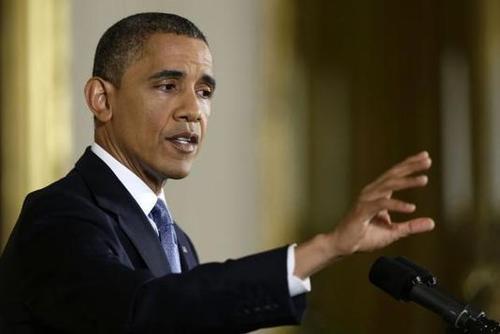
Despite the lack of attention paid to the issue during this year’s presidential campaign (at least, before Sandy came along), Barack Obama’s first term was a bit of a quiet revolution for climate change policy in America…

“More than 13 percent of the $700 billion American Recovery Act went to energy spending, most of it green. … the largest portion – $32 billion –went to energy efficiency and retrofitting projects. This was the biggest such investment in the history of history. It may even have finally heralded the arrival of a “Negawatt Revolution”….”

“Still, the right incentive structures to encourage the necessary investments in energy efficiency are not yet in place. Energy bills are still viewed by customers in terms of monthly costs that would go up because of short-term investments rather than yearly ones that…


View original post 60 more words

US Senators back new bill pushing Energy Efficiency Legislation

See on Scoop.itGreen & Sustainable News

By SEN. JEANNE SHAHEEN and SEN. ROB PORTMAN | 7/29/13 9:25 PM EDT

For the past three years, we have worked together to develop the Energy Savings and Industrial Competitiveness Act, legislation that will go a long way toward making the United States more energy efficient and more economically competitive.

Duane Tilden‘s insight:

According to the Sen. Shaheen & Portman:

>Our bill curbs inefficient energy practices that cost the U.S. economy billions of dollars and millions of jobs every year. According to a recent study by the Emily Hall Tremaine Foundation, we waste an astonishing 86 percent of the energy we consume. Upgrading the energy efficiency of U.S. buildings alone could save $1 trillion over the next decade. Cutting down on energy waste represents an untapped resource that we have long ignored. Our legislation helps to change that.

Our bill promotes energy savings that Americans across the political spectrum can get behind. Energy efficiency has broad, bipartisan support from business, energy and environmental advocates alike, and the legislation we have developed helps to promote energy efficiency through a smart, pragmatic plan that can be implemented immediately.

There is one mandatory component to the bill: We are going to make Washington practice what it preaches. We’re going to make the federal government — the largest energy user in the country — adopt energy-saving techniques and best practices that make its operations more efficient. […]

These provisions will save money, make America more energy-independent and lower harmful emissions. For the private sector, the tools our bill deploys are entirely voluntary. This legislation will also not add to the deficit and its costs are fully offset.<

See on www.politico.com

Department of Energy – Energy Efficiency Standards Cost Less than Estimated

See on Scoop.itGreen & Sustainable News

Washington, D.C.—A new report released today by the American Council for an Energy-Efficient Economy (ACEEE) and the Appliance Standards Awareness Project (ASAP) finds that the U.S. Department of Energy (DOE) has been overestimating the impact that energy efficiency standards for appliances and other products have on their price tags.

Duane Tilden‘s insight:

>Today’s study, entitled Appliance Standards: Comparing Predicted and Observed Prices, looks at nine appliance standards that took effect over the 1998-2010 period and found that DOE overestimated price impacts in every case, usually by a wide margin. ACEEE and ASAP found that across the nine rulemakings, DOE estimated an average increase in manufacturer’s selling price of $148. On average the actual change in price was a decrease in manufacturer’s selling price of $12.

Estimates of the overall benefits of energy efficiency standards for consumers will likely have to be revised as well. In 2012, ACEEE and ASAP released a study estimating that standards for appliances and other equipment would save consumers more than $1 trillion cumulatively by 2035, even after subtracting estimated increases in product prices.

“Energy efficiency standards are proving to be an economic powerhouse, driving even more consumer savings than we realized,” said report co-author and ASAP Executive Director Andrew deLaski.<

See on www.aceee.org

Water-Smart Power: Strengthening the U.S. Electricity System in a Warming World (2013) | UCSUSA

See on Scoop.itGreen & Sustainable News

This report shows how the U.S. can build an electricity system that protects our water resources and dramatically reduces global warming emissions.

Duane Tilden‘s insight:

>The country stands at a critical crossroads. Many aging, water-intensive power plants are nearing the end of their lives. The choices we make to replace them will determine the water and climate implications of our electricity system for decades to come.

Today’s electricity system cannot meet our needs in a future of growing demand for power, worsening strains on water resources, and an urgent need to mitigate climate change.

[…]

Energy-water collisions are happening now, and are poised to worsen in a warming world

  • The heat waves and drought that hit the U.S. in 2011 and 2012 shined a harsh light on the vulnerability of the U.S. power sector to extreme weather, and revealed water-related electricity risks across the country.
  • When plants cannot get enough cooling water, they must cut back or completely shut down their generators, as happened in 2011 and 2012 at plants around the country.
  • Nationally, the 2012 drought was the worst in half a century. Amid soaring temperatures in the Midwest, several power plant operators got permission to discharge exceptionally hot water rather than reduce power output.
  • Electricity-water collisions are poised to worsen in a warming world as the power sector helps drive climate change. Extreme weather conditions that have historically been outliers are expected to become standard fare.<

See on www.ucsusa.org