Lack of centralised EU regulation ‘major headache’ for frackers

internationalbarassociation's avatarThe International Bar Association Blog

Europe urgently needs to draft centralised hydraulic fracturing (fracking) regulations to reduce confusion for businesses and close loopholes for potentially damaging practices, leading environmental lawyers from both the NGO and corporate spheres have told IBA Global Insight.

There are currently no European Union (EU) laws directly addressing fracking. Instead, the process is controlled by a series of environmental rules already in place, including those tackling water pollution, hazardous waste and emissions.

Matthew Townsend, head of the London Environmental and Regulatory Law Group at Allen & Overy, says the current system generates perplexing compliance issues for both clients and regulators, creating a strong barrier for entry. ‘We have myriad regimes potentially applicable to onshore fracking activities and shale gas exploration, none of which were designed with those activities in mind,’ he tells IBA Global Insight. ‘It’s a major headache for developers to navigate their way through what can only…

View original post 20 more words

Effectiveness versus efficiency

See on Scoop.itfreedomoftheinternet

Considering the difference between effectiveness and efficiency, two words which are often used in place of each other, can give you insights into how you manage your training outcomes.

MARY HELEN FERRIS‘s insight:

From the article Essentially, the difference between effectiveness and efficiency is that one relates to how worthwhile the results of an action are, and the other to how economically a result was achieved. A common way of remembering this difference is to define effectiveness as an evaluation of what has been achieved and to think of efficiency as measuring how the result was reached.

See on www.traininglens.co.uk

US Navy Builds Scale Model Aircraft Powered with Fuel From the Sea Concept

See on Scoop.itGreen Energy Technologies & Development

Navy researchers at the U.S. Naval Research Laboratory (NRL), Materials Science and Technology Division, demonstrated pr

Duane Tilden‘s insight:

>"Using an innovative and proprietary NRL electrolytic cation exchange module (E-CEM), both dissolved and bound CO2 are removed from seawater at 92 percent efficiency by re-equilibrating carbonate and bicarbonate to CO2 and simultaneously producing H2. The gases are then converted to liquid hydrocarbons by a metal catalyst in a reactor system.

"In close collaboration with the Office of Naval Research P38 Naval Reserve program, NRL has developed a game-changing technology for extracting, simultaneously, CO2 and H2 from seawater," said Dr. Heather Willauer, NRL research chemist. "This is the first time technology of this nature has been demonstrated with the potential for transition, from the laboratory, to full-scale commercial implementation."

CO2 in the air and in seawater is an abundant carbon resource, but the concentration in the ocean (100 milligrams per liter [mg/L]) is about 140 times greater than that in air, and 1/3 the concentration of CO2 from a stack gas (296 mg/L). Two to three percent of the CO2 in seawater is dissolved CO2 gas in the form of carbonic acid, one percent is carbonate, and the remaining 96 to 97 percent is bound in bicarbonate.

NRL has made significant advances in the development of a gas-to-liquids (GTL) synthesis process to convert CO2 and H2 from seawater to a fuel-like fraction of C9-C16 molecules. In the first patented step, an iron-based catalyst has been developed that can achieve CO2 conversion levels up to 60 percent and decrease unwanted methane production in favor of longer-chain unsaturated hydrocarbons (olefins). These value-added hydrocarbons from this process serve as building blocks for the production of industrial chemicals and designer fuels.

In the second step these olefins can be converted to compounds of a higher molecular using controlled polymerization. The resulting liquid contains hydrocarbon molecules in the carbon range, C9-C16, suitable for use a possible renewable replacement for petroleum based jet fuel. 

The predicted cost of jet fuel using these technologies is in the range of $3-$6 per gallon, and with sufficient funding and partnerships, this approach could be commercially viable within the next seven to ten years. Pursuing remote land-based options would be the first step towards a future sea-based solution."<

See on www.navy.mil

Geothermal Energy: Superior to Natural Gas for Powering the Electrical Grid

See on Scoop.itGreen & Sustainable News

Geothermal resources provide about 3,440 MW of power to the United States electrical grid as of early 2014.

Duane Tilden‘s insight:

>”In a recent report, the Geothermal Energy Association explored geothermal power’s unique values that make it essential to the U.S. energy mix.  These plants have the same important baseload qualities coal now provides for over two thirds of the electric power generation in the nation.  Geothermal can be a high-value substitute for baseload fossil fuel or nuclear power plants, providing firm, clean power 24 hours a day regardless of extraneous conditions.

“As state and national policies move to significantly reduce climate changing power emissions, geothermal is a baseload clean energy that can replace baseload fossil fuels at a minimum cost to the power system,” says Karl Gawell, GEA’s executive director.

Gawell explains that as the grid uses more variable energy resources, which it most certainly will, the flexibility of geothermal energy is an attribute that regulators are still learning about.  “Flexible geothermal can help firm the system, allowing for imbalance, and is able to provide supplemental reserve,” he adds.

The U.S. continues to make strides toward a cleaner energy mix largely through wind and solar contracts to meet goals of state Renewable Portfolio Standards. This creates a greater need for firming power, and although geothermal can provide this as well, it could get lost in the mix if natural gas becomes a fallback to offset intermittency.

In his 2014 State of the Union address, President Obama called natural gas “the bridge fuel that can power our economy with less of the carbon pollution that causes climate change.” Geothermal energy, too, provides the same stabilizing function as natural gas and comes with unique environmental and economic ancillary benefits. Ancillary services support the transmission of electricity from a supplier to a purchaser and include scheduling and dispatch, reactive power and voltage control, loss compensation, load following, system protection, and energy imbalance.

A geothermal plant can be engineered to optimize these services. In most geothermal plants built today, operators can increase or decrease the amount of power being generated in order to match load requirements — such as making up for gaps caused by intermittency.   Geothermal energy and natural gas play a similar role to the power grid with the capability to dispatch, or to change a facility’s power output by ramping up or down depending on system needs.”<

See on www.renewableenergyworld.com

Heart Bleed Bug – A Massive Security Flaw That’s Taken Over The Internet

See on Scoop.itSocial Media, Bitcoin & Finance

You should change your passwords.

Duane Tilden‘s insight:

What is the Heartbleed bug?

>"Heartbleed is a flaw in OpenSSL, the open-source encryption standard used by the majority of websites that need to transmit the data that users want to keep secure. It basically gives you a secure line when you’re sending an email or chatting on IM.

Encryption works by making it so that data being sent looks like nonsense to anyone but the intended recipient.

Occasionally, one computer might want to check that there’s still a computer at the end of its secure connection, and it will send out what’s known as a heartbeat, a small packet of data that asks for a response. 

Because of a programming error in the implementation of OpenSSL, the researchers found that it was possible to send a well-disguised packet of data that looked like one of these heartbeats to trick the computer at the other end into sending data stored in its memory.

The flaw was first reported to the team behind OpenSSL by Google security researcher Neel Mehta, and independently found by security firm Codenomicon. According to the researchers who discovered the flaw, the code has been in OpenSSL for about two years, and using it doesn’t leave a trace."<

See on www.businessinsider.com

Affordable Housing Designed for Net Zero

See on Scoop.itGreen Building Design – Architecture & Engineering

Lexington Farms, a single family affordable housing development in Illinois, looks to be LEED Platinum and net zero via clean energy on each house.

Duane Tilden‘s insight:
“The model under which these modular homes are made available to residents is rather unique. They were built for those making less than $41,000 a year, and were reportedly provided to these people in a rent to own situation at a set monthly lease cost of $590. Each 1,425 square foot, three bedroom dwelling is green down to its core via an array of eco technologies. Owners apparently had to be provided with a special manual to educate them about the various green technologies they are living with. So what exactly is under the hood of each green home in Lexington Farms? According toUrban Green Energy, the impressive list includes one of the firm’s 1,000 watt eddyGT vertical axis wind turbines; 7,200 watt photovoltaic solar roof panels; Energy Starappliances; U35-rated, argon gas filled windows; R-21 wall and R-49 attic insulation; low-flow water fixtures and WaterSense toilets; sustainable landscaping with efficient irrigation systems; recycled construction materials; low VOC paints and energy efficient, fluorescent light fixtures. At the time of construction is was said the IHDA invested more than $2.5 million into the project, providing federal American Recovery and Reinvestment Act (ARRA) funds and federal Low-Income Housing Tax Credits to finance it. The federal tax credits, noted the IHDA, “were a result of a special allocation for counties hit by severe flooding [and] generated an additional $6.7 million in private equity for the development.” Overall, these green homes aimed for net zero energy usage via the renewable energy features. An additional $260,000 grant from the Illinois Department of Commerce and Economic Opportunity further supported the development.”

See on earthtechling.com

Here’s a gust of new information about wind farm efficiency!

A nicely written article explaining the shading effect and boundary layer influence on turbine placement for wind farms. A good example of the need for integrated design and engineering.

megansch's avatarUNder the C

Everyone’s familiar with the ‘shading effect’ that occurs on solar energy schemes. If a tree or high rise building casts a shadow on your photovoltaic cell’s glass face, that means your system isn’t generating as much energy as it could, because it’s not catching as much sunlight as it could.

wakeeffects The Horns Rev wake effect, in the North Sea. Picture courtesy renewableenergyworld.com and NOAA.

But did you know that wind turbine farms are hindered by a similar phenomenon? It’s known as a wake effect, and oftentimes, it’s caused by the wind turbines themselves. A now famous picture of the so termed ‘Horns Rev wake effect’ was taken off the coast of Europe in the North Sea of an offshore wind farm.

Imagine you could see the wind. It’s flowing along peacefully across the ocean. Then someone puts an obstacle in its way. And not just any obstacle, it’s a spinning…

View original post 284 more words

UK Bioenergy: Dedicated Biomass Plants no Competition for CHP Plants

See on Scoop.itGreen Energy Technologies & Development

As Ed Davey, U.K. Secretary of State for Energy & Climate Change, spoke to the Environment Council in Brussels, saying: “We call for urgent action on reaching an ambitious 2030 energy and climate change agreement, to spur on investment in green, reliable energy,” at home in Britain t

Duane Tilden‘s insight:

>”Biomass with CHP

In contrast with dedicated power only biomass plants, biomass-fired combined heat and power installations are continuing to attract investment in the UK, given that they still qualify for significant government support.

A number of these projects have made advances over the previous few months. For instance, RWE Innogy UK (formerly RWE npower renewables), is in the final stages of commissioning its Markinch Biomass CHP plant in Fife, Scotland. This 65 MW plant will supply up to 120 tonnes of industrial steam per hour to paper manufacturer Tullis Russell. RWE Innogy is investing some £200 million (US$300 million) in the development, which was built by Metso and Jacobs.

In October 2013 Estover Energy revealed that planning consent has been granted by Dover District Council for its proposal to develop a £65 million (US$100 million) biomass-fired CHP in the South East of England at Sandwich, in Kent. Generating 11-15 MWe and 8-12 MWth, the plant will use locally sourced low-grade wood as fuel.

Construction is forecast to begin in spring 2014 at the Discovery Park science and technology park.

And in the July, the Helius Energy-developed CoRDe biomass energy plant in Rothes, Speyside, Scotland began operations, using by-products from nearby malt whisky distilleries to produce renewable energy and an animal feed protein supplement, Pot Ale Syrup. Construction began in 2011 on the 8.32 MWe and 66.5 t/h pot ale evaporator plan. The total development and construction costs of the project were £60.5 million. …”<

See on www.renewableenergyworld.com

Apparent Theft at Mt. Gox Shakes Bitcoin World

See on Scoop.itSocial Media, Bitcoin & Finance

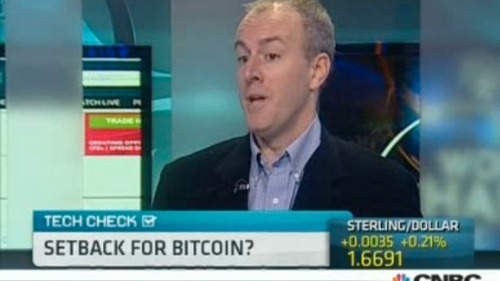
The prominent Bitcoin exchange was said to be on the verge of total collapse following a major theft, even as another company announced plans for a high-profile virtual currency market.

Duane Tilden‘s insight:

>"On Monday night, a number of leading Bitcoin companies jointly announced that Mt. Gox, the largest exchange for most of Bitcoin’s existence, was planning to file for bankruptcy after months of technological problems and what appeared to have been a major theft. A document circulating widely in the Bitcoin world said the company had lost 744,000 Bitcoins in a theft that had gone unnoticed for years. That would be about 6 percent of the 12.4 million Bitcoins in circulation.

While Mt. Gox did not respond to numerous requests for comments, and the companies issuing the statement scrambled to determine the exact situation at Mt. Gox, which is based in Japan, the news helped push the price of a single Bitcoin below $500 for the first time since November, when it began a spike that took it above $1,200.

Continue reading the main story

RELATED COVERAGE DealBook: Defending Bitcoin, Andreessen Says Mt. Gox Is ‘Like MF Global’FEB. 25, 2014

But at the same time that the news about Mt. Gox was emerging, a New York firm announced plans to create an exchange that could draw the world’s largest banks into the virtual currency market for the first time."<

See on www.nytimes.com

How Cold Weather Affects Fuel Consumption

See on Scoop.itGreen & Sustainable News

If there’s one thing Canadians know how to do, it’s drive in the winter. But did you know it’s a sci…

Duane Tilden‘s insight:

>"Expect to use more fuel in the winter. The U.S. Environmental Protection Agency found that a drop in temperature from 24°C to 7°C increased fuel consumption in urban commutes by 12 to 28 percent for eight different vehicles tested. For a vehicle that typically achieves a 500 km range on a full tank of fuel, this represents a loss of 60 to 140 km per fill-up during the winter months.

• Aerodynamic resistance is greater in the winter. Cold, dry, winter air is about 12 percent denser than warm, humid, summer air, increasing highway fuel consumption by about 1.3 percent in the winter. The average wind speed is also higher in the winter, which contributes to increased aerodynamic resistance and fuel consumption.

• Winter roads create difficult driving conditions. With increased asphalt deterioration and a mix of snow, ice, slush, water, salt, gravel and sand, Canadian roads can be pretty awful in winter and harder to manage. Your vehicle’s engine works harder to offset the increased rolling resistance, as your tires have to work to push aside heavy snow and road cover. The snow and ice also increase wheel slippage, which results in higher fuel consumption.

• Winter gas normally has lower energy density. Gasoline composition is seasonally and geographically adjusted based on historical temperature data. A litre of winter gas has less energy content than a litre of summer gas, typically in the range of 1.5 to three percent.

• Winter driving taxes a vehicle’s electrical system. Except for air conditioning, your vehicle’s electrical loads are normally higher in cold weather due to greater demand from heating, defrosting, head lights and interior lights, heated seats, heated mirrors and increased use of the windshield washer pump. The energy for these electrical loads is provided by the vehicle’s electrical system, which obtains power from the engine."<

See on www.onthego.to