“Barefoot” Solar Energy Engineers

See on Scoop.itGreen & Sustainable News

The Barefoot College in western India is training illiterate or semi-literate women from all over the world to be solar engineers, making renewable energy technology and knowledge accessible.

See on theenergycollective.com

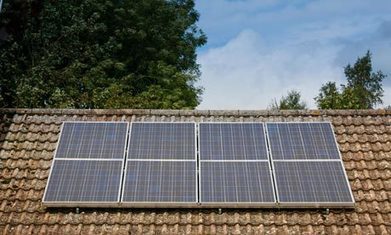
Surge in renewable energy as solar panel prices plummet

See on Scoop.itGreen Energy Technologies & Development

However, falling costs also meant that revenue generated by the industry remained flat, says Clean Edge report

Duane Tilden‘s insight:

"We always knew each doubling of [solar PV] installation would reduce prices about 18%," the Clean Edge founder, Ron Pernick, told the Guardian. Pernick said that prices were falling because the sector was expanding rapidly, doubling every one to two years. New solar PV installations expanded to 31GW in 2012, while revenues decreased by $12bn – or 19% – to $80bn.


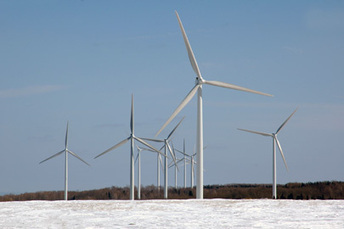
Looking to the future, the report suggests innovation can continue to improve the performance of renewable technologies, including using biomimicry ideas to imitate nature. Curved wind turbine blades inspired by humpback whale fins have increased wind energy capture over flat blades by 25%, while mimicking photosynthesis using dye-sensitised solar cells based on titanium oxide instead of silicon is proving effective in low-light situations. In addition, energy efficiency developments like Nest’s ‘learning thermostat’ and smartphone apps for thermostat control will help connect web and smart-grid technologies.

See on www.guardian.co.uk

How Twitter Social Media Stock Scams Could Put Your Money at Risk

See on Scoop.itTwitter & Social Media

Social media stock scams – the use of tools like Twitter to spread misinformation to manipulate equities – is one more thing for retail investors to worry about.

Duane Tilden‘s insight:

The victims were two small-cap companies (which are more susceptible to this sort of short-term manipulation) – audio chip maker Audience Inc. (Nasdaq: ADNC) and biopharmaceutical Sarepta Therapeutics (Nasdaq: SRPT).


The attack on Audience struck on Jan. 29. Someone created a fake Twitter account intended to fool people into thinking it belonged to Carson Block of Muddy Waters Research, a firm best known for following Chinese companies and exposing their accounting problems.  […]


But at 2:20 pm. ADNC shares suddenly plunged 25%, which suggested that automated trading systems programmed to scan social media for negative news reacted to the tweets. The stock recovered 16 minutes later, but it shows how easily a social media stock scam can be executed.


[…] Lisette said "tons of bots" are always on the lookout for negative news in the social media sphere, and less-sophisticated ones can be fooled by stock scams most humans would recognize.


The day after the Audience incident, someone else created a fake Twitter account for Citron Research and sent out negative tweets about Sarepta Therapeutics, causing that stock to fall 9% in seconds.

See on www.marketoracle.co.uk

Social Media and Recruiting: Top Channels and Trends for 2013

See on Scoop.itTwitter & Social Media

Career Management – Among recruiting and staffing professionals, increased access to passive job candidates via social media presents the biggest opportunity for recruiting in 2013, according to a survey from Bullhorn.

Duane Tilden‘s insight:

LinkedIn Most Effective Social Channel

LinkedIn was also the most effective channel for recruiting: 93% of recruiters say they used the professional networking site to successfully place a candidate 2012, up from the 86% who said so a year earlier. Some 17% of recruiters used Facebook to place a candidate in 2012 (vs. 19% in 2011), and 13% used Twitter (vs. 10% in 2011).


See on www.marketingprofs.com

PSA’s Hybrid Air offers a cheaper, simpler solution

See on Scoop.itGreen Energy Technologies & Development

It’s called the Hybrid Air and it’s a prototype from the French auto maker PSA Peugeot Citroen. PSA is the second-largest car maker in Europe (after Volkswagen) and PSA claims that Hybrid Air is better, cheaper and simpler than hybrid electric systems from manufacturers like the hybrid leader Toyota Prius…

Duane Tilden‘s insight:

PSA claims that in city driving, depending on traffic, you can save 45 per cent of fuel while running with the gasoline engine off 60 to 80 per cent of the time. I have no way of knowing if this is true or not, but the main advantage of Hybrid Air over Hybrid Electric appears to be cost.


PSA says it can undercut existing hybrids significantly on price because the Hybrid Air does not require an expensive battery and electric motor. It is hoped that Hybrid Air could be viable even in emerging markets like China and India where gasoline-electric hybrids are expensive and complex to repair.

See on www.theglobeandmail.com

Energy storage issue highlighted

See on Scoop.itGreen & Sustainable News

For countries to switch their electricity generation from fossil fuel to renewable sources, they’ll also have to dramatically reconfigure their electrical grids to be able to store electricity when there is oversupply, Wired.co.uk has reported.

Duane Tilden‘s insight:

When a wind turbine or solar panel generates power, it’s not necessarily when that electricity is needed — it could be the middle of the night, or during a holiday when lots of people are outside, the study points out.


That power needs to be stored somewhere so that it can be used, otherwise renewable energy can’t ever replace coal, oil, nuclear or similar plants that can output a reliable level of power whenever needed.


For that reliability, there are three main options: pumped hydroelectric storage (PHS), where water is pumped upwards into a reservoir where it can be released later; compressed air energy storage (CAES) where the air can be expanded again through turbines when needed; and batteries, of which there are many different types, each with their own maximum number of effective charge cycles.


See on www.hvnplus.co.uk

Stanford researchers map out an alternative energy future for New York

See on Scoop.itGreen & Sustainable News

A study, co-authored by Stanford researcher Mark Z. Jacobson, outlines a path to statewide renewable energy conversion, and away from natural gas and imported fuel.

Duane Tilden‘s insight:

The study is the first to develop a plan to fulfill all of a state’s transportation, electric power, industry, and heating and cooling energy needs with renewable energy, and to calculate the number of new devices and jobs created, amount of land and ocean areas required, and policies needed for such an infrastructure change. It also provides new calculations of air pollution mortality and morbidity impacts and costs based on multiple years of air quality data.

To ensure grid reliability, the plan outlines several methods to match renewable energy supply with demand and to smooth out the variability of WWS resources. These include a grid management system to shift times of demand to better match with timing of power supply, and “over-sizing” peak generation capacity to minimize times when available power is less than demand.

The study’s authors are developing similar plans for other states, including California and Washington. They took no funding from any interest group, company or government agency for this study.

See on news.stanford.edu

Nearly Zero-Energy Buildings and Offsite Renewables | Leonardo ENERGY

See on Scoop.itGreen Building Design – Architecture & Engineering

The facts and thoughts presented in this position paper reveal the complexity but also the potential organisational, financial and environmental benefits of integrating off-site electricity into the nearly-zero energy building concept. A thorough analysis of the EPBD’s definition, existing concepts for nZEBs, aspects that influence the share of renewable energy and key issues around off-site renewables in nZEBs like energy cost, the advent of grid parity, metering schemes, ownership schemes of electricity generation, standardisation, monitoring, verification and enforcement has been done as a first contribution for starting a broader discussion around this topic.

Duane Tilden‘s insight:

Although nearly-zero energy building standards will be mandatory only for new buildings by 2020 the next and even more important question is how to transform the building stock to that level until 2050. The sheer magnitude of this challenge requires that in principle every building owner must be given a sufficient set of options to have a fair and equal chance to transform his property to nearly-zero energy standard. Thus electricity from on-site, nearby and off-site sources must be a natural part of the set of options.

See on www.leonardo-energy.org

Report: Efficiency Is a More Important Economic Driver Than Energy Supply : Greentech Media

See on Scoop.itGreen Building Operations – Systems & Controls, Maintenance & Commissioning

A new analysis concludes that economic productivity is more closely tied to energy efficiency than energy production.

Duane Tilden‘s insight:

The chart shows that energy efficiency met nearly three quarters of the demand for services, while energy supply met only one quarter.


"One immediate conclusion from this assessment is that the productivity of our economy may be more directly tied to greater levels of energy efficiency rather than a continued mining and drilling for new energy resources," wrote Laitner.

See on www.greentechmedia.com

Coal Kills – An Assessment of Death and Disease caused by India’s Dirtiest Energy Source – Conservation Action Trust

See on Scoop.itGreen & Sustainable News

See on cat.org.in