North American Windpower: DOE Releases Guide For Developing ‘Financially Attractive’ Renewable Energy Projects

See on Scoop.itGreen Energy Technologies & Development

The U.S. Department of Energy’s (DOE) Federal Energy Management Program (FEMP) has created a new resource that provides best practices and other guidance for federal agencies developing large-scale renewable energy projects..


See on www.nawindpower.com

The Price of Green Energy: Is Germany Killing the Environment to Save It? – SPIEGEL ONLINE

See on Scoop.itGreen & Sustainable News

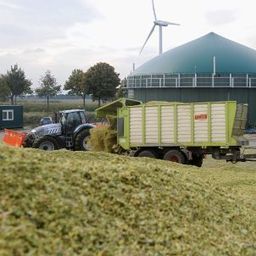
The German government is carrying out a rapid expansion of renewable energies like wind, solar and biogas, yet the process is taking a toll on nature conservation.

Duane Tilden‘s insight:

One would assume that ecology and the Energiewende, Germany’s plans to phase out nuclear energy and increase its reliance on renewable sources, were natural allies. But in reality, the two goals have been coming into greater and greater conflict. "With the use of wood, especially," Kaiser says, "the limits of sustainability have already been exceeded several times."  […]


Greens in Awkward Position

Although this conflict touches all political parties, none is more affected than the Greens. Since the party’s founding in 1980, it has championed a nuclear phaseout and fought for clean energy. But now that this phaseout is underway, the Greens are realizing a large part of their dream — the utopian idea of a society operating on "good" power — is vanishing into thin air. Green energy, they have found, comes at an enormous cost. And the environment will also pay a price if things keep going as they have been.


Encroaching on Nature Reserves

The opposition in Berlin has so far contented itself with criticizing Merkel, believing that her climate policies have failed and that she has steered Germany’s most important infrastructure project into a wall. Granted, neither the center-left Social Democratic Party (SPD) nor the Greens are part of the ruling coalition at the federal level, but they do jointly govern a number of Germany’s 16 federal states. And, when forced to choose between nature and renewable energies, it is usually nature that take a back seat in those states.
See on www.spiegel.de

Teen’s algae-biofuel experiment wins science fest

See on Scoop.itGreen Energy Technologies & Development

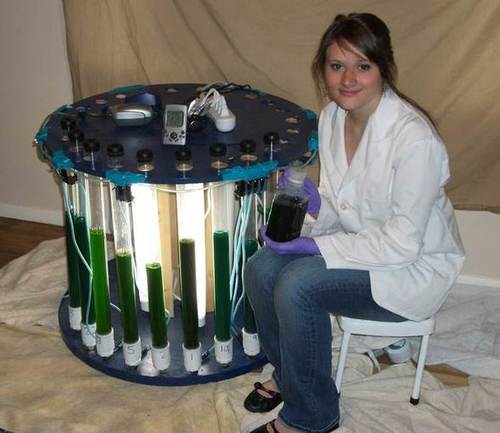
Sara Volz, a 17-year-old high school student from Colorado, received top honors and a $100,000 check Tuesday at a science fair for pioneerin…

Duane Tilden‘s insight:

Her technique involves the use of a chemical to artificially select populations of algae cells with high oil content. She did all the work in a makeshift lab under her loft bed in Colorado Springs.

See on www.nbcnews.com

Biofuels boom threatens to disrupt global biodiversity | Global Ideas | DW.DE | 12.03.2013

See on Scoop.itGreen & Sustainable News

The rush around the world to plant crops used to produce biofuel has not only sparked a global food vs. fuel debate, but it’s also putting biodiversity at risk.

Duane Tilden‘s insight:

The grass species in question that prompted protests by US researchers are Arundo donax, known as giant reed, and Pennisetum purpureum, also called elephant grass. In their native regions in India and Africa, these grass grow at a normal pace, kept in check by equally strong plant species, and by elephants who feed on them.


Because they can grow rapidly and don’t require high-quality soil, giant reed and elephant grass are seen as ideal biofuel plants. But those very same qualities have turned the two into dangerous weeds that, under the right conditions, can spread at an uncontrollable pace and overgrow entire fields.


When it comes to genetically-altered plants, officials in Europe carefully scrutinize the environmental consequences before granting approval. The same risk analysis is needed for all other plants, too, Tim Low says. One state in Australia has banned the cultivation of the biofuel plant jatropha, for example, because it belongs to a long list of dangerous weeds.

See on www.dw.de

Energy Efficiency Cut 107TWh Of US Electricity Demand In 2011 – CleanTechnica

See on Scoop.itGreen Energy Technologies & Development

Energy Efficiency Cut 107TWh Of US Electricity Demand In 2011 CleanTechnica Energy efficiency is widely considered one of the most significant growth areas for America’s clean energy transition – one recent outlook estimated $327 billion in annual…

Duane Tilden‘s insight:

These massive savings were driven by massive investments. $5.7 billion was spent on energy efficiency efforts in 2011 – with an 18% increase of $879 million over 2010 expenditure levels.


Ten states represented 71% of total energy efficiency spending, led by California’s $1.3 billion – nearly three times second-place New York State’s $554 million. Three states doubled their expenditures from 2010, and nine states increased their energy efficiency spending by over 50%.


See on cleantechnica.com

Coal’s Future Craters Because Of Cheap Gas

See on Scoop.itGreen & Sustainable News

BELLAIRE, Ohio — The four miners who gathered one blustery morning at the United Mine Workers of America hall know that, so far, they are lucky. Their coal mines along the West Virginia border are still working.

See on www.dispatch.com

Twitter Cheat Sheet: How to Increase Your Engagement

See on Scoop.itTwitter & Social Media

Are you getting the type of interaction and retweets you always hoped for on Twitter? Did you know you could basically double your engagement rates on Twitter just by including an image within your tweet?

See on dashburst.com

Walgreens Wagers on Net-Zero Energy – Forbes

See on Scoop.itGreen Building Design – Architecture & Engineering

Walgreens, the Deerfield, Ill.-based owner and operator of a whopping 8,000 retail pharmacy stores, is building America’s first net zero energy retail store.

Duane Tilden‘s insight:

… the new store is projected to consume an estimated 200,000 kWh and generate an estimated 256,000 kWh annually, according to engineering calculations. To make this possible, Walgreens will equip the new store with more than 800 roof-top solar panels, two wind turbines, geothermal wells , LED lighting and energy-efficient building materials.


This smacks of the standard net zero energy building strategy, which Lawrence Berkeley National Laboratory has characterized like so: “‘net zero energy’ buildings (ZEB) follow the strategy of first achieving very aggressive reductions in energy use needed to provide the desired energy services, and then providing the remaining energy requirements with on-site renewable energy.”

See on www.forbes.com

The Business Case for Green Building – Dexigner

See on Scoop.itGreen Building Design – Architecture & Engineering

The World Green Building Council (WorldGBC) has today released “The Business Case for Green Building: A Review of the Costs and Benefits for Developers, Investors and Occupants,” highlighting that there are a large number of compelling benefits…

See on www.dexigner.com

Facilities Management: University of Minnesota

See on Scoop.itGreen Building Operations – Systems & Controls, Maintenance & Commissioning

Facilities Management, a department of University Services, is responsible for the physical assets of the University of Minnesota to ensure a quality environment for students, faculty, staff and visitors in support of the University’s mission of…

Duane Tilden‘s insight:

Compared to replacing aging boilers with a traditional boiler, CHP generates $7M in annual savings and $176M of lifecycle savings over a 30 year horizon.  Another bottom line benefit CHP provides is partially shielding the University from increased electricity rates, which are expected to jump 10% in the near future. Because CHP allows the institution to generate some electricity, the U will not have to purchase as much from the utility company.

See on www.facm.umn.edu