California Real Estate Assn’ Educates Members on Building Energy Performance & Benchmarking

In California, brokers are at the heart of every non-residential sale or lease. Can the AIR organization get them on board with benchmarking?

Source: www.greenbiz.com

>”Commercial buildings are some of California’s largest energy- and water-guzzlers. With 58 percent of the state locked in the highest category of drought, many commercial property owners are seeing increased utility bills, and with a new building energy benchmarking and disclosure law on the books, building owners seek energy efficiency solutions as a common-sense way to ease some of the pressure. One key trade association in California, the AIR Commercial Real Estate Association, is taking the lead by educating its members on the benefits of energy efficiency.

AIR, founded in 1960, is a regional commercial real estate brokers association with more than 1,700 members across southern California, and is one of the nation’s largest organizations of its kind. It’s recognized across the U.S. for its ever-expanding library of sample lease forms, which members use to stay updated on industry and lease language trends — several of which now include sustainability. When California’s energy benchmarking law, AB 1103, went into effect in January, AIR responded by creating sample energy disclosure lease and sale addenda (PDF) and began educating its members on these new tools.

Brokers are in the thick of it

The law states that any time a non-residential building owner finances, sells or leases a whole building, the property owner is required to use Energy Star portfolio manager to benchmark the building and provide the Energy Star rating and supporting consumption information to the lender, buyer or tenant in the transaction. As brokers are central to every aspect of a commercial transaction, their participation is essential for the law to have its intended effect. AIR’s lease and sale addenda effectively address these energy disclosure requirements in one document, providing real estate professionals, building owners, tenants and attorneys with a framework template for compliance with the regulation.

Brokers hold the key to increasing stakeholder awareness, potentially boosting compliance rates, benchmarking data quality and ultimately better building performance and energy management — and educating the community about new regulations and tools is essential to unlocking this potential.”<

See on Scoop.itGreen & Sustainable News

CEC Delays Energy Benchmarking and Disclosure Requirements 2 Years for Smaller Buildings


>”[…]Compliance with AB 1103 is not suspended, and will continue to be required, for the sale, lease, or financing of buildings over 10,000 square feet that are otherwise subject to the regulations based upon occupancy type.

Significant barriers to compliance with AB 1103

An Emergency Rulemaking Action requires a description of specific facts justifying the immediate action. In justifying the two-year delay, the CEC explained that several stakeholders had expressed concerns about significant barriers to compliance with AB 1103. The CEC noted the following factors in justifying the two-year delay:

  • Some utilities have required tenant consents before releasing utility usage data despite letters sent from the CEC to utilities in July 2013 prohibiting such requirement. This requirement to obtain tenant consents significantly increases compliance costs.
  • Smaller utilities have expressed concerns with their ability to comply given limited staff and resources.
  • The Portfolio Manager platform and software has experienced significant technical problems.
  • The expansion in scope to smaller buildings would increase the number of compliance requests received by utilities, impeding their ability to address barriers to compliance.
  • Smaller building owners may lack the expertise, resources, or capacity necessary to overcome current barriers to compliance without incurring undue expense.
  • Based on initial disclosure data following the January 1, 2014 implementation, it became apparent that “the required disclosures were not being made for the majority of transactions for which they were required.”
  • The development of best practices approaches is lowering compliance costs and paving the way to greater compliance. The additional two years will facilitate lower costs and higher compliance rates before further expanding the program to smaller buildings.”<

See on Scoop.itGreen Building Operations – Systems & Controls, Maintenance & Commissioning

Advanced Controls Devices for HVAC in Buildings shows growth

Worldwide revenue from advanced HVAC controls is expected to grow from $7 billion annually in 2014 to $11.7 billion in 2023, according to a new report

Source: www.businesswire.com

BOULDER, Colo.–(BUSINESS WIRE)–Heating, ventilation, and air conditioning (HVAC) in commercial buildings typically accounts for roughly 40% of total building energy consumption. While advancements have been made in the efficiency of HVAC equipment, the actual energy consumption of HVAC equipment depends largely on their operation – which can be made much more efficient and less energy-intensive through the application of advanced HVAC controls. […]

“The drive to reduce energy use in commercial buildings has put a spotlight on improving the efficiency of HVAC systems, and HVAC controls retrofits offer a compelling value proposition through reduced energy consumption in existing buildings.”

[…]

New building certification and benchmarking regulations are driving faster retrofits of controls in existing buildings, according to the report, and changing how automation is designed into new buildings. The wider adoption of open standards for controls functions (such as BACnet), and of communications based on the Internet Protocol (IP) suite and Ethernet connectivity, is expected to help bring advanced HVAC technology to a wider market.

[…]

See on Scoop.itGreen Building Operations – Systems & Controls, Maintenance & Commissioning

Maintaining High Performance HVAC Control Systems for Cost Savings in Building Operations

The performance level of a building is directly related to the performance level of its control systems. You cannot manage a high performance building without high performing control systems.


Source: www.automatedbuildings.com

>”We rely on control systems to monitor and manage our building systems. For the most part it’s been assumed that once the control system is installed and configured it will work for years with little attention and minimal maintenance. Some systems may be trouble-free, but the majority of them will need regular attention and maintenance. Over time hardware will fail, software parameters and versions change and slowly the control system will “drift” from its original configuration and performance.

The role of control systems is somewhat undervalued. When you examine the most complex system in most buildings, the HVAC infrastructure, you find that it’s the HVAC control system, not the HVAC equipment, which produces the most operational issues and is the leading cause of inefficient energy use. Lawrence Berkley National Laboratories examined 60 buildings and found the highest frequency of common problems with HVAC was in the control system. Texas A&M research determined that of the operational and maintenance measures that could produce significant energy savings, 77% of the savings were from correcting control problems.

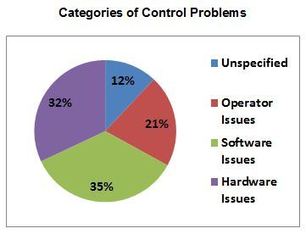
Maintaining a high performing control system involves regular maintenance, software and data management and organizational policies. The issues that can cause problems with a building control system are the same challenges all of us have had at one time or another with our computer or smartphone: problems related to software, hardware, communications networking and “user” mistakes. What follows is an overview of some of the typical control system issues and recommendations as to how to keep it performing at a high level.”<

See on Scoop.itGreen Building Operations – Systems & Controls, Maintenance & Commissioning

Buildings are biggest source of GHG’s in Vancouver & City recommends Energy Retrofits

Buildings spew more than half of all Vancouver’s total greenhouse gas (GHG) emissions every year and detached houses are the biggest culprit […] That fact is key to a staff recommendation that council adopt an energy retrofit strategy for existing buildings to drastically cut GHG emissions.

Source: www.vancouversun.com

>”About 40,000 of Vancouver’s 77,000 detached homes were built before 1960. The report said most older homes could improve their energy efficiency with weather sealing, wall and attic insulation, furnace/boiler/hot water heater replacements and replacing old windows with new energy-efficient glazing.

About 55 per cent of GHG emissions in Vancouver come from buildings and of those detached homes create 31 per cent of building emissions, the report said.

That compares with industry’s 20-per-cent share and 18 per cent from multi-unit residential buildings.

The city’s Greenest City Action Plan has targeted a 20-per-cent reduction in GHG emissions from Vancouver buildings by 2020, which would eliminate 160,000 tonnes of emissions annually — the equivalent of taking 40,000 cars off the road.

The report recommends the city partner with BC Hydro and/or FortisBC to study the effectiveness of using thermal imaging to identify poorly insulated homes.

[…]

… common energy-efficient building practices today include using vinyl or wood window frames instead of aluminum, along with the use of heat pumps, solar panels and drainwater recovery systems.

But Kerchum noted it can cost nothing to improve a home’s energy efficiency.

[…]

A recent Vancouver city initiative to improve energy efficiency in Vancouver homes — the Home Energy Loan Program — had a very low participation rate among homeowners.

The program called for homeowners to have an energy audit by a federally licensed auditor, who would recommend the best ways to reduce a home’s carbon footprint.”<

Deep Energy Retrofits–A Necessity for Old Buildings

“Studies show that focusing on energy efficiency and usage from buildings and homes is still a more effective and less expensive choice than investing in new energy sources. After all, on a global scale, residential and commercial buildings account for 40% of total final energy consumption, from HVAC, lighting, water heating, and further building functions, so a push on diminishing wastefulness in this area will have a much greater and more immediate effect than focusing on other, less sure practices (such as building wind turbines). At the moment, revamping a building to be more energy efficient will have instant effects on savings and efficiency, which is where retrofitting comes into play. Retrofitting involves giving older buildings, which often have out-of-date heating, cooling and lighting systems, an internal and external update. The entire process isn’t cheap, but it’s far less pricey than starting from the bottom up, and causes far less havoc for businesses who can’t afford to move offices while construction is taking place.”

via From Guest Blogger Blake Meredith: Deep Energy Retrofits–A Necessity for Old Buildings.

Asbestos – Best Practice Approach To Roof Refurbishment

Excellent article on legacy asbestos insulated roofing systems and remediation methods.

Specifier Review's avatarArchitecture, Design & Innovation

For any demolition, refurbishment or repair project, the presence of asbestos in the building can have far reaching cost and health & safety implications. And it’s not an uncommon problem. Asbestos was widely used as a roofing material right the way through to the 1970s thanks to its durability and fire resistance benefits at low cost.

The use of asbestos as a building material is a legacy of the built environment that today’s roofing contractors are often tasked with tackling, as those roofs originally specified in the 1950s, 60s and 70s fail and need to be replaced.  Sometimes, there may be no other option than to remove the asbestos roof and incur the project delays and added costs that specialist remediation involves. However, while the Control of Asbestos regulations 2012 ensures that building owners are accountable for preventing any risk of exposure to asbestos fibres from their building, contractors do…

View original post 747 more words

Boston Housing Authority to invest $11m in energy efficiency and infrastructure upgrades for Public Housing

See on Scoop.itGreen Building Operations – Systems & Controls, Maintenance & Commissioning

The Malden Housing Authority will spend more than $11 million to make its public housing units more energy efficient, work officials believe will pay for itself.

Duane Tilden‘s insight:

>The 250-unit complex has a central power plant with utilities distributed to each building through pipes installed in the 1950s. The pipes are in poor condition, Finn said, which results in uneven distribution of heat and water pressure. “Those pipes are a problem; they are aging in place,” he said.

The new system will feature one energy-efficient boiler for every two units in the 58 Housing Authority buildings on Newman Road, Finn said. The old pipes will remain and could be used by the authority or the city as underground electricity conduits, he said. The work on Newman Road is expected to cost $4.3 million.

The Housing Authority received the 20-year $11.27 million bond through MassDevelopment , an entity created by the Legislature in 1998 to act as a finance and development authority.

“We’re pleased to support the Malden Housing Authority with this low-cost financing to improve homes for low-income families, reduce the cost of utilities for the authority’s developments, and to support the Commonwealth’s goal of improving energy technologies and efficiencies, resulting in reduced cost,” MassDevelopment chief executive Marty Jones said in a prepared statement.

For the bond financing agreement, the authority will pay a fixed interest rate of 4.12 percent to East Boston Savings Bank, which is loaning the funds. But the bank was only able to do that by entering into an interest-rate swap agreement with another institution, PNC Bank.

The move allowed East Boston Savings Bank to offer a fixed-rate loan, which the Housing Authority needed in order to comply with federal housing standards, said Joseph Leary, vice president of East Boston Savings Bank.<

See on www.bostonglobe.com

Fuel cell switched on at Cal State San Bernardino

See on Scoop.itGreen Energy Technologies & Development

A new 1.4 MW utility-owned a fuel cell is now in full operation at Cal State San Bernardino.

Duane Tilden‘s insight:

>”Electricity generated by the fuel cell is going straight into the Edison grid, and the university will be able to utilize the waste heat it produces to preheat the campus heating system, resulting in an estimated annual savings of $120,000 from avoided natural gas costs,” said Tony Simpson, senior director of facilities services at Cal State San Bernardino.

The combined heat and power configuration —known as cogeneration — of the fuel cell will reduce the campus’s carbon dioxide emissions by lessening reliance on the high temperature hot water generators currently in operation. The fuel cell will continue to use natural gas to generate ultra-clean electricity through an electrochemical reaction, but because there is no combustion, unhealthful emissions are reduced.

Additionally, the fuel cell is highly efficient, generating more power from a given unit of fuel and lower greenhouse gas emissions compared to combustion-based power sources in a similar size range. Cogeneration DFC power plants can achieve total thermal efficiencies up to 90 percent, depending on the application.<

See on www.elp.com

California Building Code Title 24 Will Revolutionize Efficiency Financing for Buildings

See on Scoop.itGreen Building Design – Architecture & Engineering

If successful, Title 24 will open the door to increased amounts of energy efficiency financing, expanded sources of capital and lower financing costs.

Duane Tilden‘s insight:

>California’s Title 24

Title 24 is California’s body of state building codes. These codes have been revised to move the building industry toward comprehensive building solutions with a goal of achieving Zero Net Energy (ZNE) residential and commercial buildings. In a ZNE building, the annual building’s energy consumption is equal to the building’s onsite renewable energy generation. California has set a goal for all new residential construction to be ZNE by 2020 and for all new commercial construction to be ZNE by 2030. Additionally, the repurposing and remodeling of existing buildings that are of a size-threshold defined by Title 24 will also have to comply with Title 24 revised codes.

Financing a “smart” Zero Net Energy building

The challenge of financing any energy efficiency or renewable energy project is in providing assurances to the source of capital that the project will actually generate sufficient cost savings to cover financing costs plus repayment of invested capital. The number one challenge for winning energy efficiency investments is the uncertainty in documenting bill savings results. Too often, the cost savings generated by an investment in energy efficiency is lost in higher electric bills as new loads are added and utilities raise rates.

Information technologies that monitor, control and financially operate a building through links to real time prices of grid-supplied electricity are the foundation for enabling Title 24 project financing. Smart ZNE buildings will operate to optimize the economics between reducing building demand, reducing energy consumption, on-site generation, use of on-site energy storage and purchases of grid electricity.

What will further enable the financing of ZNE buildings is the ability of enabling information technologies to “look forward” in time to proactively shape a building’s operation and grid purchases to financially support the building’s project financing. The technologies that can achieve these results have already been invented. What California is pursuing through its Title 24 code revisions is a massive economies of scale push for these technologies to drive their costs down and increase their ability to be financed.

The sales pie just got bigger…a lot bigger

Beginning in 2014, Title 24 will blow the sales doors open for smart building technologies, energy efficiency technologies, onsite energy storage and renewable energy technologies. Title 24 will create a new competitive landscape for architects, general contractors, sub-contractors and vendors based upon their ability to offer price competitive services and products that comply with Title 24 codes. The construction industry’s sales path for energy efficiency projects will no longer be anchored by utility incentives that support targeted energy efficiency upgrades like re-lamping a building with more efficient lights. The new sales path will be based upon cost-effectively delivering code compliance to achieve financeable building performance. New competitive advantages will be won by contractors and architects that offer building performance assurances to building owners and financing sources.<

See on www.triplepundit.com