What Actually Happens As We Move Away From Coal as an Energy Source?

Business Management: Habits Of Successful People – Infographic

See on Scoop.itTwitter & Social Media

  Many C-level executives have distinctive formulas to reach business success, and some of the techniques are surprisingly peculiar. Does your pursuit of corporate victory by way of traditional practices need adjusting?

See on themainstreetanalyst.com

Shaheen-Portman Energy Bill gaining Bi-Partisan Support in Senate

See on Scoop.itGreen & Sustainable News

Senate leaders and industry groups have a plan to revive the energy-efficiency bill that stalled in the upper chamber last month amid a flurry of unrelated amendments.

Duane Tilden‘s insight:

>"There’s been a ramped-up or increased pace of meetings this week in exploring a bunch of different ways to increase support for Shaheen-Portman, especially among Republicans," added a Democratic Senate aide. "There have been discussions about amendments being one way to do that." Still, the aide emphasized that no single strategy has been set in stone.

Another Republican aide echoed that behind-the-scenes work has been ongoing. "Portman is working to get bipartisan agreements to get to 60 votes," said the staffer, singling out Hoeven as a potential key vote. "Hoeven’s a guy that a lot of folks look to," agreed another Senate staffer, adding that there are already at least 59 potential yes votes for the bill.

All the aides agreed that hitting the 60-vote threshold would greatly increase the likelihood that Senate Majority Leader Harry Reid, D-Nev., would move the bill. "If folks can make a case that there’s a lot of support for this, then that makes it easier to bring it back to the floor," said the Democratic aide.<

See on www.nationaljournal.com

New York to Retrofit 250,000 Streetlights With Energy-Saving LED Bulbs

See on Scoop.itGreen Energy Technologies & Development

The phaseout is part of a long-term plan to reduce greenhouse gas emissions by 30 percent by 2017 and, Mayor Michael R. Bloomberg said, would save taxpayers money.

Duane Tilden‘s insight:

>The news conference was on Eastern Parkway in Brooklyn, where lights have already been replaced, expecting to save more than $70,000 and nearly 248,000 kilowatt-hours a year in energy. Unlike standard lights, which last six years, LED bulbs can burn for 20 years before they need to be replaced, the administration said, and the project is expected to save $14 million a year in energy and maintenance costs. […]

“People tend to like them,” she said. “It’s clear. It’s bright. It really does a good job in providing fresher light.” The project is estimated to cost $76.5 million.

The project is the first to receive financing through the Accelerated Conservation and Efficiency initiative or “ACE,” the administration said, a $100 million competitive program that the Department of Citywide Administrative Services created to expedite such sustainability projects.<

See on www.nytimes.com

2015 IECC energy code raises requirements for efficiency, lighting controls, advanced HVAC in existing buildings

See on Scoop.itGreen Building Design – Architecture & Engineering

By Brianna Crandall, October 23, 2013—Hearings to finalize the 2015 International Energy Conservation Code (IECC) wrapped up in Atlantic City recently with big wins for higher efficiency requirements in existing buildings, controls for lighting and daylighting hardware and HVAC equipment specifications, according to a news release from the New Buildings Institute (NBI),

Duane Tilden‘s insight:

>The IECC is reviewed and updated every three years and serves as the model energy code for states and local jurisdictions across the country. The last version is the 2012 IECC.

In the United States, buildings account for about 40% of the energy consumed and 38% of all CO2 emissions, according to the U.S. Green Building Council. Cost-effective measures that cut the energy used by buildings represent a critical strategy to help building owners save money and curb the impacts of climate change, notes NBI.

“The updates related to existing and historic buildings clarify and further extend the code’s impact on the current building stock and will mean large energy savings growing over time,” said Jim Edelson, NBI senior manager of codes and policy. “Taken together, the approved code changes represent the most significant code revisions for energy consumption of existing buildings since the 1970s.”<

See on www.fmlink.com

Power Plays: Practical Local Energy Policies to Boost the Economy

See on Scoop.itGreen Building Design – Architecture & Engineering

The economy has stalled and so has the war on climate change. But a new report from the Institute for Local Self-Reliance shows that dozens of cities are boosting their local economies while dramatically reducing greenhouse gases.

Duane Tilden‘s insight:

>What’s remarkable is that none of the examples relied on federal or state financial aid, but instead on the community’s own resources.  And the communities featured in the report just scratch the surface of the many cities, counties, and municipalities that have tried and tested these options.

Eight local policies are featured in the report and the case studies of each policy show how these local tools have been leveraged for economic advantage, from more rigorous building codes to solar mandates and easier permitting to the use of a wide array of financing tools to spur renewable energy and energy efficiency.  The full list (far from exhaustive) includes:

Municipal electric utilitiesCommunity choice aggregation or "community utilities"Building energy codesBuilding energy use disclosureLocal tax authoritySolar mandates for new homesImproved solar permittingLocal energy financing

The policies aren’t tied to a political ideology, but a practical and local one.  Cities have identified where they have untapped resources and deployed them to generate jobs and keep more of their energy dollars in the economy.

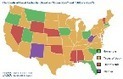
The report also candidly admits that not every policy can be used everywhere.  In a brief chapter on the "Limits of Local Authority," a map illustrates how variation in state law gives some cities relative local superpowers compared to others.  Cities in states with so-called Dillon’s Rule are largely confined to powers expressly granted by their state government.  Cities with home rule generally have more authority.<

See on www.renewableenergyworld.com

Carbon taxes a war on poor – B.C. Driver’s hardest hit

See on Scoop.itGreen & Sustainable News

Rumour in the oilpatch has it that U.S. President Barack Obama’s price for the Keystone XL pipeline to go ahead is the imposition of a carbon tax.

Duane Tilden‘s insight:

>A report (written by the strongest proponents of the tax) was recently released claiming that the carbon tax on gas — B.C. drivers’ now pay more to fill their tanks than anywhere else in North America — has resulted in less driving and a drop of carbon emissions by 17.4 per cent.

But Willis Eschenbach, a reporter for the world’s most viewed climate site, Watts Up With That, now a hall of fame honoree as best science blog on the Web, did the number crunching and found that the 17.4 per cent reduction was based entirely on B.C. residents buying less gas. But while B.C. drivers may be buying less gas in province, trips across the border have skyrocketed — by 150 per cent — because gas there is one-third cheaper. […]


B.C’s dubious achievement led its premier, Christy Clark, a mistress of green manipulation if there ever was one, to recently announce that the rest of Canada must follow her province’s lead, no matter the cost to single parents, young families, working class drivers, and old people needing to heat their homes. For make no mistake about it, it is they who live in fuel poverty and who all too often have to choose between heating and food.

And where did the money from the carbon tax go? According to B.C.’s Auditor-General, two-thirds of funds brokered by the Pacific Carbon Trust went to Encana, the biggest gas company in Canada, and to the Nature Conservancy of Canada, an organization so powerful, it is practically untouchable. No matter that both organizations were going to undertake their carbon projects anyway; they were glad to take the money, which came from schools and hospitals which are mandated to be carbon neutral: a cool million dollars from Vancouver and Surrey area schools alone.<


See on www.vancouversun.com

U.S. Tidal Energy Project requires Proximity Standard

See on Scoop.itGreen Energy Technologies & Development

A planned tidal energy project off the coast of Washington state in the US has come under fire over the lack of a standard defining how close such projects can be to existing underwater cables.

Duane Tilden‘s insight:

>There is currently no U.S. standard for the distance tidal energy projects need to be from other subsea installations. The Federal Communications Commission has stated that neither it nor FERC has the expert guidance necessary to make an informed decision about what a safe separation distance would be. The FCC has charged an advisory committee, the Communications Security, Reliability and Interoperability Council (CSRIC), to work with the industry to develop guidance, delegating a special submarine cable working group to address the issue.

Distance guidelines do exist for offshore wind turbines in the U.S. The FCC and industry groups have suggested that these standards, which require 500 metres between offshore wind turbines and submarine cables, should be used in this case.

In its comment to the FERC, Pacific Crossing invoked a UK guideline, Subsea Cables UK Guideline number 6, which recommends proximity limits of 200-400 metres from an existing subsea structure for marine energy development. The North American Submarine Cable Association has urged U.S. regulatory agencies to apply the UK guidelines to all U.S. marine energy projects, including tidal energy projects.<

See on www.renewableenergyworld.com

Greening Coal Power with CO2-eating Microalgae as a Biofuel Feedstock

See on Scoop.itGreen Energy Technologies & Development

Successful microalgae-to-biodiesel conversion has been the goal of some renewable energy researchers for more than two decades.

Duane Tilden‘s insight:

>To that end, Algae.Tec has signed a deal with Macquarie Generation, Australia’s largest electricity generator, to put an “algae carbon capture and biofuels” production facility next to a coal-fired power station in Australia’s Hunter Valley. Macquarie Generation, which operates the Sydney-area 2640 MW Bayswater Power Station, will feed waste CO2 into an enclosed algae growth system. […]

Projections are for the first year of production to hit 100,000 tons of algae biomass; half of which would be converted to an estimated 60 million liters of biodiesel. One sea-land container would generate 250 tons of biomass per annum, said the company, which would be harvested on a continuous basis. […]

Stroud projects that some 75 percent of his company’s income will come from biodiesel. The remaining 25 percent of Algae.Tec’s income will hinge on the sale of the microalgae’s leftover biomass for animal feed.<

See on www.renewableenergyworld.com

Austerity at OSHA: Budget rolls back resources

See on Scoop.itGreen Building Design – Architecture & Engineering

While OSHA has never been the most robustly funded federal agency, its efforts and regulatory authority have helped prevent countless deaths, injuries and illnesses on the job.

Duane Tilden‘s insight:

>In a report released in late August by the Center for Effective Government (formerly OMB Watch), author Nick Schwellenbach chronicled what austerity means for OSHA and the workers it protects. To first put the issue and impacts of slashed budgets in broader context, consider OSHA’s current capacity. According to the report, OSHA conducted fewer health and safety compliance inspections in 2011 than in 1981, despite the number of workplaces doubling from 4.5 million to 9 million and the number of workers growing from about 73 million to about 129 million. In that three-decade span, the ratio of OSHA inspectors to workers fell from one per 31,000 workers to one per 62,000 workers. And of course, as with most public health endeavors, cutting oversight of health and safety doesn’t save money in the long run.<


See on scienceblogs.com