Virtual Power Plants (VPP): A New Tech Based Utility Model for Renewable Power Integration

Today’s global energy market is in the midst of a paradigm shift, from a model dominated by large centralized power plants owned by big utilities to a mixed bag of so-called distributed energy generation facilities — smaller residential, commercial and industrial power generation systems &mdas

Source: www.renewableenergyworld.com

>”Virtual Power Plants

One distributed generation technology with significant growth potential is the virtual power plant (VPP). In the VPP model an energy aggregator gathers a portfolio of smaller generators and operates them as a unified and flexible resource on the energy market or sells their power as system reserve.

VPPs are designed to maximize asset owners’ profits while also balancing the grid. They can match load fluctuations through forecasting, advance metering and computerized control, and can perform real-time optimization of energy resources.

“Virtual power plants essentially represent an ‘Internet of Energy,’ tapping existing grid networks to tailor electricity supply and demand services for a customer,” said Navigant senior analyst Peter Asmus in a market report. The VPP market will grow from less than US $1 billion per year in 2013 to $3.6 billion per year by 2020, according to Navigant’s research — and one reason is that with more variable renewables on the grid flexibility and demand response are becoming more crucial.

Asmus called VPPs “an ideal optimization platform for the coming transformation of the power grid,” adding that both supply and demand flexibility will be increasingly necessary to accommodate fast ramping periods and address corresponding supply forecast errors.

German utility RWE began a VPP in 2012 that now has around 80 MW of capacity. According to Jon-Erik Mantz, commercial director of RWE Energy Services in Germany, in the near future flexibility will become a commodity. Virtual power plants generate additional value from the flexibility they can offer the grid, he said-so, for RWE, “this is why we concentrate on building VPPs.” As large utilities’ market share falls in response to growing self-consumption, he said, utilities can still “be part of a VPP and profit.”

Dr. Thomas Werner, senior key expert in product lifecycle management at Siemens, said that in order to integrate diverse smaller energy sources, “You need an energy management system with good data models which represents energy resources on the one hand and, on the other, the energy market environment.” Werner believes VPPs fulfill these conditions and are the best way to integrate a growing number of power sources into the grid and the market.

“VPPs can be handled like other conventional generation,” he said. “They can target different energy markets and regulatory environments. They can play as important a role as conventional concentrated generation.”

“No Real Competition”

“From my point of view, there is no real competition for the VPP concept,” Werner said, pointing to VPPs’ use of cheap and ubiquitous information and communication technologies, while other technology trends like building energy storage systems incur comparatively heavy costs. VPPs can also avoid expensive installation costs in, for example, a home system, he notes. Self-consumption for home or industrial use is hampered by having to produce “the right amount of power at the right time.”

VPPs can deliver needed energy at peak usage times, and can store any surplus power, giving the energy aggregator more options than would exist in a single power plant. Other advantages include improved power network efficiency and security, cost and risk savings in transmission systems, increased value from existing infrastructure assets and reduced emissions from peaking power plants. And, importantly, VPPs can also enable more efficient integration of renewable energy sources into the grid by balancing their variability.

For example, explains Werner, if one wind power source generates a bit more energy than predicted and another generates a bit less, they will compensate for each other, resulting in a more accurate forecast and making it easier to sell the capacity in the market or to use it in power systems operation.

A VPP can also combine variable renewable power sources with stable, controllable sources such as biomass plants, using the flexibility of the biomass source to smooth out any discrepancy between planned and actual production.”<

Shaw partners with City of Calgary to offer free public WiFi

See on Scoop.itTwitter & Social Media

The City of Calgary has reached an agreement with Shaw Communications to provide free Wi-Fi at city-owned locations.

Duane Tilden‘s insight:

>After reviewing applications, the city decided Shaw had the best proposal and technical expertise, and awarded Shaw the contract.

Shaw will partner with the city to install free WiFi zones in a variety of public locations including recreation facilties, parks and LRT stations.

“The City manages a variety of public spaces and we were looking to partner with an organization that would be able to provide reliable WiFi services, at no cost to citizens, as well as meet industry regulations and provide technical support,” says Heather Reed-Fenske, the city’s manager of  Information Technology.

During the initial launch of the program, public WiFi will be available in a select number of public spaces. […]

Mayor Naheed Nenshi says free public WiFi will give Calgarians better access to city services.

Once the initial zones are up and running, the city will collect feedback from Calgarians to evaluate the success of the program.

An announcement is expected soon on when the service will be available.<

See on globalnews.ca

Utilities and Energy Efficiency – How to Bridge the Gap

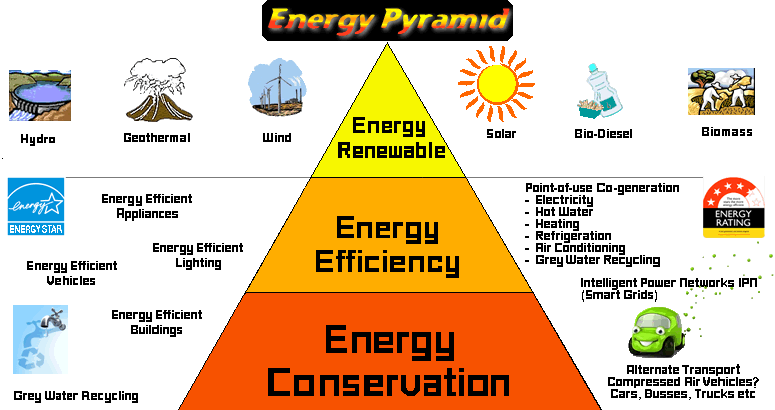
energy-efficiency-pyramid

Image found at: http://bit.ly/1bAHOiM

See on Scoop.itGreen Building Operations – Systems & Controls, Maintenance & Commissioning

As much as such improvements can provide positive financial returns to utility customers, the utilities themselves face some very real financial barriers to offering customer energy efficiency programs.

Duane Tilden‘s insight:

>The inherent conflict between a utility’s business objectives and the objectives of customer energy efficiency programs has long been recognized. Alternative regulatory mechanisms can be implemented that not only make utilities indifferent to the amount of energy they sell, but that also can provide positive earnings from their customer energy efficiency programs. Alternative regulatory mechanisms such as “decoupling,” (separating an utility’s revenues from the amount of energy it sells to customers) are in place in a growing number of states.

Since the premise of these alternative regulatory mechanisms is that they can protect utilities from suffering financial harm from energy efficiency programs, ACEEE examined the experiences of a selected group of utilities to find out how well such regulations have worked. The utilities we selected all have relatively large-scale energy efficiency programs that serve all types of customers. We interviewed utility program managers and executives as well as clean-energy advocates and regulators. We also examined the financial performance of these utilities as represented by their stock performance.

What we found is that these utilities all have performed well financially. We found no evidence to suggest that energy efficiency programs have had negative effects on shareholder returns. While addressing utility business concerns with energy efficiency programs is clearly important, doing so is really just one part of comprehensive policies and regulations that support customer energy efficiency programs. Other keys to successful energy efficiency programs include:

Strong commitments to energy efficiency by regulators and utilities,Ongoing collaboration among utilities and stakeholders,Shared sense of purpose and common goals, and Willingness to experiment and learn from experiences.

See on aceee.org

Critical lack of long-term radioactive waste storage as Japan finalizes energy policy

See on Scoop.itGreen & Sustainable News

The United States’ top nuclear regulator said Friday that atomic energy users, including Japan, must figure out how to ultimately store radioactive waste.

Duane Tilden‘s insight:

>Japan has no final waste repository, not even a potential site. The U.S. government’s plan for building a repository at Yucca Mountain in Nevada has been halted by strong local opposition due to safety concerns.

“In the nuclear community, we of course have to face the reality of the end product — spent fuel,” Macfarlane told reporters.

She urged countries that are contemplating or embarking on a nuclear power program to formulate back-end plans at an early stage.

The new policy under Prime Minister Shinzo Abe’s pro-nuclear government is pushing to restart as many reactors as possible if deemed safe under the new, stricter safety standards that took effect this past summer. The new policy, whose draft was discussed Friday by a government panel, is also expected to stick to Japan’s shaky fuel cycle program despite international concerns about the country’s massive plutonium stockpile.

Japan is stuck with 44 tons of plutonium at home and overseas after unsuccessfully pushing to establish a fuel cycle, with its fast breeder reactor and a reprocessing plant never fully operated. Experts say Japan’s plutonium stockpile poses a nuclear security threat and raises questions over whether Japan plans to develop a nuclear weapon, which Tokyo denies.

Japan also has more than 14,000 tons of spent fuel in cooling pools at its 50 reactors, all of which are offline. Some pools are expected to be full in several years, and are expected to be moved to a dry cask facility just completed in northern Japan.<

See on www.ctvnews.ca

A different kind of pipe

Fuel cell switched on at Cal State San Bernardino

See on Scoop.itGreen Energy Technologies & Development

A new 1.4 MW utility-owned a fuel cell is now in full operation at Cal State San Bernardino.

Duane Tilden‘s insight:

>”Electricity generated by the fuel cell is going straight into the Edison grid, and the university will be able to utilize the waste heat it produces to preheat the campus heating system, resulting in an estimated annual savings of $120,000 from avoided natural gas costs,” said Tony Simpson, senior director of facilities services at Cal State San Bernardino.

The combined heat and power configuration —known as cogeneration — of the fuel cell will reduce the campus’s carbon dioxide emissions by lessening reliance on the high temperature hot water generators currently in operation. The fuel cell will continue to use natural gas to generate ultra-clean electricity through an electrochemical reaction, but because there is no combustion, unhealthful emissions are reduced.

Additionally, the fuel cell is highly efficient, generating more power from a given unit of fuel and lower greenhouse gas emissions compared to combustion-based power sources in a similar size range. Cogeneration DFC power plants can achieve total thermal efficiencies up to 90 percent, depending on the application.<

See on www.elp.com

Fortum inaugurates new waste-to-energy CHP plant in Sweden

See on Scoop.itGreen Energy Technologies & Development

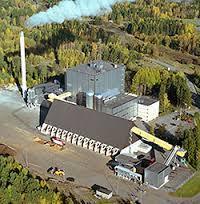
The new power plant unit, Brista 2, produces district heat for local residents and electricity for the Nordic power market from sorted municipal and industrial waste.

Duane Tilden‘s insight:

>”Brista 2 is already the fourth CHP plant we have commissioned this year in the Nordic and Baltic countries. Combined heat and power production is at the core of our strategy, and whenever possible we utilise renewable and local fuels,” says Per Langer, Executive Vice President of Fortum’s Heat Division.

Production capacity of the new Brista plant unit is 60 megawatts (MW) heat and 20 MW electricity. The annual heat production, about 500 gigawatt-hours (GWh), corresponds to the annual heating needs of about 50,000 mid-sized homes. The estimated annual electricity production of Brista 2 is 140 GWh. Fortum co-owns the plant (85%) together with the municipal energy company Sollentuna Energi (15%). <

See on online.wsj.com

Renewable Geothermal Power – a Vast & Untapped Energy Resource

See on Scoop.itGreen Energy Technologies & Development

There are no plans for new coal plants to be built in the United States. This opens doors for the geothermal industry possibly more than ever before in U.S. history.

Duane Tilden‘s insight:

> Geothermal energy is a renewable source of electricity that has the same important baseload qualities […]  (of coal for) electric power generation in the U.S. at a fraction of the cost.

“Baseload is always better,” […] “[I]t assures a steady revenue stream which is much better for financing.”For a nation that’s thinking to the long term, geo plants are:

Firm. They can run 24 hours a day regardless of extraneous conditions.Flexible. Geothermal’s flow can be load following or allow for imbalance, can provide a spinning reserve or a non-spinning reserve, and works well as replacement or supplemental reserve.

Falcone says of geothermal’s flow options: “By being able to load follow, geothermal can be reduced during low need time and increased without much effort. There is no need to store power that cannot be used. The price of power can be kept lower than other renewables since more of it is sold than the intermittent power sources like wind and solar.”

Falcone adds, “There are now efforts to marry solar with geothermal so that extra power can be produced during sunny peak hours.

“There is no need to invest in fossil fuel to create heat in order to generate power, so the environment is better off.”But today’s solicitations for renewable energy in Western states tend to ignore these unique benefits of geothermal power. Additional long-term analysis shows geothermal plants are:

Small. Geothermal-impacted land in 2030 is expected to be around 7.5 km2/TW-hr/yr, as opposed to 9.7 .5 km2/TW-hr/yr for a coal plant.Hardy. Long-lasting geothermal plants include those at The Geysers in California (since the 1960s) and at the Lardarello field in Italy (since 1904).<

See on www.renewableenergyworld.com

“Personal Wipes” create toxic waste in Canadian sewers

See on Scoop.itGreen & Sustainable News

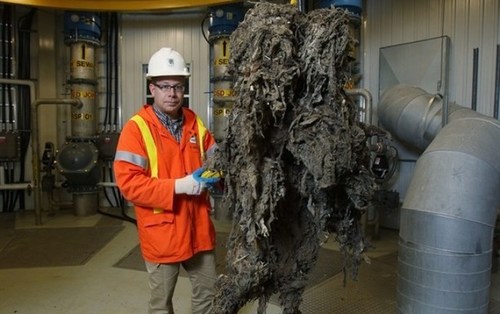
They’re billed as a fresh, clean alternative to toilet paper – but waste-water utilities across Canada say personal wipes are creating putrid sewage clogs that are costing Canadian ratepayers at least $250 million a year.

Duane Tilden‘s insight:

>MESUG members have set up traps across Ontario municipalities, Orr said, and they’re catching hundreds of flushable wipes. The situation is the same across the country, with officials in Penticton, B.C., recently complaining publicly about the wipes.

Canadian utilities aren’t alone in their battle against personal wipes.

In the U.S. capital region, the Washington Suburban Sanitary Commission has spent more than $1 million installing powerful grinders to shred wipes before they reach pumps on their way to treatment plants.

The utility has also devoted hundreds of man-hours to unclog pipes and repair broken sewer lines. It blames wipes for blockages that have caused sewage to overflow into streams or back up into residential basements.<

See on globalnews.ca

Kyocera Opens Japan’s Largest Offshore Solar Power Plant

See on Scoop.itGreen & Sustainable News

The Kyocera Corporation just opened a 70 megawatt solar power plants off the southern coast of Japan.

Duane Tilden‘s insight:

>Kyocera partnered with six other companies to develop the solar plant, which is located in the Kagoshima Prefecture. The company hopes that this latest offshore venture will set a precedent for a cleaner Japan, especially in light of the 2011 Fukushima disaster. The solar plant is designed to inspire and encourage Japan to make the switch to more renewable energy sources.

The Kagoshima Nanatsujima Solar Power Plant was made possible in part because of Japan’s revised feed-in-tariff (FIT) program, which was restructured in July, 2012 to better accommodate solar energy. The adjusted FIT plan requires local utilities to purchase 100 percent of the power generated by solar plants that produce more than 10 kW.<

Read more: Kyocera Opens Japan’s Largest Offshore Solar Power Plant | Inhabitat – Sustainable Design Innovation, Eco Architecture, Green Building

See on inhabitat.com