Wind Turbines

rotronicuk's avatarRotronic - BLOG

Its been pretty windy recently, So wind farms are probably doing quite well at the moment. The biggest wind farm in the world, at the moment, is the London array, which can produce 630MW of power.

Wind Energy in General

The future is very encouraging for wind power. The technology is growing exponentially due to the current power crisis and the ongoing discussions about nuclear power plants. Wind turbines are becoming more efficient and are able to produce increased electricity capacity given the same factors.

Facts & figures:

There is over 200 GW (Giga Watts) of installed wind energy capacity in the world.

The Global Wind Energy Council (GWEC) has forecasted a global capacity of 2,300 GW by 2030. This will cover up to 22% of the global power consumption.

WindPower
Converting wind power into electrical power:

A wind turbine converts the kinetic energy of wind into rotational mechanical energy. This energy is directly converted, by a generator, into electrical energy. Large wind turbines typically have a generator installed on top of the tower. Commonly, there…

View original post 489 more words

UK Green Investment Bank Raises £463m on its planned £1bn Offshore Wind Farm Fund

The UK Green Investment Bank plc (GIB) has announced that its FCA regulated subsidiary, UK Green Investment Bank Financial Services Limited (GIBFS), has reached first close on commitments of £463m on its planned £1bn fund to invest in operating offshore wind farms in the UK.

Source: www.greeninvestmentbank.com

>” […] £463m of capital raised at first close, to be invested in UK offshore wind projects.Investors include UK pension funds and a sovereign wealth fund.Innovative transaction creating the world’s first dedicated offshore wind fund.This is the first fund raised by the GIB group, a first move into asset management and the first time it has managed private capital since its formation.This announcement marks the end of GIB’s financial year. It committed £723m to 22 green energy projects across the UK in 2014/15. GIB has now backed 46 UK projects with a total value of almost £7bn.

The UK Green Investment Bank plc (GIB) has announced that its FCA regulated subsidiary, UK Green Investment Bank Financial Services Limited (GIBFS), has reached first close on commitments of £463m on its planned £1bn fund to invest in operating offshore wind farms in the UK.

First close marks the completion of the first stage of fundraising and is triggered by the commitment of an initial group of investors.

The initial investors comprise UK-based pension funds and a major sovereign wealth fund. GIB is also investing £200m in the fund. Fundraising continues and GIBFS expects to raise additional funds from other investors to reach the £1bn target.

In addition to the £463m of fund commitments raised, an additional significant amount of investor capital is available to co-invest into projects alongside the fund.

The fund is an innovative, first-of-a-kind transaction. It is the world’s first fund dedicated to investments in offshore wind power generation and, once fully subscribed, will be the largest renewables fund in the UK. The fund has an expected life of 25 years, allowing a new class of long-term investor to enter the sector.

This is the first fund raised by the GIB group and its first step into asset management. It is also the first private capital to be managed by the GIB group. It will be managed by a new FCA-regulated and authorised subsidiary called UK Green Investment Bank Financial Services Limited which is staffed by a dedicated team.

GIB has now transferred its investments in two operating assets into the fund, which will produce immediate cash yield for investors. They include:

Rhyl Flats. A 90 MW, 25 turbine wind farm operated by RWE Innogy UK off the coast of North Wales. It has been operational since December 2009. GIB has sold its full 24.95% equity stake in the project to the Fund.Sheringham Shoal. A 317 MW, 88 turbine wind farm operated by Statkraft and located in the Greater Wash area off the coast of Norfolk. It has been operational since October 2012. GIB has sold its full 20% equity stake in the project to the fund.

These two offshore wind farms are able to produce 1,290 GWh of renewable energy annually, enough to power 305,000 UK homes. The fund also has a strong pipeline of future investment opportunities.

Evercore Private Funds Group is acting as advisor and exclusive global placement agent for the fundraise and King & Wood Mallesons is acting as legal counsel to the fund. […]”<

See on Scoop.itGreen & Sustainable News

France now requires all new buildings to have green roofs or solar panels

Susan Davis Cushing's avatarPr0jectClimate

France just passed atrailblazing new lawthat requires that all new buildings constructed in commercial areas to be partially-covered by either solar panels orgreen roofs. Not only will this bring dramatic changes to the nation?s skylines and bolster the efficiency of all new commercial construction, but the law will help France pick up the pace the solar adoption?which has lagged behind other European nations in recent years.

Read more:France requires all new buildings to have green roofs or solar panels | Inhabitat – Sustainable Design Innovation, Eco Architecture, Green Building


Source: inhabitat.com

“Here’s hoping that other nations can soon follow suit.” I had to go back and dig through my sources to make sure I hadn’t dreamed this!

View original post

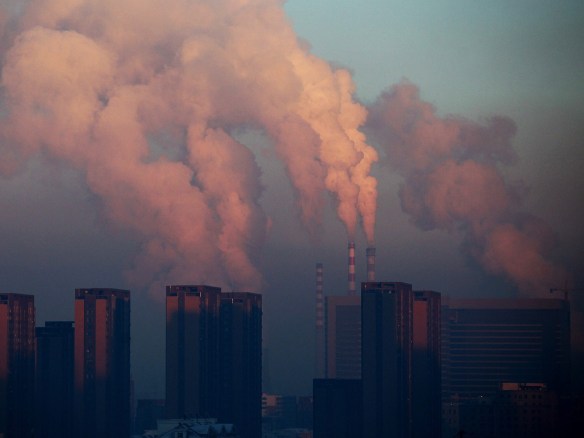
China’s Capital City to Shut Major Coal Power Plants due to Excessive Pollution

(Bloomberg) — Beijing, where pollution averaged more than twice China’s national standard last year, will close the last of its four major coal-fired power plants next year.

Source: www.bloomberg.com

>” […]

The capital city will shutter China Huaneng Group Corp.’s 845-megawatt power plant in 2016, after last week closing plants owned by Guohua Electric Power Corp. and Beijing Energy Investment Holding Co., according to a statement Monday on the website of the city’s economic planning agency. A fourth major power plant, owned by China Datang Corp., was shut last year.

The facilities will be replaced by four gas-fired stations with capacity to supply 2.6 times more electricity than the coal plants.

The closures are part of a broader trend in China, which is the world’s biggest carbon emitter. Facing pressure at home and abroad, policy makers are racing to address the environmental damage seen as a byproduct of breakneck economic growth. Beijing plans to cut annual coal consumption by 13 million metric tons by 2017 from the 2012 level in a bid to slash the concentration of pollutants.

Shutting all the major coal power plants in the city, equivalent to reducing annual coal use by 9.2 million metric tons, is estimated to cut carbon emissions of about 30 million tons, said Tian Miao, a Beijing-based analyst at North Square Blue Oak Ltd., a London-based research company with a focus on China.  […]

Closing coal-fired power plants is seen as a critical step in addressing pollution in China, which gets about 64 percent of the primary energy it uses from the fossil fuel. Coal accounts for about 30 percent of the U.S.’s electricity mix, while gas comprises 42 percent, according to Bloomberg New Energy Finance data.  […]

Air pollution has attracted more public attention in the past few years as heavy smog envelops swathes of the nation including Beijing and Shanghai. About 90 percent of the 161 cities whose air quality was monitored in 2014 failed to meet official standards, according to a report by China’s National Bureau of Statistics earlier this month.

The level of PM2.5, the small particles that pose the greatest risk to human health, averaged 85.9 micrograms per cubic meter last year in the capital, compared with the national standard of 35.

The city also aims to take other measures such as closing polluted companies and cutting cement production capacity to clear the air this year, according to the Municipal Environmental Protection Bureau. […]”<


See on Scoop.itGreen & Sustainable News

State and Solar Advocates Complete Legal Agreement for Full Net Metering Credit to Utilities

The Act 236 agreement also settles rules for legal solar leasing.

Source: www.utilitydive.com

>”[…]  The South Carolina Public Service Commission last week approved a settlement agreement between Duke Energy Carolinas, South Carolina Electric & Gas (SCE&G) and major environmental groups that allows rooftop solar owners to get full retail value for electricity their systems send to the grid.The agreement on net energy metering (NEM) is part of Act 236, passed in 2014 after a consultation process involving renewable energy-interested stakeholders. Solar systems installed before the end of 2020 will earn full retail value bill credit for each kilowatt-hour that goes to the grid.Act 236 also legalizes third party ownership of solar, more widely known as solar leasing, and sets up rules by which leasing companies like SolarCity and Sunrun must operate.

Dive Insight:  To study the emerging solar opportunity, a South Carolina General Assembly-created oversight group organized a coalition of environmentalists, solar advocates, and utilities and electric cooperatives into an Energy Advisory Council in 2013. Act 236 was formulated out of its report.

The NEM settlement also raises the size limit of eligible systems from 100 kW to 1 MW and raises the cap on NEM systems from 0.2% of each utility’s peak capacity to 2%.

Act 236 requires leasing companies to be certified by the state and limits the size of leased residential systems to 20kW and leased commercial systems to 1000kW. Leased systems can only serve one customer and one location and cannot sell electricity to third parties. The total of leased solar is capped at no more than 2% of a utility’s residential, commercial, or industrial customers average retail peak demand.

Groups that led the settlement with the utilities include the Coastal Conservation League, the Southern Environmental Law Center, and the Southern Alliance for Clean Energy. […]”<


See on Scoop.itGreen Building Operations – Systems & Controls, Maintenance & Commissioning

Global Distributed Energy Storage Capacity Expected to Increase Nearly 10-Fold

The worldwide capacity of distributed energy storage systems is expected to increase nearly 10-fold over the next 3 years, according to a new report from Navigant Research, which analyzed the global market for distributed energy storage systems through 2024.

Source: cleantechnica.com

>” […] The primary conclusion of the report is that distributed storage is one of the fastest-growing markets for energy storage globally, thanks to the focus of rapid innovation and intense competition, causing the market to greatly exceed market expectations. This growth and subsequent demand has led to grid operators, utilities, and governments looking to encourage storage installations that are physically situated closer to the retail electrical customer.

According to the report from Navigant Research, worldwide capacity of distributed energy storage systems (DESSs) is expected to grow from its current 276 MW, to nearly 2,400 MW in 2018.

“Distributed storage is among the fastest-growing markets for energy storage globally,” says Anissa Dehamna, senior research analyst with Navigant Research. “In particular, residential and commercial energy storage are expected to be the focus of technological advances and market activity in the coming years.” […]

Two specific types of DESS are classified in the report: Community energy storage refers to systems installed at the distribution transformer level; Residential and commercial storage, on the other hand, refer to “two behind-the-meter applications targeted at either homeowners or commercial and industrial customers.” Together, these two technologies include lithium ion (Li-ion), flow batteries, advanced lead-acid, and other next-generation chemistries, such as sodium metal halide, ultracapacitors, and aqueous hybrid ion.

Similarly, the two categories of DESS each have specific market drivers. Community energy storage is being driven by the improved reliability yielded in case of outages, load leveling and peak shifting, and improved power quality. Almost as importantly, community energy storage systems can communicate with a grid operator’s operating system, allowing the operator to mitigate disruptions to the grid.

Given its primary use as an energy cost management solution, the prime driver behind commercial storage systems is the rate structure for customers. “<

See on Scoop.itGreen Energy Technologies & Development

US Energy Storage Capacity to Triple in 2015

Over triple the amount of energy storage capacity — 220 megawatts worth — is expected to come on-line this year.

Source: www.triplepundit.com

>” […] 2015 looks set to be a milestone year for advanced energy storage solutions. Some 220 megawatts worth of energy storage capacity will be deployed across the nation in 2015 – more than three times the 2014 total, according to an inaugural market research report from GTM Research and the Energy Storage Association (ESA). The organizations see growth continuing “at a rapid clip thereafter.”

The number of grid-connected electrochemical and electromechanical storage installations that came on-line in 2014 totaled 61.9 megawatts of power capacity, the organizations found, up 40 percent from 44.2 MW in 2013. One leading distributed energy storage pioneer delivered over a third of the total.  […]

Utility deployments dominated the fast emerging U.S. market for advanced energy storage systems in 2014, accounting for 90 percent of newly-installed capacity. So-called “behind the meter” installations at utility customer sites – commercial and industrial companies, government facilities, schools, hospitals and municipalities – made up 10 percent of the 2014 total.

But installations of “behind the meter” energy storage systems picked up sharply in the fourth quarter of 2014, GTM and ESA note. Going forward, GTM expects behind-the-meter installations will account for 45 percent of the overall market by 2019.

Advanced energy storage system deployments are also concentrated in states that have and/or are in the process of instituting market regulatory reforms and supportive policies, including mandates and incentive programs. GTM and ESA singled out California and states where PJM is responsible for grid operations and management – all or part of 13 states across the eastern U.S. and the District of Columbia – as early leaders.

“The U.S. energy storage market is nascent, but we expect it to pick up more speed this year,” GTM Research SVP Shayle Kann was quoted in a Greentech Media news report. “Attractive economics already exist across a broad array of applications, and system costs are in rapid decline. We expect some fits and starts but significant overall growth for the market in 2015.”

[…]”<

See on Scoop.itGreen Energy Technologies & Development

Are Virtual Power Plants the Next Generation in Electrical Utilities?

Germany’s energy giants are lumbering behind the rapid advance of renewable energy. They might stay afloat for a while, but they don’t seem flexible enough to achieve a turnaround, says DW’s Henrik Böhme.

Source: www.dw.de

>” […]  Decentralization is the buzzword. And the power required elsewhere, say, for street lights, electric motors, or the bakery nearby will be largely generated through renewables. Even large industrial compounds will be in a position to generate enough electricity for their own needs.

Nuclear power stations will all have been switched off by then, with only a few coal-fired or gas-fired plants still in operation. One way or another, Germany’s power landscape is bound to undergo dramatic changes.

That’s been obvious for a couple of years now. But the German utilities’ age-old business models don’t seem to be working anymore. All they know is big and heavy – they’re used to nuclear and coal power stations guaranteeing billions in profit, year-in year-out, and they seemed to secure their earnings without any trouble. And then they grew fat and began making mistakes.  […]

Then came the Fukushima nuclear disaster four years ago, leading to the German government’s decision to phase out nuclear energy completely by 2022. That dealt a severe blow to Eon, RWE and co. which hadn’t really understood the thrust of the country’s energy transition anyway.

The utilities in question are now frantically trying to rescue what they still can. They’re cutting away some of the fat. Costs are being cut, employees are being laid off and selected divisions are being jettisoned. The companies have rediscovered private clients by offering them networking technology.

But people don’t trust those giant, de facto monopolist firms anymore. Younger companies can do the same just as well, and often far more efficiently. Take “Next Kraftwerke”, a Cologne-based start-up. They run a virtual power station where power is collected from many smaller facilities and redistributed in the process. This is pretty close to what a future energy supply system will look like.

According to Silicon Valley researcher Peter Diamandis, 40 percent of the world’s current biggest companies will have ceased to play an important role some 10 years from now. On current performance, among those to fall will most likely be Eon, RWE and others.”<


See on Scoop.itGreen Energy Technologies & Development

Brewery’s Waste Treatment Bio-Gas Fuel Micro-Turbines for Grid Power

Sierra Nevada taps waste-to-energy technologies as a way to close operational loops and demonstrate responsible brewing practices.

Source: www.rewmag.com

>”[…]

Biogas benefits

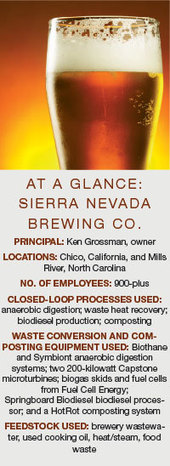
Sierra Nevada operates breweries in Chico, California, and in Mills River, North Carolina. While the Chico facility has been in operation since 1980, the Mills River brewery didn’t break ground until 2012. Both facilities operate anaerobic digesters for treating brewery effluent water. Each facility uses the biogas produced from the digesters a little bit differently. In Chico, the biogas is used to offset natural gas production for use in its boilers. The Mills River digester is also used in the boilers but is also being fed into two 200-kilowatt microturbines from Capstone of Chatsworth, California, which will generate electricity to power the operation.

McKay says the first anaerobic digester was installed in Chico in 2002, well before the technology had gained traction in the United States. The digester, manufactured by Veolia Water Technologies subsidiary Biothane, Pennsauken, New Jersey, is an upflow anaerobic sludge bed. The biogas produced from the digestion process is cleaned and treated by a biogas skid designed by Fuel Cell Energy, Danbury, Connecticut, before it is used in the boilers. When the digester was initially installed, Sierra Nevada had planned on using the biogas in its fuel cells, but the inconsistent flow of biogas from the digester was problematic for the fuel cells without a buffer zone.

“We just decided we would send the biogas all to the boilers because the boilers could definitely use it,” says McKay.

The fuel cells were installed in Chico in 2005 and are considered “old technology” by today’s standards, according to McKay. The company is currently deciding on a replacement for the fuel cells which is planned to be completed by the end of the year. Fuel cells, microturbines and other engine technologies have all been considered as potential replacements.

“Ideally we would like to produce electricity from any biogas we are producing at the wastewater treatment plant,” McKay says, adding, “It is fine to use in the boiler, but we would prefer to make electricity because it would be closing the loop a little bit better.” […]”<

See on Scoop.itGreen Energy Technologies & Development

Geothermal Energy Could Cleanly Power the Planet

The Earth’s heat offers a clean and steady source of electricity, though it doesn’t come cheap.

Source: news.nationalgeographic.com

>” […]

An alternative to fossil fuels, geothermal has potential far beyond Indonesia. It could help tame global warming by producing copious amounts of renewable energy. The United Nations estimates global reserves at about 200 gigawatts—double the total capacity of all U.S. nuclear power plants. Yet despite decades of effort, only 6.5 percent of that potential has been tapped.

Indonesia’s story explains why.

Volcanoes Offer Peril and Promise

A chain of more than 17,000 islands, Indonesia has dozens of active volcanoes—more than any other country. Those volcanoes offer the nation a potent energy source via deep underground reservoirs of hot water that seeps out of molten rock. Power plants can extract steam from those reservoirs and use it to turn turbines that generate electricity. […]

Indonesia currently produces the third largest amount of geothermal power, after the U.S. and the Philippines. Still, it’s tapping less than 5 percent of its potential 29-gigawatt capacity. It has 62 projects under way, and if all get built, Indonesia could overtake the Philippines by the end of this year and the U.S. in another decade or two, according to a 2015 industry analysis by the Washington-based Geothermal Energy Association. (See related blog post: “Nicaragua Looks to Geothermal for Energy Independence.”)

“Its resources are so startlingly good,” says Paul Brophy, president of EGS Inc., a California-based firm that recently did consulting work for Indonesia’s government on the geothermal industry.

The country, aiming to triple geothermal output from 1.4 to 4.9 gigawatts by 2019and to hit 10 gigawatts by 2025, is trying to fast-track projects.

Last year it amended a law to stop defining geothermal development as “mining” and thus allow work in protected forests, where many resources are located. The revision also shifts project approval from local to federal officials.

“That’s critical,” Brophy says, noting that the central government has more geothermal expertise.

Implementing the new provisions will take time, says Josh Nordquist of U.S.-based Ormat Technologies, which has invested in geothermal projects in Indonesia. Doing so could be a “real burden” for the government, he says, but adds, “I believe in the end it will work.” […]”<

See on Scoop.itGreen & Sustainable News