5 Biofuel Trends to Watch Out for in 2013

See on Scoop.itGreen & Sustainable News

2012 saw the introduction of next generation, advanced biorefineries. Here we look at the trends that will hit the biofuel market in 2013, including; Green Diesel, Decline of Oil,

Duane Tilden‘s insight:

The Retreat of Oil Majors

Trend: Oil Majors double down on “Golden Age of Gas” while narrowing investments across the advanced biofuel space.

An early strategic investor in the advanced biofuels industry, global oil majors have begun trimming excess fat from their biofuel investment portfolios over the past couple of years. BP, a leading investor in the biofuels industry, pulled out of its commercial Highlands Park project in Florida in October 2012 to refocus on R&D efforts. Shell, meanwhile, has dropped a number of investments across the advanced biofuels landscape, concentrating its commercialization efforts on its Raizen joint venture with Cosan in Brazil.

See on oilprice.com

Lower nitrogen losses with perennial biofuel crops

See on Scoop.itGreen & Sustainable News

Perennial biofuel crops such as miscanthus, whose high yields have led them to be considered an eventual alternative to corn in producing ethanol, are now shown to have another beneficial characteristic — the ability to reduce the escape of…

Duane Tilden‘s insight:

In the study, funded by the Energy Biosciences Institute, miscanthus, switchgrass, and mixed prairie species were compared against a typical corn-corn-soybean rotation. Harvested biomass and nitrogen, nitrous oxide emissions, and nitrate leaching in the mid-soil profile and through tile drainage lines were all measured.

The researchers found that the perennial crops quickly reduced nitrate leaching in the mid-soil profile as well as from tile lines. “By year four each of the perennial crops had small losses,” Smith said. “Nitrous oxide emissions also were much smaller in the perennial crops–including switchgrass, which was fertilized with nitrogen, while prairie and miscanthus were not. Overall, nitrogen levels were higher for the corn and soybean treatment as well as switchgrass, but were lower for prairie and miscanthus. Prairie and miscanthus levels were lower due to harvest of the plant biomass (and nitrogen) each winter, with no fertilizer nitrogen additions to replace it, as occurred in corn and switchgrass,” she said.

See on www.sciencedaily.com

Why Frack When You Can Grow Biofuel? USDA Has $25 Million In Answers

See on Scoop.itGreen & Sustainable News

The U.S. Department of Agriculture has just embarked on a new round of $25 million in funding for four new biofuel research and development projects, offering farmers and other rural property owners the potential for new alternatives to selling or…

Duane Tilden‘s insight:

One of USDA’s new projects addresses this approach through a new cropping system, in which the weedy biofuel plant camelina will be rotated with wheat-based plants. The $5 million project, through Kansas State University, will study the commercial feasibility of converting camelina to biobased adhesives and coatings as well as biofuel.

Another $6.5 million will go to Ohio State University to demonstrate an innovative anaerobic digestion system (anaerobic refers to bacteria that thrive without oxygen) that can handle multiple feedstocks. The new system will use natural decomposition to break down manure, agricultural waste, woody biomass and biofuel crops.

There is no such thing as impact-free energy production, but all of these biofuel projects are designed to fit sustainably into the core business of the farmer, which all boils down to long term land stewardship.

See on cleantechnica.com

IRENA: Fossil fuel subsidies cause everlasting expenses and pollution

See on Scoop.itGreen & Sustainable News

Abu Dhabi: Decreasing costs of renewable energy sources may convince the world governments to minimise subsidies on polluting fossil fuels, a senior official of International Renewable Energy Agency (Irena) said here on Sunday.

Duane Tilden‘s insight:

World governments were ignoring the fact that although renewable energy sources require big initial investments, their long-term operational and maintenance costs are minimal, he [Frank Wouters, Deputy Director General of Irena] pointed out.

Effective policies are more important than subsidies for countries to scale up renewable energy on a large scale, experts participating in the assembly also pointed out.

Anywhere in the world, investment in renewable power generation depends on stable regulatory frameworks, transparent planning processes and clear procedures for connection to the grid, said the participants at a workshop as part of the assembly.

See on gulfnews.com

Pioneering Global Atlas for Renewable Energy Goes Online

See on Scoop.itGreen Energy Technologies & Development

The world’s first open-access Global Atlas of renewable energy resources goes live today, announced at the annual general assembly of the International Renewable Energy Agency (IRENA).

Duane Tilden‘s insight:

–  “In the next 10 years we expect a huge rise in the investments in renewable energy. The Global Solar and Wind Atlas will help us make the right decisions,” says Martin Lidegaard, Danish Minister of Climate, Energy and Building, and President of the 3rd session of the IRENA Assembly.

–  Note to Editors

IRENA is mandated by 159 countries and the European Union to promote the sustainable use of all forms of renewable energy, and to serve as the global hub for renewable energy cooperation and information exchange. Formally established in 2011, IRENA is the first major international organization to be headquartered in the Middle East.

See on www.financialpost.com

French Firm Launches Floating Solar Power System to Market

See on Scoop.itGreen Energy Technologies & Development

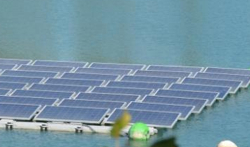
The Hydrélio system will be best used in unused stretches of water, such as quarry lakes, irrigation ponds, water treatment plant lagoons and dams, Ciel et Terre said. “This new floating solar power generation concept addresses the problems of land availability and landscape impacts that large-scale land-based solar power generation projects come up against,” it said. “It makes it possible to conserve land that can be put to other uses, and to convert unused stretches of water into spaces dedicated to renewable electricity production. These stretches of water cover substantial areas.”

See on thegreenenergyblog.com

Gas Drilling, North Dakota : Image of the Day

See on Scoop.itGreen & Sustainable News

Cities and people are scarce in northwestern North Dakota, but nighttime satellite imagery shows the Bakken Formation aglow with brightly-lit drilling equipment.

Duane Tilden‘s insight:

Northwestern North Dakota is one of the least-densely populated parts of the United States. Cities and people are scarce, but satellite imagery shows the area has been aglow at night in recent years. The reason: the area is home to the Bakken shale formation, a site where gas and oil production are booming.

On November 12, 2012, the Visible Infrared Imaging Radiometer Suite (VIIRS) on the Suomi NPP satellite captured this nighttime view of widespread drilling throughout the area. Most of the bright specks are lights associated with drilling equipment and temporary housing near drilling sites, though a few are evidence of gas flaring. Some of the brighter areas correspond to towns and cities including Williston, Minot, and Dickinson. …

See on earthobservatory.nasa.gov

The Negawatt Revolution — Solving the CO-2 [& Energy] Problem —

See on Scoop.itGreen Energy Technologies & Development

Introduction

“My 1976 article entitled “Energy Strategy: The Road Not Taken?” which appeared in Foreign Affairs, suggested two ways in which the energy system could probably evolve over the next fifty years or so, using the United States as an example. If you divided by something like a factor of nine or ten, you would get Canada.”…

“If the U.S. spent only enough on efficiency to keep up with growth and demand for electric services, plus the net retirement of generating capacity, we would have almost enough capital left in surplus to double our rate of investment in durable manufacturing industries.”

The Importance of Electrical Efficiency

“Why do I concentrate on electricity? First, because it is by far the costliest form of energy. Each cent per kilowatt-hour is equivalent in heat content to oil at $17 dollars a barrel, roughly the world oil price. So the electricity we buy, even in Canada where it is quite cheap, is equivalent to heat at many times the world oil price. Therefore saving electricity is more financially rewarding than saving direct fuels. In addition, electricity has enormous capital leverage because central electric systems — the whole systems — are about 100 times as capital intensive as the traditional direct fuel systems (you know, Texas and Louisiana and Alberta oil and gas — the sorts of things on which our economies were built). In fact a quarter of all the development capital in the world goes to electrification.

“Also electricity has huge environmental leverage. Power plants burn a third of the fuel in the world. They account for a third of the CO2, therefore, released from the burning of fossil fuel. In my own country they release two thirds of the sulphur oxides and a third of the nitrogen oxides. What’s more, every unit of electricity you save at the point of use saves typically three or four units of fuel, namely coal at the power plant. And in socialist or developing countries that ratio is more like five or six to one.

So you get the most environmental benefit from saving electricity, as well as the most financial benefit.”

See on www.ccnr.org

Taking energy efficiency seriously

See on Scoop.itGreen Building Operations – Systems & Controls, Maintenance & Commissioning

Despite the lack of attention paid to the issue during this year’s presidential campaign (at least, before Sandy came along), Barack Obama’s first term was a bit of a quiet revolution for climate change policy in America…

“More than 13 percent of the $700 billion American Recovery Act went to energy spending, most of it green. … the largest portion – $32 billion –went to energy efficiency and retrofitting projects. This was the biggest such investment in the history of history. It may even have finally heralded the arrival of a “Negawatt Revolution”….”

“Still, the right incentive structures to encourage the necessary investments in energy efficiency are not yet in place. Energy bills are still viewed by customers in terms of monthly costs that would go up because of short-term investments rather than yearly ones that will ultimately go down because of long-term savings….. The Negawatt Revolution may have begun in earnest during these past four years, but we can’t afford to wait until 2037 for it to finally reach its full potential. The possible benefits to the environment – and the economy – are too great for us to continue to forego.”

See on www.startribune.com