See on Scoop.it – Green & Sustainable News
FEMP trains Federal agency managers about the latest energy requirements, best practices, and technologies through eTraining Courses, First Thursday Seminars, and webinars.
See on apps1.eere.energy.gov
See on Scoop.it – Green & Sustainable News
FEMP trains Federal agency managers about the latest energy requirements, best practices, and technologies through eTraining Courses, First Thursday Seminars, and webinars.
See on apps1.eere.energy.gov
See on Scoop.it – Green & Sustainable News
Through immediate publication of press releases, we keep the business, financial and public press informed on all important Siemens topics.
>The plant will be built in western Poland in the city of Gorzów Wielkopolski. Within the scope of turnkey construction, Siemens will deliver two SGT-800 gas turbines, one SST-400 steam turbine, three 11 kilovolt (kV) generators and two heat recovery steam generators. In addition, Siemens was awarded a long-term 12 years maintenance agreement for the gas turbines. The Gorzów plant will be fired with nitrogen-rich natural gas from gas reserves located in western Poland. This type of gas has a lower calorific value than conventional natural gas. […]
The Gorzów power plant will replace a currently used coal-fired block at the same location. The combined cycle power plant with district heat extraction will be able to generate electricity in a much more efficient and environmentally friendly manner. Compared to the old coal-fired power plant, the new plant will produce 95 percent less sulfur dioxide emissions, more than 30 percent less nitrogen dioxide emissions and more than 95 percent less particulate emissions.<
See on www.siemens.com
See on Scoop.it – Green Building Design – Architecture & Engineering
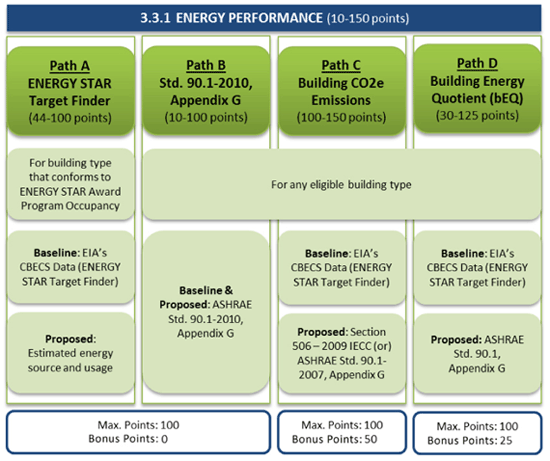
LEED and Green Globes approved as third party certification programs for federal facilities.
>In its recommendation to DOE, GSA recommended the Green Building Initiative’s Green Globes 2010 and the U.S. Green Building Council’s Leadership in Energy and Environmental Design (LEED) 2009 as the third party certification systems that the federal government can use to gauge performance in its construction and renovation projects. Other certification systems were not selected because they did not align with the government’s requirements. Additionally, under this recommendation, GSA will conduct more regular reviews in order to keep up with the latest green building tools that the market has to offer.
Third party certification systems like LEED and Green Globes help in measuring reduction targets for water, energy, and greenhouse gas emissions against industry standards. Agencies can use one of the two certification systems that best meet their building portfolios, which range from office buildings, to laboratories, to hospitals, to airplane hangars.
Federal construction and modernization projects must adhere to the government’s own green building requirements by law and executive orders. No one certification system meets all of the federal government’s green building requirements. Green building certification systems are just one tool that GSA uses to cut costs and meet sustainability and economic performance goals.<
See on Scoop.it – Green Building Design – Architecture & Engineering
PORTLAND, OR–(Marketwired – Oct 29, 2013) – The Green Building Initiative (GBI) applauds the General Services Administration on its recognition of Green Globes® alongside the U.S.
>GBI’s growth in the market is due to its commitment to the practicality of its tools for use by building owners, designers, and facility managers as well as its commitment to open, consensus-based review of its technical criteria. In 2010, GBI was recognized for developing Green Globes for New Construction as the first ever American National Standard for a commercial building rating system. As it continues to improve its rating systems based on changes in the market, GBI remains committed to using the American National Standards Institute (ANSI) approved consensus procedures.
“GBI is the only commercial building rating system developer to vet its technical criteria through the ANSI process,” stated GBI Chairman Tonjes. “This helps to ensure that GBI’s rating systems provide the opportunity to evaluate the widest range of buildings using an open, science-based approach to building performance.”
ANSI/GBI 01-2010, also known as Green Globes for New Construction, is due for revision before the end of 2015 based on ANSI periodic maintenance requirements. According to Tonjes, GBI’s ANSI-based rating system review process will begin before the end of this year with the filing of required documents followed by reformation of the technical review committee.
GBI’s tools have a significant focus on both the reduction and efficient use of energy and water in buildings. These, along with other criteria, help reduce building operating costs and their overall impact on the environment.
“Since 2005, the Green Globes product line has evolved to include several updated and expanded tools,” stated Erin Shaffer, vice president of federal outreach at GBI.<
See on www.marketwired.com
See on Scoop.it – Green & Sustainable News
Learn how the China water crisis will have significant impact on the balance of the world if not reversed, and how you can help, in this WaterFilters.NET post.
>The New York Times reports:
Beijing has placed its faith in monumental feats of engineering to slake the north’s growing thirst. The South-North Water Transfer eventually aims to pipe 45 cubic kilometers of water annually northward along three routes in eastern, central and western China. All three pose enormous technical challenges: The eastern and central routes will be channeled under the Yellow River, while the western route entails pumping water over part of the Himalayan mountain range.
The estimated cost of $65 billion is almost certainly too low, and doesn’t include social and ecological impacts. Construction has already displaced hundreds of thousands, and issues the like possible increases in transmission of water-borne diseases have not been properly studied. But Beijing’s calculus is political: It is easier to increase the quantity of water resources, at whatever cost, rather than allocate a limited supply between competing interests. […]
A recent article by The Economist states:
“The Chinese government would do better to focus on demand, reducing consumption of water in order to make better use of limited supplies. Water is too cheap in most cities, usually costing a tenth of prices in Europe. Such mispricing results in extravagance. Industry recycles too little water; agriculture wastes too much. Higher water prices would raise costs for farms and factories, but that would be better than spending billions on shipping water round the country.”
Economically supporting Chinese regions and corporations that commit to better water usage and sustainability practices may help to change the mindset of many within this nation’s government or industries. In turn, this could lead them towards exploring more realistic initiatives experiencing success in other parts of the world.<
See on blog.waterfilters.net
See on Scoop.it – Green Building Design – Architecture & Engineering
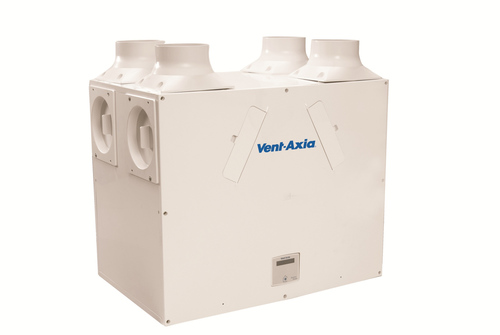
Vent-Axia has made the final shortlist in the prestigious Energy Awards 2013, which recognise and reward companies leading the way in reducing carbon emissions. Vent-Axia’s Lo-Carbon Kinetic Plus E…
>Consuming as little as 20W, the Kinetic Plus E only costs around £20 a year to run, offering 94% thermal efficiency and potentially recovering 10 or 20 times more energy than it costs to operate. This offers homeowners an attractive cost saving as we enter the winter months and rising fuel costs.<
See on kirhammond.wordpress.com
See on Scoop.it – Green Energy Technologies & Development
The phaseout is part of a long-term plan to reduce greenhouse gas emissions by 30 percent by 2017 and, Mayor Michael R. Bloomberg said, would save taxpayers money.
>The news conference was on Eastern Parkway in Brooklyn, where lights have already been replaced, expecting to save more than $70,000 and nearly 248,000 kilowatt-hours a year in energy. Unlike standard lights, which last six years, LED bulbs can burn for 20 years before they need to be replaced, the administration said, and the project is expected to save $14 million a year in energy and maintenance costs. […]
“People tend to like them,” she said. “It’s clear. It’s bright. It really does a good job in providing fresher light.” The project is estimated to cost $76.5 million.
The project is the first to receive financing through the Accelerated Conservation and Efficiency initiative or “ACE,” the administration said, a $100 million competitive program that the Department of Citywide Administrative Services created to expedite such sustainability projects.<
See on www.nytimes.com
See on Scoop.it – Green Building Design – Architecture & Engineering
By Brianna Crandall, October 23, 2013—Hearings to finalize the 2015 International Energy Conservation Code (IECC) wrapped up in Atlantic City recently with big wins for higher efficiency requirements in existing buildings, controls for lighting and daylighting hardware and HVAC equipment specifications, according to a news release from the New Buildings Institute (NBI),
>The IECC is reviewed and updated every three years and serves as the model energy code for states and local jurisdictions across the country. The last version is the 2012 IECC.
In the United States, buildings account for about 40% of the energy consumed and 38% of all CO2 emissions, according to the U.S. Green Building Council. Cost-effective measures that cut the energy used by buildings represent a critical strategy to help building owners save money and curb the impacts of climate change, notes NBI.
“The updates related to existing and historic buildings clarify and further extend the code’s impact on the current building stock and will mean large energy savings growing over time,” said Jim Edelson, NBI senior manager of codes and policy. “Taken together, the approved code changes represent the most significant code revisions for energy consumption of existing buildings since the 1970s.”<
See on www.fmlink.com
See on Scoop.it – Green Energy Technologies & Development
Successful microalgae-to-biodiesel conversion has been the goal of some renewable energy researchers for more than two decades.
>To that end, Algae.Tec has signed a deal with Macquarie Generation, Australia’s largest electricity generator, to put an “algae carbon capture and biofuels” production facility next to a coal-fired power station in Australia’s Hunter Valley. Macquarie Generation, which operates the Sydney-area 2640 MW Bayswater Power Station, will feed waste CO2 into an enclosed algae growth system. […]
Projections are for the first year of production to hit 100,000 tons of algae biomass; half of which would be converted to an estimated 60 million liters of biodiesel. One sea-land container would generate 250 tons of biomass per annum, said the company, which would be harvested on a continuous basis. […]
Stroud projects that some 75 percent of his company’s income will come from biodiesel. The remaining 25 percent of Algae.Tec’s income will hinge on the sale of the microalgae’s leftover biomass for animal feed.<
See on www.renewableenergyworld.com
See on Scoop.it – Green & Sustainable News
GE has demonstrated technology aimed at addressing one of the biggest challenges with fracking: water pollution.
>Concerns about water pollution and other environmental issues related to fracking have led some places, including France and New York State, to block the process. As fracking increases in dry areas and places that lack adequate treatment and disposal options, pressure to block it could grow.
“Water-treatment technology is going to become more and more critical as the industry moves forward,” says Amy Myers Jaffe, executive director of energy and sustainability at the University of California at Davis, and a new member of a GE environmental advisory board. She says the continued use of fracking depends on the “industry getting its act together to do it in an environmentally sustainable way.”
Better water-treatment options could change the way oil and gas producers operate by making it economical to treat water at fracking sites instead of trucking it long distances to large water-treatment facilities or disposal wells. The technology is specifically targeted to places such as the Marcellus shale, one of the largest sources of shale gas in the U.S., where wastewater is far too salty for existing on-site treatment options (see “Can Fracking Be Cleaned Up?” and “Using Ozone to Clean Up Fracking”).
Each fracking well can require two to five million gallons of fresh water, which is pumped underground at high pressure to fracture rock and release trapped oil and gas. Much of that water flows back out, carrying with it the toxic chemicals used to aid the fracking process, as well as toxic materials flushed from the fractured rock.
Producers currently reuse much of that water, but that involves first storing it in artificial ponds, which can leak, and then diluting it, a step that consumes millions of gallons of fresh water. Eventually they can’t reuse the water any more so they need to ship it, often over long distances, to specialized treatment and disposal locations. Transporting the wastewater is expensive, and it comes with a risk of spills. At disposal sites, the wastewater is injected deep underground in a process that can cause earthquakes.
The new technology would make it unnecessary to dilute the wastewater, or transport it for treatment or disposal. […]<
See on www.technologyreview.com




 duanetilden