Renewable Geothermal Power Expands in Nevada

Geothermal energy is a growing industry, with more plants going into Nevada’s mostly untapped resource.

Source: www.ktvn.com

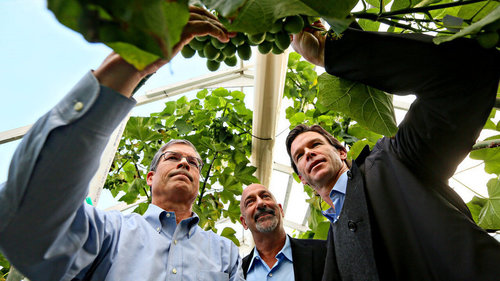
Geothermal energy is a growing type of clean energy, and nowhere is that more true than in Nevada. Ormat Technologies has built a geothermal plant every year since 2005.  […]

“This is what the future is going to bring,” Gawell said. “You will see more and more of this in years ahead and it is already a boom for Reno.”

The Steamboat Complex is a binary plant that takes hot water from deep underground, to produce power.

“We convert the heat that’s in the fluid to electrical energy,” Bob Sullivan, Senior Vice President of Ormat Technologies said. “Then we put all the fluids back into the ground where it gets reheated. So, it’s a sustainable cycle.”  […]

Along with electricity, these facilities create economic development, putting hundreds of people to work, drilling wells and building the plants.   About 500 people have permanent jobs with Ormat, in the United States.  Another 500 people work for the company around the world.

“It’s a job engine,” Sullivan said. “It takes a lot of maintenance. It takes a lot of people. It takes a lot of workers, a lot of subcontractors to keep one of these facilities running.”

While the cost of fossil fuels goes up and down, geothermal stays steady. The fuel cost is upfront, in the form of drilling wells. Gawell says what is lost in capital and labor costs is saved in fuel costs. […]”<

See on Scoop.itGreen Energy Technologies & Development

Development of small scale renewable landfill bio-gas electric generator in UK

ACP funds for development of small scale landfill gas engine in UK Energy Business Review ACP’s biogas partner AlphaGen Renewables, which oversee the installation and operation of a 50kW microgeneration landfill gas engine, will develop the project.

Source: biofuelsandbiomass.energy-business-review.com

>”The project is expected to generate power from the landfill gas resource at the site under a 20 year agreement with Norfolk County Council.

AlphaGen Renewables chairman Richard Tipping said: “We are delighted to be partnering with ACP on this project, which is set to deliver strong returns. Renewables such as biogas are playing a growing role in the UK’s energy production.”

Albion Ventures Renewables head David Gudgin said: “Biogas is an increasingly popular area of renewable energy and we are looking forward to working with AlphaGen both on this project and others in the future.”<

See on Scoop.itGreen Energy Technologies & Development

Liquid Air Proposed as Clean Fuel Replacement for Diesel Vehicles

Liquid air could potentially be a source of clean vehicle power for commercial trucks in the UK by 2020, according to a report by the Liquid Air Energy Network.   Source: www.environmentalleader.com >”The report projects that a liquid-air powered British fleet of 36,000 vehicles by 2025 could save more than 1 billion liters of diesel fuel, 1.4 million metric tons of carbon dioxide equivalent (well-to-wheel), and a net of £113 million ($193 million) in investment costs. […] Although liquid air is not currently in mass production, liquid nitrogen, which has similar properties, could easily be used as a temporary substitute for early liquid air vehicles while waiting for production of liquid air to ramp up to projected demand levels. Although several engine concepts in this area are being developed, report authors decided to focus on the two closest to commercial deployment: the zero-emissions “power and cooling” engine for truck and trailer refrigeration, and the diesel-liquid air “heat hybrid” engine for buses, delivery trucks and other commercial vehicles. The Dearman Engine Company is developing both applications, and its refrigeration engine begins on-vehicle testing this year and is scheduled for commercial production in 2016. According to the report, liquid air is now being recognized as a potentially powerful new energy source, and the concept has received approximately £20 million ($34 million) in government grants, including £9 million ($15.4 million) to develop liquid air energy storage for storing grid electricity, £6 million ($10 million) for a new Centre for Cryogenic Energy Storage at Birmingham University and £5 million ($8.5 million) to develop liquid air vehicle engines.”<   See on Scoop.itGreen Energy Technologies & Development

Liquid Air Processes for Energy Storage and Power – Grid & Transportation

A 19th-century idea might lead to cleaner cars, larger-scale renewable energy.

Source: www.technologyreview.com

>”Highview Power’s process is 50 to 60 percent efficient—the liquid air can yield just over half as much electricity as it takes to make it. Batteries, by contrast, can be more than 90 percent efficient. But the new process can make up for its inefficiency by using waste heat from other processes (see “Audi to Make Fuel Using Solar Power”). Highview has demonstrated that low-temperature waste heat from power plants or even data centers can be used to help warm up the liquefied air. The system can also last for decades, while batteries typically need to be replaced every few years. This longevity could help reduce overall costs.

Several companies are developing ways to improve the efficiency of compressing air, which could also make the liquefaction process more efficient (see “LightSail Energy Snags $37M in Funding” and “Compressed-Air System Could Aid Wind Power”). Liquefied air is about four times more energy-dense than compressed air, and storing it at a large scale takes up less space.

Liquid air might also prove useful in cars and trucks. An inventor named Peter Dearman has made a compact system that, instead of relying on large heat exchangers, uses antifreeze injected into an engine’s combustion chamber to recycle heat that would otherwise be wasted. He built a ramshackle prototype and showed that it could power a car. Ricardo is working on a version that could eventually be commercialized.

Liquid air stores energy at about the density of nickel–metal hydride batteries and some lithium-ion batteries, the kind used in hybrid and electric cars now. But it has a key advantage—it can be poured into a fuel tank far faster than a battery can be recharged, says Andrew Atkins, a senior technologist at Ricardo. The engine would run on liquid nitrogen—basically liquid air with the oxygen removed—and would emit only nitrogen. The carbon emissions associated with the engine would depend on the power source used to liquefy the nitrogen.”<

Cost Effective ‘net zero’ energy in Jerseyville, Illinois subdivision

Lexington Farms, an affordable housing project of rental homes [built in Illinois].

Source: www.stltoday.com

>”Rooftop solar panels and wind turbines mounted over garages power all 32 homes at Lexington Farms, a new Jerseyville subdivision designed to provide residents no-cost electricity. […]

“Over the course of a year the solar array and wind turbines provide all the energy needed to power heating and air-conditioning systems, along with other household electricity needs,” said Jeff Lewis, president of MidAmerica Solar. “While similar technology has been used in homes, it hasn’t been done on this scale in an entire subdivision.” […]

Each home can produce up to 7.2 kilowatts of energy from roof-mounted solar panels.

Wind turbines mounted on masts over garages provide up to 1 kilowatt of additional energy. Lewis said tests were conducted to make sure the turbines’ vibrations were so slight as to be unnoticed by the homes’ occupants.

Ground-mounted solar panels at the subdivision’s entrance generate power for the community center.

Lexington Farms’ three-bedroom homes rent for $590 per month to families with incomes of $41,000 or less. The houses have central air conditioning, heat, hot water and other appliances that are powered by electricity generated by the solar panels and wind turbines.

The Illinois Housing Development Authority provided more than $2.5 million in assistance for the project, including federal low-income housing tax credits and federal stimulus money. Funding also came from a $260,000 grant from the Illinois Department of Economic Opportunity and financing from Sterling Bank.

Included in the project are 16 streetlights that operate entirely off the electrical grid.

The streetlights, made by MidAmerica Solar, have their own wind turbines and solar panels that provide electricity to energy-efficient LED lights and a backup battery. The lights used to come from China. Now they come from a small factory in Affton.”<

Geothermal Energy: Superior to Natural Gas for Powering the Electrical Grid

See on Scoop.itGreen & Sustainable News

Geothermal resources provide about 3,440 MW of power to the United States electrical grid as of early 2014.

Duane Tilden‘s insight:

>”In a recent report, the Geothermal Energy Association explored geothermal power’s unique values that make it essential to the U.S. energy mix.  These plants have the same important baseload qualities coal now provides for over two thirds of the electric power generation in the nation.  Geothermal can be a high-value substitute for baseload fossil fuel or nuclear power plants, providing firm, clean power 24 hours a day regardless of extraneous conditions.

“As state and national policies move to significantly reduce climate changing power emissions, geothermal is a baseload clean energy that can replace baseload fossil fuels at a minimum cost to the power system,” says Karl Gawell, GEA’s executive director.

Gawell explains that as the grid uses more variable energy resources, which it most certainly will, the flexibility of geothermal energy is an attribute that regulators are still learning about.  “Flexible geothermal can help firm the system, allowing for imbalance, and is able to provide supplemental reserve,” he adds.

The U.S. continues to make strides toward a cleaner energy mix largely through wind and solar contracts to meet goals of state Renewable Portfolio Standards. This creates a greater need for firming power, and although geothermal can provide this as well, it could get lost in the mix if natural gas becomes a fallback to offset intermittency.

In his 2014 State of the Union address, President Obama called natural gas “the bridge fuel that can power our economy with less of the carbon pollution that causes climate change.” Geothermal energy, too, provides the same stabilizing function as natural gas and comes with unique environmental and economic ancillary benefits. Ancillary services support the transmission of electricity from a supplier to a purchaser and include scheduling and dispatch, reactive power and voltage control, loss compensation, load following, system protection, and energy imbalance.

A geothermal plant can be engineered to optimize these services. In most geothermal plants built today, operators can increase or decrease the amount of power being generated in order to match load requirements — such as making up for gaps caused by intermittency.   Geothermal energy and natural gas play a similar role to the power grid with the capability to dispatch, or to change a facility’s power output by ramping up or down depending on system needs.”<

See on www.renewableenergyworld.com

UK Bioenergy: Dedicated Biomass Plants no Competition for CHP Plants

See on Scoop.itGreen Energy Technologies & Development

As Ed Davey, U.K. Secretary of State for Energy & Climate Change, spoke to the Environment Council in Brussels, saying: “We call for urgent action on reaching an ambitious 2030 energy and climate change agreement, to spur on investment in green, reliable energy,” at home in Britain t

Duane Tilden‘s insight:

>”Biomass with CHP

In contrast with dedicated power only biomass plants, biomass-fired combined heat and power installations are continuing to attract investment in the UK, given that they still qualify for significant government support.

A number of these projects have made advances over the previous few months. For instance, RWE Innogy UK (formerly RWE npower renewables), is in the final stages of commissioning its Markinch Biomass CHP plant in Fife, Scotland. This 65 MW plant will supply up to 120 tonnes of industrial steam per hour to paper manufacturer Tullis Russell. RWE Innogy is investing some £200 million (US$300 million) in the development, which was built by Metso and Jacobs.

In October 2013 Estover Energy revealed that planning consent has been granted by Dover District Council for its proposal to develop a £65 million (US$100 million) biomass-fired CHP in the South East of England at Sandwich, in Kent. Generating 11-15 MWe and 8-12 MWth, the plant will use locally sourced low-grade wood as fuel.

Construction is forecast to begin in spring 2014 at the Discovery Park science and technology park.

And in the July, the Helius Energy-developed CoRDe biomass energy plant in Rothes, Speyside, Scotland began operations, using by-products from nearby malt whisky distilleries to produce renewable energy and an animal feed protein supplement, Pot Ale Syrup. Construction began in 2011 on the 8.32 MWe and 66.5 t/h pot ale evaporator plan. The total development and construction costs of the project were £60.5 million. …”<

See on www.renewableenergyworld.com

Scientists Convert Algae into Crude Oil in Less than One Hour

See on Scoop.itGreen Energy Technologies & Development

Pacific Northwest National Laboratory engineers a way to turn algae into usable crude oil without a million years wait or harmful and expensive chemicals.

Duane Tilden‘s insight:

>Department of Energy scientists at the Pacific Northwest National Laboratory say they’ve reduced nature’s million year process of turning algae into crude oil to one than takes less than an hour. The engineers created a chemical process that produces crude oil minutes after it is poured into harvested algae. The reaction is not only fast, but also continuous since it produces a recyclable by product containing phosphorus that can then be used to grow more algae.   […]

The scientists say with additional conventional refining, the crude algae oil can be converted into a variety of fuels for aviation, gasoline burning cars, or diesel vehicles. Meanwhile, the wastewater can also be used to yield burnable gas or elemental substances like potassium and nitrogen, which, along with the cleansed water, can grow more algae.

The new process promises to reduce time and save money compared to other techniques by combining several chemical steps and skipping the process of drying out the algae. Instead, the new process uses a slurry that contains as much as 80 to 90 percent water while eliminating the need for complex processing solvents like hexane to extract the energy rich oils from the algae. Elliott said in addition to saving time, “there are bonuses, like being able to extract usable gas from the water and then recycle the remaining water and nutrients to help grow more algae, which further reduces costs.”<

See on inhabitat.com

Biofuel Start-Up Uses Drought Resistant Jatropha Plant Seeds

See on Scoop.itGreen Energy Technologies & Development

Advances in molecular genetics and DNA sequencing technology have allowed a San Diego start-up to domesticate jatropha, a plant with seeds that produce high-quality oil that can be refined into low-carbon biofuel.

Duane Tilden‘s insight:

>Hailed about six years ago as the next big thing in biofuels, jatropha attracted hundreds of millions of dollars in investments, only to fall from favor as the recession set in and as growers discovered that the wild bush yielded too few seeds to produce enough petroleum to be profitable.

But SGB, the biofuels company that planted the bushes, pressed on. Thanks to advances in molecular genetics and DNA sequencing technology, the San Diego start-up has, in a few years, succeeded in domesticating jatropha, a process that once took decades.

SGB is growing hybrid strains of the plant that produce biofuel in quantities that it says are competitive with petroleum priced at $99 a barrel. Oil is around $100 a barrel.

The company has deals to plant 250,000 acres of jatropha in Brazil, India and other countries expected to eventually produce about 70 million gallons of fuel a year. That has attracted the interest of energy giants, airlines and other multinational companies seeking alternatives to fossil fuels. They see jatropha as a hedge against spikes in petroleum prices and as a way to comply with government mandates that require the use of low-carbon fuels.<

See on www.nytimes.com

Utilities and Energy Efficiency – How to Bridge the Gap

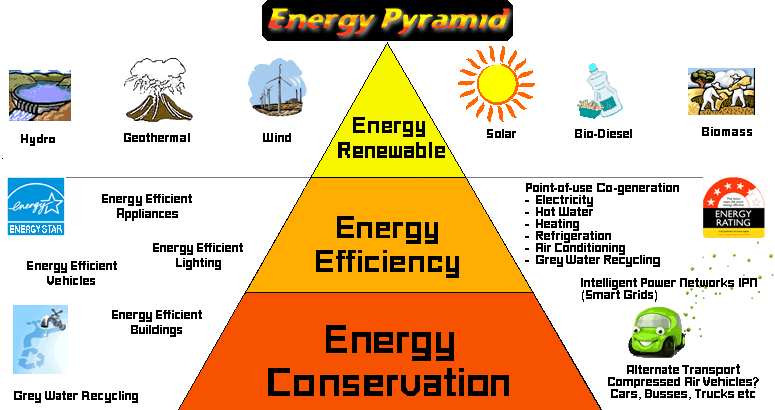
energy-efficiency-pyramid

Image found at: http://bit.ly/1bAHOiM

See on Scoop.itGreen Building Operations – Systems & Controls, Maintenance & Commissioning

As much as such improvements can provide positive financial returns to utility customers, the utilities themselves face some very real financial barriers to offering customer energy efficiency programs.

Duane Tilden‘s insight:

>The inherent conflict between a utility’s business objectives and the objectives of customer energy efficiency programs has long been recognized. Alternative regulatory mechanisms can be implemented that not only make utilities indifferent to the amount of energy they sell, but that also can provide positive earnings from their customer energy efficiency programs. Alternative regulatory mechanisms such as “decoupling,” (separating an utility’s revenues from the amount of energy it sells to customers) are in place in a growing number of states.

Since the premise of these alternative regulatory mechanisms is that they can protect utilities from suffering financial harm from energy efficiency programs, ACEEE examined the experiences of a selected group of utilities to find out how well such regulations have worked. The utilities we selected all have relatively large-scale energy efficiency programs that serve all types of customers. We interviewed utility program managers and executives as well as clean-energy advocates and regulators. We also examined the financial performance of these utilities as represented by their stock performance.

What we found is that these utilities all have performed well financially. We found no evidence to suggest that energy efficiency programs have had negative effects on shareholder returns. While addressing utility business concerns with energy efficiency programs is clearly important, doing so is really just one part of comprehensive policies and regulations that support customer energy efficiency programs. Other keys to successful energy efficiency programs include:

Strong commitments to energy efficiency by regulators and utilities,Ongoing collaboration among utilities and stakeholders,Shared sense of purpose and common goals, and Willingness to experiment and learn from experiences.

See on aceee.org