California Building Code Title 24 Will Revolutionize Efficiency Financing for Buildings

See on Scoop.itGreen Building Design – Architecture & Engineering

If successful, Title 24 will open the door to increased amounts of energy efficiency financing, expanded sources of capital and lower financing costs.

Duane Tilden‘s insight:

>California’s Title 24

Title 24 is California’s body of state building codes. These codes have been revised to move the building industry toward comprehensive building solutions with a goal of achieving Zero Net Energy (ZNE) residential and commercial buildings. In a ZNE building, the annual building’s energy consumption is equal to the building’s onsite renewable energy generation. California has set a goal for all new residential construction to be ZNE by 2020 and for all new commercial construction to be ZNE by 2030. Additionally, the repurposing and remodeling of existing buildings that are of a size-threshold defined by Title 24 will also have to comply with Title 24 revised codes.

Financing a “smart” Zero Net Energy building

The challenge of financing any energy efficiency or renewable energy project is in providing assurances to the source of capital that the project will actually generate sufficient cost savings to cover financing costs plus repayment of invested capital. The number one challenge for winning energy efficiency investments is the uncertainty in documenting bill savings results. Too often, the cost savings generated by an investment in energy efficiency is lost in higher electric bills as new loads are added and utilities raise rates.

Information technologies that monitor, control and financially operate a building through links to real time prices of grid-supplied electricity are the foundation for enabling Title 24 project financing. Smart ZNE buildings will operate to optimize the economics between reducing building demand, reducing energy consumption, on-site generation, use of on-site energy storage and purchases of grid electricity.

What will further enable the financing of ZNE buildings is the ability of enabling information technologies to “look forward” in time to proactively shape a building’s operation and grid purchases to financially support the building’s project financing. The technologies that can achieve these results have already been invented. What California is pursuing through its Title 24 code revisions is a massive economies of scale push for these technologies to drive their costs down and increase their ability to be financed.

The sales pie just got bigger…a lot bigger

Beginning in 2014, Title 24 will blow the sales doors open for smart building technologies, energy efficiency technologies, onsite energy storage and renewable energy technologies. Title 24 will create a new competitive landscape for architects, general contractors, sub-contractors and vendors based upon their ability to offer price competitive services and products that comply with Title 24 codes. The construction industry’s sales path for energy efficiency projects will no longer be anchored by utility incentives that support targeted energy efficiency upgrades like re-lamping a building with more efficient lights. The new sales path will be based upon cost-effectively delivering code compliance to achieve financeable building performance. New competitive advantages will be won by contractors and architects that offer building performance assurances to building owners and financing sources.<

See on www.triplepundit.com

Infographic – Energy Efficiency – Variable Speed Motors & Drives

See on Scoop.itGreen Building Operations – Systems & Controls, Maintenance & Commissioning

Infographic – Energy efficiency. A solution.

Duane Tilden‘s insight:

Industry has been reported to consume between 40 and 60% (UN Report) of the world’s electrical supply.  Motors are the largest consumer of the industrial electrical supply and the greatest opportunity for industry wide savings.

Many motors are over-sized and run inefficiently.  Variable speed drives can significantly reduce industrial operating costs, with attractive payback period and reductions in energy consumption by up to 50% or more.

See on www.abb.com

The 10 Most Energy-Efficient U.S. States: The Forgotten ‘Fifth Fuel’

See on Scoop.itGreen & Sustainable News

Access to energy in the U.S. — and the effects of generating it — are a national concern.

Duane Tilden‘s insight:

>The Forgotten ‘Fifth Fuel’

Access to energy in the U.S. — and the effects of generating it — are a national concern. Debates persist over the most cost-effective and environmentally friendly mix of nuclear energy, coal, gas and liquid hydrocarbons and renewable sources.

Too often left out of these discussions is the so-called fifth fuel: energy efficiency. States have driven benefits for consumers and the environment with policies that both reduce energy use and encourage economic growth.

The American Council for an Energy-Efficient Economy (ACEEE) yesterday issued its annual scorecard for each state based on multiple factors, including reductions in greenhouse gas, energy codes for buildings and switching to cleaner fuels.<

See on www.bloomberg.com

How Real Estate Energy Managers Can Use Big Data to Schedule Building Energy Retrofits

See on Scoop.itGreen Building Operations – Systems & Controls, Maintenance & Commissioning

Big Data remains a fairly nebulous concept for many real estate professionals, including those who stand to gain tremendously from it right now: real estate energy managers.

Duane Tilden‘s insight:

>To effectively time energy retrofit measures, energy managers can first develop those measures. New energy analytical tools such as FirstFuel identify and develop measures, and even estimate a range for capital cost. It does this analysis remotely over the course of a day just by analyzing hourly electricity data (which is sometimes also stored by the utility); no time-intensive on-site energy audit is required. Another new tool is Retroficiency, which provides a high-level look at energy performance improvement potential using the same interval data and, with minimal additional data from the IWMS, can further develop retrofit measures to investment-grade level.

After identifying energy-retrofit measures for the portfolio using remote energy analysis tools or more standard on-site energy analysis, energy managers can create a new retrofit measures database in the IWMS. Having this new database on hand enables managers to integrate energy retrofit opportunities with space management, maintenance and capital upgrade needs, and potentially other real estate issues. Such integration drives down the incremental cost of an energy retrofit, which is the gross cost minus the avoided cost of otherwise required capital or space upgrades.<

See on blog.rmi.org

Federal Energy Management Program: Online Training – Live & On-Demand – CEU’s

See on Scoop.itGreen & Sustainable News

FEMP trains Federal agency managers about the latest energy requirements, best practices, and technologies through eTraining Courses, First Thursday Seminars, and webinars.

See on apps1.eere.energy.gov

Clean Energy rebranded by DOE to Combined Heat and Power (CHP)

See on Scoop.itGreen Energy Technologies & Development

In a move that had been in the works for a while, the U.S. Department of Energy recently announced that its Clean Energy Application Centers have been rebranded as CHP Technical Assistance Partnerships, or CHP TAPs.

Duane Tilden‘s insight:

>The CHP TAPs maintain the same regional offices that existed under the former Clean Energy Application Centers:

  1. Pacific (California, Nevada);
  2. Southwest (Arizona, Colorado, New Mexico, Oklahoma, Texas, Utah, Wyoming);
  3. Northwest (Idaho, Montana, Oregon, Washington);
  4. Midwest (Illinois, Indiana, Iowa, Kansas, Michigan, Minnesota, Missouri, Nebraska, North Dakota, Ohio, South Dakota);
  5. Southeast (Alabama, Arkansas, Florida, Georgia, Kentucky, Louisiana, Mississippi, North Carolina, South Carolina, Tennessee);
  6. Mid-Atlantic (Delaware, Maryland, New Jersey, Pennsylvania, Virginia, West Virginia); and
  7. Northeast (Connecticut, Maine, Massachusetts, New Hampshire, New York, Rhode Island, Vermont).

With the new energy in these programs, now is the time to take advantage of the expertise offered by the Department of Energy and its CHP TAPs. Industrial users, municipalities, hospitals, college campuses and other large users of energy need to review and understand the significant benefits of CHP, district energy and waste heat capture technologies.<

See on www.natlawreview.com

US GSA Recognizes two 3rd-party Green Building Certification Systems

See on Scoop.itGreen Building Design – Architecture & Engineering
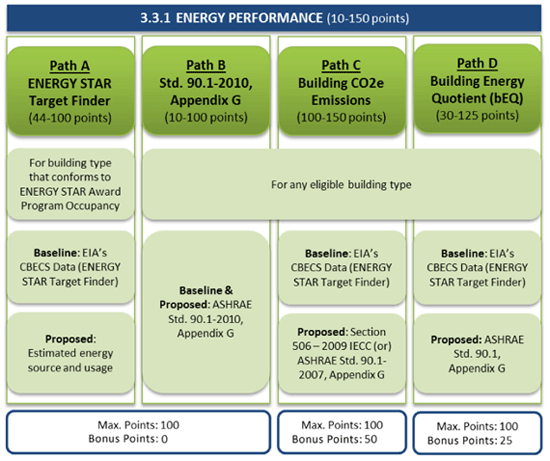
Green-Globes-NC-Building-Energy-Performance-Paths-chart

LEED and Green Globes approved as third party certification programs for federal facilities.

Duane Tilden‘s insight:

>In its recommendation to DOE, GSA recommended the Green Building Initiative’s Green Globes 2010 and the U.S. Green Building Council’s Leadership in Energy and Environmental Design (LEED) 2009 as the third party certification systems that the federal government can use to gauge performance in its construction and renovation projects. Other certification systems were not selected because they did not align with the government’s requirements. Additionally, under this recommendation, GSA will conduct more regular reviews in order to keep up with the latest green building tools that the market has to offer.

Third party certification systems like LEED and Green Globes help in measuring reduction targets for water, energy, and greenhouse gas emissions against industry standards. Agencies can use one of the two certification systems that best meet their building portfolios, which range from office buildings, to laboratories, to hospitals, to airplane hangars.

Federal construction and modernization projects must adhere to the government’s own green building requirements by law and executive orders. No one certification system meets all of the federal government’s green building requirements. Green building certification systems are just one tool that GSA uses to cut costs and meet sustainability and economic performance goals.<

See on www.todaysfacilitymanager.com

GBI’s Green Globes Recognized by Portland’s GSA as Equivalent to LEED for Green Building

See on Scoop.itGreen Building Design – Architecture & Engineering

PORTLAND, OR–(Marketwired – Oct 29, 2013) – The Green Building Initiative (GBI) applauds the General Services Administration on its recognition of Green Globes® alongside the U.S.

Duane Tilden‘s insight:

>GBI’s growth in the market is due to its commitment to the practicality of its tools for use by building owners, designers, and facility managers as well as its commitment to open, consensus-based review of its technical criteria. In 2010, GBI was recognized for developing Green Globes for New Construction as the first ever American National Standard for a commercial building rating system. As it continues to improve its rating systems based on changes in the market, GBI remains committed to using the American National Standards Institute (ANSI) approved consensus procedures.

“GBI is the only commercial building rating system developer to vet its technical criteria through the ANSI process,” stated GBI Chairman Tonjes. “This helps to ensure that GBI’s rating systems provide the opportunity to evaluate the widest range of buildings using an open, science-based approach to building performance.”

ANSI/GBI 01-2010, also known as Green Globes for New Construction, is due for revision before the end of 2015 based on ANSI periodic maintenance requirements. According to Tonjes, GBI’s ANSI-based rating system review process will begin before the end of this year with the filing of required documents followed by reformation of the technical review committee.

GBI’s tools have a significant focus on both the reduction and efficient use of energy and water in buildings. These, along with other criteria, help reduce building operating costs and their overall impact on the environment.

“Since 2005, the Green Globes product line has evolved to include several updated and expanded tools,” stated Erin Shaffer, vice president of federal outreach at GBI.<

See on www.marketwired.com

Manufacturer’s Energy Efficient Heat Recovery Unit Runs High in Energy Awards

See on Scoop.itGreen Building Design – Architecture & Engineering

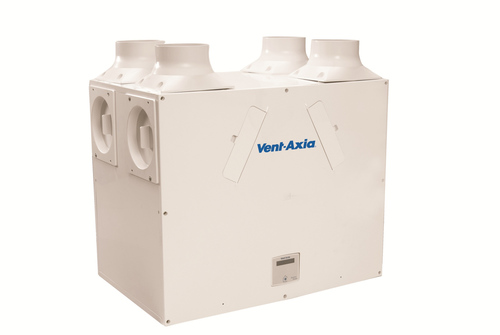
Vent-Axia has made the final shortlist in the prestigious Energy Awards 2013, which recognise and reward companies leading the way in reducing carbon emissions. Vent-Axia’s Lo-Carbon Kinetic Plus E…

Duane Tilden‘s insight:

>Consuming as little as 20W, the Kinetic Plus E only costs around £20 a year to run, offering 94% thermal efficiency and potentially recovering 10 or 20 times more energy than it costs to operate. This offers homeowners an attractive cost saving as we enter the winter months and rising fuel costs.<

See on kirhammond.wordpress.com

2015 IECC energy code raises requirements for efficiency, lighting controls, advanced HVAC in existing buildings

See on Scoop.itGreen Building Design – Architecture & Engineering

By Brianna Crandall, October 23, 2013—Hearings to finalize the 2015 International Energy Conservation Code (IECC) wrapped up in Atlantic City recently with big wins for higher efficiency requirements in existing buildings, controls for lighting and daylighting hardware and HVAC equipment specifications, according to a news release from the New Buildings Institute (NBI),

Duane Tilden‘s insight:

>The IECC is reviewed and updated every three years and serves as the model energy code for states and local jurisdictions across the country. The last version is the 2012 IECC.

In the United States, buildings account for about 40% of the energy consumed and 38% of all CO2 emissions, according to the U.S. Green Building Council. Cost-effective measures that cut the energy used by buildings represent a critical strategy to help building owners save money and curb the impacts of climate change, notes NBI.

“The updates related to existing and historic buildings clarify and further extend the code’s impact on the current building stock and will mean large energy savings growing over time,” said Jim Edelson, NBI senior manager of codes and policy. “Taken together, the approved code changes represent the most significant code revisions for energy consumption of existing buildings since the 1970s.”<

See on www.fmlink.com