IBM Uses Hot Water To Cool Supercomputer, Saves Energy by 40%

See on Scoop.itGreen Building Design – Architecture & Engineering

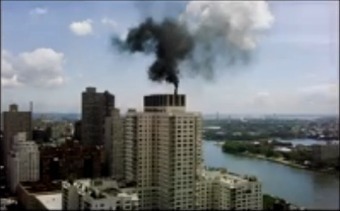
IBM, in collaboration with the Leibniz Supercomputer Center in Munich, is using hot water to its SuperMUC supercomputer. This is not new for IBM. It

Duane Tilden‘s insight:

>The system, called LRZ “SuperMUC”, is based on an IBM System x iDataPlex Direct Water Cooled dx360 M4 server. It is said to feature 150,000 cores and provides peak performance of up to three petaflops. In layman’s language it could be described as something equivalent of the processing power of 110,000 personal computers.

IBM claims that the technique needs 40% less energy to cool this machinery as compared to the other air-cooling systems. The heat is then used for the heating systems of the Leibniz Supercomputing Center campus. This accounts for an annual savings of $1.25 million on their heating bills.<

See on www.greenpacks.org
Scientists Adding Color to Solar Panels

See on Scoop.itGreen Building Design – Architecture & Engineering

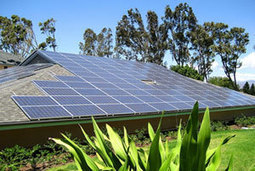
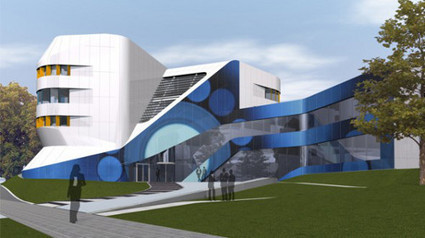
If you have noticed the design and layout of solar panels around, you would have thought a minute or two about its aesthetics. Though not too bad, the dark

Duane Tilden‘s insight:

>The Institute is developing a SIS (semiconductor-insulator-semiconductor) variety solar panel. The package consists of a silicon substrate which absorbs light and converts it into electricity.[…]

The change in color does not make solar cells less efficient. The cell’s working is also not affected by the thickness of the conductive oxide layer. The SIS cell has the same simulated efficiency of around 20%.

The technology might later on use a type of inkjet printing that deposits the oxide layer with more flexibility, which would allow complex designs too. With this, solar cells could turn out to be part of beautiful architectural designs in future.<

See on www.greenpacks.org

Fire Industry Protocol – are you in the loop? – BSEE – Building Services and Environmental Engineer

See on Scoop.itGreen Building Operations – Systems & Controls, Maintenance & Commissioning

Three decades ago, the protocol debate in building automation systems (BAS) did not exist. Every element of a BAS, from the sensors to the control devices…

See on www.bsee.co.uk

Sustainable Energy and Federal Agencies | The Energy Collective

See on Scoop.itGreen Energy Technologies & Development

In his speech on Tuesday laying out a national climate action plan, President Obama called on federal agencies to lead by example in taking actions to reduce their emissions of greenhouse gases.

Duane Tilden‘s insight:

>Faced with declining budgets, federal agencies are looking for innovative ways to cut costs while meeting a growing list of sustainability mandates.  Expanding the use of information and communication technologies (ICT) – metering and energy management systems for buildings, GPS-based tools for fleets, teleconferencing, e-training, teleworking, and cloud-based data storage – offer agencies new ways to reduce their energy use, cut greenhouse gas emissions and enhance productivity.

We estimate widespread deployment of  ICT could help reduce greenhouse gas emissions by 12 percent, roughly half the amount called for under a 2009 executive order, and could save an estimated $5 billion in energy costs through 2020. […]

Using 2008 as a baseline, agencies have a goal of reducing direct emissions (Scope1 and 2) 28 percent and indirect emissions (Scope 3) 13 percent by 2020. With reductions of 7 percent through 2011, federal agencies are making good progress.  By expanding use of ICT, the federal government could go much further. […]<

See on theenergycollective.com

Learn How New York City Is Cleaning the Air With Just One Change | Sustainable Products and Practices

See on Scoop.itGreen & Sustainable News

Want clean air? Sometimes it takes just a few simple changes. New York City, in partnership with the Environmental Defense Fund, has a great story to tell about

Duane Tilden‘s insight:

>… Just recently, New York City and EDF through the city’s Clean Heat Program converted over 1,200 boilers to the cleanest available fuels reducing over 150 tons of soot pollution, or particulate matter (PM2.5), from the air.<

See on thegreenregister.com

Green Building Taking Off in Hospitality, Retail Industries

See on Scoop.itGreen Building Design – Architecture & Engineering

Green building is taking off in the hospitality and retail industries, […]  This year, retail owners that are building green for over half of their projects rose to 38%, up from just 18% in 2011. That’s expected to rise to 52% by 2015.

Duane Tilden‘s insight:

>”Green building has taken such hold in the industry that even sectors with unique challenges, such as retail and hospitality, are making stronger investments,” says Harvey Bernstein, vice president at McGraw Hill Construction. “Clearly the benefits that owners are reporting are key reasons for their green building investments, and as they find better ways to measure those impacts and quantify the value to their sales velocity and to the well-being of their staff, customers and guests, we expect even more rapid engagement in green.”

While lower operating costs are the most frequently reported reason for going green (66% of retailers, 73% of hotels), other factors are also considered very important in their decision-making process:

Utility rebates – Protecting/enhancing brand – just as important as costs for hotels

Improving ROI  […]Energy efficiency is still a key goal, recycling and waste management are also critically important. A strong majority say they require green practices from suppliers, especially on waste handling (75%). <

See on www.sustainablebusiness.com

Innovative Empire State Building Program Saves Millions, Establishes New Energy Efficiency Model Nationwide

See on Scoop.itGreen Building Operations – Systems & Controls, Maintenance & Commissioning

/PRNewswire/ — The innovative energy efficiency program at the Empire State Building has exceeded guaranteed energy savings for the second year in a row, saving $2.3 million and providing a new model for building retrofits that is now being rolled…

Duane Tilden‘s insight:

>”The success from the Empire State Building retrofit project further demonstrates that thoughtfully applied energy-efficiency investments can deliver unparalleled returns through a combination of lower energy, lower operating costs, and increased building valuation,” said Iain Campbell, vice president, Global Energy and WorkPlace Solutions, Johnson Controls Building Efficiency.  “When implemented under a performance contract, the energy savings are guaranteed, ensuring a no-risk investment and a smart business decision.”

The retrofit has attracted new Empire State Building tenants over the past two years, including LinkedIn, Skanska, LF USA, Coty Inc., the Federal Deposit Insurance Corp., and Shutterstock.  These tenants sought space that reflected their sustainability values, provided more comfort for employees, and allowed them to monitor and control their energy use.

“The Empire State Building project has conclusively proven the business case for deep energy retrofits of any building,” said Raymond Quartararo, international director at Jones Lang LaSalle.  “We have consistently surpassed annual projected energy savings through a process that is very transparent, quantitatively intense and internationally approved.  The overwhelming majority of people want to do their part to reduce energy usage while delivering economic returns and occupying an environmentally responsible building.”<

See on www.sacbee.com

Go geothermal to maximize energy efficiency

See on Scoop.itGreen Building Design – Architecture & Engineering

A huge leap in energy conservation, and undoubtedly the most innovative of all energy saving tactics has its origins in the earth itself

Duane Tilden‘s insight:

>This geothermal system provides a quiet environment with a consistent temperature throughout the house or building; efficiently comfortable in the winter, and cool in the summer. The heating or cooling mode can be changed with a simple switch on the indoor thermostat. With virtually no use of fossil fuel, costs for heating and cooling for a typical 4,000-square-foot home can run as low as $2 per day/$60 per month.<

See on www.milforddailynews.com

WPL Publishing Schedules LEED Green Associate Exam Preparation Webinar Series

See on Scoop.itGreen Building Design – Architecture & Engineering

(PRWEB) May 18, 2013 WPL Publishing soon will kick off a four-part webinar series to help people prepare for the Leadership in Energy and Environmental Design Green Associate (LEED GA) exam.

Duane Tilden‘s insight:

The series, which will begin June 4 and end June 25, is intended to bridge the gaps between other exam preparation resources, such as the U.S. Green Building Council’s (USGBC) “Green Building & LEED Core Concepts Guide” and “LEED Green Associate Study Guide.” To register for the four-part series, entitled “LEED Green Associate Exam Preparation,” visit http://tinyurl.com/crfdy5m.

Read more: http://www.digitaljournal.com/pr/1254975#ixzz2TgoQsny8

See on www.digitaljournal.com

Fluorescent Dye Boosts Solar Cell Efficiency by a Whopping 38 Percent

See on Scoop.itGreen Energy Technologies & Development

Squaraine dye helps to improve light absorption, recycle electron and enhance the light to energy conversion in solar cells, increasing efficiency by a whopping 38 percent.

Duane Tilden‘s insight:

>The Yale researchers relied on Förster resonance energy transfer (FRET), a well-known biochemical mechanism, to achieve this radical new energy conversion rate.

“In this type of solar cell—FRET-based heterojunction polymer solar cells—extra energy is able to migrate from one molecule to another over long distances. The dye, which is highly absorbent in the near-infrared region, both broadens the spectral absorption of solar cells and enhances electricity transmission,” Physorg explains.<

See on inhabitat.com