Drilling Companies Cheating Landowners and Government Out of Royalty Payments

See on Scoop.itGreen & Sustainable News

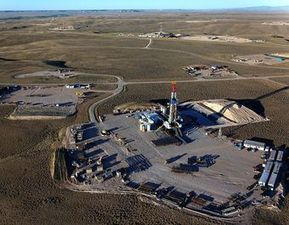
Don Feusner ran dairy cattle on his 370-acre slice of northern Pennsylvania until he could no longer turn a profit by farming.

Duane Tilden‘s insight:

>Like every landowner who signs a lease agreement to allow a drilling company to take resources off his land, Feusner is owed a cut of what is produced, called a royalty.

In 1982, in a landmark effort to keep people from being fleeced by the oil industry, the federal government passed a law establishing that royalty payments to landowners would be no less than 12.5 percent of the oil and gas sales from their leases.

From Pennsylvania to North Dakota, a powerful argument for allowing extensive new drilling has been that royalty payments would enrich local landowners, lifting the economies of heartland and rural America. The boom was also supposed to fill the government’s coffers, since roughly 30 percent of the nation’s drilling takes place on federal land.

Over the last decade, an untold number of leases were signed, and hundreds of thousands of wells have been sunk into new energy deposits across the country.

But manipulation of costs and other data by oil companies is keeping billions of dollars in royalties out of the hands of private and government landholders, an investigation by ProPublica has found.

An analysis of lease agreements, government documents and thousands of pages of court records shows that such underpayments are widespread. Thousands of landowners like Feusner are receiving far less than they expected based on the sales value of gas or oil produced on their property. In some cases, they are being paid virtually nothing at all.

In many cases, lawyers and auditors who specialize in production accounting tell ProPublica energy companies are using complex accounting and business arrangements to skim profits off the sale of resources and increase the expenses charged to landowners.<

See on insideclimatenews.org

UK Energy Minister defends fracking comments

See on Scoop.itGreen & Sustainable News

Energy minister Michael Fallon defends comments about fracking, in which he appeared to suggest the process would affect those living near drilling sites.

Duane Tilden‘s insight:

>Mr Fallon said fracking would only be allowed if “absolutely safe”.

In an exchange with the BBC Mr Fallon confirmed he had made the remarks but said the newspaper report had “completely misconstrued a light hearted remark”.

He said “no fracking will be allowed in the Weald unless it is absolutely safe and the environment is fully protected”.

[…]

But demonstrators from across the UK have gathered in the area saying they fear test drilling could lead to the search for shale gas and fracking at the site.

In a separate development, Cuadrilla chief executive Francis Egan revealed he had received an anonymous email saying the company would receive “pipe bombs delivered by express mail to its premises” unless the company ceased its activities in the UK.

“Fracking kills and so do we,” the message said.<

See on www.bbc.co.uk

Water in Crisis: A New Paradigm in Power Generation

See on Scoop.itGreen & Sustainable News

The US can affordably and sustainably meet its energy and water needs by pursuing a “renewables-and-efficiency” path, according to a new EW3 report.

Duane Tilden‘s insight:

>The current system of power generation in the U.S., according to EW3, “clearly cannot meet our needs in a future of growing demand for electricity, worsening strains on water resources, and an urgent need to mitigate climate change.”

What’s urgently needed, they assert, is a system of power generation that is much more resilient – one that is not only much less dependent on water, but one that can operate sustainably in a warming climate and, at the same time, help mitigate climate change. With the release of its second report, EW3 advocates making decisions today that puts U.S. society firmly on such a path. […]

EW3′s research team constructed two long-term scenarios in order to better understand and analyze the implications of decisions made today regarding electricity production in the U.S. in terms of water usage and greenhouse gas emissions.

Pursuing a business-as-usual path that would see natural gas combustion growing to account for 60 percent of U.S. power generation in coming decades “would fail to reduce carbon emissions, and would not tap opportunities to safeguard water,” EW3′s research team found. In sharp contrast, both water usage and carbon emissions in the power sector would drop much further, and faster, under a “renewables-and-efficiency” scenario.

Under the renewables-and-efficiency scenario, both water withdrawals and consumption by the power sector would be less than half of today’s levels by 2030. By 2050, water withdrawals would be 97 percent below today’s levels while water consumption would drop 85 percent – nearly 80 percent below the business-as-usual scenario.<

See on www.triplepundit.com

China’s Coal-Fired Economy Dying of Thirst as Mines Lack Water

See on Scoop.itGreen & Sustainable News

Coal industries and power stations use as much as 17 percent of China’s water, and almost all of the collieries are in the vast energy basin in the north that is also one of the country’s driest regions.

Duane Tilden‘s insight:

>About half of China’s rivers have dried up since 1990 and those that remain are mostly contaminated. Without enough water, coal can’t be mined, new power stations can’t run and the economy can’t grow. At least 80 percent of the nation’s coal comes from regions where the United Nations says water supplies are either “stressed” or in “absolute scarcity.” […]

Geneva-based Pictet Asset Management’s $3.17 billion global water fund doubled its exposure to stocks offering water services in China to 10 percent since 2007.  […]

Beijing Enterprises has risen 55 percent this year to HK$3.10 and Deutsche Bank sees it reaching HK$3.20 within a year. China Everbright is up 81 percent to HK$7.10 and JPMorgan Chase & Co. estimates it will reach HK$7.60 by mid-October.

Severe Pollution  “The best opportunity is in industrial water re-use, and for the mining industry, it is of the utmost urgency,” said Junwei Hafner-Cai, a manager of RobecoSAM’s Sustainable Water fund. “Water that has been released from the coal mines and from petrochemical plants has resulted in severe pollution on top of the water scarcity.”

A shortage of coal because of the lack of water to mine and process the fuel may force China to increase imports, pushing up world prices, according to Debra Tan, director at research firm China Water Risk in Hong Kong. China, which mines 45 percent of the world’s coal, may adopt an aggressive “coal-mine grab” to secure supplies, said Tan.<

See on www.moneynews.com

Water Stress Threatens Future Energy Production

See on Scoop.itGreen Building Design – Architecture & Engineering

When we flip on a light, we rarely think about water.  But electricity generation is the biggest user of water in the United States.  Thermoelectric power plants alone use more than 200 billion gallons of water a day – about 49 percent of the…

Duane Tilden‘s insight:

>Large quantities of water are needed as well for the production, refining and transport of the fuels that light and heat our homes and buildings, and run our buses and cars.  Every gallon of gasoline at the pump takes about 13 gallons of water to make.

And of course hydroelectric energy requires water to drive the turbines that generate the power.  For every one-foot drop in the level of Lake Mead on the Colorado River, Hoover Dam loses 5-6 megawatts of generating capacity – enough to supply electricity to about 5,000 homes.

In short, energy production is deeply dependent on the availability of water.  And, as a report released last week by the U.S. Department of Energy (DOE) makes clear, as climate change brings hotter temperatures, more widespread and severe droughts, and lower river and lake levels, the nation’s energy supply is becoming more vulnerable. […]

One particularly interesting figure in the report compares the water requirements of seven different types of electric power facilities – nuclear, coal, biopower, natural gas combined-cycle, concentrated solar, photovoltaic solar and wind.  The last two come out as by far the most water-conserving electricity sources.  In contrast to the 20,000-60,000 gallons per megawatt-hour needed for nuclear and coal plants with “once-through” cooling systems, PV solar and wind require only negligible quantities.<

See on newswatch.nationalgeographic.com

Nuclear Plant Closures Forecast for New York and Chicago regions

See on Scoop.itGreen & Sustainable News

Nuclear reactors that light New York City and Chicago with carbon-free electricity face possible extinction before they can reap the benefits of President Barack Obama’s proposed climate rules.

Duane Tilden‘s insight:

>A slump in power prices, increasing maintenance expense as plants age and stricter safety regulations following Japan’s 2011 Fukushima nuclear disaster may prompt the industry to retire as many as five plants before the end of the decade, according to research firm UBS Securities LLC. That would eliminate enough generating capacity to power 2.4 million U.S. homes. […]

Reactors such as Indian Point are combating critics that want to shut them down over safety concerns. New York, for example, has solicited bids to replace the plant with natural gas-fired generators and authorized a transmission line to deliver hydropower from Quebec.

Retired nuclear units would likely be replaced by gas plants built by operators such as NRG Energy Inc. (NRG), which would have the result of increasing overall greenhouse gas emissions. That may complicate Obama’s longstanding goal of slashing U.S. emissions 17 percent from 2005 levels by 2020, and echo challenges faced by countries such as Japan and Germany as they phase out nuclear power, said Chris Gadomski, an analyst for Bloomberg New Energy Finance.<

See on www.bloomberg.com

Renewables & Energy Efficiency Can Cut Power Plants’ Water Use 97% by 2050

wupt-plantscherer-Coal-Fired-plantSee on Scoop.itGreen & Sustainable News

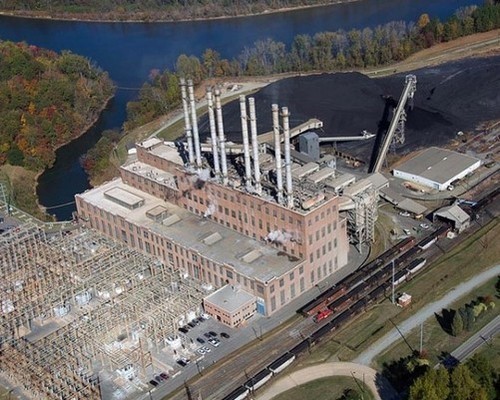
Investing in renewables and energy efficiency could reduce power plants’ water withdrawals by 97 percent from current levels by 2050 and cut carbon emissions 90 percent from current levels, according to a study by the Union of Concerned Scientists…

Duane Tilden‘s insight:

>The report warns that a “business-as-usual” approach would keep emissions within 5 percent of current levels and water withdrawals would not drop significantly until after 2030. And while utilities’ ongoing shift to natural gas would decrease water use in the coming decades, the study says its ongoing requirements could still harm water-strained areas. This shift to natural gas also would do little to lower the power sector’s carbon emissions.

More than 40 percent of US freshwater withdrawals are used for power plant cooling, the report says. These plants also lose several billion gallons of freshwater every day through evaporation.

Further, increasing demand and drought are putting a greater strain on water resources. Low water levels and high water temperatures can cause power plants to cut their electricity output in order to avoid overheating or harming local water bodies. Such energy and water collisions can leave customers with little or no electricity or with added costs because their electric supplier has to purchase power from elsewhere, as occurred during the past two summers.<

See on www.environmentalleader.com

Colorado’s oil and gas boom is polluting the state’s air

See on Scoop.itGreen & Sustainable News

Drillers pump 600 tons of air pollution over Colorado every day, and three-quarters of the state’s air pollution enforcement cases are linked to drilling.

Duane Tilden‘s insight:

>The 50,000 oil and gas wells in the state are collectively pumping hundreds of tons of pollution into the air every day, making the drilling industry the state’s largest source of airborne volatile organic compounds and third-largest source of nitrogen oxides. That’s according to a report in The Denver Post: […]<

See on grist.org

The Amazing Energy Race

See on Scoop.itGreen & Sustainable News

The United States is falling behind. To catch up, we need to reorder our priorities, find cleaner and smarter fuels and develop new technologies.

Duane Tilden‘s insight:

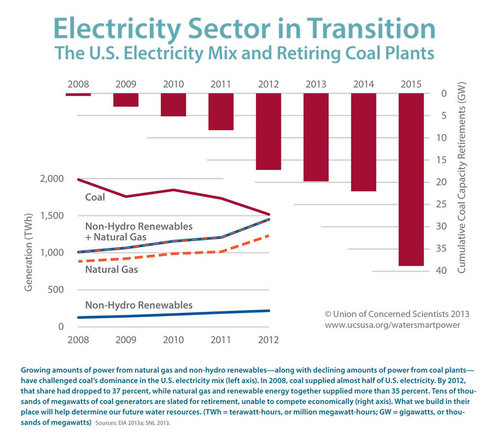
>“In reducing coal’s historic dominance, the president is formalizing a market trend that was already taking shape,” remarked Andy Karsner, who was an assistant secretary of energy in the last Bush administration. His bigger message, though, was “no matter where you find yourself on the political spectrum, it’s useful for the nation to discuss, debate and consider a strategy for climate change. The consequences of inaction are potentially greater than all the other noise out there.”<

See on www.nytimes.com

EPA tells Ohio to stop keeping fracking secrets from first responders

See on Scoop.itGreen & Sustainable News

Ohio lets energy companies keep emergency-management officials in the dark about the fracking chemicals they use. The EPA says that has to stop.

See on grist.org