Ski resorts and climate change

Cam Walker's avatarMountain Journal

As climate change bears down on us, winters become ever more erratic. This impacts on the economic viability of ski resorts and the jobs of people who rely on them.  In their quest to remain commercially viable, most ski resorts are adopting the double edged strategy of claiming a space in the ‘green season’ tourism market while also investing in snow making technology. A small number are also showing leadership in terms of grappling with the actual problem of climate change. Sadly, no Australian resorts are in this category.

View original post 942 more words

Energy Storage Compared to Conventional Resources Using LCOE Analysis

In its first analysis of the levelized cost of storage, Lazard finds some promising economic trends.

Sourced through Scoop.it from: www.greentechmedia.com

“[…] “Although in its formative stages, the energy storage industry appears to be at an inflection point, much like that experienced by the renewable energy industry around the time we created the LCOE study eight years ago,” said George Bilicic, the head of Lazard’s energy and infrastructure group, in a release about the report.

Lazard modeled a bunch of different use cases for storage in front of the meter (replacing peaker plants, grid balancing, and equipment upgrade deferrals) and behind the meter (demand charge reduction, microgrid support, solar integration). It also modeled eight different technologies, ranging from compressed-air energy storage to lithium-ion batteries.

“As a first iteration, Lazard has captured the complexity of valuating storage costs pretty well. Unlike with solar or other generation technologies, storage cost analysis needs to account for not just different technologies, but also location and application, essentially creating a three-dimensional grid,” said Ravi Manghani, GTM Research’s senior storage analyst.

In select cases, assuming best-case capital costs and performance, a handful of storage technologies rival conventional alternatives on an unsubsidized basis in front of the meter. Using lithium-ion batteries for frequency regulation is one example. Deploying pumped hydro to integrate renewables into the transmission system is another.  […]

See on Scoop.itGreen Energy Technologies & Development

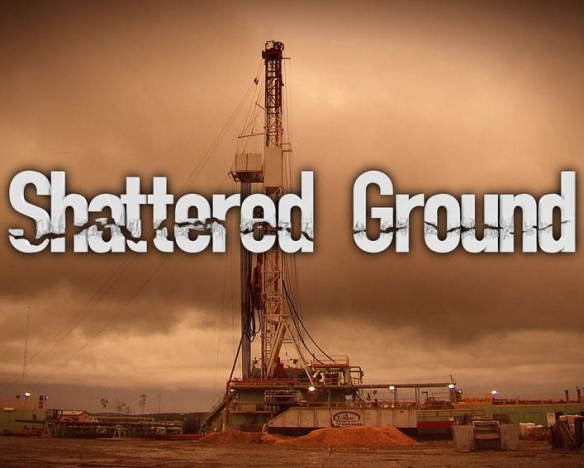
Documentary on Fracking – Shattered Ground Hosted by David Suzuki

The Nature of Things – Shattered Ground

fracking documentary

Sourced through Scoop.it from: www.youtube.com

ShatteredGround

image credit:  (2)

“[…] “Fracking”, or Hydraulic Fracturing, is a new technology that has opened up immense resources of natural gas buried in deep shale beds. The process involves injection of highly-pressurized water, sand and chemicals to shatter underground layers of shale and extract previously inaccessible natural gas.
But the process and its sudden spread across the North American landscape, has become an incredibly divisive issue, ripping apart communities and even families. The backlash to the gas industry is unprecedented, with some countries, Canadian provinces and American states adopting fracking bans and moratoriums. […] “(1)

(1) http://www.cbc.ca/natureofthings/episodes/shattered-ground 

“[…] In Dimock, Pennsylvania, residents found their water contaminated after fracking began nearby.  As it turns out, the cement casings that were meant to prevent the water from escaping had failed, and now all of their water was contaminated.  One man described his daughter’s experience showering in that water:

“My daughter would get in the shower in the morning, and she would have to get out and lay on the floor because she thought she was going to pass out from the methane.  She had eczema on the insides of her arms, hives up and down her body, and she said, ‘I want to have kids some day’.  You know, my job is to protect my kids, how do I protect them from this?” […] “(2)

(2) http://aftw.net/2015/08/31/shattered-ground-review/

See on Scoop.itGreen Energy Technologies & Development

Alberta Air Pollution Levels High in Sulphur and Nitrogen Reports Environment Canada

Environment Canada recently released images showing air emissions modelling results across Alberta. These images are a reminder of how a small number of large sources mix together to pollute the air Albertans breathe, resulting in increased risks to human health.

Sourced through Scoop.it from: www.pembina.org

“[…] SO2 and NOx emissions impact human health not only because they can cause direct harm, but also because they can react in the atmosphere to create fine particulate matter (PM2.5). The Alberta government has found that NOx and SO2 are the main causes of past incidents where PM2.5­ concentrations have exceeded Canada’s air quality standards.

PM2.5 can cause asthma attacks, hospitalizations and even premature death, as we’ve summarized before. It’s a particular concern in Alberta, where PM2.5 is putting us on track to have the worst air quality in Canada, and Edmonton’s pollution levels are exceeding Toronto’s.

These images underscore the cumulative impacts of a small number of very large industrial emissions sources — particularly coal plants, the oilsands and refineries — in addition to distributed industrial activities such as oil and gas operations. Those may all be separate sources, but their emissions end up in the same air. Pollutants from these different sources mix together in the air Albertans breathe, resulting in increased risks to human health. […]

Alberta is unique in the western half of North America for its mid- and high-level readings. The province more closely resembles the densely populated mid-Atlantic region of the United States, or the coal-burning Midwest, than our western neighbours.

Problem spots near coal plants, refineries and the oilsands

Another image shows how SO2 and NOX that is released into the atmosphere returns to ground level, or “deposits.” The image reveals a clear concentration (the orange and red spots) of the two pollutants being deposited around both Edmonton and the oilsands in northeast Alberta.

Edmonton is sandwiched between three large coal-burning power plants, which are clustered near Wabamun Lake west of Edmonton, and refineries on the east side of the city.

The video that AEMERA posted shows modelled SO2 plumes from large emitters across British Columbia, Alberta and Saskatchewan. The three-dimensional plumes reflect SO2 concentrations of at least three parts per billion. How the plumes travel was modelled using real weather conditions from a four-week period in the fall of 2013.

The video visually represents where SO2 is generated, how it moves through the atmosphere and where it eventually lands. As SO2 deposits on the ground, the land surface in the video changes colour to indicate where higher depositions are modelled. Although the specifics will differ for other pollutants, the video is representative of how airborne pollutants generally are dispersed and deposited.

It’s not particularly surprising to see that SO2 pollution originates from oil and gas production, coal plants and the oilsands — Alberta’s three largest-emitting sectors, by far. But seeing how much of the province is affected by these plumes may come as a shock.

The video shows that major industrial emissions do not blow in the direction of the prevailing wind pattern. Rather, they shift directions and can be combined with pollutants emitted in different areas. This raises concerns about environmental evaluations for new industrial emitters, since those evaluations focus on a much smaller area around the polluter — and focus on prevailing winds — rather than these dynamic wind patterns.

The data used for the oilsands is from 2010, so it discounts the emissions growth in that region over the last five years. The data for the rest of the sources is from 2006. In terms of coal emissions, these images correspond closely to today’s reality: NOx and SO2 in 2014 are at nearly the same levels as in 2006. […]”


See on Scoop.itGreen & Sustainable News

In Supreme Court, a Battle Over Fracking and Citizens’ Rights

Jessica Ernst’s long fight to challenge legislation putting energy regulator above the law reaches top court.

Sourced through Scoop.it from: www.thetyee.ca

“[…] After years of legal wrangling, Jessica Ernst and Alberta’s powerful energy regulator finally squared off in the Supreme Court of Canada yesterday.

For almost two hours, all nine justices questioned lawyers from both sides in a case that will determine if legislation can grant government agencies blanket immunity from lawsuits based on the Charter of Rights and Freedoms.

At times the debate was so bogged down in legal jargon and little known cases that it felt as though the participants were holding a conversation in a foreign language. […]

Ernst alleges the Alberta Energy Regulator violated her rights by characterizing her as a “criminal threat” and barring all communication with her.

The claims are part of her multipronged lawsuit related to the regulation of fracking. She says fracking contaminated aquifers near her homestead near Rosebud, about 110 kilometres east of Calgary, and is seeking $33 million in damages. […]

The Supreme Court hearing dealt with Ernst’s allegation that the provincial energy regulator denied her the right to raise her concerns about groundwater contamination. She argues that the legislation shielding the regulator from citizen’s lawsuits should not bar charter claims.

Lawyers for Ernst, the BC Civil Liberties Association and the David Asper Centre for Constitutional Rights all argued that the Alberta Energy Regulator’s immunity clause undermined the spirit of Canada’s charter, which is designed to protect citizens from government abuses of power.

It is patently unfair to allow a government to violate a citizen’s basic freedoms and then deny them an appropriate remedy in the courts, especially when the charter itself grants that right, they argued. […]

Eight years ago, Ernst sued Alberta Environment, the Energy Resources Conservation Board (which has since become the Alberta Energy Regulator) and Encana, one of Canada’s largest unconventional gas drillers. She claimed her well water had been contaminated by fracking and government agencies had failed to investigate the problems.

But the regulator argued that it couldn’t be sued because it had an immunity clause that protected it from civil action.

After an Alberta Court of Appeal agreed, Ernst’s lawyers appealed the matter to the Supreme Court in 2014.

Initially three provincial governments and the federal government announced their intention to intervene in the case.

“But once they looked at the arguments, they withdrew,” said Murray Klippenstein, another of Ernst’s lawyers, after yesterday’s hearing.

“So there was no government here to support the argument of the [regulator],” added Klippenstein. “It kind of shows in a common sense sort of way how ridiculous the position is.”

The case made legal history, too. “This is the first time the Supreme Court has heard a case about human rights with an environmental context,” noted Lynda Collins, a professor of law at the University of Ottawa’s Centre for Environmental Law and Global Studies.

She said the case concerns the right of a citizen to pinpoint environmental wrongs, such as groundwater contamination, without being penalized by a regulatory body.

Whenever a regulator allegedly takes punitive measures against a citizen addressing key environmental issues in the public interest, “you have a serious allegation,” added Collins. […]

The case is being closely watched by Canada’s oil and gas industry. In 2014, Borden Ladner Gervais, Canada’s largest national full-service law firm, included the Ernst case in a top 10 list of important judicial decisions affecting the energy industry.

“The Ernst case has brought into focus the potential for regulator or provincial liability arising out of oil and gas operations…. If Ernst proceeds to trial, it will likely provide more guidance on the scope of the duty of care and the standard of care required by the province and the oil and gas operator to discharge their duties in the context of hydraulic fracturing.”

The fracking industry has been the subject of scores of lawsuits across North America. Landowners have sued over property damage and personal injury related to industry-caused earthquakes, air pollution and the contamination of groundwater.

In one major Texas case, a jury awarded one family $3 million. The verdict found that Aruba Petroleum “intentionally created a private nuisance” though its drilling, fracking and production activities at 21 gas wells near the Parrs’ Wise County home over a three-year period between 2008 and 2011. […]”

See on Scoop.itGreen & Sustainable News

Fox Creek Fracking Operations Stopped After Latest Earthquake

A hydraulic fracturing operation near Fox Creek, Alta., has been shut down after an earthquake hit the area Tuesday.

Sourced through Scoop.it from: www.cbc.ca

“[…] The magnitude 4.8 quake was reported at 11:27 a.m., says Alberta Energy Regulator, which ordered the shutdown of the Repsol Oil & Gas site 35 kilometres north of Fox Creek.

Carrie Rosa, spokeswoman for the regulator, says “the company has ceased operations … and they will not be allowed to resume operations until we have approved their plans.”

Rosa added the company is working with the energy regulator to ensure all environmental and safety rules are followed.

In a statement, Repsol confirmed the seismic event and said the company was conducting hydraulic fracturing operations at the time it happened. […]

Jeffrey Gu, associate professor of geophysics at the University of Alberta, said the area surrounding Fox Creek has been experiencing a proliferation of quakes lately.

He estimates in the last six months there have been hundreds of quakes in the area ranging in magnitude from 2.0 to 3.0.

But it is not considered a risky area with a such low population, said Gu, who added that Fox Creek and the surrounding region is carefully monitored by the energy regulator.

“There are faults in this area that have been mapped, have been reported in that area, but nothing of significance,” he said.

“It’s a relatively safe area without major, major faults.”

Still, Gu said, there were two fairly large quakes in the area in January 2015, one of which had a magnitude of 4.4.

He wasn’t able to confirm that they were caused by fracking, but said it is “highly probable.”

The energy regulator said at the time that the 4.4 magnitude quake was likely caused by hydraulic fracturing. […]

See on Scoop.itGreen & Sustainable News

Water Scarcity Drives Global Desalination Requirements, Predicted to Double by 2020

The global desalination capacity will double by 2020, according to a new analysis by Frost & Sullivan.

Sourced through Scoop.it from: www.processingmagazine.com

“[…]  rapid industrialization and urbanization have increased water scarcity in many parts of the world. As drought conditions intensify, desalination is expected to evolve into a long-term solution rather than a temporary fix.

Technology providers can capitalize on this immense potential by developing cost-effective and sustainable solutions, the consulting firm said.

The report states that the global desalination market earned revenues of $11.66 billion in 2015, and this figure is estimated to reach $19.08 billion in 2019. More than 17,000 desalination plants are currently in operation in 150 countries worldwide, a capacity that is predicted to double by the end of the decade.

“Environmentally conscious countries in Europe and the Americas are hesitant to practice desalination owing to its harsh effects on sea water,” noted Vandhana Ravi, independent consultant for Frost & Sullivan’s Environment and Building Technologies unit. “Eco-friendly desalination systems that do not use chemicals will be well-received among municipalities in these regions.”

The report highlights several factors that are holding back adoption in some parts of the world, including lack of regulatory support and the high cost of desalination. The thermal desalination process also releases significant volumes of highly salty liquid brine back into water bodies, impacting the environment. Brine disposal will remain a key challenge until a technology upgrade resolves the issue. […]”

See on Scoop.itGreen Energy Technologies & Development

Solar Array Added to Power Agricultural District’s Irrigation Systems

Tranquillity Irrigation District, which serves the water needs of the 10,750-acre agricultural community of Tranquillity in Fresno County, today announces plans to build a 1.8 megawatt ground-mounted solar tracker system that will provide enough electricity to meet 50 percent of the agency’s energy demand. Borrego Solar Systems Inc., a leading designer, developer, installer and O&M …

Sourced through Scoop.it from: www.borregosolar.com

“[…] Tranquillity will save a net $10 million over the 25-year term of its power purchase agreement (PPA)—a financing mechanism that enables customers to invest in solar without any upfront costs. The District will buy the energy produced from the system owner at a set price over the PPA agreement term.

“Solar was clearly the best use for our site, especially considering the savings we’ll realize for our residents through the PPA – it’s truly a win-win,” said Danny Wade, general manager of Tranquillity Irrigation District. “The reality is that we will continue to be plagued with limited water resources for the foreseeable future, and solar is a sustainable solution to help us deal with the resulting energy demand and cost increase due to the drought. Any water district in the state should be investigating whether solar works for them.”

Given the ongoing drought in California, the District has needed to use its wells more than it had pre-drought. As a result, more electricity is needed to power the pumps bringing water toward the surface. The District is trying to provide water to its landowners and the community of Tranquillity as efficiently and economically as it can. For example, the District recently received a $5 million grant from the California State Department of Health to build a necessary water treatment facility. The solar tracker system will be placed adjacent to the treatment facility on land already owned by the District. […]

In its first year of operation, the array will generate an estimated 3.3 million kilowatt-hours of electricity— enough to power approximately 450 homes. The installation will offset more than 760 metric tons of CO2 equivalents annually, which is the equivalent of taking 162 cars off the road for a year or the amount of carbon sequestered by 630 acres of mature U.S. forests each year.

ABOUT TRANQUILLITY IRRIGATION DISTRICT

Tranquillity Irrigation District was formed January 22, 1918, as a public agency designed to serve the local community with water supplies. It is the second oldest such agency in Fresno County. A Board of Directors elected from the community at-large governs the District. The District is approximately 10,750 acres in size and is located in the west central portion of Fresno County in the Great Central Valley of California. The District farmland produces a variety of commodities including: cotton (pima and acala), canning tomatoes, alfalfa for seed, sugar beets and almonds. Its principal community is the unincorporated town of Tranquillity.  […]”

See on Scoop.itGreen Energy Technologies & Development

Massive Methane Gas Leak at California Storage Facility

The natural gas leak from a storage facility in the hills above Los Angeles is shaping up as a major ecological disaster as it vents large amounts of methane, a potent greenhouse gas.

Sourced through Scoop.it from: www.washingtonpost.com

” […]  A runaway natural gas leak from a storage facility in the hills above Los Angeles is shaping up as a significant ecological disaster, state officials and experts say, with more than 150 million pounds of methane pouring into the atmosphere so far and no immediate end in sight.

The rupture within a massive underground containment system — first detected more than two months ago — is venting gas at a rate of up to 110,000 pounds per hour, California officials confirm. The leak already has forced evacuations of nearby neighborhoods, and officials say pollutants released in the accident could have long-term consequences far beyond the region.

Newly obtained infrared video captures a plume of gas — invisible to the naked eye — spouting from a hilltop in the Aliso Canyon area above Burbank, like smoke billowing from a volcano. Besides being an explosive hazard, the methane being released is a powerful greenhouse gas, more potent than carbon dioxide in trapping heat in the lower atmosphere.

Scientists and environmental experts say the Aliso Canyon leak instantly became the biggest single source of methane emissions in all of California when it began two months ago. The impact of greenhouse gases released since then, measured over a 20-year time frame, is the equivalent of emissions from six coal-fired power plants or 7 million automobiles, environmentalists say. […]

See on Scoop.itGreen & Sustainable News

Demand Response Energy Distribution a Technological Revolution

Demand response (DR) energy distribution appears to be gaining momentum in the United States and elsewhere. In the U.S., however, the DR sector is awaiting a Supreme Court decision that will have great impact on the evolution of the technology, administrative and business models.

Sourced through Scoop.it from: www.energymanagertoday.com

“[…] A lot is going on besides the Supreme Court case, however. Technology evolutions in two discreet areas are converging to make DR a hot topic. The tools necessary to determine where energy is being stored, where it is needed and when to deliver it is have developed over decades in the telecommunications sector. Secondly, the more recent rush of advanced battery research is making it possible to store energy and provide the flexibility necessary for demand response to really work. Mix that with the growing ability to generate energy on premises through solar, wind and other methods and a potent new distributed structure is created.

In October, Advanced Energy Economy (AEE) released a report entitled “Peak Demand Reduction Strategy,” which was prepared for it by Navigant Research. The research found that the upside is high. For instance, for every $1 spent on reducing peak demand, savings of $2.62 and $3.26 or more can be expected in Illinois and Massachusetts, respectively. The most progress has been made in the United States, the report found. Last year, the U.S. accounted for $1.25 billion of the total worldwide $2 billion demand response market, according to JR Tolbert, the AEE’s Senior Director of State Policy. The U.S. market, he wrote in response to questions emailed by Energy Manager Today, grew 14 percent last year compared to 2013.

The report painted a bright picture for the future of demand response. “The key takeaway from this report is that by passing peak demand reduction mandates into law, or creating peak demand reduction programs, policy makers and utilities could significantly reduce costs for ratepayers, strengthen reliability of the electricity system, and facilitate compliance with the Clean Power Plan,” Tolbert wrote. “As states plan for their energy future, demand response should be a go-to option for legislators and regulators.” […]”

See on Scoop.itGreen & Sustainable News