Critical lack of long-term radioactive waste storage as Japan finalizes energy policy

See on Scoop.itGreen & Sustainable News

The United States’ top nuclear regulator said Friday that atomic energy users, including Japan, must figure out how to ultimately store radioactive waste.

Duane Tilden‘s insight:

>Japan has no final waste repository, not even a potential site. The U.S. government’s plan for building a repository at Yucca Mountain in Nevada has been halted by strong local opposition due to safety concerns.

“In the nuclear community, we of course have to face the reality of the end product — spent fuel,” Macfarlane told reporters.

She urged countries that are contemplating or embarking on a nuclear power program to formulate back-end plans at an early stage.

The new policy under Prime Minister Shinzo Abe’s pro-nuclear government is pushing to restart as many reactors as possible if deemed safe under the new, stricter safety standards that took effect this past summer. The new policy, whose draft was discussed Friday by a government panel, is also expected to stick to Japan’s shaky fuel cycle program despite international concerns about the country’s massive plutonium stockpile.

Japan is stuck with 44 tons of plutonium at home and overseas after unsuccessfully pushing to establish a fuel cycle, with its fast breeder reactor and a reprocessing plant never fully operated. Experts say Japan’s plutonium stockpile poses a nuclear security threat and raises questions over whether Japan plans to develop a nuclear weapon, which Tokyo denies.

Japan also has more than 14,000 tons of spent fuel in cooling pools at its 50 reactors, all of which are offline. Some pools are expected to be full in several years, and are expected to be moved to a dry cask facility just completed in northern Japan.<

See on www.ctvnews.ca

A different kind of pipe

Fuel cell switched on at Cal State San Bernardino

See on Scoop.itGreen Energy Technologies & Development

A new 1.4 MW utility-owned a fuel cell is now in full operation at Cal State San Bernardino.

Duane Tilden‘s insight:

>”Electricity generated by the fuel cell is going straight into the Edison grid, and the university will be able to utilize the waste heat it produces to preheat the campus heating system, resulting in an estimated annual savings of $120,000 from avoided natural gas costs,” said Tony Simpson, senior director of facilities services at Cal State San Bernardino.

The combined heat and power configuration —known as cogeneration — of the fuel cell will reduce the campus’s carbon dioxide emissions by lessening reliance on the high temperature hot water generators currently in operation. The fuel cell will continue to use natural gas to generate ultra-clean electricity through an electrochemical reaction, but because there is no combustion, unhealthful emissions are reduced.

Additionally, the fuel cell is highly efficient, generating more power from a given unit of fuel and lower greenhouse gas emissions compared to combustion-based power sources in a similar size range. Cogeneration DFC power plants can achieve total thermal efficiencies up to 90 percent, depending on the application.<

See on www.elp.com

Fortum inaugurates new waste-to-energy CHP plant in Sweden

See on Scoop.itGreen Energy Technologies & Development

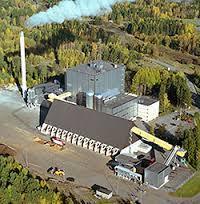
The new power plant unit, Brista 2, produces district heat for local residents and electricity for the Nordic power market from sorted municipal and industrial waste.

Duane Tilden‘s insight:

>”Brista 2 is already the fourth CHP plant we have commissioned this year in the Nordic and Baltic countries. Combined heat and power production is at the core of our strategy, and whenever possible we utilise renewable and local fuels,” says Per Langer, Executive Vice President of Fortum’s Heat Division.

Production capacity of the new Brista plant unit is 60 megawatts (MW) heat and 20 MW electricity. The annual heat production, about 500 gigawatt-hours (GWh), corresponds to the annual heating needs of about 50,000 mid-sized homes. The estimated annual electricity production of Brista 2 is 140 GWh. Fortum co-owns the plant (85%) together with the municipal energy company Sollentuna Energi (15%). <

See on online.wsj.com

Renewable Geothermal Power – a Vast & Untapped Energy Resource

See on Scoop.itGreen Energy Technologies & Development

There are no plans for new coal plants to be built in the United States. This opens doors for the geothermal industry possibly more than ever before in U.S. history.

Duane Tilden‘s insight:

> Geothermal energy is a renewable source of electricity that has the same important baseload qualities […]  (of coal for) electric power generation in the U.S. at a fraction of the cost.

“Baseload is always better,” […] “[I]t assures a steady revenue stream which is much better for financing.”For a nation that’s thinking to the long term, geo plants are:

Firm. They can run 24 hours a day regardless of extraneous conditions.Flexible. Geothermal’s flow can be load following or allow for imbalance, can provide a spinning reserve or a non-spinning reserve, and works well as replacement or supplemental reserve.

Falcone says of geothermal’s flow options: “By being able to load follow, geothermal can be reduced during low need time and increased without much effort. There is no need to store power that cannot be used. The price of power can be kept lower than other renewables since more of it is sold than the intermittent power sources like wind and solar.”

Falcone adds, “There are now efforts to marry solar with geothermal so that extra power can be produced during sunny peak hours.

“There is no need to invest in fossil fuel to create heat in order to generate power, so the environment is better off.”But today’s solicitations for renewable energy in Western states tend to ignore these unique benefits of geothermal power. Additional long-term analysis shows geothermal plants are:

Small. Geothermal-impacted land in 2030 is expected to be around 7.5 km2/TW-hr/yr, as opposed to 9.7 .5 km2/TW-hr/yr for a coal plant.Hardy. Long-lasting geothermal plants include those at The Geysers in California (since the 1960s) and at the Lardarello field in Italy (since 1904).<

See on www.renewableenergyworld.com

Kyocera Opens Japan’s Largest Offshore Solar Power Plant

See on Scoop.itGreen & Sustainable News

The Kyocera Corporation just opened a 70 megawatt solar power plants off the southern coast of Japan.

Duane Tilden‘s insight:

>Kyocera partnered with six other companies to develop the solar plant, which is located in the Kagoshima Prefecture. The company hopes that this latest offshore venture will set a precedent for a cleaner Japan, especially in light of the 2011 Fukushima disaster. The solar plant is designed to inspire and encourage Japan to make the switch to more renewable energy sources.

The Kagoshima Nanatsujima Solar Power Plant was made possible in part because of Japan’s revised feed-in-tariff (FIT) program, which was restructured in July, 2012 to better accommodate solar energy. The adjusted FIT plan requires local utilities to purchase 100 percent of the power generated by solar plants that produce more than 10 kW.<

Read more: Kyocera Opens Japan’s Largest Offshore Solar Power Plant | Inhabitat – Sustainable Design Innovation, Eco Architecture, Green Building

See on inhabitat.com

84% Efficient Combined Heat & Power (CHP) Plant to be built by Siemens in Poland

See on Scoop.itGreen & Sustainable News

Through immediate publication of press releases, we keep the business, financial and public press informed on all important Siemens topics.

Duane Tilden‘s insight:

>The plant will be built in western Poland in the city of Gorzów Wielkopolski. Within the scope of turnkey construction, Siemens will deliver two SGT-800 gas turbines, one SST-400 steam turbine, three 11 kilovolt (kV) generators and two heat recovery steam generators. In addition, Siemens was awarded a long-term 12 years maintenance agreement for the gas turbines. The Gorzów plant will be fired with nitrogen-rich natural gas from gas reserves located in western Poland. This type of gas has a lower calorific value than conventional natural gas. […]

The Gorzów power plant will replace a currently used coal-fired block at the same location. The combined cycle power plant with district heat extraction will be able to generate electricity in a much more efficient and environmentally friendly manner. Compared to the old coal-fired power plant, the new plant will produce 95 percent less sulfur dioxide emissions, more than 30 percent less nitrogen dioxide emissions and more than 95 percent less particulate emissions.<

See on www.siemens.com

Clean Energy rebranded by DOE to Combined Heat and Power (CHP)

See on Scoop.itGreen Energy Technologies & Development

In a move that had been in the works for a while, the U.S. Department of Energy recently announced that its Clean Energy Application Centers have been rebranded as CHP Technical Assistance Partnerships, or CHP TAPs.

Duane Tilden‘s insight:

>The CHP TAPs maintain the same regional offices that existed under the former Clean Energy Application Centers:

  1. Pacific (California, Nevada);
  2. Southwest (Arizona, Colorado, New Mexico, Oklahoma, Texas, Utah, Wyoming);
  3. Northwest (Idaho, Montana, Oregon, Washington);
  4. Midwest (Illinois, Indiana, Iowa, Kansas, Michigan, Minnesota, Missouri, Nebraska, North Dakota, Ohio, South Dakota);
  5. Southeast (Alabama, Arkansas, Florida, Georgia, Kentucky, Louisiana, Mississippi, North Carolina, South Carolina, Tennessee);
  6. Mid-Atlantic (Delaware, Maryland, New Jersey, Pennsylvania, Virginia, West Virginia); and
  7. Northeast (Connecticut, Maine, Massachusetts, New Hampshire, New York, Rhode Island, Vermont).

With the new energy in these programs, now is the time to take advantage of the expertise offered by the Department of Energy and its CHP TAPs. Industrial users, municipalities, hospitals, college campuses and other large users of energy need to review and understand the significant benefits of CHP, district energy and waste heat capture technologies.<

See on www.natlawreview.com

Connecticut Storm Proofing with Micro-Grid Developments

See on Scoop.itGreen Energy Technologies & Development

Press Release Gov. Dannel P. Malloy announced Oct. 30 that nine towns that are part of a pilot microgrid program, including Windham and Storrs, are eligible for additional funding.

Duane Tilden‘s insight:

>A pilot microgrid program, administered by the state Department of Energy and Environmental Protection, was created under Public Act 12-148 to increase the safety and quality of life for Connecticut residents during electric grid outage situations.

Microgrids provide electricity to critical facilities and town centers on a 24/7, daily basis. They will also include a system of “trips” and “transfers” to isolate the microgrid and provide power within its network even when there is a large-scale outage.

The first round of the program awarded $18 million in grants to microgrid projects in Bridgeport, Fairfield, Groton, Hartford, Middletown, Storrs/Mansfield, Windham and Woodbridge as part of the Governor’s Storm Legislation.

Those projects are expected to become operational over the course of the next 18 months, with the first projects slated to come online in early 2014. […]

“Our first-in-the-nation microgrid program is an essential tool to help minimize hardships to our residents and businesses when severe storms occur. We all know that it is not a question of if, but when the next super storm will strike, and it is essential we do everything we can to be prepared,” Gov. Malloy said.

Commenting on the additional funding, DEEP Commissioner Daniel C. Esty said, “It is essential to public safety that power be maintained to critical facilities and town centers even when the electric grid is down… Connecticut and the northeast continue to experience more severe and more frequent storms, so it is vital that the state aggressively pursues the development of microgrids statewide so that we are in a better position to provide critical services to the state’s residents and businesses.”<

See on mansfield.htnp.com

Supercritical CO2 refines cogeneration for Industry

See on Scoop.itGreen Energy Technologies & Development

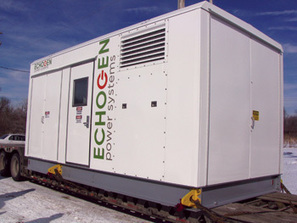
The first production unit of the EPS100 7.5 MWe heat engine is completing factory checkout tests at Dresser-Randbtd…

Duane Tilden‘s insight:

>Energy-intensive manufacturing

In an increasingly competitive environment, manufacturers are seeking to cut their costs. Fluctuating energy prices often channel this investment into cost-effective energy-saving technologies and practices that will reduce operating costs while maintaining or increasing product quality and yield.

Energy-efficient technologies often bring other benefits, such as higher productivity or environmental gains, reducing the regulatory ‘burden’. Waste heat can be captured from many industrial processes through waste heat recovery technology. […]

Waste heat recovery represents the greatest opportunity for reducing energy loss in these industries while simultaneously reducing their carbon footprint and associated greenhouse emissions with improved overall energy production efficiency.[…]

The outlook for scCO2

Supercritical CO2 heat engines are scalable across a broad system size range, from 250 kWe to 45 MWe and above, with net electrical output to support the widest possible variety of industrial and utility-scale applications.

The sCO2 Cycle is thermal source neutral − suitable with a wide range of heat sources from 200°C to 500°C with efficiencies up to 30%. New energy production can be offset with recovered energy without increasing greenhouse emissions while improving overall energy production efficiency. The scCO2 heat engine can add up to 35% more power to simple-cycle gas turbines, 10–15% more power to reciprocating engines, and can significantly improve the energy efficiency and bottom line performance at steel mills, cement kilns, glass furnaces and other fuel-fired industrial processes by converting previously wasted exhaust and flue gas energy into usable electricity.

Alex Kacludis is an Application Engineer at EPS LLC; www.echogen.com

See on www.cospp.com