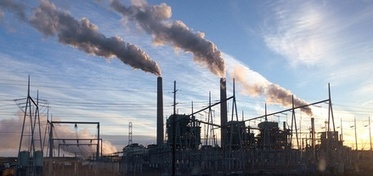
Comments on Improving EPA’s Proposed Clean Power Plan

The summer deadline is approaching for finalizing the Environmental Protection Agency’s first-ever limits on dangerous carbon pollution from the nation’s power plants, and opponents are ratcheting up their complaints….

Source: www.huffingtonpost.com

“> […] Some 1500 mostly coal- and gas-fired power plants spew out more than two billion tons of heat-trapping carbon dioxide each year — 40 percent of the nation’s total. The vast majority of the millions of public comments submitted last fall express strong support for the Clean Power Plan, which as proposed last June starts in 2020 and ramps emissions down gradually over the next decade.

But big coal polluters and their political allies have big megaphones.

Many hope to kill the proposal outright. But for others the back-up agenda is to get the standards weakened and delayed past 2020. Their comments and speeches read like Armageddon is coming if power plants have to start limiting their carbon pollution in 2020 — five years from now. Republican members of the Senate environment committee banged that drum over and over at a hearing last week. As on so many issues, they hope endless repetition will make their story seem true.

The truth is that the standards and timeline EPA proposed last June are quite modest and readily achievable. They can be met without any threat to the reliability of electric power. A new report from the highly respected Brattle Group shows that states can meet the EPA’s proposal “while maintaining the high level of electric reliability enjoyed by U.S. electricity customers.” […]

The plan as proposed in June sets state-by-state targets that, on an overall national basis, would cut power plants’ carbon pollution by 26 percent by 2020 and 30 percent by 2030, when compared to 2005 levels.

We found that with three specific improvements – I’ll describe them below – the plan could achieve 50 percent more carbon pollution reductions (36 percent by 2020 and 44 percent by 2030).

Here are the three factors:

First, the costs of clean energy are falling dramatically, and EPA’s June proposal was based on out of date cost and performance data for renewable electricity and efficiency energy. An NRDC issue brief published last fall details how sharply the cost and performance of energy efficiency and renewable energy have improved. When we factored in up-to-date data, our analysis shows that the Clean Power Plan’s state-by-state targets as proposed in June 2014 can be met at a net savings to Americans of $1.8-4.3 billion in 2020 and $6.4-9.4 billion in 2030. More reliance on energy efficiency and renewables will also create hundreds of thousands of good-paying jobsthat can’t be shipped overseas.

The lower cost of clean energy technologies opens the door to getting substantially more carbon pollution reductions from the nation’s largest emitters.

We also took two other specific improvements into account:

In an October 2014 notice seeking further public comment, EPA explained that the formula it had used to calculate state targets in the June 2014 proposal did not correctly account for the emission reductions made by renewables and energy efficiency. The formula did not fully account for the reduction in generation at coal and gas power plants that occurs when additional renewables are added to the grid and when businesses and homeowners reduce how much electricity they need by improving the efficiency of our buildings, appliances, and other electricity-using equipment. NRDC corrected the formula in our updated analysis to capture the full emission reduction associated with ramping up renewables and efficiency.EPA also asked for comment on an approach to better balancing state targets by adopting a minimum rate of transition from older high-emitting generation to lower-emitting sources. NRDC analyzed state targets that include conversion of 20 percent of coal generation in 2012 to natural gas generation over the period between 2020 and 2029.

These three factors — updating the cost and performance data for renewables and efficiency, correcting the target-setting formula, and including a minimum rate of transition from higher- to lower-emitting plants — produce the substantial additional carbon pollution reductions in our analysis, all at very reasonable costs. […]”<


See EPA’s Clean Power Plan:  http://www2.epa.gov/carbon-pollution-standards/clean-power-plan-proposed-rule


See on Scoop.itGreen & Sustainable News

Clean Power Plan Seen as Historic Opportunity to Modernize the Electrical Grid

Following the launch of the Clean Power Plan, concerns were raised about how adding renewable energy to the grid would affect reliability. According to a new report […] compliance is unlikely to materially affect reliability.


image source:  http://phys.org/news/2010-10-electric-grid.html

Source: domesticfuel.com

>”[…] Report lead author Jurgen Weiss PhD, senior researcher and lead author said that while the North American Electric Reliability Corporation (NERC) focused on concerns about the feasibility of achieving emissions standards with the technologies used to set the standards, they did not address several mitigating factors. These include:

The impact of retiring older, inefficient coal plants, due to current environmental regulations and market trends, on emissions rates of the remaining fleet;Various ways to address natural gas pipeline constraints; andEvidence that that higher levels of variable renewable energy sources can be effectively managed.

“With the tools currently available for managing an electric power system that is already in flux, we think it unlikely that compliance with EPA carbon rules will have a significant impact on reliability,” reported Weiss.

In November 2014, NERC issued an Initial Reliability Review in which it identified elements of the Clean Power Plan that could lead to reliability concerns. Echoed by some grid operators and cited in comments to EPA submitted by states, utilities, and industry groups, the NERC study has made reliability a critical issue in finalizing, and then implementing, the Clean Power Plan. These concerns compelled AEE to respond to the concerns by commissioning the Brattle study.

“We see EPA’s Clean Power Plan as an historic opportunity to modernize the U.S. electric power system,” said Malcolm Woolf, Senior Vice President for Policy and Government Affairs for Advanced Energy Economy, a business association. “We believe that advanced energy technologies, put to work by policies and market rules that we see in action today, will increase the reliability and resiliency of the electric power system, not reduce it.  […]”<

See on Scoop.itGreen Energy Technologies & Development

Apple to Invest $2 Billion in Solar Farm Powered Data Center Renovation in Arizona

Apple plans to invest $2 billion to build a data center in Arizona in the location where its failed sapphire manufacturing facility exists, the state announced Monday.

Source: blogs.wsj.com

“> […] The company plans to employ 150 full-time Apple staff at the Mesa, Arizona, facility, which will serve as a command center for its global network of data centers. In addition to the investment for the data center, Apple plans to build a solar farm capable of producing 70-megawatts of energy to power the facility.

Apple’s investment is expected to create up to 500 construction jobs as well, the state said.

Apple said it expects to start construction in 2016 after GT Advanced Technologies Inc., the company’s sapphire manufacturing partner, clears out of the 1.3 million square foot site. The $2 billion investment is in addition to the $1 billion that Apple had earmarked to build scratch-resistant sapphire screens at the same location.

The investment comes a few months after GTAT filed for bankruptcy protection in October, citing problems with the Arizona facility. Shortly after its bankruptcy filing, GTAT said it planned to lay off more than 700 employees in Arizona.

In October 2013, Apple had agreed to build a sapphire factory in Mesa that GTAT was going to operate. At the time, Apple had said the new factory was going to create 2,000 jobs and move an important part of its supply chain to the U.S.

However, the project struggled to produce a consistent level of sapphire at the quality demanded by Apple. In the end, Apple did not use sapphire from the facility for its latest iPhones. After GTAT’s bankruptcy, Apple has said it was seeking ways to preserve the jobs lost at the Mesa facility.

Arizona’s governor said the state did not provide additional financial incentives to keep Apple in the state. For the original investment in 2013, Arizona provided $10 million to Apple to sweeten the deal for the company.”<

See on Scoop.itGreen & Sustainable News

North Dakota Bill Introduced to Minimize Natural Gas Waste from Oil Wells

North Dakota’s Senate is considering legislation that would drastically cut the time oil companies can burn off and waste natural gas from an oil well.

Source: www.pennenergy.com

>”[…] Democratic Sen. Connie Triplett is sponsoring the bill that would require companies to begin paying royalties and taxes on natural gas within 14 days after an oil well begins production. Companies are given a year at present.

Triplett and others told the Senate Energy and Natural Resources Committee on Friday that mineral owners and the state are being shortchanged because revenue on the wasted gas is not immediately being collected.

North Dakota Petroleum Council President Ron Ness says the industry has invested $13 billion to capture the gas. But he says there is still a challenge obtaining permission to place gas pipelines in some areas.”<


See on Scoop.itGreen & Sustainable News

Michigan’s Consumers Energy to retire 9 coal plants by 2016

New EPA regulations are an opportunity to modernize the generating fleet, according to a Consumers Energy official.

Source: www.utilitydive.com

>”[…] Consumers Energy will shutter nine coal plants in Michigan as EPA air pollution regulations make them unprofitable to operate, MLive reports. And the Michigan utility won’t be the only one. A wave of coal retirements will roll across the Midwest by early 2016, shuttering more than 60 generating plants, a Consumers official told the “Greening of the Great Lakes” weekly radio program.In addition to the regulations under the Clean Power Plan and other EPA programs, Consumers says many of the nine coal plants were built in the 1950s and are simply at the end of their productive lives.  […]

Last year Consumers Energy announced it had selected AMEC to run the utility’s decommissioning program for the planned retirement of seven operating units at the utility’s three oldest coal-fired generating plants. Though there is still uncertainty over just what impact a slate of EPA regulations will have, Consumers last year said the power plants being decommissioned have an average operating life-span of more than 60 years and collectively represented approximately 950 MW of electric capacity.

The Supreme Court has agreed to hear a challenge to the EPA’s Mercury and Air Toxics Standard, but as it stands the regulations could apply to 1,400 generators at more than 600 of the nation’s largest power plants.

Federal regulators believe the tighter controls could prevent up to 11,000 premature deaths each year by limiting mercury, particulate matter, and other harmful pollutants it says are hazardous to public health.”<

See on Scoop.itGreen & Sustainable News

Why Demand Response will shape the future of Energy

Matching supply to demand is crucial when it comes to energy — and this concept can help us do it.

Source: www.mnn.com

>” […] Our energy grid is not designed to put out a steady amount of energy throughout the day. Rather, it is designed to crank up or wind down depending on the amount of energy that’s being demanded by the markets.

That means there’s a baseload of generation that’s always on — churning out steady amounts of relatively cheap, dependable power night and day. This has typically been made up of coal and nuclear plants, which can produce large amounts of power but can’t be made to cycle up and down efficiently in the face of fluctuating demand. On top of the baseload, you have an increasing amount of intermittent sources as the world transitions to renewable energy technologies like wind and solar. And then, on top of these intermittent sources are so-called “peaking” plants, often running on natural gas and sometimes diesel or even jet fuel. These can be deployed at very short notice, when there’s either unusually high demand or when another source isn’t available (e.g. the sun isn’t shining enough for solar), but are expensive, inefficient and disproportionately polluting.  One of the most effective ways to meet this challenge also happens to be the simplest — reward people for not using energy when it’s in highest demand.

An old idea whose time has come
Demand response, as it is known by those in the industry, is really not all that new. Many utilities have offered cheaper electricity rates for off-peak hours, encouraging consumers to shift their habits and reduce the pressure on the peak. Similarly, energy producers around the world have partnered with energy-hungry industries to ask them to power down at times of high demand. What’s new, however, is an ever more sophisticated array of technologies, meaning more people can participate in demand response schemes with less disruption to their daily lives. […]

A more sophisticated approach
On the commercial side, demand response has been a strategy for some time because it took very little infrastructure to implement — just an energy-hungry business ready and willing to cut its consumption in times of need, and able to educate its workforce about how and why to do so. Here too, however, the concept is becoming a lot more sophisticated and scalable as technology allows us to better communicate between producers and consumers, and to coordinate the specific needs of the grid. And as distributed energy storage becomes more commonplace, consumers may not even have to modulate their overall use — but rather allow the utility to switch them to battery power when grid supply is constrained. […]

A huge potential to cut peak demand
A report from federal regulators suggests that U.S. demand response capacity had the potential to shave 29GW off of peak demand in 2013, representing a 9.9 percent increase over 2012. When the U.K.’s National Grid, which manages the nation’s transmission infrastructure, put out a call for companies willing to cut consumption at key times, over 500 different sites came forward. The combined result was the equivalent of 300MW of power that can be removed from the grid at times of need. And constrained by its rapid growth of renewables following the Fukushima disaster, Japan is now looking at shoring up its grid by starting a national demand response program in 2016. […]”<

See on Scoop.itGreen Energy Technologies & Development

Madrid upgrades with World’s largest street lighting project

To support its ambition of becoming a Smart City, the Spanish capital, Madrid, is embarking on the world’s largest street lighting upgrade project. Philips is providing the city’s government with 225,000 new energy-efficient lights for the renewal of the entire street lighting system.

Source: traffictechnologytoday.com

>”The products, which deliver 44% in energy savings, will finance the cost of the technology upgrade, providing Madrid with the best quality of street lighting for a brighter, safer and ‘smarter’ city at no additional cost to its citizens. The project has been conducted in collaboration with ESCO energy service companies hired by the Madrid city council through a public bidding process. […]”<

See on Scoop.itGreen & Sustainable News

Energy Efficiency Development and Adoption in the United States for 2015

The US wastes about 61% of the energy we produce — much of it due to how we generate, transmit, and distribute it.

Source: theenergycollective.com
I
mage Source:  http://www.seas.columbia.edu/earth/RRC/waste_material_utilization.html

>” […] Energy efficiency, simply put, is using less energy to get the same output or value. Ways of being more energy efficient include using appliances that use less energy or reducing air leakage from our homes and buildings. Programs to increase energy efficiency date back to the energy crises of the 1970s, and continue to be hugely successful today.

Take Michigan for example, where recent data from the Public Service Commission show that the $253 million Michigan utilities spent on energy efficiency programs in 2013 will yield a $948 million return in savings in the coming years. That’s an excellent investment, no matter who you talk to. And Michigan is by no means an anomaly.

We’ve seen states throughout the country see the same kinds of positive returns for their investments in energy efficiency, which continues to prove itself the cheapest “fuel” — investments in energy efficiency per unit of energy output are less costly than both traditional fossil fuels and clean renewable fuels.

Energy efficiency programs are administered by utilities, state agencies, or other third parties, and typically funded by modest charges on ratepayers’ energy bills. While some worry that this causes energy bills to go up, they also cause energy costs to go down, as widespread efficiency upgrades decrease the demand for energy across the state or the utility’s service area, reducing consumer costs. And the customers who participate directly in the programs reap the biggest savings.

It’s a wonder not all states are investing in these kinds of innovative, proven programs. But much of the resistance can be attributed to low energy prices and a lack of political will to charge customers a bit more, even if it does mean big returns. With energy prices steadily rising, such programs will become increasingly attractive to utility regulators and customers. Even historically lagging states like Arkansas and Kentucky are starting to jump on the energy efficiency bandwagon.

No matter where we live or what our personal circumstances are, there’s always room to make changes to improve our energy consumption, whether we make a big investment like installing better insulation, or small simple changes like turning down the thermostat a few degrees in the winter.

As we think about what changes we’re planning to make in 2015, we can look internally at how to reduce energy waste in our own homes and workplaces, as well as help our neighborhoods, communities, and local and state governments make informed decisions to invest in energy efficiency. Even as our energy starts coming from cleaner sources across the country, we can do our part to reduce waste in the energy we already generate — and efficiency is the quickest and cheapest place to look.”<

See on Scoop.itGreen Energy Technologies & Development

Concentrated Solar Power Projects in 2014

“It was a good year for solar power in the USA, with over six gigawatts of photovoltaic (PV) capacity and more than one gigawatt of concentrated solar power (CSP) being added in 2014, bringing the nation’s total solar power capacity to more than 17 gigawatts. That’s a 41% increase in solar power capacity in just one year…”  Source: www.engineering.com

>” Photovoltaic vs Concentrated Solar Power

Photovoltaic technology converts light directly into electricity. PV panels produce DC, which needs to be converted to AC before being placed on the grid. PV panels work best in direct sunlight when they’re pointed perpendicular to the sun’s rays, but they also work reasonably well in diffuse light, even when not pointed directly at the sun. This makes them inexpensive and suitable for rooftops, since solar tracking isn’t required. PV also works in climates that aren’t particularly sunny; Germany gets less sunlight than the northern US, and yet it has a large portion of its power generated by PV.

Concentrated solar power, on the other hand, requires direct sunlight and solar tracking. CSP focuses the sun’s energy and uses the resulting heat to create steam that drives a traditional turbine generator. Even better, the heat can be stored – usually in the form of molten salts – so the CSP plant can generate electricity even when the sun isn’t shining. Because CSP relies on direct sunlight, it’s most suitable for very sunny locations like the American southwest.  […]

US Concentrated Solar Power in 2014

These five major CSP plants went online in 2014 (give or take a few months – one went live in late 2013):

Gila Bend, AZ is the home of the Solana parabolic trough power plant, which provides 250 MW of power to residents of Arizona. The turbine It went live in October of 2013. Spanning 1920 acres, the solar farm includes over two million square meters of reflective troughs and two tanks of molten salts, which provide up to six hours of thermal energy storage. If the stored energy is depleted and the sun isn’t shining, the turbine can be powered by natural gas as a backup.

The Genesis power plant in Blythe CA generates 250 MW of power using a parabolic trough array consisting of more than half a million mirrors. Unlike the Solana plant, Genesis includes no storage or backup fuel. Brought online in April of 2014, designers expect it to generate about 600 GWh of energy each year.

Probably the most famous CSP plant in the US, and the largest of its kind in the world, is the Ivanpah Solar Electric Generating System in Ivanpah Dry Lake CA, about 50 miles south of Las Vegas NV. Its three power towers fired up in February 2014, and the facility now produces 377 MW of power. Its annual production is expected to exceed one terawatt-hour. Ivanpah includes natural gas as its backup, but has no on-site storage.

About 270 miles northwest of Ivanpah is the Crescent Dunes Solar Energy Project in Tonopah, NV. Originally planned to go online in late 2014, the start date has been pushed back to January of 2015. When operational, this 110 MW power tower should produce nearly 500 GWh per year. Crescent Dunes uses molten salt to store heat, allowing it to generate power for ten hours without sunlight.

The Mojave Solar One facility came online in late 2014 and now generates 250 MW of electricity. Located about 100 miles northeast of Los Angeles CA, this parabolic trough array feeds a pair of 125 MW steam turbine generators. The plant should produce about 600 GWh per year. […]”<


See on Scoop.itGreen Energy Technologies & Development

New Boston Start-up Tracks Multifamily Residential Energy Efficiency “Score”

wego_screen_shotWegoWise Inc., which provides energy analytics to private property owners and public housing entities, last week launched WegoScore, a rating system that assesses buildings in three areas, energy, water and carbon and then spits out a score between one and 100.

Source: www.bizjournals.com

>” […] “We are focusing on a universal approach with meaningful reductions,” WegoWise founder and CTO Barun Singh said of the platform.

With the water crisis in California and with 39 percent of carbon dioxide coming from buildings, property owners and public housing agencies are making energy-saving retrofits and want to market what they’ve done.

Those buildings that reach a high rating are issued certificates and decals to let the world know they are more efficient. Maloney Properties Inc., a Wellesley-based real estate management, sales and construction firm with 350 buildings, is featuring its decal proudly. Other area companies include Peabody Properties in Braintree and Homeowners Rehab, based in Cambridge.

The score not only brings awareness to a building’s efficiency, it also provides a way for property owners to market the value of the work completed in their buildings to perspective tenants who are concerned about the environment, Singh said. And the stickers are a fun way to market their accomplishments.

After using WegoWise, Maloney Properties was able to find $2.5 million in 2014 retrofits and expects to save 10 to 20 percent on utility costs related to the retrofits annually. John Magee, an assistant facilities director at Maloney, said the real estate company has been looking for a way to market the value of its properties. And now, the WegoScore will enable it to do that.

With the $4.9 million in funding it has raised from Boston Community Capital, WegoWise was able to build a portfolio of 23,000 multifamily buildings covering more than 600 million square feet. With all of the data that WegoWise has collected since its launch in 2010, coming up with a rating system would be a simple solution, right? Not exactly, according Singh.

Launching WegoScore was an expensive and lengthy process for the 25-person company, he said. Before launching the rating system, Singh said he wanted to be sure that had enough data to come up with a score that was meaningful.

“The end result is a straight-forward algorithm,” he said.

The WegoScore is currently only available for multifamily buildings, according to the company. Scores will be refreshed on a weekly basis and stickers are awarded twice a year.

In addition to gaining interest from its existing customers, venture-backed WegoWise is also garnering the attention of other potential partners including banks, who could use the score as a way to get a sense of the building and decide whether or not to lend to them, and insurance providers that would make decisions based on the building’s efficiency score and other factors. […]”<

See on Scoop.itGreen Building Operations – Systems & Controls, Maintenance & Commissioning