Utilities and Energy Efficiency – How to Bridge the Gap

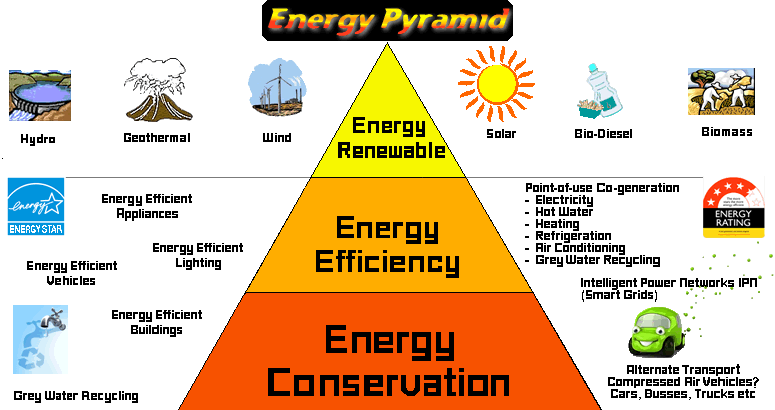
energy-efficiency-pyramid

Image found at: http://bit.ly/1bAHOiM

See on Scoop.itGreen Building Operations – Systems & Controls, Maintenance & Commissioning

As much as such improvements can provide positive financial returns to utility customers, the utilities themselves face some very real financial barriers to offering customer energy efficiency programs.

Duane Tilden‘s insight:

>The inherent conflict between a utility’s business objectives and the objectives of customer energy efficiency programs has long been recognized. Alternative regulatory mechanisms can be implemented that not only make utilities indifferent to the amount of energy they sell, but that also can provide positive earnings from their customer energy efficiency programs. Alternative regulatory mechanisms such as “decoupling,” (separating an utility’s revenues from the amount of energy it sells to customers) are in place in a growing number of states.

Since the premise of these alternative regulatory mechanisms is that they can protect utilities from suffering financial harm from energy efficiency programs, ACEEE examined the experiences of a selected group of utilities to find out how well such regulations have worked. The utilities we selected all have relatively large-scale energy efficiency programs that serve all types of customers. We interviewed utility program managers and executives as well as clean-energy advocates and regulators. We also examined the financial performance of these utilities as represented by their stock performance.

What we found is that these utilities all have performed well financially. We found no evidence to suggest that energy efficiency programs have had negative effects on shareholder returns. While addressing utility business concerns with energy efficiency programs is clearly important, doing so is really just one part of comprehensive policies and regulations that support customer energy efficiency programs. Other keys to successful energy efficiency programs include:

Strong commitments to energy efficiency by regulators and utilities,Ongoing collaboration among utilities and stakeholders,Shared sense of purpose and common goals, and Willingness to experiment and learn from experiences.

See on aceee.org

Boston Housing Authority to invest $11m in energy efficiency and infrastructure upgrades for Public Housing

See on Scoop.itGreen Building Operations – Systems & Controls, Maintenance & Commissioning

The Malden Housing Authority will spend more than $11 million to make its public housing units more energy efficient, work officials believe will pay for itself.

Duane Tilden‘s insight:

>The 250-unit complex has a central power plant with utilities distributed to each building through pipes installed in the 1950s. The pipes are in poor condition, Finn said, which results in uneven distribution of heat and water pressure. “Those pipes are a problem; they are aging in place,” he said.

The new system will feature one energy-efficient boiler for every two units in the 58 Housing Authority buildings on Newman Road, Finn said. The old pipes will remain and could be used by the authority or the city as underground electricity conduits, he said. The work on Newman Road is expected to cost $4.3 million.

The Housing Authority received the 20-year $11.27 million bond through MassDevelopment , an entity created by the Legislature in 1998 to act as a finance and development authority.

“We’re pleased to support the Malden Housing Authority with this low-cost financing to improve homes for low-income families, reduce the cost of utilities for the authority’s developments, and to support the Commonwealth’s goal of improving energy technologies and efficiencies, resulting in reduced cost,” MassDevelopment chief executive Marty Jones said in a prepared statement.

For the bond financing agreement, the authority will pay a fixed interest rate of 4.12 percent to East Boston Savings Bank, which is loaning the funds. But the bank was only able to do that by entering into an interest-rate swap agreement with another institution, PNC Bank.

The move allowed East Boston Savings Bank to offer a fixed-rate loan, which the Housing Authority needed in order to comply with federal housing standards, said Joseph Leary, vice president of East Boston Savings Bank.<

See on www.bostonglobe.com

Fuel cell switched on at Cal State San Bernardino

See on Scoop.itGreen Energy Technologies & Development

A new 1.4 MW utility-owned a fuel cell is now in full operation at Cal State San Bernardino.

Duane Tilden‘s insight:

>”Electricity generated by the fuel cell is going straight into the Edison grid, and the university will be able to utilize the waste heat it produces to preheat the campus heating system, resulting in an estimated annual savings of $120,000 from avoided natural gas costs,” said Tony Simpson, senior director of facilities services at Cal State San Bernardino.

The combined heat and power configuration —known as cogeneration — of the fuel cell will reduce the campus’s carbon dioxide emissions by lessening reliance on the high temperature hot water generators currently in operation. The fuel cell will continue to use natural gas to generate ultra-clean electricity through an electrochemical reaction, but because there is no combustion, unhealthful emissions are reduced.

Additionally, the fuel cell is highly efficient, generating more power from a given unit of fuel and lower greenhouse gas emissions compared to combustion-based power sources in a similar size range. Cogeneration DFC power plants can achieve total thermal efficiencies up to 90 percent, depending on the application.<

See on www.elp.com

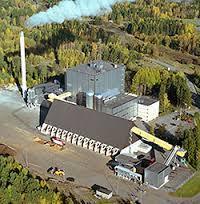
Fortum inaugurates new waste-to-energy CHP plant in Sweden

See on Scoop.itGreen Energy Technologies & Development

The new power plant unit, Brista 2, produces district heat for local residents and electricity for the Nordic power market from sorted municipal and industrial waste.

Duane Tilden‘s insight:

>”Brista 2 is already the fourth CHP plant we have commissioned this year in the Nordic and Baltic countries. Combined heat and power production is at the core of our strategy, and whenever possible we utilise renewable and local fuels,” says Per Langer, Executive Vice President of Fortum’s Heat Division.

Production capacity of the new Brista plant unit is 60 megawatts (MW) heat and 20 MW electricity. The annual heat production, about 500 gigawatt-hours (GWh), corresponds to the annual heating needs of about 50,000 mid-sized homes. The estimated annual electricity production of Brista 2 is 140 GWh. Fortum co-owns the plant (85%) together with the municipal energy company Sollentuna Energi (15%). <

See on online.wsj.com

UN and World Bank promote sustainable energy financing

See on Scoop.itGreen & Sustainable News

The United Nations and the World Bank announced what they call “a concerted effort” by governments, international agencies, civil society and the private sector to scale up financing for sustainable energy.


Duane Tilden‘s insight:

>Kim stressed that financing is key, with $600 billion to $800 billion a year needed from now until 2030 to reach the goals for access to energy, energy efficiency, and renewable energy.

“We are now starting in countries in which demand for action is most urgent,” he said. “In some of these countries, only one in 10 people has access to electricity. It is time for that to change.”

Ban praised achievements already attained such as Brazil’s ‘Light for All’ programme that has reached 15 million people, Norway’s commitment of 2 billion kroner ($330 million) in 2014 for global renewable energy and efficiency, and Bank of America’s Green Bond that has raised $500 million for three years as part of its 10-year $50 billion environmental business commitment.<

See on www.renewableenergymagazine.com

California Building Code Title 24 Will Revolutionize Efficiency Financing for Buildings

See on Scoop.itGreen Building Design – Architecture & Engineering

If successful, Title 24 will open the door to increased amounts of energy efficiency financing, expanded sources of capital and lower financing costs.

Duane Tilden‘s insight:

>California’s Title 24

Title 24 is California’s body of state building codes. These codes have been revised to move the building industry toward comprehensive building solutions with a goal of achieving Zero Net Energy (ZNE) residential and commercial buildings. In a ZNE building, the annual building’s energy consumption is equal to the building’s onsite renewable energy generation. California has set a goal for all new residential construction to be ZNE by 2020 and for all new commercial construction to be ZNE by 2030. Additionally, the repurposing and remodeling of existing buildings that are of a size-threshold defined by Title 24 will also have to comply with Title 24 revised codes.

Financing a “smart” Zero Net Energy building

The challenge of financing any energy efficiency or renewable energy project is in providing assurances to the source of capital that the project will actually generate sufficient cost savings to cover financing costs plus repayment of invested capital. The number one challenge for winning energy efficiency investments is the uncertainty in documenting bill savings results. Too often, the cost savings generated by an investment in energy efficiency is lost in higher electric bills as new loads are added and utilities raise rates.

Information technologies that monitor, control and financially operate a building through links to real time prices of grid-supplied electricity are the foundation for enabling Title 24 project financing. Smart ZNE buildings will operate to optimize the economics between reducing building demand, reducing energy consumption, on-site generation, use of on-site energy storage and purchases of grid electricity.

What will further enable the financing of ZNE buildings is the ability of enabling information technologies to “look forward” in time to proactively shape a building’s operation and grid purchases to financially support the building’s project financing. The technologies that can achieve these results have already been invented. What California is pursuing through its Title 24 code revisions is a massive economies of scale push for these technologies to drive their costs down and increase their ability to be financed.

The sales pie just got bigger…a lot bigger

Beginning in 2014, Title 24 will blow the sales doors open for smart building technologies, energy efficiency technologies, onsite energy storage and renewable energy technologies. Title 24 will create a new competitive landscape for architects, general contractors, sub-contractors and vendors based upon their ability to offer price competitive services and products that comply with Title 24 codes. The construction industry’s sales path for energy efficiency projects will no longer be anchored by utility incentives that support targeted energy efficiency upgrades like re-lamping a building with more efficient lights. The new sales path will be based upon cost-effectively delivering code compliance to achieve financeable building performance. New competitive advantages will be won by contractors and architects that offer building performance assurances to building owners and financing sources.<

See on www.triplepundit.com

Infographic – Energy Efficiency – Variable Speed Motors & Drives

See on Scoop.itGreen Building Operations – Systems & Controls, Maintenance & Commissioning

Infographic – Energy efficiency. A solution.

Duane Tilden‘s insight:

Industry has been reported to consume between 40 and 60% (UN Report) of the world’s electrical supply.  Motors are the largest consumer of the industrial electrical supply and the greatest opportunity for industry wide savings.

Many motors are over-sized and run inefficiently.  Variable speed drives can significantly reduce industrial operating costs, with attractive payback period and reductions in energy consumption by up to 50% or more.

See on www.abb.com

The 10 Most Energy-Efficient U.S. States: The Forgotten ‘Fifth Fuel’

See on Scoop.itGreen & Sustainable News

Access to energy in the U.S. — and the effects of generating it — are a national concern.

Duane Tilden‘s insight:

>The Forgotten ‘Fifth Fuel’

Access to energy in the U.S. — and the effects of generating it — are a national concern. Debates persist over the most cost-effective and environmentally friendly mix of nuclear energy, coal, gas and liquid hydrocarbons and renewable sources.

Too often left out of these discussions is the so-called fifth fuel: energy efficiency. States have driven benefits for consumers and the environment with policies that both reduce energy use and encourage economic growth.

The American Council for an Energy-Efficient Economy (ACEEE) yesterday issued its annual scorecard for each state based on multiple factors, including reductions in greenhouse gas, energy codes for buildings and switching to cleaner fuels.<

See on www.bloomberg.com

How Real Estate Energy Managers Can Use Big Data to Schedule Building Energy Retrofits

See on Scoop.itGreen Building Operations – Systems & Controls, Maintenance & Commissioning

Big Data remains a fairly nebulous concept for many real estate professionals, including those who stand to gain tremendously from it right now: real estate energy managers.

Duane Tilden‘s insight:

>To effectively time energy retrofit measures, energy managers can first develop those measures. New energy analytical tools such as FirstFuel identify and develop measures, and even estimate a range for capital cost. It does this analysis remotely over the course of a day just by analyzing hourly electricity data (which is sometimes also stored by the utility); no time-intensive on-site energy audit is required. Another new tool is Retroficiency, which provides a high-level look at energy performance improvement potential using the same interval data and, with minimal additional data from the IWMS, can further develop retrofit measures to investment-grade level.

After identifying energy-retrofit measures for the portfolio using remote energy analysis tools or more standard on-site energy analysis, energy managers can create a new retrofit measures database in the IWMS. Having this new database on hand enables managers to integrate energy retrofit opportunities with space management, maintenance and capital upgrade needs, and potentially other real estate issues. Such integration drives down the incremental cost of an energy retrofit, which is the gross cost minus the avoided cost of otherwise required capital or space upgrades.<

See on blog.rmi.org

Federal Energy Management Program: Online Training – Live & On-Demand – CEU’s

See on Scoop.itGreen & Sustainable News

FEMP trains Federal agency managers about the latest energy requirements, best practices, and technologies through eTraining Courses, First Thursday Seminars, and webinars.

See on apps1.eere.energy.gov