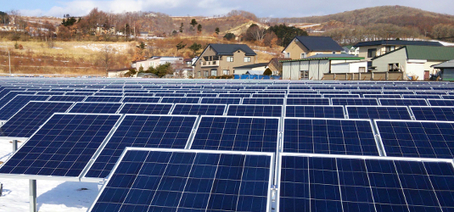
CloudSolar Helps Renewable Energy Fans Who Can’t Install Their Own Solar Panels

State and Solar Advocates Complete Legal Agreement for Full Net Metering Credit to Utilities

The Act 236 agreement also settles rules for legal solar leasing.

Source: www.utilitydive.com

>”[…]  The South Carolina Public Service Commission last week approved a settlement agreement between Duke Energy Carolinas, South Carolina Electric & Gas (SCE&G) and major environmental groups that allows rooftop solar owners to get full retail value for electricity their systems send to the grid.The agreement on net energy metering (NEM) is part of Act 236, passed in 2014 after a consultation process involving renewable energy-interested stakeholders. Solar systems installed before the end of 2020 will earn full retail value bill credit for each kilowatt-hour that goes to the grid.Act 236 also legalizes third party ownership of solar, more widely known as solar leasing, and sets up rules by which leasing companies like SolarCity and Sunrun must operate.

Dive Insight:  To study the emerging solar opportunity, a South Carolina General Assembly-created oversight group organized a coalition of environmentalists, solar advocates, and utilities and electric cooperatives into an Energy Advisory Council in 2013. Act 236 was formulated out of its report.

The NEM settlement also raises the size limit of eligible systems from 100 kW to 1 MW and raises the cap on NEM systems from 0.2% of each utility’s peak capacity to 2%.

Act 236 requires leasing companies to be certified by the state and limits the size of leased residential systems to 20kW and leased commercial systems to 1000kW. Leased systems can only serve one customer and one location and cannot sell electricity to third parties. The total of leased solar is capped at no more than 2% of a utility’s residential, commercial, or industrial customers average retail peak demand.

Groups that led the settlement with the utilities include the Coastal Conservation League, the Southern Environmental Law Center, and the Southern Alliance for Clean Energy. […]”<


See on Scoop.itGreen Building Operations – Systems & Controls, Maintenance & Commissioning

Global Distributed Energy Storage Capacity Expected to Increase Nearly 10-Fold

The worldwide capacity of distributed energy storage systems is expected to increase nearly 10-fold over the next 3 years, according to a new report from Navigant Research, which analyzed the global market for distributed energy storage systems through 2024.

Source: cleantechnica.com

>” […] The primary conclusion of the report is that distributed storage is one of the fastest-growing markets for energy storage globally, thanks to the focus of rapid innovation and intense competition, causing the market to greatly exceed market expectations. This growth and subsequent demand has led to grid operators, utilities, and governments looking to encourage storage installations that are physically situated closer to the retail electrical customer.

According to the report from Navigant Research, worldwide capacity of distributed energy storage systems (DESSs) is expected to grow from its current 276 MW, to nearly 2,400 MW in 2018.

“Distributed storage is among the fastest-growing markets for energy storage globally,” says Anissa Dehamna, senior research analyst with Navigant Research. “In particular, residential and commercial energy storage are expected to be the focus of technological advances and market activity in the coming years.” […]

Two specific types of DESS are classified in the report: Community energy storage refers to systems installed at the distribution transformer level; Residential and commercial storage, on the other hand, refer to “two behind-the-meter applications targeted at either homeowners or commercial and industrial customers.” Together, these two technologies include lithium ion (Li-ion), flow batteries, advanced lead-acid, and other next-generation chemistries, such as sodium metal halide, ultracapacitors, and aqueous hybrid ion.

Similarly, the two categories of DESS each have specific market drivers. Community energy storage is being driven by the improved reliability yielded in case of outages, load leveling and peak shifting, and improved power quality. Almost as importantly, community energy storage systems can communicate with a grid operator’s operating system, allowing the operator to mitigate disruptions to the grid.

Given its primary use as an energy cost management solution, the prime driver behind commercial storage systems is the rate structure for customers. “<

See on Scoop.itGreen Energy Technologies & Development

Are Virtual Power Plants the Next Generation in Electrical Utilities?

Germany’s energy giants are lumbering behind the rapid advance of renewable energy. They might stay afloat for a while, but they don’t seem flexible enough to achieve a turnaround, says DW’s Henrik Böhme.

Source: www.dw.de

>” […]  Decentralization is the buzzword. And the power required elsewhere, say, for street lights, electric motors, or the bakery nearby will be largely generated through renewables. Even large industrial compounds will be in a position to generate enough electricity for their own needs.

Nuclear power stations will all have been switched off by then, with only a few coal-fired or gas-fired plants still in operation. One way or another, Germany’s power landscape is bound to undergo dramatic changes.

That’s been obvious for a couple of years now. But the German utilities’ age-old business models don’t seem to be working anymore. All they know is big and heavy – they’re used to nuclear and coal power stations guaranteeing billions in profit, year-in year-out, and they seemed to secure their earnings without any trouble. And then they grew fat and began making mistakes.  […]

Then came the Fukushima nuclear disaster four years ago, leading to the German government’s decision to phase out nuclear energy completely by 2022. That dealt a severe blow to Eon, RWE and co. which hadn’t really understood the thrust of the country’s energy transition anyway.

The utilities in question are now frantically trying to rescue what they still can. They’re cutting away some of the fat. Costs are being cut, employees are being laid off and selected divisions are being jettisoned. The companies have rediscovered private clients by offering them networking technology.

But people don’t trust those giant, de facto monopolist firms anymore. Younger companies can do the same just as well, and often far more efficiently. Take “Next Kraftwerke”, a Cologne-based start-up. They run a virtual power station where power is collected from many smaller facilities and redistributed in the process. This is pretty close to what a future energy supply system will look like.

According to Silicon Valley researcher Peter Diamandis, 40 percent of the world’s current biggest companies will have ceased to play an important role some 10 years from now. On current performance, among those to fall will most likely be Eon, RWE and others.”<


See on Scoop.itGreen Energy Technologies & Development

Vanadium Flow Battery Competes With Lithium and Lead-Acid at Grid Scale

The company claims LCOE [Levelized Cost of Energy] is less than half the cost of any other battery technology available.

Source: www.greentechmedia.com

>”[…]

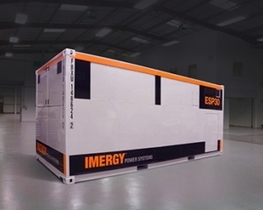
Imergy Power Systems just introduced its third-generation vanadium flow battery, claiming it offers a low-cost, high-performance energy storage solution for large-scale applications, including peak demand management, frequency regulation and the integration of intermittent renewable energy sources.

The ESP250 has an output power capability of 250 kilowatts and 1 megawatt of energy storage capacity. It’s suited for both short- and long-duration storage, with available energy ranging from two to 12 hours of output duration. The 40-foot batteries (each about the size of two shipping containers) are designed to be deployed individually or linked together for larger-scale projects. […]

Where Imergy has been able to edge out its competitors is on material cost. Vanadium is abundant but expensive to extract from the ground. Imergy has developed a unique chemistry that allows it to use cheaper, recycled resources of vanadium from mining slag, fly ash and other environmental waste.

With this chemistry, the levelized cost of energy for Imergy’s batteries is less than half of any other battery on the market right now, according to Hennessy. Vanadium flow batteries are orders of magnitude cheaper than lithium-ion batteries on a lifetime basis because they can be 100 percent cycled an unlimited number of times, whereas lithium-ion batteries wear down with use, according to the firm. Despite the compelling cost claims from Imergy, lithium-ion has been the predominant energy storage technology being deployed at this early point of the market. And very few flow batteries are currently providing grid services.

Imergy’s capital costs are lower than every other battery technology except lead-acid, Hennessy added. But he believes the company can hit that mark (roughly $200 per kilowatt-hour) by the end of the year by outsourcing contracts to manufacturing powerhouse Foxconn Technology Group in China. Delivery of the ESP250 is targeted for summer of 2015.

At this price, Imergy says the ESP250 offers an affordable alternative to peaker plants and can help utilities avoid investing more capital in the grid. Some might disagree with the claim that grid-scale storage can compete with fast-start turbines and natural gas prices below $3 per million Btu. But according to Hennessy, it all comes down to the application. Batteries can’t compete with gas at the 50-megawatt scale, but they can compete with gas at the distribution level.

“Batteries that are distributed have a huge advantage over gas, because when you buy gas down at the low end, you’re paying a lot more than $3 to $4 per MMBtu, because you’ve got to pay for all the transmission down to the small end,” he said.

Demand for cost-effective energy storage is growing as intermittent renewables become cheaper and come on-line in higher volumes. GTM Research anticipates the solar-plus-storage market to grow from $42 million in 2014 to more than $1 billion by 2018.

Imergy sees a ripe market in the Caribbean, parts of Africa and India, Hawaii and other places where the LCOE for solar-plus-storage is already competitive. As costs continue to fall, New York, California and Texas will also become attractive markets.”<


See on Scoop.itGreen Energy Technologies & Development

Renewable Energy Provides Half of New US Generating Capacity in 2014

According to the latest “Energy Infrastructure Update” report from the Federal Energy Regulatory Commission’s (FERC) Office of Energy Projects, renewable energy sources (i.e., biomass, geothermal, hydroelectric, solar, wind) provided nearly half (49.81 percent – 7,663 MW) of new electrical generation brought into service during 2014 while natural gas accounted for 48.65 percent (7,485 MW).


Image source:  http://usncre.org/

Source: www.renewableenergyworld.com

>” […] By comparison, in 2013, natural gas accounted for 46.44 percent (7,378 MW) of new electrical generating capacity while renewables accounted for 43.03 percent (6,837 MW). New renewable energy capacity in 2014 is 12.08 percent more than that added in 2013.

New wind energy facilities accounted for over a quarter (26.52 percent) of added capacity (4,080 MW) in 2014 while solar power provided 20.40% (3,139 MW). Other renewables — biomass (254 MW), hydropower (158 MW), and geothermal (32 MW) — accounted for an additional 2.89 percent.

For the year, just a single coal facility (106 MW) came on-line; nuclear power expanded by a mere 71MW due to a plant upgrade; and only 15 small “units” of oil, totaling 47 MW, were added.

Thus, new capacity from renewable energy sources in 2014 is 34 times that from coal, nuclear and oil combined — or 72 times that from coal, 108 times that from nuclear, and 163 times that from oil.

Renewable energy sources now account for 16.63 percent of total installed operating generating capacity in the U.S.: water – 8.42 percent, wind – 5.54 percent, biomass – 1.38 percent, solar – 0.96 percent, and geothermal steam – 0.33 percent.  Renewable energy capacity is now greater than that of nuclear (9.14 percent) and oil (3.94 percent) combined.

Note that generating capacity is not the same as actual generation. Generation per MW of capacity (i.e., capacity factor) for renewables is often lower than that for fossil fuels and nuclear power. According to the most recent data (i.e., as of November 2014) provided by the U.S. Energy Information Administration, actual net electrical generation from renewable energy sources now totals a bit more than 13.1 percent of total U.S. electrical production; however, this figure almost certainly understates renewables’ actual contribution significantly because EIA does not fully account for all electricity generated by distributed renewable energy sources (e.g., rooftop solar).

Can there any longer be doubt about the emerging trends in new U.S. electrical capacity? Coal, oil, and nuclear have become historical relics and it is now a race between renewable sources and natural gas with renewables taking the lead.”<

See on Scoop.itGreen & Sustainable News

Concentrated Solar Power Projects in 2014

“It was a good year for solar power in the USA, with over six gigawatts of photovoltaic (PV) capacity and more than one gigawatt of concentrated solar power (CSP) being added in 2014, bringing the nation’s total solar power capacity to more than 17 gigawatts. That’s a 41% increase in solar power capacity in just one year…”  Source: www.engineering.com

>” Photovoltaic vs Concentrated Solar Power

Photovoltaic technology converts light directly into electricity. PV panels produce DC, which needs to be converted to AC before being placed on the grid. PV panels work best in direct sunlight when they’re pointed perpendicular to the sun’s rays, but they also work reasonably well in diffuse light, even when not pointed directly at the sun. This makes them inexpensive and suitable for rooftops, since solar tracking isn’t required. PV also works in climates that aren’t particularly sunny; Germany gets less sunlight than the northern US, and yet it has a large portion of its power generated by PV.

Concentrated solar power, on the other hand, requires direct sunlight and solar tracking. CSP focuses the sun’s energy and uses the resulting heat to create steam that drives a traditional turbine generator. Even better, the heat can be stored – usually in the form of molten salts – so the CSP plant can generate electricity even when the sun isn’t shining. Because CSP relies on direct sunlight, it’s most suitable for very sunny locations like the American southwest.  […]

US Concentrated Solar Power in 2014

These five major CSP plants went online in 2014 (give or take a few months – one went live in late 2013):

Gila Bend, AZ is the home of the Solana parabolic trough power plant, which provides 250 MW of power to residents of Arizona. The turbine It went live in October of 2013. Spanning 1920 acres, the solar farm includes over two million square meters of reflective troughs and two tanks of molten salts, which provide up to six hours of thermal energy storage. If the stored energy is depleted and the sun isn’t shining, the turbine can be powered by natural gas as a backup.

The Genesis power plant in Blythe CA generates 250 MW of power using a parabolic trough array consisting of more than half a million mirrors. Unlike the Solana plant, Genesis includes no storage or backup fuel. Brought online in April of 2014, designers expect it to generate about 600 GWh of energy each year.

Probably the most famous CSP plant in the US, and the largest of its kind in the world, is the Ivanpah Solar Electric Generating System in Ivanpah Dry Lake CA, about 50 miles south of Las Vegas NV. Its three power towers fired up in February 2014, and the facility now produces 377 MW of power. Its annual production is expected to exceed one terawatt-hour. Ivanpah includes natural gas as its backup, but has no on-site storage.

About 270 miles northwest of Ivanpah is the Crescent Dunes Solar Energy Project in Tonopah, NV. Originally planned to go online in late 2014, the start date has been pushed back to January of 2015. When operational, this 110 MW power tower should produce nearly 500 GWh per year. Crescent Dunes uses molten salt to store heat, allowing it to generate power for ten hours without sunlight.

The Mojave Solar One facility came online in late 2014 and now generates 250 MW of electricity. Located about 100 miles northeast of Los Angeles CA, this parabolic trough array feeds a pair of 125 MW steam turbine generators. The plant should produce about 600 GWh per year. […]”<


See on Scoop.itGreen Energy Technologies & Development
Chile’s Mines Run on Renewables

Chilean mines are more and more run on renewable energy, which will soon be bigger than conventional energy in Chile. Thanks to China, writes John Mathews.

Source: www.energypost.eu

>” […] Miners in Chile are building independent solar, solar thermal, wind and geothermal power plants that produce power at costs competitive with or lower than conventional fuel supplies or grid-connected electric power.

Consider these facts.

The Cerro Dominador concentrated solar power (CSP) plant (see here for an explanation of the different solar technologies), rated at 110 megawatts, will supply regular uninterrupted power to the Antofagasta Minerals complex in the dry north of Chile, in the Atacama desert. Construction began in 2014. This is one of the largest CSP plants in the world, utilising an array of mirrors and lenses to concentrate the sun’s rays onto a power tower, and utilising thermal storage in the form of molten salts, perfected by Spanish company Abengoa. It will supply steady, dispatchable power, day and night.

The El Arrayán wind power project, rated at 115 megawatts, now supplies power to the Los Pelambres mine of Antofagasta Minerals, using Pattern Energy (US) as technology partner. Antofagasta Minerals has also contracted with US solar company SunEdison to build solar panel arrays at the Los Pelambres mine, with a power plant rated at 70 megawatts; while the related plant operated by Amenecer Solar CAP is rated at 100 megawatts, the largest such array in Latin America when it came online in 2014.

There are many more such projects under review or in the pipeline. The Chilean Renewable Energy Center reported in 2014 that the pipeline of renewable power projects in Chile added up to 18,000 megawatts (or 18 gigawatts), which is more than the country’s entire current electric power grid. […]”<


See on Scoop.itGreen & Sustainable News

Oil Price Slump Good News for Solar Power?

As global oil prices hit a five-year low, the fossil fuel industry is facing a gathering storm that could spell great news for the solar power industry.

Source: www.pv-magazine.com

” […]

Some analysts had suggested that cheaper oil could initially cause problems for the solar industry. With utilities able – but not guaranteed – to pass on gains to the consumer, the thirst for renewable energy could wane, analysts warned. “Such a scenario could destroy value on existing renewable energy projects and make it difficult to raise financing for future projects,” Peter Atherton, utility analyst at Liberum Capital, told the Guardian.

However, Deutsche Bank energy analyst Vishal Shah yesterday released a report that suggested there would be “limited/no impact from recent oil price weakness” on the solar industry, with PPA prices in the U.S. immune from oil fluctuations. In China, Shah added, government appetite to tackle air pollution also protects the solar industry from external volatility, while the U.S. residential solar market is even more insulated from external forces, which spells good news for companies like Solar City.

In Japan, energy advisor to the government and senior fellow at Mitsui Global Strategic Studies Institute Takashi Hongo told Bloomberg that “renewables are supported by policies, and that is not something that will be amended quickly just because oil prices fall,” suggesting there will be hardly any negative impact to the solar industry.

A warning shot was fired from Lin Boqiang, director of the Energy Economics Research Center at China’s Xiamen University, however. “If oil stays at current prices or weakens through the first half of next year, the impact on new energy would be massive,” Boqiang told Bloomberg. “Weakening oil prices would hamper the competitiveness of new energy.”

[…]

“The fact that oil is so unpredictable is one of the reasons why we must move to renewable energy, which has a completely predictable cost of zero for fuel,” urged Christiana Figueres, executive secretary of the UN Framework Convention on Climate Change at the opening of the COP20 climate conference in Peru.

A changing tide
Following oil’s dramatic price fall last week, this week began with two seismic announcements that could hammer a further nail into the fossil fuel coffin. First, German utility E.ON announced that it is to pivot away from fossil fuels by 2016, pouring the majority of its resources into the development of renewable energy sources.

Then, a day later, the Bank of England (BOE) wrote a letter to the U.K. government’s Environment Audit Committee announcing that it is to formally begin examining the risks fossil fuel companies pose to financial stability.

BOE governor Mark Carney expressed his concern that much of the world’s proven coal, oil and gas reserves may be “unburnable” if the world is to keep global warming within safe limits.

“In light of discussions with officials, we will be deepening and widening our inquiry into the topic,” wrote Carney. “I expect the Financial Policy Committee to also consider this issue as part of its regular horizon-scanning work on financial stability risks.” […]”

Read more: http://www.pv-magazine.com/news/details/beitrag/is-the-oil-price-slump-a-boon-for-solar_100017395/#ixzz3LrUAGr88


See on Scoop.itGreen & Sustainable News

Electricity storage becomes priority as solar and wind energy cost keeps dropping

“And the cost of solar power is declining amazingly. Austin Energy signed a deal recently that a solar farm is selling at 5 cents a kilowatt-hour. A recent study by Lazard gave a cost of 5.6 cents for solar and 1.4 cents for wind power (with current subsidies) or 7.2 cents for solar and 3.7 cents for wind without subsidies. Natural gas came in at 6.1 cents and coal at 6.6 cents. The Solar Energy Industries Association claims that in the Southwest electricity contracts for solar energy have dropped 70 percent since 2008.”

Peter Spitz's avatarchemengineeringposts

imgres The rapid advances in the use of solar and wind energy – more in Europe, but now also gaining momentum in the U.S.- has put electricity “storage” front and center. That is because there is no solar production at night and little on cloudy days, while strong winds are unpredictable in most locations. So, the best “model” for these renewable energy sources is to generate as much as possible at favorable times and to “store” excess production for periods when solar and wind energy supply are low.

And the cost of solar power is declining amazingly. Austin Energy signed a deal recently that a solar farm is selling at 5 cents a kilowatt-hour. A recent study by Lazard gave a cost of 5.6 cents for solar and 1.4 cents for wind power (with current subsidies) or 7.2 cents for solar and 3.7 cents for wind without subsidies. Natural gas came in at…

View original post 303 more words