The Ripple Effect of Energy Efficiency Investment

“The term “multiple benefits” has emerged to describe the additional value that emerges with any energy performance improvement. The benefits that occur onsite can be especially meaningful to manufacturing, commercial, and institutional facilities. Energy efficiency’s positive ripple effects include increased productivity and product quality, system reliability, and more. ”


Source: aceee.org

>” […]  Over the past few decades, researchers have documented numerous cases of energy efficiency improvements—almost always focusing exclusively on energy savings. Non-energy benefits are often recognized, but only in concept. ACEEE’s new report, Multiple Benefits of Business-Sector Energy Efficiency, summarizes what we know about the multiple benefits for the business sector. True quantification of these benefits remains elusive due to a lack of standard definitions, measurements, and documentation, but also in part because variations in business facility design and function ensures that a comprehensive list of potential energy efficiency measures is long, varied, and often unique to the facility.

To give some concrete examples of non-energy benefits at work: Optimizing the use of steam in a plywood manufacturing plant not only reduces the boiler’s natural gas consumption, it also improves the rate of throughput, thus increasing the plant’s daily product yield. A lighting retrofit reduces electricity consumption while also introducing lamps with a longer operating life, thus reducing the labor costs associated with replacing lighting. In many instances, monitoring energy use also provides insights into water or raw material usage, thereby revealing opportunities to optimize manufacturing inputs and eliminate production waste. By implementing energy efficiency, businesses can also boost their productivity. This additional value may make the difference in a business leader’s decision to pursue certain capital investment for their facility.

Meanwhile, energy resource planners at utilities and public utility commissions recognize the impact of large-facility energy demands on the cost and reliability of generation and transmission assets. By maximizing consumer efficiency, costs are reduced or offset throughout a utility system. So the ability to quantify the multiple benefits of investing in energy efficiency, if only in general terms, is an appealing prospect for resource planners eager to encourage greater participation in efficiency programs.

Unfortunately, our research shows that this quantification rarely happens, even though the multiple benefits are frequently evident. A number of studies offer measurement methodologies, anticipating the availability of proper data. When these methodologies are employed with limited samples, we see how proper accounting of non-energy benefits dramatically improves the investment performance of energy efficiency improvements—for example, improving payback times by 50% or better. Samples may provide impressive results, but the data remains too shallow to confidently infer the value to come for any single project type implemented in a specific industrial configuration. Developing such metrics will require more data.  […]”<


See on Scoop.itGreen & Sustainable News

University to Install Combined Heat and Power Plant for Energy Savings and Climate Goals

“Construction is will soon begin on a $96 million combined heat and power (CHP) plant in another aging facility near the river’s edge that will dramatically cut the campus’ carbon footprint while driving down the cost of energy”

Source: www.midwestenergynews.com

>” […] The project, in the 1912-vintage Old Main Utility Building, will produce enough steam to heat the entire campus and meet about half of its electricity demand.

CHP and carbon reductions

CHP will be a major tactic in the goal of reducing the University’s carbon emissions by 50 percent by 2020, said Shane Stennes, who serves as the University Services’ sustainability coordinator. The Southeast Steam Plant, itself a CHP facility, mainly used natural gas but still had a small measure of coal in its fuel mix, along with oat hulls.

“The carbon reduction is partly due to a change in fuel but mostly a result of increased efficiency,” Stennes said. The ability to use the waste heat from the electricity generation process is the real reason the University will see carbon emissions plummet, he added.

“From the sustainability point of view this plant is the right thing to do,” he said, noting that in 2008 the University’s campus system agreed to a net zero scenario in the American College and University Presidents’ Climate Commitment.

CHP is on a bit of a roll. President Barack Obama signed an executive order in 2012 promoting wider adoption of CHP and the state Department of Commerce recently held stakeholders’ meetings on the issue to determine how the state might help in moving forward projects.

The potential was described in a Commerce policy brief associated with the stakeholder meetings: “Power generation waste heat in Minnesota is nearly equal to the total requirement for heat energy in buildings and industry.” […]

Minnesota has at latest count 55 CHP systems in the state, according to the ICF International.

Reasons for CHP at the U

A campus CHP comes with another advantage by creating an “island” of energy independence should a regional blackout hit. Many major Midwest and coastal universities have CHP in part to rely less on power grids that are vulnerable to major storms or other weather maladies, he said.

“We see CHP as a way to be competitive with other schools and to protect research if we had a catastrophe,” he said.

The need for more boilers, said Malmquist, stems from growing demand for power. Although the nearly dozen new buildings constructed in the last few years meet rigorous energy efficiency standards they tend to demand more power due to their function as research centers.

The Biomedical Discovery District, a new physics laboratory, technology classroom and other science-related buildings, as well as a new residence hall, have added square footage for steam and electricity, he said.

“The buildings we’re putting up today are more energy intensive than the ones we’ve been taking down,” said Malmquist. […]”<

See on Scoop.itGreen Building Operations – Systems & Controls, Maintenance & Commissioning

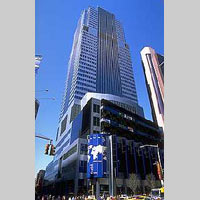
Morgan Stanley Installs Bloom Energy Fuel Cells At Purchase, NY Facility

Morgan Stanley Installs Bloom Energy Fuel Cells At Purchase, NY Facility

Source: www.bloomenergy.com

“The project will provide clean and uninterruptible power for the 750,000 Sq. Ft. Office Building

PURCHASE, NY, Nov. 14 — […] The fuel cell system, along with a solar panel field completed earlier this year, are the latest in a series of initiatives to improve the facility’s energy efficiency and resiliency.

The Bloom Energy fuel cell system produces electricity without burning fossil fuels, thus reducing emission of greenhouse gases. It will supply approximately 250 kilowatts (kW) of constant base load power to the facility, as well as grid-independent electricity to power portions of the building’s critical load during grid outages.  […]

The new solid oxide fuel cell system (SOFC) technology converts fuel into electricity through a highly efficient electrochemical process, resulting in on-site, clean and reliable power. Combined with the solar field, these new installations are expected to produce approximately 3 million kilowatt hours (kWh) of energy a year. During peak energy consumption times, they can supply approximately one megawatt, or up to 30 percent of the building’s demand.

Support for this project was provided by the New York State Energy Research and Development Authority (NYSERDA). Founded in 1975, NYSERDA is a public benefit corporation that provides information, services, programs and funding to help New Yorkers increase energy efficiency, save money, use renewable energy and reduce reliance on fossil fuels.

About Bloom Energy

Bloom Energy is a provider of breakthrough solid oxide fuel cell technology generating clean, highly-efficient on-site power from multiple fuel sources. The company was founded in 2001 with a mission to make clean, reliable energy affordable for everyone in the world. Bloom Energy Servers are currently producing power for several Fortune 500 companies including Apple, Google, Walmart, AT&T, eBay, Staples, The Coca-Cola Company, as well as notable non-profit organizations such as Caltech and Kaiser Permanente. The company is headquartered in Sunnyvale, CA. For more information, visit www.bloomenergy.com.

About Morgan Stanley

Morgan Stanley (NYSE: MS) is a leading global financial services firm providing investment banking, securities, investment management and wealth management services.  […]”<


See on Scoop.itGreen Energy Technologies & Development

Bloom Box: The Alternative Energy Fuel Cell Technology – 60 Minutes

https://youtube.com/watch?v=shkFDPI6kGE%3Ffs%3D1%26hl%3Dfr_FR

“Derived from a common sand-like powder, and leveraging breakthrough advances in materials science, our technology is able to produce clean, reliable, affordable power,… practically anywhere,… from a wide range of renewable or traditional fuels.”

Source: www.youtube.com

Changing the Face of Energy

Bloom Energy is changing the way the world generates and consumes energy.

Our unique on-site power generation systems utilize an innovative new fuel cell technology with roots in NASA’s Mars program.  […]

Our Energy Servers® are among the most efficient energy generators on the planet; providing for significantly reduced electricity costs and dramatically lower greenhouse gas emissions.

By generating power on-site, where it is consumed, Bloom Energy offers increased electrical reliability and improved energy security, providing a clear path to energy independence.

Founded in 2001, Bloom Energy is headquartered in Sunnyvale, California.”
http://www.bloomenergy.com/about/&nbsp;

See on Scoop.itGreen Energy Technologies & Development

‘Demand Response’ is ‘Disruptive Technology’ Shutting Down Power Plants

FirstEnergy Corp. has a traditional view of wholesale electricity markets: They’re a competition between iron-in-the-ground facilities that can put megawatts on the grid when those megawatts are needed. Think coal plants, nuclear reactors and hydroelectric dams. Missing from the definition is a consumer’s promise to turn off the lights when the grid is stressed — so-called demand response. Instead of creating energy during peak times, demand response resources conserve it, freeing up megawatts […]

Source: powersource.post-gazette.com

>” […]The idea is not new and has been expanding in the territory of PJM Interconnection, a Valley Forge-based grid operator that manages the flow of electricity to 13 states, including Pennsylvania.

FirstEnergy, which owns power plants and utility companies across several states, wants PJM to abandon the demand response concept.

The Ohio-based energy company says demand response, which doesn’t require any kind of capital commitment, is “starving” traditional generation out of its rightful revenue in wholesale markets.

“We feel that it’s going to lead to even more premature closures of power plants,” said Doug Colafella, a spokesman for the firm.

Specifically, FirstEnergy is fighting to get demand response kicked out of PJM’s annual capacity auction, which ensures there’s enough electricity resources to meet projected power demand three years in advance. The auction establishes a single clearing price that will be paid to all successful bidders, like a retainer fee, in exchange for their promise to be available to be called upon three years from now.

During the May auction, which set capacity prices for the 2017-2018 year, the clearing price was $120 a day for each megawatt of electricity bidders committed. About 6 percent, or about 11,000 megawatts, of the capacity secured came from demand response.

FirstEnergy’s Bruce Mansfield coal-fired power plant in Beaver County failed to clear the auction. The company has since postponed upgrades to the facility, which could jeopardize its functioning beyond 2016.

Capacity payments are a stable source of revenue for baseload generation plants, Mr. Colafella said, and a price signal to the market about which way demand is headed, giving generators some indication about whether new facilities will be necessary and profitable.

Demand response distorts that dynamic, he said.

Since May, FirstEnergy has intensified its efforts to drive demand response out of PJM’s markets, having seized on a related court case involving the Federal Energy Regulatory Commission.

“FirstEnergy’s business model is that electricity consumption has been flattening, so they want to take a larger share of the market and how do you take a larger share? You bulldoze everybody out,” said Mei Shibata, CEO of The Energy Agency, a marketing and communications firm and co-author of a recent report on the market for demand response in the U.S. for GreenTech Media Research.

In May, the D.C. Circuit Court vacated a rule created by the Federal Energy Regulatory Commission in 2011 that said demand response should be treated the same way as power plants in wholesale energy markets. That meant demand response providers could offer to shut down a day in advance, when grid operators book electricity for the following day, and get the same price as megawatts from generation.

An electric power industry group sued the FERC claiming that the call to shut off electricity in exchange for payment is a retail choice and retail falls exclusively within state jurisdiction, not federal. The court agreed, setting in motion FirstEnergy’s challenge to demand response in capacity markets, which were not addressed by the court decision. If demand response is a retail product in one context, then it’s a retail product in all, the logic goes.

The same day the court issued its decision, FirstEnergy filed a lawsuit asking a judge to order PJM to recalculate the results of its May capacity auction stripping out demand response.

PJM objected. The Pennsylvania Public Utility Commission, which intervened in that case, charged FirstEnergy with “jumping the gun” on its logic and called its proposal an “unprecedented and wholly unnecessary disruption of the capacity market auction process.”

Even if demand response is excluded from the daily wholesale market as the court decision wills, the market for this resource will continue to expand, said Ms. Shibata.

If, however, FirstEnergy succeeds in kicking demand response out of the capacity market, “that would be a much bigger deal,” she said.

PJM leads the nation in demand response resources, according to Ms. Shibata’s research, and anything that happens to demand response at PJM would likely trickle down to the other grid operators around the country. […]”<

See on Scoop.itGreen Energy Technologies & Development

Ice Energy Storage Solution Awarded 16 Contracts by SCE

Santa Barbara – Ice Energy today (Nov 5, 2014) announced it has been awarded sixteen contracts from Southern California Edison (SCE) to provide 25.6 megawatts of behind-the-meter thermal energy storage using Ice Energy’s proprietary Ice Bear system.

Source: www.ice-energy.com

>” […] Ice Energy was one of 3 providers selected in the behind-the-meter energy storage category, which was part of an energy storage procurement by SCE that was significantly larger than the minimum mandated by the California Public Utility Commission (CPUC). SCE is one of the nation’s leaders in renewable energy and the primary electricity supply company for much of Southern California.

The contract resulted from an open and competitive process under SCE’s Local Capacity Requirements (LCR) RFO. The goals of the LCR RFO and California’s Storage Act Mandates are to optimize grid reliability, support renewables integration to meet the 2020 portfolio standards, and support the goal of reducing greenhouse gas emissions to 20% of 1990 levels by 2050.

“SCE’s focus on renewable energy is critical to helping meet California’s long-term goals, and Ice Energy is proud to be part of the solution with these contracts,” said Mike Hopkins, CEO of Ice Energy, the leading provider of distributed thermal energy storage technology. “Using ice for energy storage is not new, we’ve just made it distributed, efficient, and cost-effective. The direct-expansion AC technology is robust and proven, which is important because SCE and other utilities require zero risk for their customers.”

In 2013, 22 percent of the power SCE delivered came from renewable sources, compared to 15 percent for other power companies in the state. The utility is on track to meet the state’s goal of 33 percent, and procuring energy storage helps them meet those targets while maintaining a robust and reliable grid.

Ice Energy’s product, the Ice Bear, attaches to one or more standard 5-20 ton commercial AC units. The Ice Bear freezes ice at night when demand for power is low, capacity is abundant and increasingly sourced from renewables such as wind power. Then during the day, stored ice is used to provide cooling, instead of the power-intensive AC compressor. Ice Bears are deployed in smart-grid enabled, megawatt-scale fleets, and each Ice Bear can reduce harmful CO2 emissions by up to 10 tons per year. Installation is as quick as deploying a standard AC system.

“Ice Bears add peak capacity to the grid, reduce and often eliminate the need for feeder and other distribution system upgrades, improve grid reliability and reduce electricity costs,” Hopkins said. “What’s special about our patented design and engineering is the efficiency and cost. It’s energy storage at the lowest cost possible with extraordinary reliability.”

See on Scoop.itGreen Energy Technologies & Development

Thermal Energy Storage uses Ice for Cooling of Buildings – Smart Grid Technologies

Ice Energy’s proven Ice Bear system is the most cost effective and reliable distributed energy storage solution for the grid. The Ice Bear delivers up to six hours of clean, firm, non-fatiguing stored energy daily and is fully dispatchable by the utility. Ice Bear projects are job engines, creating long-term green jobs in the hosting communities.

Source: www.ice-energy.com

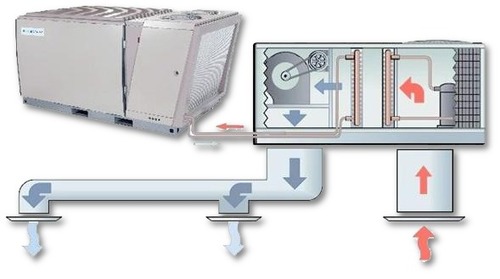
>” […] The Ice Bear system is an intelligent distributed energy storage solution that works in conjunction with commercial direct-expansion (DX) air-conditioning systems, specifically the refrigerant-based, 4-20 ton package rooftop systems common to most small to mid-sized commercial buildings.

The system stores energy at night, when electricity generation is cleaner, more efficient and less expensive, and delivers that energy during the peak of the day to provide cooling to the building.

Daytime energy demand from air conditioning – typically 40-50% of a building’s electricity use during peak daytime hours – can be reduced significantly by the Ice Bear. Each Ice Bear delivers an average reduction of 12 kilowatts of source equivalent peak demand for a minimum of 6 hours daily, shifting 72 kilowatt-hours of on-peak energy to off-peak hours. In addition, the Ice Bear can be configured to provide utilities with demand response on other nearby electrical loads – effectively doubling or even tripling the peak-demand reduction capacity of the Ice Bear.

When aggregated and deployed at scale, a typical utility deployment will shift the operation of thousands of commercial AC condensing units from on-peak periods to off-peak periods, reducing electric system demand, improving electric system load factor, reducing electric system costs, and improving overall electric system efficiency and power quality.

The Ice Bear is installed behind the utility-customer meter, but the Ice Bear system was designed for the utility as a grid asset, with most of the benefits flowing to the utility and grid as a whole. Therefore Ice Bear projects are typically funded either directly or indirectly by the utility.[…]

At its most basic, the Ice Bear consists of a large thermal storage tank that attaches directly to a building’s existing roof top air-conditioning system.

The unit makes ice at night, and uses that ice during the day to efficiently deliver cooling directly to the building’s existing air conditioning system.

The Ice Bear energy storage unit operates in two basic modes, Ice Cooling and Ice Charging, to store cooling energy at night, and to deliver that energy the following day.

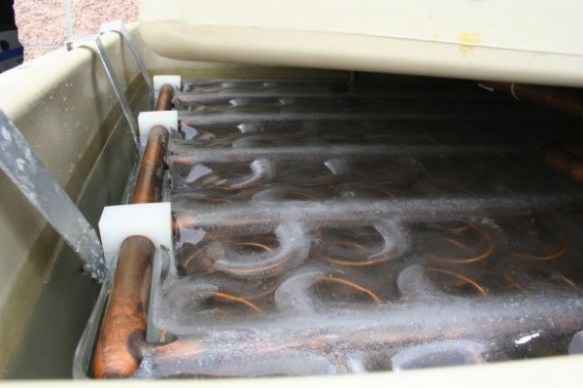
During Ice Charge mode, a self-contained charging system freezes 450 gallons of water in the Ice Bear’s insulated tank by pumping refrigerant through a configuration of copper coils within it. The water that surrounds these coils freezes and turns to ice. The condensing unit then turns off, and the ice is stored until its cooling energy is needed.

As daytime temperatures rise, the power consumption of air conditioning rises along with it, pushing the grid to peak demand levels. During this peak window, typically from noon to 6 pm, the Ice Bear unit replaces the energy intensive compressor of the building’s air conditioning unit.

[…]

The Ice Cooling cycle lasts for at least 6 hours.

Once the ice has fully melted, the Ice Bear transfers the job of cooling back to the building’s AC unit, to provide cooling, as needed, until the next day. During the cool of the night, the Ice Charge mode is activated and the entire cycle begins again. […]”<

See on Scoop.itGreen Energy Technologies & Development

California’s PG&E Takes Grid Energy Storage to the Distribution Substation

California’s utilities are building a 1.3-gigawatt energy storage system, one piece at a time.

Source: www.greentechmedia.com

>” […] PG&E’s solicitation (PDF) is one of the first rounds from the 74 megawatts of storage projects the utility is set to announce by December. That, in turn, is part of the first procurement round for the state’s 1.3-gigawatt mandate for storage by 2021, which is requiring PG&E, Southern California Edison, and San Diego Gas & Electric to sign up about 200 megawatts of cost-effective grid storage by year’s end.

[…]

Some of these projects will be aggregating distributed, behind-the-meter batteries to help solve local grid needs. But PG&E’s substation RFO is aimed strictly at utility-owned and -operated battery systems — which makes sense, because PG&E is justifying its cost by showing how much it saves by not building or upgrading new substations.

[…]

PG&E’s cost-benefit calculation for these projects is fairly straightforward — subtract the cost of upgrading the substation from the cost of the battery system. Still, the duty cycle being asked of these energy storage systems (ESS) is pretty severe, according to the RFO:

“[T]his is defined as discharging the ESS from 100% state of charge (SOC) at guaranteed maximum power for the guaranteed discharge duration, then charging it to back to 100% SOC and subsequently discharging it at guaranteed maximum power for half of the guaranteed discharge duration, and finally charging it back to 100% SOC during the course of a single day. The ESS shall be capable of performing the guaranteed site specific duty cycle for up to 365 days per year excluding time for planned maintenance and/or forced outages.”

[…]

Asset or investment deferral of this kind is actually a significant route to market for existing battery-based grid storage systems, with projects around the world allowing stressed-out substations to keep operating for years longer by cushioning the peaks with stored battery power. In fact, PG&E has a 2-megawatt project in Vacaville that’s serving that purpose for a transmission substation.

But the new projects are some of the first targeting the medium- and low-voltage distribution grid, where the rules for batteries are different. California regulators are asking the state’s big utilities to come up with ways to value distributed energy assets — solar panels, batteries, plug-in vehicles, smart thermostats and other grid-edge systems — in their multi-billion-dollar, multi-year distribution grid investment plans.

PG&E didn’t disclose how much investment it’s hoping to defer with these new projects, or how much it planned to pay for them. But the numbers could be significant. In New York City, utility Consolidated Edison is proposing a plan to replace $1 billion in substation upgrades with a mix of energy efficiency, demand response, and distributed energy resources like rooftop solar and energy storage.”<

See on Scoop.itGreen Energy Technologies & Development

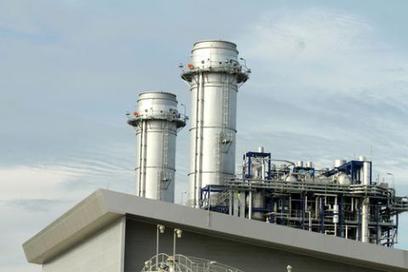
Energy Storage Technologies Will Replace Utilities Gas Fired Turbine Peaker Plants

“Power grids need extra generating capacity to work properly. For example, about 20 percent of New York State’s generation fleet runs less than 250 hours a year. Because they don’t run much, “peaker plants” are by design the cheapest and least efficient fossil generators.”

Source: www.renewableenergyworld.com

>”[…] As has happened with solar PV, the costs for multi-hour energy storage are about to undergo a steep decline over the next 2 to 3 years. This cost trend will disrupt the economic rationale for gas-fired simple cycle combustion turbines (CTs) in favor of flexible zero emissions energy storage. This will be especially true for storage assets owned and operated by vertical utilities and distributed near utility substations.

Simple cycle gas-fired CTs have been a workhorse utility asset for adding new peaker capacity for decades. But times and technologies change, and the power grid’s long love affair with gas-fired CTs is about to be challenged by multi-hour energy storage. Flow batteries that utilize a liquid electrolyte are especially cost-effective because the energy they store can be easily and inexpensively increased just by adding more electrolyte.

CTs cost from $670 per installed kilowatt to more than twice that much for CT’s located in urban areas. But the economics of peaking capacity must also reflect the benefits side of the cost/benefit equation. Distributed storage assets can deliver both regional (transmission) and local (distribution) level energy balancing services using the same storage asset. This means the locational value and capacity use factor for distributed storage can be significantly higher compared to CTs operated on a central station basis.

[…]

The disruptive potential of energy storage as a substitute for simple cycle CTs has been recognized. For example, Arizona Public Service (APS) and the Residential Utility Consumer Office (RUCO) recently filed a proposed settlement which, if approved, would require that at least 10% of any new peaker capacity now being planned as simple cycle combustion turbines would instead need to be energy storage — as long as the storage meets the cost effectiveness and reliability criteria of any CTs being proposed.

[…]

Lower cost solar PV and its rising penetration in all market segments will have a profoundly disruptive effect on utility operations and the utility cost-of-service business model. This has already started to happen. Storage offers a way for utilities to replace lost revenues premised on margins from kilowatt-hour energy sales by placing energy storage into the rate based and earning low-risk regulated returns.”<

See on Scoop.itGreen Energy Technologies & Development

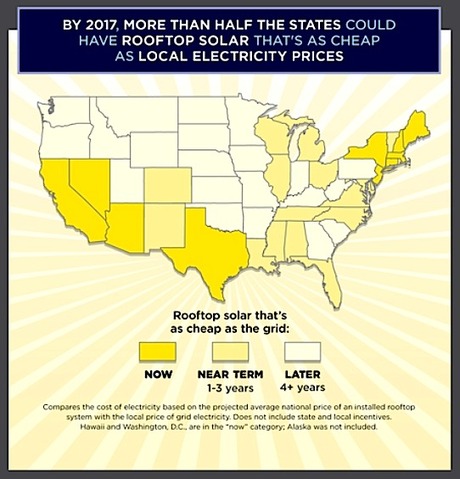
Grid Parity Is Accelerating the US Solar Revolution

“Solar PV installations in the U.S. increased an impressive 485% from 2010 to 2013, and by early 2014, there were more than 480,000 systems in the country. That’s 13,400 MW, enough to power about 2.4 million typical American homes.”


Source: www.pvsolarreport.com

>” […] You can definitely see a correlation between electricity price and amount of solar installed, though there are exceptions. Kansas, for example, has fairly high grid prices but little solar — a testament to the fact that good policy is also a key ingredient in promoting solar. And Alaska is not exactly highly populated. For the most part, though, solar is flourishing in states with high electricity rates.

In some states like California, already one of the most expensive places for electricity in the country, residential rates will soon be going up further. Customers in the PG&E service area are looking at a 3.8% increase in electricity bills. Overall, electricity prices in the U.S. have been rising rapidly. According to the Energy Information Administration, in the first half of 2014, U.S. retail residential electricity prices went up 3.2% from the same period last year — the highest year-over-year growth since 2009. […]

The fact is, solar and other renewables just keep getting cheaper. We’ve noticed a number of stories debating this recently, many in reaction to an Economist article on how expensive wind and solar really are. But as Amory Lovins points out, the reality is that renewables are getting cheaper all the time, regardless of anyone’s arguments.

What does this mean? It means that grid parity is coming sooner than you might think […]”<

See on Scoop.itGreen Energy Technologies & Development