Smart Grid Testbed For Industrial Electrical Grid Innovation

Industrial Internet Consortium announces first energy-focused testbed.

Source: www.cbronline.com

The Communication and Control Testbed for Microgrid Applications, the first energy-focused testbed, was today [Mar 27/2015] announced by the Industrial Internet Consortium.

Member organisations including Real-Time Innovations (RTI), National Instruments, and Cisco, will collaborate on the project, working with power utility firms CPS Energy and Southern California Edison. Additionally, Duke Energy and power industry organisation Smart Grid Interoperability Panel (SGIP) will be also involved.

In order to put an end to renewable energy waste in neighbourhoods or businesses, a new architectural innovation was found to be needed.

Today’s power grid relies on a central-station architecture, which is not designed to interconnect distributed and renewable power sources such as roof-top solar and wind turbines. The system must over-generate power to compensate for rapid variation in power generation or demands.

The Communication and Control Testbed will introduce the flexibility of real-time analytics and control to increase efficiencies, ensuring that power is generated more accurately and reliably to match demand.

The solution proposes re-architecting electric power grids to include a series of distributed microgrids which will control smaller areas of demand with distributed generation and storage capacity.

These microgrids will operate independently from the main electric power grid, but will still interact and be coordinated with the existing infrastructure.

In order to ensure a coordinated, accepted architecture based on modern, cross-industry industrial internet technologies, companies taking part in the venture will work with Duke Energy and SGIP.

The Communications and Control framework will be developed in three phases, with initial developments being tested in Southern California Edison’s Controls Lab in Westminster, CA.

The final stage of the project will culminate in a field deployment that will take place at CPS Energy’s “Grid-of-the-Future” microgrid test area in San Antonio, Texas.

Stan Schneider, RTI’s CEO and IIC Steering Committee member, said: “The smart grid is a critical infrastructure component of the Industrial Internet of Things.

“The IIoT will span industries, sensor to cloud, power to factory, and road to hospital. This key first step will address a significant barrier to the efficient use of green energy.” […]”<

See on Scoop.itGreen Energy Technologies & Development

France now requires all new buildings to have green roofs or solar panels

Susan Davis Cushing's avatarPr0jectClimate

France just passed atrailblazing new lawthat requires that all new buildings constructed in commercial areas to be partially-covered by either solar panels orgreen roofs. Not only will this bring dramatic changes to the nation?s skylines and bolster the efficiency of all new commercial construction, but the law will help France pick up the pace the solar adoption?which has lagged behind other European nations in recent years.

Read more:France requires all new buildings to have green roofs or solar panels | Inhabitat – Sustainable Design Innovation, Eco Architecture, Green Building


Source: inhabitat.com

“Here’s hoping that other nations can soon follow suit.” I had to go back and dig through my sources to make sure I hadn’t dreamed this!

View original post

CloudSolar Helps Renewable Energy Fans Who Can’t Install Their Own Solar Panels

State and Solar Advocates Complete Legal Agreement for Full Net Metering Credit to Utilities

The Act 236 agreement also settles rules for legal solar leasing.

Source: www.utilitydive.com

>”[…]  The South Carolina Public Service Commission last week approved a settlement agreement between Duke Energy Carolinas, South Carolina Electric & Gas (SCE&G) and major environmental groups that allows rooftop solar owners to get full retail value for electricity their systems send to the grid.The agreement on net energy metering (NEM) is part of Act 236, passed in 2014 after a consultation process involving renewable energy-interested stakeholders. Solar systems installed before the end of 2020 will earn full retail value bill credit for each kilowatt-hour that goes to the grid.Act 236 also legalizes third party ownership of solar, more widely known as solar leasing, and sets up rules by which leasing companies like SolarCity and Sunrun must operate.

Dive Insight:  To study the emerging solar opportunity, a South Carolina General Assembly-created oversight group organized a coalition of environmentalists, solar advocates, and utilities and electric cooperatives into an Energy Advisory Council in 2013. Act 236 was formulated out of its report.

The NEM settlement also raises the size limit of eligible systems from 100 kW to 1 MW and raises the cap on NEM systems from 0.2% of each utility’s peak capacity to 2%.

Act 236 requires leasing companies to be certified by the state and limits the size of leased residential systems to 20kW and leased commercial systems to 1000kW. Leased systems can only serve one customer and one location and cannot sell electricity to third parties. The total of leased solar is capped at no more than 2% of a utility’s residential, commercial, or industrial customers average retail peak demand.

Groups that led the settlement with the utilities include the Coastal Conservation League, the Southern Environmental Law Center, and the Southern Alliance for Clean Energy. […]”<


See on Scoop.itGreen Building Operations – Systems & Controls, Maintenance & Commissioning

Global Distributed Energy Storage Capacity Expected to Increase Nearly 10-Fold

The worldwide capacity of distributed energy storage systems is expected to increase nearly 10-fold over the next 3 years, according to a new report from Navigant Research, which analyzed the global market for distributed energy storage systems through 2024.

Source: cleantechnica.com

>” […] The primary conclusion of the report is that distributed storage is one of the fastest-growing markets for energy storage globally, thanks to the focus of rapid innovation and intense competition, causing the market to greatly exceed market expectations. This growth and subsequent demand has led to grid operators, utilities, and governments looking to encourage storage installations that are physically situated closer to the retail electrical customer.

According to the report from Navigant Research, worldwide capacity of distributed energy storage systems (DESSs) is expected to grow from its current 276 MW, to nearly 2,400 MW in 2018.

“Distributed storage is among the fastest-growing markets for energy storage globally,” says Anissa Dehamna, senior research analyst with Navigant Research. “In particular, residential and commercial energy storage are expected to be the focus of technological advances and market activity in the coming years.” […]

Two specific types of DESS are classified in the report: Community energy storage refers to systems installed at the distribution transformer level; Residential and commercial storage, on the other hand, refer to “two behind-the-meter applications targeted at either homeowners or commercial and industrial customers.” Together, these two technologies include lithium ion (Li-ion), flow batteries, advanced lead-acid, and other next-generation chemistries, such as sodium metal halide, ultracapacitors, and aqueous hybrid ion.

Similarly, the two categories of DESS each have specific market drivers. Community energy storage is being driven by the improved reliability yielded in case of outages, load leveling and peak shifting, and improved power quality. Almost as importantly, community energy storage systems can communicate with a grid operator’s operating system, allowing the operator to mitigate disruptions to the grid.

Given its primary use as an energy cost management solution, the prime driver behind commercial storage systems is the rate structure for customers. “<

See on Scoop.itGreen Energy Technologies & Development

US Energy Storage Capacity to Triple in 2015

Over triple the amount of energy storage capacity — 220 megawatts worth — is expected to come on-line this year.

Source: www.triplepundit.com

>” […] 2015 looks set to be a milestone year for advanced energy storage solutions. Some 220 megawatts worth of energy storage capacity will be deployed across the nation in 2015 – more than three times the 2014 total, according to an inaugural market research report from GTM Research and the Energy Storage Association (ESA). The organizations see growth continuing “at a rapid clip thereafter.”

The number of grid-connected electrochemical and electromechanical storage installations that came on-line in 2014 totaled 61.9 megawatts of power capacity, the organizations found, up 40 percent from 44.2 MW in 2013. One leading distributed energy storage pioneer delivered over a third of the total.  […]

Utility deployments dominated the fast emerging U.S. market for advanced energy storage systems in 2014, accounting for 90 percent of newly-installed capacity. So-called “behind the meter” installations at utility customer sites – commercial and industrial companies, government facilities, schools, hospitals and municipalities – made up 10 percent of the 2014 total.

But installations of “behind the meter” energy storage systems picked up sharply in the fourth quarter of 2014, GTM and ESA note. Going forward, GTM expects behind-the-meter installations will account for 45 percent of the overall market by 2019.

Advanced energy storage system deployments are also concentrated in states that have and/or are in the process of instituting market regulatory reforms and supportive policies, including mandates and incentive programs. GTM and ESA singled out California and states where PJM is responsible for grid operations and management – all or part of 13 states across the eastern U.S. and the District of Columbia – as early leaders.

“The U.S. energy storage market is nascent, but we expect it to pick up more speed this year,” GTM Research SVP Shayle Kann was quoted in a Greentech Media news report. “Attractive economics already exist across a broad array of applications, and system costs are in rapid decline. We expect some fits and starts but significant overall growth for the market in 2015.”

[…]”<

See on Scoop.itGreen Energy Technologies & Development

Vanadium Flow Battery Competes With Lithium and Lead-Acid at Grid Scale

The company claims LCOE [Levelized Cost of Energy] is less than half the cost of any other battery technology available.

Source: www.greentechmedia.com

>”[…]

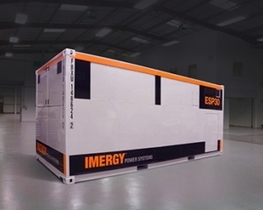
Imergy Power Systems just introduced its third-generation vanadium flow battery, claiming it offers a low-cost, high-performance energy storage solution for large-scale applications, including peak demand management, frequency regulation and the integration of intermittent renewable energy sources.

The ESP250 has an output power capability of 250 kilowatts and 1 megawatt of energy storage capacity. It’s suited for both short- and long-duration storage, with available energy ranging from two to 12 hours of output duration. The 40-foot batteries (each about the size of two shipping containers) are designed to be deployed individually or linked together for larger-scale projects. […]

Where Imergy has been able to edge out its competitors is on material cost. Vanadium is abundant but expensive to extract from the ground. Imergy has developed a unique chemistry that allows it to use cheaper, recycled resources of vanadium from mining slag, fly ash and other environmental waste.

With this chemistry, the levelized cost of energy for Imergy’s batteries is less than half of any other battery on the market right now, according to Hennessy. Vanadium flow batteries are orders of magnitude cheaper than lithium-ion batteries on a lifetime basis because they can be 100 percent cycled an unlimited number of times, whereas lithium-ion batteries wear down with use, according to the firm. Despite the compelling cost claims from Imergy, lithium-ion has been the predominant energy storage technology being deployed at this early point of the market. And very few flow batteries are currently providing grid services.

Imergy’s capital costs are lower than every other battery technology except lead-acid, Hennessy added. But he believes the company can hit that mark (roughly $200 per kilowatt-hour) by the end of the year by outsourcing contracts to manufacturing powerhouse Foxconn Technology Group in China. Delivery of the ESP250 is targeted for summer of 2015.

At this price, Imergy says the ESP250 offers an affordable alternative to peaker plants and can help utilities avoid investing more capital in the grid. Some might disagree with the claim that grid-scale storage can compete with fast-start turbines and natural gas prices below $3 per million Btu. But according to Hennessy, it all comes down to the application. Batteries can’t compete with gas at the 50-megawatt scale, but they can compete with gas at the distribution level.

“Batteries that are distributed have a huge advantage over gas, because when you buy gas down at the low end, you’re paying a lot more than $3 to $4 per MMBtu, because you’ve got to pay for all the transmission down to the small end,” he said.

Demand for cost-effective energy storage is growing as intermittent renewables become cheaper and come on-line in higher volumes. GTM Research anticipates the solar-plus-storage market to grow from $42 million in 2014 to more than $1 billion by 2018.

Imergy sees a ripe market in the Caribbean, parts of Africa and India, Hawaii and other places where the LCOE for solar-plus-storage is already competitive. As costs continue to fall, New York, California and Texas will also become attractive markets.”<


See on Scoop.itGreen Energy Technologies & Development

Apple to Invest $2 Billion in Solar Farm Powered Data Center Renovation in Arizona

Apple plans to invest $2 billion to build a data center in Arizona in the location where its failed sapphire manufacturing facility exists, the state announced Monday.

Source: blogs.wsj.com

“> […] The company plans to employ 150 full-time Apple staff at the Mesa, Arizona, facility, which will serve as a command center for its global network of data centers. In addition to the investment for the data center, Apple plans to build a solar farm capable of producing 70-megawatts of energy to power the facility.

Apple’s investment is expected to create up to 500 construction jobs as well, the state said.

Apple said it expects to start construction in 2016 after GT Advanced Technologies Inc., the company’s sapphire manufacturing partner, clears out of the 1.3 million square foot site. The $2 billion investment is in addition to the $1 billion that Apple had earmarked to build scratch-resistant sapphire screens at the same location.

The investment comes a few months after GTAT filed for bankruptcy protection in October, citing problems with the Arizona facility. Shortly after its bankruptcy filing, GTAT said it planned to lay off more than 700 employees in Arizona.

In October 2013, Apple had agreed to build a sapphire factory in Mesa that GTAT was going to operate. At the time, Apple had said the new factory was going to create 2,000 jobs and move an important part of its supply chain to the U.S.

However, the project struggled to produce a consistent level of sapphire at the quality demanded by Apple. In the end, Apple did not use sapphire from the facility for its latest iPhones. After GTAT’s bankruptcy, Apple has said it was seeking ways to preserve the jobs lost at the Mesa facility.

Arizona’s governor said the state did not provide additional financial incentives to keep Apple in the state. For the original investment in 2013, Arizona provided $10 million to Apple to sweeten the deal for the company.”<

See on Scoop.itGreen & Sustainable News

Why Demand Response will shape the future of Energy

Matching supply to demand is crucial when it comes to energy — and this concept can help us do it.

Source: www.mnn.com

>” […] Our energy grid is not designed to put out a steady amount of energy throughout the day. Rather, it is designed to crank up or wind down depending on the amount of energy that’s being demanded by the markets.

That means there’s a baseload of generation that’s always on — churning out steady amounts of relatively cheap, dependable power night and day. This has typically been made up of coal and nuclear plants, which can produce large amounts of power but can’t be made to cycle up and down efficiently in the face of fluctuating demand. On top of the baseload, you have an increasing amount of intermittent sources as the world transitions to renewable energy technologies like wind and solar. And then, on top of these intermittent sources are so-called “peaking” plants, often running on natural gas and sometimes diesel or even jet fuel. These can be deployed at very short notice, when there’s either unusually high demand or when another source isn’t available (e.g. the sun isn’t shining enough for solar), but are expensive, inefficient and disproportionately polluting.  One of the most effective ways to meet this challenge also happens to be the simplest — reward people for not using energy when it’s in highest demand.

An old idea whose time has come
Demand response, as it is known by those in the industry, is really not all that new. Many utilities have offered cheaper electricity rates for off-peak hours, encouraging consumers to shift their habits and reduce the pressure on the peak. Similarly, energy producers around the world have partnered with energy-hungry industries to ask them to power down at times of high demand. What’s new, however, is an ever more sophisticated array of technologies, meaning more people can participate in demand response schemes with less disruption to their daily lives. […]

A more sophisticated approach
On the commercial side, demand response has been a strategy for some time because it took very little infrastructure to implement — just an energy-hungry business ready and willing to cut its consumption in times of need, and able to educate its workforce about how and why to do so. Here too, however, the concept is becoming a lot more sophisticated and scalable as technology allows us to better communicate between producers and consumers, and to coordinate the specific needs of the grid. And as distributed energy storage becomes more commonplace, consumers may not even have to modulate their overall use — but rather allow the utility to switch them to battery power when grid supply is constrained. […]

A huge potential to cut peak demand
A report from federal regulators suggests that U.S. demand response capacity had the potential to shave 29GW off of peak demand in 2013, representing a 9.9 percent increase over 2012. When the U.K.’s National Grid, which manages the nation’s transmission infrastructure, put out a call for companies willing to cut consumption at key times, over 500 different sites came forward. The combined result was the equivalent of 300MW of power that can be removed from the grid at times of need. And constrained by its rapid growth of renewables following the Fukushima disaster, Japan is now looking at shoring up its grid by starting a national demand response program in 2016. […]”<

See on Scoop.itGreen Energy Technologies & Development

Energy Efficiency Development and Adoption in the United States for 2015

The US wastes about 61% of the energy we produce — much of it due to how we generate, transmit, and distribute it.

Source: theenergycollective.com
I
mage Source:  http://www.seas.columbia.edu/earth/RRC/waste_material_utilization.html

>” […] Energy efficiency, simply put, is using less energy to get the same output or value. Ways of being more energy efficient include using appliances that use less energy or reducing air leakage from our homes and buildings. Programs to increase energy efficiency date back to the energy crises of the 1970s, and continue to be hugely successful today.

Take Michigan for example, where recent data from the Public Service Commission show that the $253 million Michigan utilities spent on energy efficiency programs in 2013 will yield a $948 million return in savings in the coming years. That’s an excellent investment, no matter who you talk to. And Michigan is by no means an anomaly.

We’ve seen states throughout the country see the same kinds of positive returns for their investments in energy efficiency, which continues to prove itself the cheapest “fuel” — investments in energy efficiency per unit of energy output are less costly than both traditional fossil fuels and clean renewable fuels.

Energy efficiency programs are administered by utilities, state agencies, or other third parties, and typically funded by modest charges on ratepayers’ energy bills. While some worry that this causes energy bills to go up, they also cause energy costs to go down, as widespread efficiency upgrades decrease the demand for energy across the state or the utility’s service area, reducing consumer costs. And the customers who participate directly in the programs reap the biggest savings.

It’s a wonder not all states are investing in these kinds of innovative, proven programs. But much of the resistance can be attributed to low energy prices and a lack of political will to charge customers a bit more, even if it does mean big returns. With energy prices steadily rising, such programs will become increasingly attractive to utility regulators and customers. Even historically lagging states like Arkansas and Kentucky are starting to jump on the energy efficiency bandwagon.

No matter where we live or what our personal circumstances are, there’s always room to make changes to improve our energy consumption, whether we make a big investment like installing better insulation, or small simple changes like turning down the thermostat a few degrees in the winter.

As we think about what changes we’re planning to make in 2015, we can look internally at how to reduce energy waste in our own homes and workplaces, as well as help our neighborhoods, communities, and local and state governments make informed decisions to invest in energy efficiency. Even as our energy starts coming from cleaner sources across the country, we can do our part to reduce waste in the energy we already generate — and efficiency is the quickest and cheapest place to look.”<

See on Scoop.itGreen Energy Technologies & Development