Google obtains a Renewable Energy Power Purchase Agreement in Texas

See on Scoop.itGreen Energy Technologies & Development

Duane Tilden‘s insight:

>The structure of this agreement is similar to our earlier commitments in Iowa and Oklahoma. Due to the current structure of the market, we can’t consume the renewable energy produced by the wind farm directly, but the impact on our overall carbon footprint and the amount of renewable energy on the grid is the same as if we could consume it. After purchasing the renewable energy, we’ll retire the renewable energy credits (RECs) and sell the energy itself to the wholesale market. We’ll apply any additional RECs produced under this agreement to reduce our carbon footprint elsewhere.<

See on googleblog.blogspot.ca

Boston Leads Ranking of Energy-Efficient U.S. Cities by ACEEE

See on Scoop.itGreen & Sustainable News

A new ranking highlights Boston’s achievements in conserving energy as the Senate debates a bipartisan energy efficiency bill.

Duane Tilden‘s insight:

>ACEEE graded 34 cities for their efforts in five areas: buildings, transportation, energy and water utility programs, local government operations, and community-wide initiatives.  […]

The cities’ leap forward in energy-efficiency efforts has been a stark contrast to the slow movement on Capitol Hill, where the Energy Savings and Industrial Competitiveness Act of 2013, authored by Sen. Jeanne Shaheen (D-New Hampshire) and Sen. Rob Portman (R-Ohio) has been struggling to move forward.

The bill, […] would require the federal government—the nation’s single largest energy consumer—to update government buildings to improve energy efficiency, institute electricity-saving measures for government computers, and make it easier for agencies to switch to electric and natural-gas-powered vehicles. It also would provide training for workers in how to build more energy-efficient buildings for the private sector, and help finance private-sector renovations for energy efficiency. […]<

See on news.nationalgeographic.com

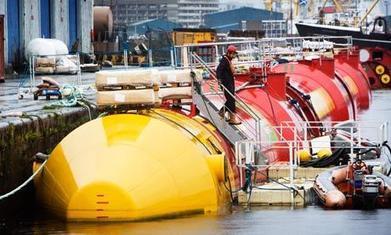
Scotland gives green light to Europe’s largest tidal energy project

See on Scoop.itGreen Energy Technologies & Development

Wave power to provide electricity to 40% homes in Highlands as work on building turbines in Pentland Firth gets approved

Duane Tilden‘s insight:

>”This is a major step forward for Scotland’s marine renewable energyindustry. When fully operational, the 86 megawatt array could generate enough electricity to power the equivalent of 42,000 homes – around 40% of homes in the Highlands. This … is just the first phase for a site that could eventually yield up to 398 megawatts.”<

See on www.theguardian.com

Coal opposes Senate Energy Commission Nomination

See on Scoop.itGreen & Sustainable News

Ronald J. Binz, nominated to lead the Federal Energy Regulatory Commission, is opposed by the coal industry because of his efforts to promote renewable energy.

Duane Tilden‘s insight:

>At the Electricity Consumers Resource Council, which represents large industrial customers, Marc Yacker, a vice president, said that the coal industry had some reason to be worried. The industry believes, he said, that “the whole idea of socializing the cost of new transmission necessary to get wind to population centers is anti-coal.”<

See on www.nytimes.com

Canadian renewable energy output continues to fall

See on Scoop.itGreen & Sustainable News

The contribution from renewable energy sources continues to decline in Canada in comparison to conventional carbon-based fuel according to Federal statistics

Duane Tilden‘s insight:

>“While wind output dropped 14.4% and solar slipped 3.6%, Canada’s total generation of electricity declined 0.8%, which means that renewables continue to lose share” said Bill Eggertson, the Executive Director of the Canadian Association for Renewable Energies. “We’ve been warning for some time that the good news on the growth in renewables, is overshadowed by the even-greater growth in conventional energy output. The recent meeting of energy ministers in Yellowknife noted that green power capacity has grown at a rapid pace over the last decade and the trend is expected to continue, but that is not due to sources which many Canadians regard as truly renewable. Feed-in tariffs and legislated renewable portfolio standards are key, but there must be stronger efforts to curtail the growth of conventional energy sources, or the share from renewables will continue to drop.”<

See on www.renewableenergymagazine.com

Are current batteries cost effective for wind and solar power storage on the grid?

See on Scoop.itGreen Energy Technologies & Development

Renewable energy holds the promise of reducing carbon dioxide emissions. But there are times when solar and wind farms generate more electricity than is needed by consumers.

Duane Tilden‘s insight:

>”We calculated how much energy is used over the full lifecycle of the battery – from the mining of raw materials to the installation of the finished device,” Barnhart said. “Batteries with high energetic cost consume more fossil fuels and therefore release more carbon dioxide over their lifetime. If a battery’s energetic cost is too high, its overall contribution to global warming could negate the environmental benefits of the wind or solar farm it was supposed to support.” […]

In addition to batteries, the researchers considered other technologies for storing renewable energy, such as pumped hydroelectric storage, which uses surplus electricity to pump water to a reservoir behind a dam. Later, when demand for energy is high, the stored water is released through turbines in the dam to generate electricity. […]

Storage is not the only way to improve grid reliability. “Energy that would otherwise be lost during times of excess could be used to pump water for irrigation or to charge a fleet of electric vehicles, for example,” Dale said.

See on phys.org

Geothermal Energy: Iceland could provide renewable energy to the UK

See on Scoop.itGreen & Sustainable News

Under plans currently being discussed by both the UK and Icelandic governments, renewable electricity could be provided by Iceland to the UK at a cheaper cost than offshore wind.

Duane Tilden‘s insight:

>The plans being discussed by the two governments concern a 1,000km undersea cable with a capacity of 1GW. The package is worth an estimated £4 billion with the inclusion of related generation and onshore transmission investments and could be operational by 2022.  […]


At present, Iceland benefits from some of the lowest electricity prices in Europe given that much of their renewable energy comes from hydroelectricity and geothermal. […] the interconnector could provide power to the UK at around 60 to 70 percent of the price of offshore wind and that whichever way you look at it there are big potential benefits. However, in order to be successful, the Icelandic government must also convince their own citizens that there are also benefits for Iceland and there are concerns that exposure to a larger market could increase domestic energy prices.<

See on www.renewableenergymagazine.com

Regenerative Suspension: How Bumps In The Road Can Generate Electrical Power

See on Scoop.itGreen Energy Technologies & Development

ZF Friedrichshafen AG and Levant Power Corp. have joined together to produce the first fully-active advanced suspension system that recovers energy and directs it to charge the battery while the car is moving.

Duane Tilden‘s insight:

>Gas2 says it’ll be “a while” before the system will go mainstream — likely several years — but it seems a no-brainer for every hybrid and electric vehicle to install this system or one like it to eke out battery charge through energy that is normally wasted. Gas-powered cars also have batteries that get a charge while the engine is running, but they use a belt attached to the engine itself to charge the battery. This causes gas-powered engines to be less efficient, and with most conventional cars using only around 15 percent of the potential energy of gasoline, efficiency comes at a premium.

Most hybrid car drivers will be familiar with the concept of recovering energy from normal car functions because of the increasingly frequent use of brake systems that, when used, transfer heat and friction of normal braking to the battery. As fuel economy standards improve over the next decade, car manufacturers are looking for anything they can do to make cars more efficient.<

See on thinkprogress.org

Supply of Renewable Wind Power Surges in Texas with some Plant Closures

See on Scoop.itGreen & Sustainable News

Market Upheaval In the U.S., hydraulic fracturing techniques used to drill shale have produced a flood of cheap natural gas. That, combined with the growth in wind and tepid customer demand, is upending power markets, leading to plant closures and bankruptcy for some generator owners.

Duane Tilden‘s insight:

>Traditional power companies across the U.S. and Europe are struggling to compete in wholesale markets with newer generators supplying subsidized wind and solar energy. In Texas, wind has more than doubled in the past six years and now makes up 13 percent of the state’s generation capacity.[…]

Falling Prices – Electricity prices for 2014 also have fallen. The on-peak North Texas power price for next year has dropped 19 percent since reaching a peak on May 23, according to data compiled by Bloomberg.

During a heat wave in the first week of August, ample wind supplies served to keep a lid on prices that would’ve normally spiked from the higher demand, NRG Chief Executive Officer David Crane said during a call with investors on Aug. 9. “Wind energy reduces electricity prices and that is good for consumers,” said Michael Goggin, an analyst for the American Wind Energy Association, an industry trade group. “Wind energy has no fuel costs, allowing it to replace more expensive and polluting sources of energy.”

Once complete, Oncor’s power lines will be part of a system that can eventually deliver about 18,500 megawatts of wind power, nearly double the amount now available in Texas and 25 percent of the state’s current generation capacity.<

See on www.renewableenergyworld.com

Are developing Microgrids the Answer to supply next generation Electricity Markets?

See on Scoop.itGreen & Sustainable News

Managing the effect of intermittent renewables on the grid is one of the critical challenges we address in making the transition to renewables. One of the primary goals of grid modernization (aka “Smart Grid”) is to adapt grid management to account for the effects of intermittency in real time.

Duane Tilden‘s insight:

>Microgrids are one possible solution to these challenges. Microgrids, part of the Smart Grid toolbox, are autonomously managed and powered sections of the distribution grid that can be as small as a single building, or as large as a downtown area or neighborhood. Automation and digital communications are used to manage rooftop solar, small scale combined heat and power systems and storage systems, along with matching supply to demand.  Heating or cooling may also be a part of a microgrid. Microgrids can efficiently manage smaller sections of the grid, according to the local demand patterns and availability of renewable resources. They can also disconnect, or “island” from the larger grid to provide higher reliability.

Can microgrids reduce complexity and increase options for electricity market participants? What are the major barriers to microgrid implementation, and how might they be overcome? Are there other approaches, besides the microgrid, that might be employed as well?<

See on www.ourenergypolicy.org