Ceramic Fuel Cells receives German order for micro combined heat and power units – Proactiveinvestors (AU)

See on Scoop.itGreen Energy Technologies & Development

Ceramic Fuel Cells (ASX: CFU) has received a binding order for 60 integrated micro combined heat and power (mCHP) units from German energy service provider EWE.

Duane Tilden‘s insight:

Integrated mCHP generators combine fuel-cell technology and a condensing boiler to meet all electricity and heat requirements for single-family homes and small office buildings.

Operating this new fleet will demonstrate the latest product improvements that Ceramic and its development partner Gebrüder Bruns Heiztechnik GmbH have incorporated, including enhanced overall control and thermal efficiency.

See on www.proactiveinvestors.com.au

Is Gasification Better Than Incineration? Read: Global Markets for Gasifiers – WSJ.com

See on Scoop.itGreen Energy Technologies & Development

NEW YORK, April 15, 2013 /PRNewswire/ — Reportlinker.com announces that a new market research report is available in its catalogue:

Global Markets for Gasifiers

Duane Tilden‘s insight:

INTRODUCTION

Gasification is a centuries–old thermochemical energy conversion technology that has slowly achieved modernity over the decades. The technology is undergoing its third evolutionary surge. Fuel shortages in WWII spurred widespread adoption for vehicle fuels. The oil crisis 1973 spurred a re–evaluation and renewed development. Rising oil prices, globally increasing fuel demand, and overwhelming scientific evidence of climate change have spurred this last leg to full industrialization.

The central concept of gasification is that by raising carbon–rich materials to high temperatures in an oxygen–deficient containment, the material will break down thermochemically instead of burning. If the same material is combusted (burned), it emits carbon monoxide and a host of pollutants, besides being incompletely consumed. If gasified, the products are hydrogen (H2), carbon monoxide (CO) and carbon dioxide (CO2). This is synthetic gas, simply called “syngas.” It can be burned, captured, stored, or its molecules rearranged to form fuels and chemical feedstocks.

The process is moderately more efficient than incineration, has significantly fewer emissions and waste, and the syngas can be shaped into a myriad of products for power production, chemical industries, liquid fuels, and heat.

Feedstock for gasification can be coal, the organic components of municipal waste, industrial waste streams, chemical feedstocks, forestry residues, forest products and crop residues, medical waste, unrecycled plastic or, in the case of plasma gasifiers, almost any nonradioactive material.

A gasifier is the central component of a gasification plant. Surrounding it are the feedstock conditioning and delivery systems, oxygen, steam and air input systems, waste removal components, syngas cooling and cleaning systems, power plants, heat recovery units, Fischer–Tropsch molecule rearrangers, and so on. This report focuses on the markets for gasifier units that are in place and will be installed by application segment and geographic location through the year 2017.


See on online.wsj.com

#Landfill methane-to-energy project gets national award – #Renewable #Energy

See on Scoop.itGreen Energy Technologies & Development

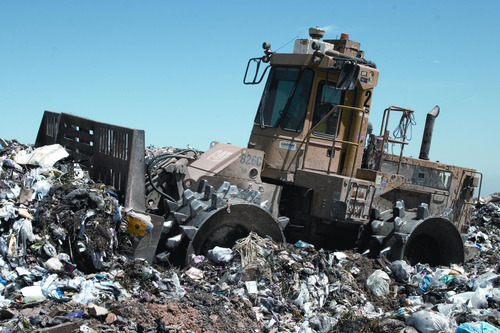
Lycoming County was one of seven places in the country to receive the U.S. Environmental Protection Agency’s award for excellence in landfill gas energy projects for 2012.

Duane Tilden‘s insight:

Yaw, who was present at Thursday’s presentation at the commissioners’ meeting, said he frequently became frustrated when driving by the landfill and seeing excess methane being flared off.

“We’re utilizing all of the landfill methane (now). We’re not flaring anything,” said Tucker.

The county’s waste gas-to-energy project produces enough electricity to power 4,000 homes a year and has the equivalent reduction of 80,000 barrels of oil a year, according to PPL Renewable Energy.

Donna Zickefoose, Allenwood Federal Correctional Complex warden, said the local institution is the first federal prison to be involved in such a project. She said it will save the prison $5 million during the next decade.

See on www.sungazette.com

UK firm to install landfill gas to energy plant in Ireland | Energy Live News

See on Scoop.itGreen Energy Technologies & Development

A UK energy company has won a contract to deliver a landfill gas to energy plant in Ireland. Based in Knowsley near Liverpool, Clarke Energy signed the agreement with Irish …

Duane Tilden‘s insight:

…Irish utility Bord na Mona for a 5.6MW plant – equivalent to powering 14,000 households – at the Drehid landfill site. The project will use landfill gas that originated from household waste to produce renewable energy.

John Curley, General Manager of Clarke Energy in Ireland said: “This significant project will create up to 25 jobs during construction, in addition to sustained employment for operations.

See on www.energylivenews.com

California’s Secret To Green Jobs And A Thriving Clean Economy? It’s Policy.

See on Scoop.itGreen & Sustainable News

Gov. Jerry Brown signs bill requiring California utilities to get a third of their power from renewable sources, the country’s most aggressive clean energy standard (AP Photo)

Duane Tilden‘s insight:

Green jobs are growing four times faster than the rate of all other jobs nationwide, with the majority happening in California according to the Bureau of Labor Statistics. EDF’s analysis of California’s clean economy finds that jobs in core sectors like energy efficiency, renewable energy, clean transportation, and advanced storage and materials have not only remained resilient during the worst of the Great Recession (2008-2010), they outpaced all other job growth and grew 109 percent from 1995 to 2010.

Green jobs are also good jobs in California. They are diverse, across a wide range of education-level and skills, and almost half of all jobs in the clean economy don’t require a college degree according to the Brookings Institution. On average, green jobs offer a higher median wage and career advancement opportunities. An analysis by Philip Romero, the former Dean of CSU Los Angeles College of Business and Economics finds that “workers command wages with a 50-to-100 percent premium over the average job,” and estimates that the overall clean economy will grow “by at least 60-to-100 percent” by the late 2030’s.

See on thinkprogress.org

Report: Global waste industry could double to $2tn by 2020

See on Scoop.itGreen Energy Technologies & Development

Bank of America Merrill Lynch analysis predicts boom in global waste industry as resource crunch bites

Duane Tilden‘s insight:

“We are seeing a shift away from waste as a mandatory public service to waste management as a sustainable business opportunity,” the report states. “We see the fastest growth in the next decade coming from diversion, recycling, recovery of valuable secondary raw materials, waste-to-energy, e-waste and sustainable packaging – as well as from emerging markets. We see considerable low hanging fruit potential given that 70 per cent plus of global waste is currently landfilled. ‘Greening’ waste management will require increasing MSW recycling by a factor of 3.5 times and doubling industrial waste recycling.”

See on www.businessgreen.com

Energy Storage Series: Why We Need It, And Why We Don’t

See on Scoop.itGreen Energy Technologies & Development

It’s almost a cliché that there’s a “friendly debate” pitting utilities against renewable energy. But concerns on the utility side of the table are real: intermittency, potential destabilization at the feeder level, non-baseload, and peaks in generation that don’t necessarily match demand peaks. Today’s power infrastructure involves unpredictability in both supply and demand that is extremely difficult to manage.

Duane Tilden‘s insight:

The big question in energy storage, Wheaton says, boils down simply: what does it cost to build more generation (to oversupply), vs. how to store and manage energy? Today it’s more “economically rational” to build more generation, whether it’s solar or wind or even coal, he noted. As energy storage technology costs come down — and as there is better understanding and calculation of externalized costs, such as societal impacts — “we will see those lines cross, and more utilities will go to energy storage as a more economical means to serve the grid.”

Fundamentally, economics determines the decision of over-generation vs. energy storage; right now “either energy storage is not cheaper, or the payback is not enough to shift over,” noted Luebbe. As the cost (dollars per kilowatt-hour) come down and energy storage costs intersect with those in over-generation, “then everyone will do it because it’s economically the logical thing to do.”

See on www.renewableenergyworld.com

Small Hydro Power for micro hydro power generation in streams & rivers. HydroWorld

See on Scoop.itGreen & Sustainable News

Read the hot small hydro power project news & technology.

Duane Tilden‘s insight:

Hydroelectric plants with a capacity of 20 MW or less are a valuable niche of the hydro industry, providing local power in underdeveloped countries and sources of new capacity in established markets.

See on www.hydroworld.com

Town looks at way to dispose of its sludge

See on Scoop.itGreen & Sustainable News

GREENFIELD — The town is looking at how it might dispose of its own sludge in the future to save

Duane Tilden‘s insight:

Town officials believe an anaerobic digester and combined heat and power facility would eliminate the costs associated with shipping the wet solids, as well as the cost to heat and provide electricity to the transfer station.

This is not just a matter of saving money, though,” said Collins. “It is also a social justice issue. A lot of these plants, like the ones we transport to, are closing down. We really need to be dealing with our own sludge, not sending it off into other communities.”

[…]  anaerobic digestion is a natural process where sludge (plant and animal waste) is broken down by micro organisms, which release the methane, or biogas, that can be used to generate heat and electricity.

“This helps cut fossil fuel use and reduce greenhouse gas emissions,”[…] “The remaining material is rich in nutrients and can be used as fertilizer.”

See on www.recorder.com

Environmental Protection – Landfill Gas Management Regulation

See on Scoop.itGreen Energy Technologies & Development

Duane Tilden‘s insight:

The regulation requires that municipal solid waste landfills with 100,000 tonnes or more of waste in place or with an annual waste acceptance rate exceeding 10,000 tonnes to undertake an assessment of landfill gas generation and to submit the results to the Ministry in a report by January 1, 2011.  […]

If according to Landfill Gas Generation Assessment Procedure a regulated landfill site is estimated to generate 1000 tonnes or more of methane, the owner or operator of that site is required to complete a LFG management facilities design plan and to install the designed facilities at the landfill site.  The Landfill Gas Management Facilities Design Guidelines (PDF/9.3 MB)  […]  The performance standards prescribed in the document are intended to implement high-efficiency LFG collection systems. This Guideline must be used by landfill owners, operators, and qualified professionals in the preparation of LFG facilities design in accordance with the Landfill Gas Management Regulation.

See on www.env.gov.bc.ca