Intel, Microsoft top clean energy ranking | SmartPlanet

See on Scoop.itGreen & Sustainable News

The EPA has released an updated ranking of the top 50 organizations that use renewable energy to power their U.S. operations.

Duane Tilden‘s insight:

The agency’s Green Power Partnership, which updates the list quarterly, said Intel uses clean energy to cover 100 percent of its electricity load. Microsoft moved into second place by increasing its green power use to more than 1,9 billion kilowatt-hours annually. Kohl’s came in third, followed by Whole Foods and Walmart.

See on www.smartplanet.com

Procter & Gamble talks zero manufacturing waste – Plastics Today

See on Scoop.itGreen Energy Technologies & Development

What if waste…isn’t waste?”

That question inspired the company behind the consumer brands including Gillette, Tide and Pampers to embark on an extensive zero manufacturing waste goal.

Duane Tilden‘s insight:

Waste is usually disposed of in four ways: recycling, compost, incineration or landfill. […]

The company recently announced that 45 of their facilities have now achieved zero manufacturing waste to landfill. Over the past five years, P&G’s work to find worth in waste has created over $1 billion in value for the company.

Material that was once sent for disposal is now sold as a raw material to an alternative use partner wherever possible. For instance, excess floss is repurposed in Mexico as the filling in pillows that are used to clean up industrial spills. At a U.S. Pampers site, scrap from the wipe manufacturing process is converted to upholstery filling. And in the UK, waste created in the production of Gillette shaving foam is composted then used to grow turf for commercial uses.

Packaging reduction

“We’re innovating to limit the amount of waste that even has the opportunity to enter a landfill by reducing our packaging,” McDougall said. “In fact, each of our product categories is committed to a 20% packaging reduction by 2020.”

External partnerships are a key part of the company’s packaging efforts to reduce material usage and increase recycled content in its products.

See on www.plasticstoday.com

Whisky distilleries start powering biomass energy plant

See on Scoop.itGreen Energy Technologies & Development

A cluster of Scottish whisky distilleries have started supplying a new biomass energy plant with enough waste to power 9,000 homes.

Duane Tilden‘s insight:

The innovative Helius CoRDe energy plant was opened in Rothes, Speyside, this week to transform the by-products from the local whisky industry into power.

Adrian Bowles, Helius Energy CEO said: “This is renewable energy in action using innovative technology to provide enough power for 9000 homes, and produce animal feed using by-products from local whisky distilleries.

See on www.clickgreen.org.uk

Ceramic Fuel Cells receives German order for micro combined heat and power units – Proactiveinvestors (AU)

See on Scoop.itGreen Energy Technologies & Development

Ceramic Fuel Cells (ASX: CFU) has received a binding order for 60 integrated micro combined heat and power (mCHP) units from German energy service provider EWE.

Duane Tilden‘s insight:

Integrated mCHP generators combine fuel-cell technology and a condensing boiler to meet all electricity and heat requirements for single-family homes and small office buildings.

Operating this new fleet will demonstrate the latest product improvements that Ceramic and its development partner Gebrüder Bruns Heiztechnik GmbH have incorporated, including enhanced overall control and thermal efficiency.

See on www.proactiveinvestors.com.au

Seattle School Certified as World’s Fourth Living Building; First on West Coast

See on Scoop.itGreen Building Design – Architecture & Engineering

For those who aren’t familiar with certified Living Buildings, this story is a great place to start. Congratulations to Bertschi School in Seattle!

Duane Tilden‘s insight:

A program of the International Living Future Institute, the Living Building Challenge (LBC) is widely considered the world’s most rigorous building performance standard. A Living Building generates all of its own energy through clean, renewable resources; captures and treats its own water; incorporates only non-toxic, appropriately sourced materials; and operates efficiently and for maximum beauty. A building must perform as designed for one full year of occupancy and pass a third-party audit before receiving certification as “Living.”

In order to meet LBC standards, Skanska USA’s green building team navigated the strict material requirements to source building products that did not contain any of the materials or chemicals on the LBC Red List. One of the greatest challenges in this effort was finding local manufacturers and vendors who were fully transparent about the chemical makeup of their products. The use of healthy materials promotes better indoor air quality, as well as furthers transparency in the building materials industry.

See on greenbuildingelements.com

Unleash Active Daylighting Benefits for Your Green Building with Ciralight SunTracker | Eco-Business.com

See on Scoop.itGreen Building Operations – Systems & Controls, Maintenance & Commissioning

Green buildings in tropical regions such as Indonesia will benefit from active daylighting.

Duane Tilden‘s insight:

Now, what is active daylighting?

95% of available systems are passive in nature – meaning they use static, non-moving/tracking systems unable to adjust for the sun’s angle throughout the day; creating uneven lighting, roaming hot spots, and obtrusive glare.

Active Daylighting is a system that mechanically tracks the sun throughout the day and redirects sunlight inside buildings at an intensity that allows artificial lighting to be turned off. Ciralight’s active daylighting system significantly outperforms passive systems when comparing the amount of daylight directed into a building; upwards of 300% more.

See on www.eco-business.com

Is Gasification Better Than Incineration? Read: Global Markets for Gasifiers – WSJ.com

See on Scoop.itGreen Energy Technologies & Development

NEW YORK, April 15, 2013 /PRNewswire/ — Reportlinker.com announces that a new market research report is available in its catalogue:

Global Markets for Gasifiers

Duane Tilden‘s insight:

INTRODUCTION

Gasification is a centuries–old thermochemical energy conversion technology that has slowly achieved modernity over the decades. The technology is undergoing its third evolutionary surge. Fuel shortages in WWII spurred widespread adoption for vehicle fuels. The oil crisis 1973 spurred a re–evaluation and renewed development. Rising oil prices, globally increasing fuel demand, and overwhelming scientific evidence of climate change have spurred this last leg to full industrialization.

The central concept of gasification is that by raising carbon–rich materials to high temperatures in an oxygen–deficient containment, the material will break down thermochemically instead of burning. If the same material is combusted (burned), it emits carbon monoxide and a host of pollutants, besides being incompletely consumed. If gasified, the products are hydrogen (H2), carbon monoxide (CO) and carbon dioxide (CO2). This is synthetic gas, simply called “syngas.” It can be burned, captured, stored, or its molecules rearranged to form fuels and chemical feedstocks.

The process is moderately more efficient than incineration, has significantly fewer emissions and waste, and the syngas can be shaped into a myriad of products for power production, chemical industries, liquid fuels, and heat.

Feedstock for gasification can be coal, the organic components of municipal waste, industrial waste streams, chemical feedstocks, forestry residues, forest products and crop residues, medical waste, unrecycled plastic or, in the case of plasma gasifiers, almost any nonradioactive material.

A gasifier is the central component of a gasification plant. Surrounding it are the feedstock conditioning and delivery systems, oxygen, steam and air input systems, waste removal components, syngas cooling and cleaning systems, power plants, heat recovery units, Fischer–Tropsch molecule rearrangers, and so on. This report focuses on the markets for gasifier units that are in place and will be installed by application segment and geographic location through the year 2017.


See on online.wsj.com

GE links up with Coca Cola in Brazil – Cogeneration & On-Site Power Production (Combined Heat & Power)

See on Scoop.itGreen Energy Technologies & Development

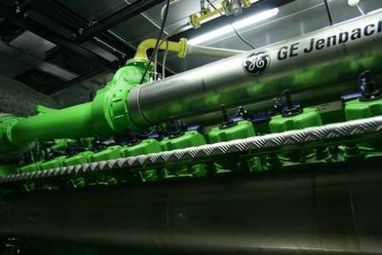
The 12 MW facility will provide all of the plant’s on-site heat and power needs. Brazilian energy company Light Esco will install three ecomagination-qualified Jenbacher J624 engines at the Andina Brasil-Coca-Cola bottling facility.

Duane Tilden‘s insight:

The power plant is expected to begin operating in November 2013 and will also produce cold water, carbon dioxide (CO2) and nitrogen to support the bottling operations.

By installing quadgeneration technology to recover food-grade CO₂, factories can reduce emissions by up to an additional 40 percent when compared to using separate power and heat generating equipment.

See on www.cospp.com

#Landfill methane-to-energy project gets national award – #Renewable #Energy

See on Scoop.itGreen Energy Technologies & Development

Lycoming County was one of seven places in the country to receive the U.S. Environmental Protection Agency’s award for excellence in landfill gas energy projects for 2012.

Duane Tilden‘s insight:

Yaw, who was present at Thursday’s presentation at the commissioners’ meeting, said he frequently became frustrated when driving by the landfill and seeing excess methane being flared off.

“We’re utilizing all of the landfill methane (now). We’re not flaring anything,” said Tucker.

The county’s waste gas-to-energy project produces enough electricity to power 4,000 homes a year and has the equivalent reduction of 80,000 barrels of oil a year, according to PPL Renewable Energy.

Donna Zickefoose, Allenwood Federal Correctional Complex warden, said the local institution is the first federal prison to be involved in such a project. She said it will save the prison $5 million during the next decade.

See on www.sungazette.com

UK firm to install landfill gas to energy plant in Ireland | Energy Live News

See on Scoop.itGreen Energy Technologies & Development

A UK energy company has won a contract to deliver a landfill gas to energy plant in Ireland. Based in Knowsley near Liverpool, Clarke Energy signed the agreement with Irish …

Duane Tilden‘s insight:

…Irish utility Bord na Mona for a 5.6MW plant – equivalent to powering 14,000 households – at the Drehid landfill site. The project will use landfill gas that originated from household waste to produce renewable energy.

John Curley, General Manager of Clarke Energy in Ireland said: “This significant project will create up to 25 jobs during construction, in addition to sustained employment for operations.

See on www.energylivenews.com