Learn How New York City Is Cleaning the Air With Just One Change | Sustainable Products and Practices

See on Scoop.itGreen & Sustainable News

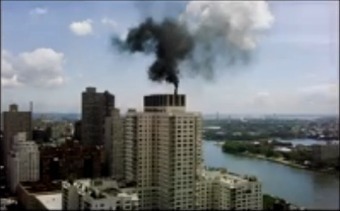
Want clean air? Sometimes it takes just a few simple changes. New York City, in partnership with the Environmental Defense Fund, has a great story to tell about

Duane Tilden‘s insight:

>… Just recently, New York City and EDF through the city’s Clean Heat Program converted over 1,200 boilers to the cleanest available fuels reducing over 150 tons of soot pollution, or particulate matter (PM2.5), from the air.<

See on thegreenregister.com

EPA tells Ohio to stop keeping fracking secrets from first responders

See on Scoop.itGreen & Sustainable News

Ohio lets energy companies keep emergency-management officials in the dark about the fracking chemicals they use. The EPA says that has to stop.

See on grist.org

Research and Energy Efficiency | The Energy Collective

See on Scoop.itGreen Energy Technologies & Development

Every time energy policy is being discussed, you’ll usually find a call for more R&D spending at the top of the list of ways to solve problems. While I agree that research is great, it’s obviously not enough and, if anything, only the first step.

Duane Tilden‘s insight:

>The result of this comparison doesn’t come as a surprise to anyone who is remotely interested in energy issues. There is a massive energy efficiency gap between the US and other world economies. While this is no surprise to many, it should be a lesson for all those who tell the public that meaningful action requires yet more R&D spending. The 200 million citizens of Japan and Germany are proof that even the technology and the concepts of the past can make a huge difference.<

See on theenergycollective.com

Green Building Taking Off in Hospitality, Retail Industries

See on Scoop.itGreen Building Design – Architecture & Engineering

Green building is taking off in the hospitality and retail industries, […]  This year, retail owners that are building green for over half of their projects rose to 38%, up from just 18% in 2011. That’s expected to rise to 52% by 2015.

Duane Tilden‘s insight:

>”Green building has taken such hold in the industry that even sectors with unique challenges, such as retail and hospitality, are making stronger investments,” says Harvey Bernstein, vice president at McGraw Hill Construction. “Clearly the benefits that owners are reporting are key reasons for their green building investments, and as they find better ways to measure those impacts and quantify the value to their sales velocity and to the well-being of their staff, customers and guests, we expect even more rapid engagement in green.”

While lower operating costs are the most frequently reported reason for going green (66% of retailers, 73% of hotels), other factors are also considered very important in their decision-making process:

Utility rebates – Protecting/enhancing brand – just as important as costs for hotels

Improving ROI  […]Energy efficiency is still a key goal, recycling and waste management are also critically important. A strong majority say they require green practices from suppliers, especially on waste handling (75%). <

See on www.sustainablebusiness.com

Water kit to be added to JEA home evaluation program – Jacksonville Public Libraries

See on Scoop.itGreen & Sustainable News
The popularity of JEA’s Home Energy Evaluation Kit Backpack program has spurred the utility to add a water-use evaluation kit to the tools offered to homeowners to help them reduce their utility bills

Duane Tilden‘s insight:

>The kits have been checked out 2,143 times since the pilot program started in 2010.  The backpacks are available at all Jacksonville public libraries and the Bartram Trail Library in St. Johns County, because it is in the JEA service area.

“Prior to the backpack program, customers would have to schedule an appointment with a technician who would visit the home, but the backpack allows them to get started with conservation on their own, … The hardest part about developing the kit was the instruction manual, … “We wanted to make sure it was functional, yet understandable,” said Reed.

Kits can be checked out for three weeks and are available on a first-come first-served basis, unless customers attend a JEA workshop.<

See on ht.ly

Utilities fear what they cannot control with community solar – PV-Tech

See on Scoop.itGreen Energy Technologies & Development

Utilities love solar. Or at least they love utility-scale solar, i.e. installations they can own or control through power purchase agreements.

Duane Tilden‘s insight:

>”People like solar and the utility can play a really useful role in bringing solar into a community. But you do have to deal with some issues in terms of how to take advantage of the tax incentives. That can really change the cost of the programme. To take advantage of the tax code, the system has to be located on your property.

[…]

“We’ve seen some prices as low as 5c-6c per kWh once the tax depreciation and tax advantages have been taken by an entity that has that tax appetite. For those who are subscribing this is a resource for the future and many years out that would be a hedge.”

Ultimately, one of the biggest appeals of community solar is the value proposition and that does not always come down to the cheapest rate: communities want power sourced as locally as possible. Green pricing failed to gain mass appeal 10 years ago because consumers were being sold ‘clean power’ generated by wind two states away.<

See on www.pv-tech.org

Innovative Empire State Building Program Saves Millions, Establishes New Energy Efficiency Model Nationwide

See on Scoop.itGreen Building Operations – Systems & Controls, Maintenance & Commissioning

/PRNewswire/ — The innovative energy efficiency program at the Empire State Building has exceeded guaranteed energy savings for the second year in a row, saving $2.3 million and providing a new model for building retrofits that is now being rolled…

Duane Tilden‘s insight:

>”The success from the Empire State Building retrofit project further demonstrates that thoughtfully applied energy-efficiency investments can deliver unparalleled returns through a combination of lower energy, lower operating costs, and increased building valuation,” said Iain Campbell, vice president, Global Energy and WorkPlace Solutions, Johnson Controls Building Efficiency.  “When implemented under a performance contract, the energy savings are guaranteed, ensuring a no-risk investment and a smart business decision.”

The retrofit has attracted new Empire State Building tenants over the past two years, including LinkedIn, Skanska, LF USA, Coty Inc., the Federal Deposit Insurance Corp., and Shutterstock.  These tenants sought space that reflected their sustainability values, provided more comfort for employees, and allowed them to monitor and control their energy use.

“The Empire State Building project has conclusively proven the business case for deep energy retrofits of any building,” said Raymond Quartararo, international director at Jones Lang LaSalle.  “We have consistently surpassed annual projected energy savings through a process that is very transparent, quantitatively intense and internationally approved.  The overwhelming majority of people want to do their part to reduce energy usage while delivering economic returns and occupying an environmentally responsible building.”<
See on www.sacbee.com

Better Buildings Act Brings Energy Efficiency Opportunities to Tenants

See on Scoop.itGreen & Sustainable News

Bipartisan Bennet-Ayotte Legislation Aimed at Boosting Energy Efficiency in Commercial Buildings

Duane Tilden‘s insight:

>To date, the focus has been on how real estate owners and developers may lower energy consumption at the “whole-building” level. However, office tenants like data centers, law firms, banks, trading floors, restaurants, and retail stores use a lot of energy – especially in areas experiencing large growth and development. The Better Buildings Act takes a holistic approach by considering office tenants’ impact on energy consumption and behaviors.

In addition to the “Tenant Star” designation, the bill asks the Department of Energy to study and learn from private sector “best practices” of how commercially-leased spaces are designed to achieve high performance and help reduce utility costs for businesses.

“Senators Bennet and Ayotte have championed innovative, transformative energy policy through their Better Buildings Act and its ‘Tenant Star’ provisions,” said Jeffrey D. DeBoer, President and CEO of The Real Estate Roundtable. “Tenants consume 50% or more of the energy used by commercial buildings, so they should be recognized for making smart choices in high-performance design and operations within leased spaces they control.  This bill is a major step forward to better align commercial landlords and tenants toward a common goal of lowering energy use in built environments across our nation.”<

See on www.bennet.senate.gov

Honeywell Has New Auto Demand Response Thermostat | The Energy Collective

See on Scoop.itGreen Energy Technologies & Development

Despite having technology in 150 million homes, Honeywell is often left out of the conversation about next-generation residential energy management offerings.

Duane Tilden‘s insight:

Honeywell launched a new thermostat this week, Total Connect Comfort with ADR. The two-way Wi-Fi thermostat runs on the Akuacom’s Open Automated Demand Response (OpenADR) platform, the same demand response platform that Honeywell uses for its commercial demand response program. Utilities can now run their entire demand response offerings from a singleOpenADR-compliant platform. By leveraging OpenADR, utilities can get real-time confirmation of load shed during demand response events.


[…]

The OpenADR protocol also allows end users to participate in different program designs. While the communication specification has mostly been used in the C&I market, there is certainly an opportunity in the future for economic demand response for homes.

See on theenergycollective.com

Explaining the Capacity Market | The Energy Collective

See on Scoop.itGreen Energy Technologies & Development

There is a difference between energy and capacity, and power plants are compensated for both because both are important to maintaining the electrical system in different ways.

Duane Tilden‘s insight:

>[…] If the clearing price in the Incremental Auction comes in at $130 per MW, the coal plant has (oddly enough) made $20 per MW. This is because they got $150 for something that someone else is now going to do for them for only $130.


The other story here is that in capacity markets, lower cost resources can have the effect of suppressing prices for all of the resources since they ensure that demand can be met at a lower cost. For utilities who own lots of expensive generation, this is bad for business. […]


Capacity markets are important. They are the firing line for the electricity system of the future, because they direct and encourage investments in different kinds of assets—whether that is clean energy, fossil fuels, or demand side resources like efficiency. […]<

See on theenergycollective.com