Comments on Improving EPA’s Proposed Clean Power Plan

The summer deadline is approaching for finalizing the Environmental Protection Agency’s first-ever limits on dangerous carbon pollution from the nation’s power plants, and opponents are ratcheting up their complaints….

Source: www.huffingtonpost.com

“> […] Some 1500 mostly coal- and gas-fired power plants spew out more than two billion tons of heat-trapping carbon dioxide each year — 40 percent of the nation’s total. The vast majority of the millions of public comments submitted last fall express strong support for the Clean Power Plan, which as proposed last June starts in 2020 and ramps emissions down gradually over the next decade.

But big coal polluters and their political allies have big megaphones.

Many hope to kill the proposal outright. But for others the back-up agenda is to get the standards weakened and delayed past 2020. Their comments and speeches read like Armageddon is coming if power plants have to start limiting their carbon pollution in 2020 — five years from now. Republican members of the Senate environment committee banged that drum over and over at a hearing last week. As on so many issues, they hope endless repetition will make their story seem true.

The truth is that the standards and timeline EPA proposed last June are quite modest and readily achievable. They can be met without any threat to the reliability of electric power. A new report from the highly respected Brattle Group shows that states can meet the EPA’s proposal “while maintaining the high level of electric reliability enjoyed by U.S. electricity customers.” […]

The plan as proposed in June sets state-by-state targets that, on an overall national basis, would cut power plants’ carbon pollution by 26 percent by 2020 and 30 percent by 2030, when compared to 2005 levels.

We found that with three specific improvements – I’ll describe them below – the plan could achieve 50 percent more carbon pollution reductions (36 percent by 2020 and 44 percent by 2030).

Here are the three factors:

First, the costs of clean energy are falling dramatically, and EPA’s June proposal was based on out of date cost and performance data for renewable electricity and efficiency energy. An NRDC issue brief published last fall details how sharply the cost and performance of energy efficiency and renewable energy have improved. When we factored in up-to-date data, our analysis shows that the Clean Power Plan’s state-by-state targets as proposed in June 2014 can be met at a net savings to Americans of $1.8-4.3 billion in 2020 and $6.4-9.4 billion in 2030. More reliance on energy efficiency and renewables will also create hundreds of thousands of good-paying jobsthat can’t be shipped overseas.

The lower cost of clean energy technologies opens the door to getting substantially more carbon pollution reductions from the nation’s largest emitters.

We also took two other specific improvements into account:

In an October 2014 notice seeking further public comment, EPA explained that the formula it had used to calculate state targets in the June 2014 proposal did not correctly account for the emission reductions made by renewables and energy efficiency. The formula did not fully account for the reduction in generation at coal and gas power plants that occurs when additional renewables are added to the grid and when businesses and homeowners reduce how much electricity they need by improving the efficiency of our buildings, appliances, and other electricity-using equipment. NRDC corrected the formula in our updated analysis to capture the full emission reduction associated with ramping up renewables and efficiency.EPA also asked for comment on an approach to better balancing state targets by adopting a minimum rate of transition from older high-emitting generation to lower-emitting sources. NRDC analyzed state targets that include conversion of 20 percent of coal generation in 2012 to natural gas generation over the period between 2020 and 2029.

These three factors — updating the cost and performance data for renewables and efficiency, correcting the target-setting formula, and including a minimum rate of transition from higher- to lower-emitting plants — produce the substantial additional carbon pollution reductions in our analysis, all at very reasonable costs. […]”<


See EPA’s Clean Power Plan:  http://www2.epa.gov/carbon-pollution-standards/clean-power-plan-proposed-rule


See on Scoop.itGreen & Sustainable News

Clean Power Plan Seen as Historic Opportunity to Modernize the Electrical Grid

Following the launch of the Clean Power Plan, concerns were raised about how adding renewable energy to the grid would affect reliability. According to a new report […] compliance is unlikely to materially affect reliability.


image source:  http://phys.org/news/2010-10-electric-grid.html

Source: domesticfuel.com

>”[…] Report lead author Jurgen Weiss PhD, senior researcher and lead author said that while the North American Electric Reliability Corporation (NERC) focused on concerns about the feasibility of achieving emissions standards with the technologies used to set the standards, they did not address several mitigating factors. These include:

The impact of retiring older, inefficient coal plants, due to current environmental regulations and market trends, on emissions rates of the remaining fleet;Various ways to address natural gas pipeline constraints; andEvidence that that higher levels of variable renewable energy sources can be effectively managed.

“With the tools currently available for managing an electric power system that is already in flux, we think it unlikely that compliance with EPA carbon rules will have a significant impact on reliability,” reported Weiss.

In November 2014, NERC issued an Initial Reliability Review in which it identified elements of the Clean Power Plan that could lead to reliability concerns. Echoed by some grid operators and cited in comments to EPA submitted by states, utilities, and industry groups, the NERC study has made reliability a critical issue in finalizing, and then implementing, the Clean Power Plan. These concerns compelled AEE to respond to the concerns by commissioning the Brattle study.

“We see EPA’s Clean Power Plan as an historic opportunity to modernize the U.S. electric power system,” said Malcolm Woolf, Senior Vice President for Policy and Government Affairs for Advanced Energy Economy, a business association. “We believe that advanced energy technologies, put to work by policies and market rules that we see in action today, will increase the reliability and resiliency of the electric power system, not reduce it.  […]”<

See on Scoop.itGreen Energy Technologies & Development

North Dakota Bill Introduced to Minimize Natural Gas Waste from Oil Wells

North Dakota’s Senate is considering legislation that would drastically cut the time oil companies can burn off and waste natural gas from an oil well.

Source: www.pennenergy.com

>”[…] Democratic Sen. Connie Triplett is sponsoring the bill that would require companies to begin paying royalties and taxes on natural gas within 14 days after an oil well begins production. Companies are given a year at present.

Triplett and others told the Senate Energy and Natural Resources Committee on Friday that mineral owners and the state are being shortchanged because revenue on the wasted gas is not immediately being collected.

North Dakota Petroleum Council President Ron Ness says the industry has invested $13 billion to capture the gas. But he says there is still a challenge obtaining permission to place gas pipelines in some areas.”<


See on Scoop.itGreen & Sustainable News

University to Install Combined Heat and Power Plant for Energy Savings and Climate Goals

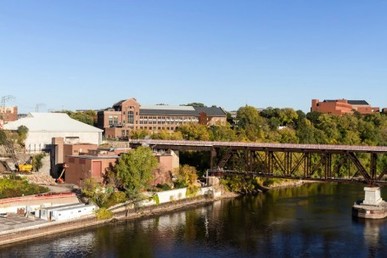
“Construction is will soon begin on a $96 million combined heat and power (CHP) plant in another aging facility near the river’s edge that will dramatically cut the campus’ carbon footprint while driving down the cost of energy”

Source: www.midwestenergynews.com

>” […] The project, in the 1912-vintage Old Main Utility Building, will produce enough steam to heat the entire campus and meet about half of its electricity demand.

CHP and carbon reductions

CHP will be a major tactic in the goal of reducing the University’s carbon emissions by 50 percent by 2020, said Shane Stennes, who serves as the University Services’ sustainability coordinator. The Southeast Steam Plant, itself a CHP facility, mainly used natural gas but still had a small measure of coal in its fuel mix, along with oat hulls.

“The carbon reduction is partly due to a change in fuel but mostly a result of increased efficiency,” Stennes said. The ability to use the waste heat from the electricity generation process is the real reason the University will see carbon emissions plummet, he added.

“From the sustainability point of view this plant is the right thing to do,” he said, noting that in 2008 the University’s campus system agreed to a net zero scenario in the American College and University Presidents’ Climate Commitment.

CHP is on a bit of a roll. President Barack Obama signed an executive order in 2012 promoting wider adoption of CHP and the state Department of Commerce recently held stakeholders’ meetings on the issue to determine how the state might help in moving forward projects.

The potential was described in a Commerce policy brief associated with the stakeholder meetings: “Power generation waste heat in Minnesota is nearly equal to the total requirement for heat energy in buildings and industry.” […]

Minnesota has at latest count 55 CHP systems in the state, according to the ICF International.

Reasons for CHP at the U

A campus CHP comes with another advantage by creating an “island” of energy independence should a regional blackout hit. Many major Midwest and coastal universities have CHP in part to rely less on power grids that are vulnerable to major storms or other weather maladies, he said.

“We see CHP as a way to be competitive with other schools and to protect research if we had a catastrophe,” he said.

The need for more boilers, said Malmquist, stems from growing demand for power. Although the nearly dozen new buildings constructed in the last few years meet rigorous energy efficiency standards they tend to demand more power due to their function as research centers.

The Biomedical Discovery District, a new physics laboratory, technology classroom and other science-related buildings, as well as a new residence hall, have added square footage for steam and electricity, he said.

“The buildings we’re putting up today are more energy intensive than the ones we’ve been taking down,” said Malmquist. […]”<

See on Scoop.itGreen Building Operations – Systems & Controls, Maintenance & Commissioning

University Researchers Find Abandoned Wells Leak Substantial Quantities of GHG’s (Methane)

After testing a sample of abandoned oil and natural gas wells in northwestern Pennsylvania, the researchers found that many of the old wells leaked substantial quantities of methane.

Source: www.princeton.edu

>” […] To conduct the research, the team placed enclosures called flux chambers over the tops of the wells. They also placed flux chambers nearby to measure the background emissions from the terrain and make sure the methane was emitted from the wells and not the surrounding area.

Although all the wells registered some level of methane, about 15 percent emitted the gas at a markedly higher level — thousands of times greater than the lower-level wells. Denise Mauzerall, a Princeton professor and a member of the research team, said a critical task is to discover the characteristics of these super-emitting wells.

Mauzerall said the relatively low number of high-emitting wells could offer a workable solution: while trying to plug every abandoned well in the country might be too costly to be realistic, dealing with the smaller number of high emitters could be possible.

“The fact that most of the methane is coming out of a small number of wells should make it easier to address if we can identify the high-emitting wells,” said Mauzerall, who has a joint appointment as a professor of civil and environmental engineering and as a professor of public and international affairs at the Woodrow Wilson School.

The researchers have used their results to extrapolate total methane emissions from abandoned wells in Pennsylvania, although they stress that the results are preliminary because of the relatively small sample. But based on that data, they estimate that emissions from abandoned wells represents as much as 10 percent of methane from human activities in Pennsylvania — about the same amount as caused by current oil and gas production. Also, unlike working wells, which have productive lifetimes of 10 to 15 years, abandoned wells can continue to leak methane for decades.

“This may be a significant source,” Mauzerall said. “There is no single silver bullet but if it turns out that we can cap or capture the methane coming off these really big emitters, that would make a substantial difference.” […]”<

See on Scoop.itGreen & Sustainable News

5 Reasons Oil Prices Are Dropping

Key contributing factors in the fall in oil prices range from surprise production levels in Libya to, in-fighting between OPEC members and EU economic outlook…

Source: oilprice.com

“> […]

1. The U.S. Oil Boom
America’s oil boom is well documented. Shale oil production has grown by roughly 4 million barrels per day (mbpd) since 2008. Imports from OPEC have been cut in half and for the first time in 30 years, the U.S. has stopped importing crude from Nigeria.

2. Libya is Back
Because of internal strife, analysts have until recently assumed that Libya’s output would hover around 150,000-250,000 thousand barrels per day. It turns out that Libya has sorted out their disruptions much quicker than anticipated, producing 810,000 barrels per day in September. […]

3. OPEC Infighting 
There have been numerous reports about the discord between OPEC members, leading many to believe that OPEC will not be able to reign in production like it has done so in the past. The Saudis and Kuwaitis have reportedly been in an oil price war, repeatedly lowering their prices in order to maintain their market share in Asia. […]

4. Negative European Economic Outlook
European Central Bank president Mario Draghi has left investors concerned about the continent’s slow growth. Germany’s exports were down 5.8 percent in August, stoking the fears of anxious investors that the EU’s largest economy had double dipped into recession last quarter. Across the Eurozone, the IMF again lowered its growth forecast to 0.8 percent in 2014 and 1.3 percent in 2015.

5. Tepid Asian Demand 
Beyond slow economic growth and currency depreciation, a number of Asian countries have begun cutting energy subsidies, resulting in higher fuel costs despite a drop in global oil prices. […]”<


See on Scoop.itGreen & Sustainable News

Price of Oil Continues to Drop Due to Oversupply

The price of oil has hit another five-year low as fears of oversupply continue to mount.  Brent crude was down $1.77 at $67.30 a barrel in Monday afternoon trading, having earlier hit $66.77 – its lowest since October 2009.

Source: www.bbc.com

>” […]US crude was down $1.44 at $64.40, after falling as low as $64.14.

Morgan Stanley predicted that Brent would average $70 a barrel in 2015, down $28 from a previous forecast, and be $88 a barrel in 2016.

The investment bank also said that oil prices could fall as low as $43 a barrel next year. Analyst Adam Longson said that markets risked becoming “unbalanced” unless the Opec producers’ cartel decided to intervene.

Saudi Arabia, the cartel’s biggest member, resisted calls at last month’s meeting to cut production despite the slide in prices, which have fallen more than 40% since June.

Kuwait, another Opec member, said that oil prices were likely to remain about $65 a barrel until the middle of next year unless Opec cut output. […]”<

See on Scoop.itGreen & Sustainable News

Climate Change, Carbon Reduction and Mitigating Natural Gas Use in the Electricity Sector

The Environmental Protection Agency’s Clean Power Plan offers states the opportunity to curb rising natural gas use in the United States and achieve steeper carbon-pollution reductions by investing more aggressively in renewable energy and energy efficiency.

Source: www.americanprogress.org

>” […] In the United States, electric utilities are the largest source of carbon pollution. Therefore, the reduction of power-sector emissions needs to be a central component of any meaningful climate mitigation strategy. In June, the Environmental Protection Agency, or EPA, released a landmark proposal to establish the first-ever carbon-pollution standards for the nation’s power plants.

This proposal, the Clean Power Plan, establishes a “best system of emissions reduction” based on four building blocks that combine to make the nation’s electricity system more efficient and less reliant on carbon-heavy coal-burning power plants. […]

One of the Clean Power Plan’s central elements is increasing the use of lower-carbon natural gas combined cycle, or NGCC, units to generate some of the electricity now produced by higher-carbon coal-fired power plants. States can use this approach to achieve relatively quick carbon-pollution reductions starting in 2020 while ramping up the deployment of programs that promote renewable energy and energy efficiency.

The EPA modeled two compliance scenarios to understand the costs, benefits, and potential energy-related impacts of the Clean Power Plan. This modeling suggests that the electricity sector’s natural gas consumption will increase sharply at the beginning of the Clean Power Plan’s implementation period as states shift power generation from dirtier coal-fired plants to cleaner-burning NGCC plants. The EPA also predicts that states will build new NGCC plants to replace retiring coal plants and to help meet their carbon-reduction targets.

By 2030, however, the EPA’s models forecast that more renewable energy and energy-efficiency programs will come online as states continue to implement the Clean Power Plan. Electricity generation from renewable sources will displace some generation from NGCC and coal-fired power plants. Energy-efficiency programs, meanwhile, will reduce electricity demand, slowing generation and curbing carbon pollution from the power sector as a whole. […]

While natural gas burns cleaner than coal, it is still a fossil fuel that releases carbon pollution. In addition, methane, a potent greenhouse gas, can escape throughout the natural gas production and supply cycle. For these reasons, several recent studies by prominent researchers have questioned whether natural gas can form the core of an effective climate mitigation strategy. […]

By acting decisively to implement ambitious renewable energy and energy-efficiency programs, states can help ensure that the United States does not overcommit to natural gas and that it continues on a path toward decarbonization of the economy. […]”<

See on Scoop.itGreen & Sustainable News

Kinder Morgan President Shocked by Level of Protest Against Burnaby Trans Mountain Pipeline

Following months of protests, and most recently a court injunction to remove protesters on Burnaby Mountain that resulted in numerous arrests, Kinder Morgan is holding a telephone town hall tonight.

Source: globalnews.ca

>” […] Asked if he was surprised by the protest and the numbers who showed up and Anderson said, no. Instead what was shocking was what he called people’s “willingness to disobey the injunction and put themselves up for arrest.“

[…] Also the diversity of the crowd, which included according to Anderson, “hardcore protesters, local interest groups and residents in the community,” that made it difficult for Kinder Morgan to have a conversation and plan appropriate action.

“We tried to remain calm and not be heavy-handed,” Anderson said.

But five protestors, who were arrested and are being sued for $5 million, may see it differently.

Anderson called the lawsuit an “unfortunate part of the process” but says it was necessary to get the work done safely. […]

The survey work may be done but for the City of Burnaby’s Mayor Derek Corrigan, there’s still a matter of the bill for the Burnaby Mountain policing costs.

“I want [Kinder Morgan] to pay,” Corrigan said in an earlier interview.

“We told them not to go on to the mountain, we told them to obey our bylaws, we were overruled by the National Energy Board, so they can’t possibly say in any way this was our fault or responsibility.”

But for Anderson, the police officers were necessary to enforce the legal injunction for “legally authorized work.”

“The police were there to protect us against unlawful protestors. Policing is a municipal responsibility and I think it remains a municipal responsibility,” Anderson said. […]

“I think Kinder Morgan’s playing the poor me with regards to their activities,” he said.

“I find it quite surprising; I don’t know many people that are going to feel sorry for a multinational corporation that’s exerting its influence on a local government.” […]”

See on Scoop.itGreen & Sustainable News

Studies Are Misleading; Keystone XL Project May Kill More Jobs Than It Creates

The report concludes that the job estimates put forward by TransCanada are unsubstantiated and the project will not only create fewer jobs than industry states, but that the project could actually kill more jobs than it creates.

Source: www.ilr.cornell.edu

>” […] Main findings include:

The project budget that has a direct impact on U.S. employment is between $3 and $4 billion or about half of what industry claims.50% or more of the steel pipe, the main material input used for Keystone XL, will be manufactured outside of the U.S.Jobs will be temporary and between 85-90% of the people hired to do the work will be non-local or from out of state.The Perryman study, which estimates around 119,000 (direct, indirect and induced) jobs is a poorly documented study commissioned by TransCanada.Job losses would be caused by additional fuel costs in the Midwest, pipeline spills, pollution and the rising costs of climate change.  Even one year of fuel price increases as a result of Keystone XL could cancel out some or all of the jobs created by the project.”<


See on Scoop.itGreen & Sustainable News