See on Scoop.it – Twitter & Social Media

How auto dealerships can use social media to find more customers.
See on dealermarketing.com
See on Scoop.it – Twitter & Social Media
How auto dealerships can use social media to find more customers.
See on dealermarketing.com
See on Scoop.it – Twitter & Social Media
In a world dominated by social media we must choose the best way to consume it. A vast majority would look to their mobile devices, but the true platform is the PC.
Phones offer very little room for an expansive and clean user interface. Buttons are smothered for space, and there’s just too much social networking to fit into those teeny, tiny screens. Indeed, when you only have enough room to see four tweets at a time, scrolling becomes a chore.
Social media services provide loud vocal cords for businesses, but trying to orchestrate content promotion on your smartphone is madness. To do it effectively, you need quick, comfortable access to tools for scheduling, account management, and analytics, and these are available only on the desktop, often through desktop client software.
See on www.pcworld.com
See on Scoop.it – Green Energy Technologies & Development
The Networked Grid 150 report is the strategic compendium on the vendor and technology landscape for today’s smart grid utility.
… the report ranks the top vendors within each of the following market segments: Advanced Metering Infrastructure, Building Area Networks, Consulting & Integration, Demand Response, Electric Vehicle Infrastructure, Energy Storage, Field Area Networks, Home Area Networks, Networking & Management, Soft Grid, Security, Transmission & Distribution, and Wide Area Network Communications.
See on www.greentechmedia.com
See on Scoop.it – Green Energy Technologies & Development
Nearly 10 percent of the nation’s ethanol plants have stopped production over the past year, the drought having pushed commodity prices so high that ethanol has become too expensive to produce.
The other half of this is falling demand for gasoline — a result of both the recession, and a renewed policy push for electric and hybrid vehicles and tougher fuel economy standards. […]
Globally, the combined effect of U.S. and European biofuel policy has been a massive divergence of corn crops into biofuel production, which in turn drove up the price of corn and contributed to global food insecurity. […]
Cellulosic biofuels, by relying on crops that don’t double as food, could provide a solution. But whether they can be widely commercialized without requiring high levels of water and land use remains an open question.
See on theenergycollective.com
See on Scoop.it – Green Energy Technologies & Development
Utilities have to engage with consumers and businesses to make the smart grid work.
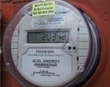
“I had a smart meter, but I didn’t even know I had a smart meter,” said Dick.
Dick and a team of CU engineers are working on exactly this problem: how to inform people about their electricity use. The team is creating an online system called “EMPIRE” — EMpowering People In Reducing Energy consumption. […]
Huston said that because Boulder’s smart grid was one of the first in the country, some of the technologies it used, such as fiber optic communication technology, turned out to be less ideal than hoped. The new two-way communication technology, installing smart meters for less than a quarter of the population and other features almost doubled the project’s cost within a year after it began. As of October 2012, the total costs were pushing $45 million.
See on www.greentechmedia.com
See on Scoop.it – Green Energy Technologies & Development
Companies that are still looking to produce biofuels from plant waste (and not corn) are making slow, but steady progress on milestones in 2013.
According to Bloomberg’s energy research arm New Energy Finance, ethanol made from plant waste could cost the same to produce as corn-based ethanol by 2016. Currently cellulosic ethanol costs 94 cents a liter to produce, or about 40 percent more than ethanol made from corn, says Bloomberg.
See on gigaom.com
See on Scoop.it – Green Energy Technologies & Development
Engineers have developed a redox flow battery that reaches stack power up to 25 kW with a cell size of 0.5 square meters – eight times larger than the previous A4-sized systems.
A new design has allowed them to produce stacks up to 0.5 square meters in size. This is eight times larger than the cells in previous systems, and results in power up to 25 kW. The prototype has an efficiency of up to 80 percent, and can take a load of up to 500 amps of current.
See on www.pacetoday.com.au
See on Scoop.it – Green & Sustainable News
The Sustainable Energy Authority of Ireland (SEAI) reports a significant year of progress on the sustainable energy agenda where 4,000 jobs were maintained in the construction and energy service industries and €35 million worth of energy savings achieved. In a year where SEAI disbursed over €70 million through capital support programmes, the Authority reports that every euro spent by the Government through its energy grant programmes leverages €2.50 in matched funding.
“Sustainable energy is vital to Ireland’s economic recovery and job creation. Actions such as home energy upgrades and business energy cost savings are already proving how costs can be lowered and jobs created. At the same time, Ireland is exploiting its great natural resource – renewable energy – and thus dramatically reducing its imports of fossil fuels.
See on www.seai.ie
See on Scoop.it – Green Energy Technologies & Development
Solar power has record year in 2012, with total U.S. capacity surging 40%, despite persisting bankruptcies.
The price of solar panels has declined 60% since the beginning of 2011, according to SEIA. Lower prices for silicon — a main ingredient in the panels — and massive investments in manufacturing capacity, especially by the Chinese, have helped push down prices.
See on money.cnn.com
See on Scoop.it – Green & Sustainable News
When in New York, you might want to drop in to the Molecule Cafe in Greenwich Village. Just don’t look for any coffee with your cake. In fact, don’t even look for any cake. The only item the cafe serves is water.
And then there are the bottles themselves. The plastic that is used is polyethyleneglycolterephthalate (PET). There are some real issues here with production and disposal. Historically, the raw materials, namely ethylene glycol and terephthalic acid, are derived from fossil fuels, a waste of a valuable resource. And while PET can be recycled, the overall recycling rate is low, with the majority of bottles being discarded improperly and taking up space in landfill.
Anyone concerned with the quality of tap water can easily avail themselves of a variety of filters that will produce water comparable to the bottled variety, at a fraction of the cost. Whether this has an impact on health is debatable, but removal of traces of chlorine can improve the taste. … DT: Back in my lab days we were warned not to drink distilled water.
See on www.montrealgazette.com






 duanetilden