What is “Levelized Cost of Energy” or LCOE?

As a financial tool, LCOE is very valuable for the comparison of various generation options. A relatively low LCOE means that electricity is being produced at a low cost, with higher likely returns for the investor. If the cost for a renewable technology is as low as current traditional costs, it is said to have reached “Grid Parity“.

Source: www.renewable-energy-advisors.com

>”LCOE (levelized cost of energy) is one of the utility industry’s primary metrics for the cost of electricity produced by a generator. It is calculated by accounting for all of a system’s expected lifetime costs (including construction, financing, fuel, maintenance, taxes, insurance and incentives), which are then divided by the system’s lifetime expected power output (kWh). All cost and benefit estimates are adjusted for inflation and discounted to account for the time-value of money. […]

LCOE Estimates for Renewable Energy

When an electric utility plans for a conventional plant, it must consider the effects of inflation on future plant maintenance, and it must estimate the price of fuel for the plant decades into the future. As those costs rise, they are passed on to the ratepayer. A renewable energy plant is initially more expensive to build, but has very low maintenance costs, and no fuel cost, over its 20-30 year life. As the following 2012 U.S. Govt. forecast illustrates, LCOE estimates for conventional sources of power depend on very uncertain fuel cost estimates. These uncertainties must be factored into LCOE comparisons between different technologies.

LCOE estimates may or may not include the environmental costs associated with energy production. Governments around the world have begun to quantify these costs by developing various financial instruments that are granted to those who generate or purchase renewable energy. In the United States, these instruments are called Renewable Energy Certificates (RECs). To learn more about environmental costs, visit our Greenhouse Gas page.

LCOE estimates do not normally include less tangible risks that may have very large effects on a power plant’s actual cost to ratepayers. Imagine, for example, the LCOE estimates used for nuclear power plants in Japan before the Fukushima incident, compared to the eventual costs for those plants.

Location

An important determination of photovoltaic LCOE is the system’s location. The LCOE of a system built in Southern Utah, for example, is likely to be lower than that of an identical system built in Northern Utah. Although the cost of building the two systems may be similar, the system with the most access to the sun will perform better, and deliver the most value to its owner. […]”<



See on Scoop.itGreen Energy Technologies & Development

CanGEA Report Claims Geothermal Creates more Jobs than Site C Dam

a recent report by a canadian industry group that is promoting geothermal energy, thermal energy generated and stored in the earth, says geothermal operations can create more permanent jobs than the site c dam in northeastern b.c.

Source: www.journalofcommerce.com

>”According to Geothermal Energy: The Renewable and Cost Effective Alternative to Site C, 1,100 megawatts – the same amount as Site C – of geothermal power projects would create more sustainable employment for surrounding communities.

“While Site C promises only 160 permanent jobs, U.S. Department of Energy statistics indicate that the equivalent amount of geothermal energy would produce 1,870 permanent jobs. This does not include jobs that result from the direct use of geothermal heat, which are also significant.”

However, said Alison Thompson, managing director of Canadian Geothermal Energy Association  (CanGEA), which published the report, geothermal projects would result in fewer construction jobs than the Site C dam.

“Geothermal projects would be spread around the province, not all on one site,” she said. “And, unlike Site C, they would not be built all at once. They would be staggered, with construction beginning in the highest-priority regions first.”

According to Dave Conway, a Site C spokesman, the $7.9 billion project will create about 10,000 person-years of direct construction employment, and 33,000 person-years of total employment during development and construction.

Construction will take about eight years.  This includes seven years for  the construction itself and one year for commissioning, site reclamation and demobilization.

Thompson said geothermal energy has other advantages over hydro.  “For example, geothermal power has a lower unit energy cost and capital cost,” she said.  “And, the physical and environmental footprint of geothermal is small.”

The CanGEA report says the “strategic dispersion” of geothermal projects will have lower transmission costs than Site C.

“There is every reason to believe that, given the thoughtful and (methodical) development of B.C.’s geothermal potential, geothermal power could provide all of B.C.’s future power requirements at a lower cost to ratepayers than the proposed Site C project.” […]

“For the most part, Canada’s geothermal power sector lay dormant for the following two decades while interest in the industry continued to grow outside of Canada’s borders.” […]”<

See on Scoop.itGreen & Sustainable News

WTE Power Plant Saves 1.3 Million GPD of Water Daily with Tertiary Water Treatment & Recycling

Covanta’s Delaware Valley energy-from-waste facility in Chester, Pennsylvania, has saved 1.3 million gallons a day from local water supplies by installing Ge…

Source: www.environmentalleader.com

>” […] The Chester facility generates up to 90 megawatts of clean energy from 3,510 tons per day of municipal solid waste. Previously, the plant used 1.3 MGD — or nearly 5 million liters a day — of municipal drinking water in its waste conversion process, costing the company thousands of dollars in daily water purchases.

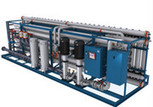
To reduce facility operating expenses and the consumption of local water resources, Covanta Delaware Valley upgraded the facility by installing GE’s RePAK combination ultrafiltration (UF) and reverse osmosis (RO) system as a tertiary treatment package. The new system enabled the plant to reuse 1.3 MGD of treated discharge water from a nearby municipal wastewater treatment plant for the facility’s cooling tower.

GE installed two RePAK-450 trains, each producing 450 gallons per minute of purified water. As a result, Covanta Delaware Valley has eliminated the need to purchase 1.3 MGD of local drinking water a day, which results in a substantial financial savings in addition to the environmental benefits.

GE’s RePAK equipment was delivered in 2014, with commissioning taking place the same year, making Covanta Delaware Valley the first North American company to deploy GE’s RePAK technology.

Covanta chose a combined water treatment technology approach because the typical organic and dissolved mineral content of the wastewater requires additional treatment to be suitable for use as cooling tower makeup. RO was selected as the technology of choice, and UF was required as the pretreatment solution.

GE’s RePAK combined treatment system reduces the equipment footprint up to 35 percent as compared to separate UF and RO systems. By combining the UF and RO into a common frame with common controls and GE’s single (patent-pending) multi-functional process tank, GE also is able to reduce the capital costs and field installation expenses when compared to the use of separate UF system and RO systems with multiple process and cleaning tanks, the company says.”<


See on Scoop.itGreen Energy Technologies & Development

Energy Efficiency Development and Adoption in the United States for 2015

The US wastes about 61% of the energy we produce — much of it due to how we generate, transmit, and distribute it.

Source: theenergycollective.com
I
mage Source:  http://www.seas.columbia.edu/earth/RRC/waste_material_utilization.html

>” […] Energy efficiency, simply put, is using less energy to get the same output or value. Ways of being more energy efficient include using appliances that use less energy or reducing air leakage from our homes and buildings. Programs to increase energy efficiency date back to the energy crises of the 1970s, and continue to be hugely successful today.

Take Michigan for example, where recent data from the Public Service Commission show that the $253 million Michigan utilities spent on energy efficiency programs in 2013 will yield a $948 million return in savings in the coming years. That’s an excellent investment, no matter who you talk to. And Michigan is by no means an anomaly.

We’ve seen states throughout the country see the same kinds of positive returns for their investments in energy efficiency, which continues to prove itself the cheapest “fuel” — investments in energy efficiency per unit of energy output are less costly than both traditional fossil fuels and clean renewable fuels.

Energy efficiency programs are administered by utilities, state agencies, or other third parties, and typically funded by modest charges on ratepayers’ energy bills. While some worry that this causes energy bills to go up, they also cause energy costs to go down, as widespread efficiency upgrades decrease the demand for energy across the state or the utility’s service area, reducing consumer costs. And the customers who participate directly in the programs reap the biggest savings.

It’s a wonder not all states are investing in these kinds of innovative, proven programs. But much of the resistance can be attributed to low energy prices and a lack of political will to charge customers a bit more, even if it does mean big returns. With energy prices steadily rising, such programs will become increasingly attractive to utility regulators and customers. Even historically lagging states like Arkansas and Kentucky are starting to jump on the energy efficiency bandwagon.

No matter where we live or what our personal circumstances are, there’s always room to make changes to improve our energy consumption, whether we make a big investment like installing better insulation, or small simple changes like turning down the thermostat a few degrees in the winter.

As we think about what changes we’re planning to make in 2015, we can look internally at how to reduce energy waste in our own homes and workplaces, as well as help our neighborhoods, communities, and local and state governments make informed decisions to invest in energy efficiency. Even as our energy starts coming from cleaner sources across the country, we can do our part to reduce waste in the energy we already generate — and efficiency is the quickest and cheapest place to look.”<

See on Scoop.itGreen Energy Technologies & Development

Concentrated Solar Power Projects in 2014

“It was a good year for solar power in the USA, with over six gigawatts of photovoltaic (PV) capacity and more than one gigawatt of concentrated solar power (CSP) being added in 2014, bringing the nation’s total solar power capacity to more than 17 gigawatts. That’s a 41% increase in solar power capacity in just one year…”  Source: www.engineering.com

>” Photovoltaic vs Concentrated Solar Power

Photovoltaic technology converts light directly into electricity. PV panels produce DC, which needs to be converted to AC before being placed on the grid. PV panels work best in direct sunlight when they’re pointed perpendicular to the sun’s rays, but they also work reasonably well in diffuse light, even when not pointed directly at the sun. This makes them inexpensive and suitable for rooftops, since solar tracking isn’t required. PV also works in climates that aren’t particularly sunny; Germany gets less sunlight than the northern US, and yet it has a large portion of its power generated by PV.

Concentrated solar power, on the other hand, requires direct sunlight and solar tracking. CSP focuses the sun’s energy and uses the resulting heat to create steam that drives a traditional turbine generator. Even better, the heat can be stored – usually in the form of molten salts – so the CSP plant can generate electricity even when the sun isn’t shining. Because CSP relies on direct sunlight, it’s most suitable for very sunny locations like the American southwest.  […]

US Concentrated Solar Power in 2014

These five major CSP plants went online in 2014 (give or take a few months – one went live in late 2013):

Gila Bend, AZ is the home of the Solana parabolic trough power plant, which provides 250 MW of power to residents of Arizona. The turbine It went live in October of 2013. Spanning 1920 acres, the solar farm includes over two million square meters of reflective troughs and two tanks of molten salts, which provide up to six hours of thermal energy storage. If the stored energy is depleted and the sun isn’t shining, the turbine can be powered by natural gas as a backup.

The Genesis power plant in Blythe CA generates 250 MW of power using a parabolic trough array consisting of more than half a million mirrors. Unlike the Solana plant, Genesis includes no storage or backup fuel. Brought online in April of 2014, designers expect it to generate about 600 GWh of energy each year.

Probably the most famous CSP plant in the US, and the largest of its kind in the world, is the Ivanpah Solar Electric Generating System in Ivanpah Dry Lake CA, about 50 miles south of Las Vegas NV. Its three power towers fired up in February 2014, and the facility now produces 377 MW of power. Its annual production is expected to exceed one terawatt-hour. Ivanpah includes natural gas as its backup, but has no on-site storage.

About 270 miles northwest of Ivanpah is the Crescent Dunes Solar Energy Project in Tonopah, NV. Originally planned to go online in late 2014, the start date has been pushed back to January of 2015. When operational, this 110 MW power tower should produce nearly 500 GWh per year. Crescent Dunes uses molten salt to store heat, allowing it to generate power for ten hours without sunlight.

The Mojave Solar One facility came online in late 2014 and now generates 250 MW of electricity. Located about 100 miles northeast of Los Angeles CA, this parabolic trough array feeds a pair of 125 MW steam turbine generators. The plant should produce about 600 GWh per year. […]”<


See on Scoop.itGreen Energy Technologies & Development

University to Install Combined Heat and Power Plant for Energy Savings and Climate Goals

“Construction is will soon begin on a $96 million combined heat and power (CHP) plant in another aging facility near the river’s edge that will dramatically cut the campus’ carbon footprint while driving down the cost of energy”

Source: www.midwestenergynews.com

>” […] The project, in the 1912-vintage Old Main Utility Building, will produce enough steam to heat the entire campus and meet about half of its electricity demand.

CHP and carbon reductions

CHP will be a major tactic in the goal of reducing the University’s carbon emissions by 50 percent by 2020, said Shane Stennes, who serves as the University Services’ sustainability coordinator. The Southeast Steam Plant, itself a CHP facility, mainly used natural gas but still had a small measure of coal in its fuel mix, along with oat hulls.

“The carbon reduction is partly due to a change in fuel but mostly a result of increased efficiency,” Stennes said. The ability to use the waste heat from the electricity generation process is the real reason the University will see carbon emissions plummet, he added.

“From the sustainability point of view this plant is the right thing to do,” he said, noting that in 2008 the University’s campus system agreed to a net zero scenario in the American College and University Presidents’ Climate Commitment.

CHP is on a bit of a roll. President Barack Obama signed an executive order in 2012 promoting wider adoption of CHP and the state Department of Commerce recently held stakeholders’ meetings on the issue to determine how the state might help in moving forward projects.

The potential was described in a Commerce policy brief associated with the stakeholder meetings: “Power generation waste heat in Minnesota is nearly equal to the total requirement for heat energy in buildings and industry.” […]

Minnesota has at latest count 55 CHP systems in the state, according to the ICF International.

Reasons for CHP at the U

A campus CHP comes with another advantage by creating an “island” of energy independence should a regional blackout hit. Many major Midwest and coastal universities have CHP in part to rely less on power grids that are vulnerable to major storms or other weather maladies, he said.

“We see CHP as a way to be competitive with other schools and to protect research if we had a catastrophe,” he said.

The need for more boilers, said Malmquist, stems from growing demand for power. Although the nearly dozen new buildings constructed in the last few years meet rigorous energy efficiency standards they tend to demand more power due to their function as research centers.

The Biomedical Discovery District, a new physics laboratory, technology classroom and other science-related buildings, as well as a new residence hall, have added square footage for steam and electricity, he said.

“The buildings we’re putting up today are more energy intensive than the ones we’ve been taking down,” said Malmquist. […]”<

See on Scoop.itGreen Building Operations – Systems & Controls, Maintenance & Commissioning

Morgan Stanley Installs Bloom Energy Fuel Cells At Purchase, NY Facility

Morgan Stanley Installs Bloom Energy Fuel Cells At Purchase, NY Facility

Source: www.bloomenergy.com

“The project will provide clean and uninterruptible power for the 750,000 Sq. Ft. Office Building

PURCHASE, NY, Nov. 14 — […] The fuel cell system, along with a solar panel field completed earlier this year, are the latest in a series of initiatives to improve the facility’s energy efficiency and resiliency.

The Bloom Energy fuel cell system produces electricity without burning fossil fuels, thus reducing emission of greenhouse gases. It will supply approximately 250 kilowatts (kW) of constant base load power to the facility, as well as grid-independent electricity to power portions of the building’s critical load during grid outages.  […]

The new solid oxide fuel cell system (SOFC) technology converts fuel into electricity through a highly efficient electrochemical process, resulting in on-site, clean and reliable power. Combined with the solar field, these new installations are expected to produce approximately 3 million kilowatt hours (kWh) of energy a year. During peak energy consumption times, they can supply approximately one megawatt, or up to 30 percent of the building’s demand.

Support for this project was provided by the New York State Energy Research and Development Authority (NYSERDA). Founded in 1975, NYSERDA is a public benefit corporation that provides information, services, programs and funding to help New Yorkers increase energy efficiency, save money, use renewable energy and reduce reliance on fossil fuels.

About Bloom Energy

Bloom Energy is a provider of breakthrough solid oxide fuel cell technology generating clean, highly-efficient on-site power from multiple fuel sources. The company was founded in 2001 with a mission to make clean, reliable energy affordable for everyone in the world. Bloom Energy Servers are currently producing power for several Fortune 500 companies including Apple, Google, Walmart, AT&T, eBay, Staples, The Coca-Cola Company, as well as notable non-profit organizations such as Caltech and Kaiser Permanente. The company is headquartered in Sunnyvale, CA. For more information, visit www.bloomenergy.com.

About Morgan Stanley

Morgan Stanley (NYSE: MS) is a leading global financial services firm providing investment banking, securities, investment management and wealth management services.  […]”<


See on Scoop.itGreen Energy Technologies & Development

Bloom Box: The Alternative Energy Fuel Cell Technology – 60 Minutes

https://youtube.com/watch?v=shkFDPI6kGE%3Ffs%3D1%26hl%3Dfr_FR

“Derived from a common sand-like powder, and leveraging breakthrough advances in materials science, our technology is able to produce clean, reliable, affordable power,… practically anywhere,… from a wide range of renewable or traditional fuels.”

Source: www.youtube.com

Changing the Face of Energy

Bloom Energy is changing the way the world generates and consumes energy.

Our unique on-site power generation systems utilize an innovative new fuel cell technology with roots in NASA’s Mars program.  […]

Our Energy Servers® are among the most efficient energy generators on the planet; providing for significantly reduced electricity costs and dramatically lower greenhouse gas emissions.

By generating power on-site, where it is consumed, Bloom Energy offers increased electrical reliability and improved energy security, providing a clear path to energy independence.

Founded in 2001, Bloom Energy is headquartered in Sunnyvale, California.”
http://www.bloomenergy.com/about/&nbsp;

See on Scoop.itGreen Energy Technologies & Development

Swedish Stirling Engine Generator Converts Low Quality Landfill Gas to Energy in Poland

Swedish Stirling Engine generator specialist, Cleanergy supplies its GasBox generators to two landfill sites in Poland for the production of energy from low quality methane gas emitted from two major, following a successful pilot project earlier in the year.

Source: www.waste-management-world.com

>” […] GasBox – the centrepiece of its Combined Heat & Power (CHP) system – has been specifically developed to generate electricity and heat from low-quality methane gas produced by the decomposition of organic matter at the 2000+ landfill sites across Europe, most of which are more than 10 years old.

According to Cleanergy, many such landfill sites choose to flare the methane they produce.

The European Union Landfill Directive of 1999 states that flaring is only an option if it is impossible to extract energy from the methane gas. But up until today, older landfill sites have often broken these directives because the gas combustion engines traditionally used at newer landfills where methane levels are above 40% simply cannot produce electricity from lower grade, ‘dirty’ methane.

However, at the two Polish landfill sites the methane was released straight into the atmosphere rather than being flared.  To address this, Cleanergy’s GasBox was deployed at the Regional Centre of Waste Management in Domaszkowice in Poland in August.

This 25 hectare landfill site closed in the  2000. Since the installation of the GasBox, the electricity generated has been used to power equipment and to heat and electrify buildings at the site.

Following this success, Cleanergy’s CHP system has also been deployed at the Waste Neutralisation Enterprise in Sulnówko, a 7.5 hectare landfill site.

Anders Koritz, CEO at Cleanergy commented: “We developed our GasBox to meet a specific need – a complete CHP system that can run on low-grade methane gas. Sure enough the industry response since our launch in June has been amazing.”

According to Cleanergy its GasBox addresses this specific problem and is able to produce both electricity and heat from a methane gas concentration down to 18%.

Installed inside a modular container, Cleanergy’s GasBox is an autonomous and flexible stirling engine unit. Also inside the container is a real-time power management system with remote access; a fuel pipe; plus a heat and electricity connection to a house/factory/warehouse with optional grid functionality.

With a claimed ROI of three to five years, the company said that its GasBox is now commercially deployed at several locations in Norway, Slovenia, Sweden (in collaboration with the Swedish Energy Agency) and the UK. […]”<


See on Scoop.itGreen Energy Technologies & Development

Indiana Landfill Gas Energy Project Starts Operations

Republic Services recently announced the start of operations at its latest landfill gas-to-energy project. The new 6 MW project at County Line Landfill involves four engines operating at one energy generation facility.

Source: biomassmagazine.com

>” […] Landfill gas is a natural byproduct of decomposing waste. This project involves extracting gas from within the landfill, processing the extracted gas, and then distributing the processed gas to a generation facility where it is converted into energy that supplies the local electric grid.

According to the U.S. EPA, landfill gas-to-energy projects also reduce reliance on non-renewable energy resources, such as coal or petroleum. The EPA estimates that three megawatts of energy produced from landfill gas is equivalent to preventing carbon emissions generated by the consumption of 16.6 million gallons of gasoline. Based on EPA calculations, the new County Line Landfill gas-to-energy project prevents carbon emissions equivalent to the consumption of more than 32 million gallons of gasoline.

Republic Services partnered with Aria Energy on the design, development and management of the new project. Republic Services and Aria Energy have partnered on four projects to date with a combined generation capacity of more than 39.6 megawatts of electrical power. Republic and Aria are currently working on two additional projects, which combined are expected to create another 15 megawatts of electrical power.

Republic Services has implemented 73 landfill gas-to-energy projects nationwide. Together, these projects harness enough electricity to power or heat approximately 400,000 households. According to the EPA, the combined environmental benefits from these projects are equal to removing more than 4 million cars from our roads or planting more than 4.5 million acres of trees each year. […]”<

See on Scoop.itGreen & Sustainable News