Aemetis Announces Restart of 60 Million Gallon Per Year Keyes Biofuels Plant – WSJ.com

See on Scoop.itGreen Energy Technologies & Development

Aemetis, Inc. (OTCQB: AMTX), an advanced fuels and renewable chemicals company, announced today that the Aemetis 60 million gallon per year capacity ethanol facility in Keyes, California has completed planned maintenance and preparations for the production of Advanced Biofuel under recent EPA rulings, and is now restarting production.

Duane Tilden‘s insight:

The plant will start up using corn as the principal feedstock, with grain sorghum or a feedstock blend used after startup to maximize operating income. In December 2012, the Environmental Protection Agency (EPA) approved the use of grain sorghum feedstock along with biogas in a combined heat and power system to produce an Advanced Biofuel containing approximately 50% lower carbon content than gasoline. Advanced Biofuel generates D5 Renewable Identification Numbers (RINs) that have traded at a premium to traditional ethanol D6 RINs.

[…]  “About $5 million of capital investment and new working capital has been invested since mid-January for maintenance and to enable the plant to produce Advanced Biofuel in a flexible configuration that enables the use of multiple feedstocks and energy sources.”

McAfee added, “The Keyes plant has sustainable cost advantages in Advanced Biofuels production. The plant’s location enables both rail and ocean shipping access to advanced biofuel feedstock from lower-cost supply sources. The Keyes plant is also equipped with an energy-efficient Combined Heat and Power (CHP) system to reduce energy costs and decrease the carbon content of fuel. By using grain sorghum feedstock and sourcing biogas for the CHP system instead of natural gas, the Keyes facility is now able to produce Advanced Biofuel to support EPA requirements for advanced fuels.”

See on online.wsj.com

Waste and Recycling Industry – Landfill Gas Collection Almost 50% of Renewable Energy Supply USA

See on Scoop.itGreen & Sustainable News

WASHINGTON, April 18, 2013 /PRNewswire-USNewswire/ — The waste and recycling industry is continuing to reduce its release of greenhouse gases — even as waste volumes increase, according to the latest greenhouse gas inventory released by U.S. Environmental Protection Agency (EPA).

Duane Tilden‘s insight:

Despite the fact that we are landfilling 6 percent less than 20 years ago, we have greatly improved our ability to reduce methane emissions. As a result, these emissions declined by 30 percent during the same period. This has happened as a result of converting methane to energy, flaring of methane emissions and oxidation techniques.

There are 594 landfill gas-to-energy sites in the United States that generated 1,813 megawatts (MW) of energy and 312 million standard cubic feet a day (mmscfd) of gas. This is enough energy to directly power 1 million homes and heat 729,000, respectively.

Methane gas collected at landfills is used to power home, businesses and government facilities across the nation. Some of it is even used to fuel garbage trucks. Landfill-gas-to-energy projects and other forms of biomass-derived energy make up the almost half of the nation’s renewable energy supply, almost the same amount as is derived from solar, wind, geothermal and hydropower combined.

See on online.wsj.com

SolarReserve Expands International Development Activities into Latin America – WSJ.com

See on Scoop.itGreen & Sustainable News

SANTA MONICA, Calif., April 18, 2013 /PRNewswire/ — SolarReserve, a leading U.S.-based solar energy developer; today announced the company’s international expansion into the Latin American region through the opening of its office in Santiago, Chile.

Duane Tilden‘s insight:

SolarReserve’s industry leading CSP technology features an integrated molten salt energy storage system, allowing firm, reliable electricity to be generated on-demand and delivered when the client requests the electricity. This energy storage capability provides a stable electricity product similar to that of conventional fuel-burning power facilities, but without the associated harmful emissions and price volatility.

Engineered and proven by Pratt & Whitney Rocketdyne, the technology generates power from sunlight by focusing energy from a field of sun-tracking mirrors called heliostats onto a central receiver. Liquid salt, which flows similarly to water when melted, is circulated through the receiver, collecting the energy gathered from the sun. The heated salt is then routed to an insulated storage tank where it is stored with minimal energy losses. When electricity is needed, the hot salt is routed to heat exchangers to produce steam that is then used to generate electricity in a conventional steam turbine cycle. Therefore, the system minimizes risk, time and cost, while providing high capacity storage that allows energy production on-demand, day or night.

See on online.wsj.com

Intel, Microsoft top clean energy ranking | SmartPlanet

See on Scoop.itGreen & Sustainable News

The EPA has released an updated ranking of the top 50 organizations that use renewable energy to power their U.S. operations.

Duane Tilden‘s insight:

The agency’s Green Power Partnership, which updates the list quarterly, said Intel uses clean energy to cover 100 percent of its electricity load. Microsoft moved into second place by increasing its green power use to more than 1,9 billion kilowatt-hours annually. Kohl’s came in third, followed by Whole Foods and Walmart.

See on www.smartplanet.com

Whisky distilleries start powering biomass energy plant

See on Scoop.itGreen Energy Technologies & Development

A cluster of Scottish whisky distilleries have started supplying a new biomass energy plant with enough waste to power 9,000 homes.

Duane Tilden‘s insight:

The innovative Helius CoRDe energy plant was opened in Rothes, Speyside, this week to transform the by-products from the local whisky industry into power.

Adrian Bowles, Helius Energy CEO said: “This is renewable energy in action using innovative technology to provide enough power for 9000 homes, and produce animal feed using by-products from local whisky distilleries.

See on www.clickgreen.org.uk

Ceramic Fuel Cells receives German order for micro combined heat and power units – Proactiveinvestors (AU)

See on Scoop.itGreen Energy Technologies & Development

Ceramic Fuel Cells (ASX: CFU) has received a binding order for 60 integrated micro combined heat and power (mCHP) units from German energy service provider EWE.

Duane Tilden‘s insight:

Integrated mCHP generators combine fuel-cell technology and a condensing boiler to meet all electricity and heat requirements for single-family homes and small office buildings.

Operating this new fleet will demonstrate the latest product improvements that Ceramic and its development partner Gebrüder Bruns Heiztechnik GmbH have incorporated, including enhanced overall control and thermal efficiency.

See on www.proactiveinvestors.com.au

Is Gasification Better Than Incineration? Read: Global Markets for Gasifiers – WSJ.com

See on Scoop.itGreen Energy Technologies & Development

NEW YORK, April 15, 2013 /PRNewswire/ — Reportlinker.com announces that a new market research report is available in its catalogue:

Global Markets for Gasifiers

Duane Tilden‘s insight:

INTRODUCTION

Gasification is a centuries–old thermochemical energy conversion technology that has slowly achieved modernity over the decades. The technology is undergoing its third evolutionary surge. Fuel shortages in WWII spurred widespread adoption for vehicle fuels. The oil crisis 1973 spurred a re–evaluation and renewed development. Rising oil prices, globally increasing fuel demand, and overwhelming scientific evidence of climate change have spurred this last leg to full industrialization.

The central concept of gasification is that by raising carbon–rich materials to high temperatures in an oxygen–deficient containment, the material will break down thermochemically instead of burning. If the same material is combusted (burned), it emits carbon monoxide and a host of pollutants, besides being incompletely consumed. If gasified, the products are hydrogen (H2), carbon monoxide (CO) and carbon dioxide (CO2). This is synthetic gas, simply called “syngas.” It can be burned, captured, stored, or its molecules rearranged to form fuels and chemical feedstocks.

The process is moderately more efficient than incineration, has significantly fewer emissions and waste, and the syngas can be shaped into a myriad of products for power production, chemical industries, liquid fuels, and heat.

Feedstock for gasification can be coal, the organic components of municipal waste, industrial waste streams, chemical feedstocks, forestry residues, forest products and crop residues, medical waste, unrecycled plastic or, in the case of plasma gasifiers, almost any nonradioactive material.

A gasifier is the central component of a gasification plant. Surrounding it are the feedstock conditioning and delivery systems, oxygen, steam and air input systems, waste removal components, syngas cooling and cleaning systems, power plants, heat recovery units, Fischer–Tropsch molecule rearrangers, and so on. This report focuses on the markets for gasifier units that are in place and will be installed by application segment and geographic location through the year 2017.

See on online.wsj.com

GE links up with Coca Cola in Brazil – Cogeneration & On-Site Power Production (Combined Heat & Power)

See on Scoop.itGreen Energy Technologies & Development

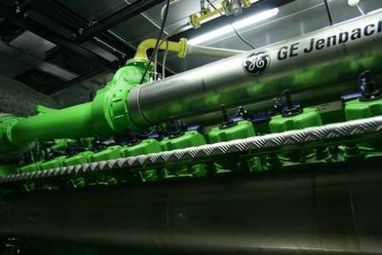
The 12 MW facility will provide all of the plant’s on-site heat and power needs. Brazilian energy company Light Esco will install three ecomagination-qualified Jenbacher J624 engines at the Andina Brasil-Coca-Cola bottling facility.

Duane Tilden‘s insight:

The power plant is expected to begin operating in November 2013 and will also produce cold water, carbon dioxide (CO2) and nitrogen to support the bottling operations.

By installing quadgeneration technology to recover food-grade CO₂, factories can reduce emissions by up to an additional 40 percent when compared to using separate power and heat generating equipment.

See on www.cospp.com

#Landfill methane-to-energy project gets national award – #Renewable #Energy

See on Scoop.itGreen Energy Technologies & Development

Lycoming County was one of seven places in the country to receive the U.S. Environmental Protection Agency’s award for excellence in landfill gas energy projects for 2012.

Duane Tilden‘s insight:

Yaw, who was present at Thursday’s presentation at the commissioners’ meeting, said he frequently became frustrated when driving by the landfill and seeing excess methane being flared off.

“We’re utilizing all of the landfill methane (now). We’re not flaring anything,” said Tucker.

The county’s waste gas-to-energy project produces enough electricity to power 4,000 homes a year and has the equivalent reduction of 80,000 barrels of oil a year, according to PPL Renewable Energy.

Donna Zickefoose, Allenwood Federal Correctional Complex warden, said the local institution is the first federal prison to be involved in such a project. She said it will save the prison $5 million during the next decade.

See on www.sungazette.com

UK firm to install landfill gas to energy plant in Ireland | Energy Live News

See on Scoop.itGreen Energy Technologies & Development

A UK energy company has won a contract to deliver a landfill gas to energy plant in Ireland. Based in Knowsley near Liverpool, Clarke Energy signed the agreement with Irish …

Duane Tilden‘s insight:

…Irish utility Bord na Mona for a 5.6MW plant – equivalent to powering 14,000 households – at the Drehid landfill site. The project will use landfill gas that originated from household waste to produce renewable energy.

John Curley, General Manager of Clarke Energy in Ireland said: “This significant project will create up to 25 jobs during construction, in addition to sustained employment for operations.

See on www.energylivenews.com