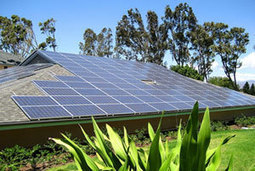
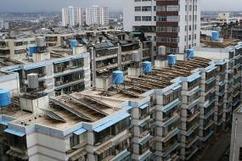
Energy Storage Systems for Solar and Wind Power Integration Will Total Nearly 22 Gigawatts of Installed Capacity from 2013 to 2023

See on Scoop.itGreen Energy Technologies & Development

June 26, 2013 More than 1,300 gigawatts (GW) of wind and solar power generation capacity are expected to come online in the next 10 years, creating an unprecedented amount of instability on the gri…

Duane Tilden‘s insight:

>“Several of the major markets for renewables, including Germany, Japan, and the United States, have enacted rules or legislation encouraging the adoption of energy storage systems for the purpose of integrating variable energy sources onto the grid,” says Anissa Dehamna, senior research analyst with Navigant Research.  “These market incentives come in various forms, including outright subsidies for ESS adoption, reforms that change how variable generation is compensated, and adjustments to connection requirements for variable power plants.”

In particular, changes to the compensation arrangements for variable power generation will have significant influence on the market for ESSs for solar and wind.  Compensation mechanisms have changed drastically over the past 10 years, according to the report, and many compensation schemes have grandfather clauses—meaning that older wind and solar systems have much different compensation rates and structures than newer systems coming online.<

See on www.navigantresearch.com
Sustainable Energy and Federal Agencies | The Energy Collective

See on Scoop.itGreen Energy Technologies & Development

In his speech on Tuesday laying out a national climate action plan, President Obama called on federal agencies to lead by example in taking actions to reduce their emissions of greenhouse gases.

Duane Tilden‘s insight:

>Faced with declining budgets, federal agencies are looking for innovative ways to cut costs while meeting a growing list of sustainability mandates.  Expanding the use of information and communication technologies (ICT) – metering and energy management systems for buildings, GPS-based tools for fleets, teleconferencing, e-training, teleworking, and cloud-based data storage – offer agencies new ways to reduce their energy use, cut greenhouse gas emissions and enhance productivity.

We estimate widespread deployment of  ICT could help reduce greenhouse gas emissions by 12 percent, roughly half the amount called for under a 2009 executive order, and could save an estimated $5 billion in energy costs through 2020. […]

Using 2008 as a baseline, agencies have a goal of reducing direct emissions (Scope1 and 2) 28 percent and indirect emissions (Scope 3) 13 percent by 2020. With reductions of 7 percent through 2011, federal agencies are making good progress.  By expanding use of ICT, the federal government could go much further. […]<

See on theenergycollective.com

Standard Solar to pioneer PV micro-grid system in Maryland – PV-Tech

See on Scoop.itGreen Energy Technologies & Development

The number one source for in-depth and up-to-the-minute news, technical articles, blogs and reviews on the international solar PV supply chain.

Duane Tilden‘s insight:

>[…] Standard Solar chief executive Tony Clifford said: “Widespread implementation of grid-connected energy storage systems is key to solar PV becoming a mainstream energy supplier.

“As one of the nation’s first commercial micro-grids, this project can truly be a game changer for PV. Not only does it provide backup power to Konterra, it also supports grid integrity and allows for participation in ancillary markets for electricity.” […]

See on www.pv-tech.org

Research and Markets: Global and Chinese Power Energy Storage Battery – 2013 Report – WSJ.com

See on Scoop.itGreen & Sustainable News
DUBLIN–(BUSINESS WIRE)–June 28, 2013–

Research and Markets (http://www.researchandmarkets.com/research/nblmtd/2013_deep) has announced the addition of the “2013 Deep Research Report on Global

Duane Tilden‘s insight:

>The report begins by defining the industry giving details on classification, application, industry chain, structure industry overview, international market analysis, China domestic market, Global market analysis, macroeconomic environment, economic situation analysis and influence, industry policy and plan, product specification, manufacturing process, and product cost structure.

The report then gives statistics on 21 key manufacturers including information on capacity, production, cost, price, profit, production value gross margin, products, customers, application, capacity, market position, company contact information and other company related information. […]

In the end, this report gives a SWOT analysis and discusses a 400MWh/year investment feasibility analysis project and investment return analysis and also gives related research conclusions and a development trend analysis of Chinese and Global Power Energy Storage Battery industry.<

See on online.wsj.com

Research and Energy Efficiency | The Energy Collective

See on Scoop.itGreen Energy Technologies & Development

Every time energy policy is being discussed, you’ll usually find a call for more R&D spending at the top of the list of ways to solve problems. While I agree that research is great, it’s obviously not enough and, if anything, only the first step.

Duane Tilden‘s insight:

>The result of this comparison doesn’t come as a surprise to anyone who is remotely interested in energy issues. There is a massive energy efficiency gap between the US and other world economies. While this is no surprise to many, it should be a lesson for all those who tell the public that meaningful action requires yet more R&D spending. The 200 million citizens of Japan and Germany are proof that even the technology and the concepts of the past can make a huge difference.<

See on theenergycollective.com

Green Building Taking Off in Hospitality, Retail Industries

See on Scoop.itGreen Building Design – Architecture & Engineering

Green building is taking off in the hospitality and retail industries, […]  This year, retail owners that are building green for over half of their projects rose to 38%, up from just 18% in 2011. That’s expected to rise to 52% by 2015.

Duane Tilden‘s insight:

>”Green building has taken such hold in the industry that even sectors with unique challenges, such as retail and hospitality, are making stronger investments,” says Harvey Bernstein, vice president at McGraw Hill Construction. “Clearly the benefits that owners are reporting are key reasons for their green building investments, and as they find better ways to measure those impacts and quantify the value to their sales velocity and to the well-being of their staff, customers and guests, we expect even more rapid engagement in green.”

While lower operating costs are the most frequently reported reason for going green (66% of retailers, 73% of hotels), other factors are also considered very important in their decision-making process:

Utility rebates – Protecting/enhancing brand – just as important as costs for hotels

Improving ROI  […]Energy efficiency is still a key goal, recycling and waste management are also critically important. A strong majority say they require green practices from suppliers, especially on waste handling (75%). <

See on www.sustainablebusiness.com

Innovative Empire State Building Program Saves Millions, Establishes New Energy Efficiency Model Nationwide

See on Scoop.itGreen Building Operations – Systems & Controls, Maintenance & Commissioning

/PRNewswire/ — The innovative energy efficiency program at the Empire State Building has exceeded guaranteed energy savings for the second year in a row, saving $2.3 million and providing a new model for building retrofits that is now being rolled…

Duane Tilden‘s insight:

>”The success from the Empire State Building retrofit project further demonstrates that thoughtfully applied energy-efficiency investments can deliver unparalleled returns through a combination of lower energy, lower operating costs, and increased building valuation,” said Iain Campbell, vice president, Global Energy and WorkPlace Solutions, Johnson Controls Building Efficiency.  “When implemented under a performance contract, the energy savings are guaranteed, ensuring a no-risk investment and a smart business decision.”

The retrofit has attracted new Empire State Building tenants over the past two years, including LinkedIn, Skanska, LF USA, Coty Inc., the Federal Deposit Insurance Corp., and Shutterstock.  These tenants sought space that reflected their sustainability values, provided more comfort for employees, and allowed them to monitor and control their energy use.

“The Empire State Building project has conclusively proven the business case for deep energy retrofits of any building,” said Raymond Quartararo, international director at Jones Lang LaSalle.  “We have consistently surpassed annual projected energy savings through a process that is very transparent, quantitatively intense and internationally approved.  The overwhelming majority of people want to do their part to reduce energy usage while delivering economic returns and occupying an environmentally responsible building.”<

See on www.sacbee.com

Better Buildings Act Brings Energy Efficiency Opportunities to Tenants

See on Scoop.itGreen & Sustainable News

Bipartisan Bennet-Ayotte Legislation Aimed at Boosting Energy Efficiency in Commercial Buildings

Duane Tilden‘s insight:

>To date, the focus has been on how real estate owners and developers may lower energy consumption at the “whole-building” level. However, office tenants like data centers, law firms, banks, trading floors, restaurants, and retail stores use a lot of energy – especially in areas experiencing large growth and development. The Better Buildings Act takes a holistic approach by considering office tenants’ impact on energy consumption and behaviors.

In addition to the “Tenant Star” designation, the bill asks the Department of Energy to study and learn from private sector “best practices” of how commercially-leased spaces are designed to achieve high performance and help reduce utility costs for businesses.

“Senators Bennet and Ayotte have championed innovative, transformative energy policy through their Better Buildings Act and its ‘Tenant Star’ provisions,” said Jeffrey D. DeBoer, President and CEO of The Real Estate Roundtable. “Tenants consume 50% or more of the energy used by commercial buildings, so they should be recognized for making smart choices in high-performance design and operations within leased spaces they control.  This bill is a major step forward to better align commercial landlords and tenants toward a common goal of lowering energy use in built environments across our nation.”<

See on www.bennet.senate.gov

Wind turbines to power Scotland’s railways

See on Scoop.itGreen & Sustainable News

A Scottish railway operating company has been given the green light to install two wind turbines at a West Lothian railway depot. They are expected to produce 14,000kWh of electricity …

Duane Tilden‘s insight:

A Scottish railway operating company has been given the green light to install two wind turbines at a West Lothian railway depot.

They are expected to produce 14,000kWh of electricity – enough to power a small station like Greenfaulds, Cumbernauld in Scotland – and save almost eight tonnes of carbon emissions every year. ScotRail also expects to save around £4,500 in energy bills per year, which it plans to reinvest in more renewable energy schemes on Scotland’s railways.

See on www.energylivenews.com

China Invests Billions in International Renewable Energy Projects

See on Scoop.itGreen & Sustainable News

See on insights.wri.org