EPB Deploys America’s Fastest Fiber-optic Smart Grid – Lee Baker, Smart Grid Consultant – Electric Energy Online

See on Scoop.itGreen Energy Technologies & Development

EPB Deploys America’s Fastest Fiber-optic Smart Grid – Lee Baker, Smart Grid Consultant – While many utilities struggle with the question of whether or not to build a Smart Grid, for the Electric Power Board (EPB) in …

Duane Tilden‘s insight:

Chattanooga: The Smarter City

EPB [Electric Power Board] is one of the first community-owned utilities to install a 100% fiber-optic network, which uses the fiber optic network for Smart Grid applications, in addition to the triple-play media services (i.e., high speed Internet, video and telephone) EPB already provides.

“Chattanooga is light years ahead when it comes to providing ultra fast broadband,” said Tom Edd Wilson, President and CEO of the Chattanooga Area Chamber of Commerce. “By offering the fastest available speeds to a whole community comprising a diverse population living in both urban and rural areas, Chattanooga has become the living laboratory for today’s innovations and tomorrow’s companies.”

EPB has built fiber optics throughout their entire customer service area and communications services are now available to all homes and businesses. By the end of 2012, all 170,000 homes and businesses will be equipped with a Tantalus smart meter.

[…] EPB already has 22 large industries signed up for a time-of-use (TOU) rate program, and its projected that together they will save $2.3 million a year. Those kinds of savings help businesses run more efficiently and bring jobs to the community.

“What makes Chattanooga stand out is that it is leveraging the network both for a full range of Smart Grid applications and communications connectivity,” Wade added.

“We looked at how the communication system and the electric system interact for many years and realized how closely tied together they are. As costs have stabilized and technology matured, we felt that the time was right to proceed with the project.”

“We’re building this network not just for today but for the future. The system we’re building will provide rapid, two-way communications with every meter, home and device, making it possible and practical for our customers to interact with their energy use as never before.”

See on www.electricenergyonline.com
Energy Efficiency in Data Centres to Lower Costs and Benefit the Environment

See on Scoop.itGreen Energy Technologies & Development

LONDON, Jan. 16, 2013 /PRNewswire/ — The data centre market is growing at an extremely high rate and its boom…

Duane Tilden‘s insight:

“Data centre managers are under constant pressure to lower the TCO [Total Cost of Ownership] and energy is one of the main components of the overall data centre operation cost.  […]

Data centres are classified as mission critical facilities and any down time will result in a significant financial loss. In order to ensure highest availability, data centre managers employ high powered UPS systems. These UPS systems consume about 7% of the total energy.   […]

See on www.prnewswire.com

IRENA: Fossil fuel subsidies cause everlasting expenses and pollution

See on Scoop.itGreen & Sustainable News

Abu Dhabi: Decreasing costs of renewable energy sources may convince the world governments to minimise subsidies on polluting fossil fuels, a senior official of International Renewable Energy Agency (Irena) said here on Sunday.

Duane Tilden‘s insight:

World governments were ignoring the fact that although renewable energy sources require big initial investments, their long-term operational and maintenance costs are minimal, he [Frank Wouters, Deputy Director General of Irena] pointed out.

Effective policies are more important than subsidies for countries to scale up renewable energy on a large scale, experts participating in the assembly also pointed out.

Anywhere in the world, investment in renewable power generation depends on stable regulatory frameworks, transparent planning processes and clear procedures for connection to the grid, said the participants at a workshop as part of the assembly.

See on gulfnews.com

French Firm Launches Floating Solar Power System to Market

See on Scoop.itGreen Energy Technologies & Development

The Hydrélio system will be best used in unused stretches of water, such as quarry lakes, irrigation ponds, water treatment plant lagoons and dams, Ciel et Terre said. “This new floating solar power generation concept addresses the problems of land availability and landscape impacts that large-scale land-based solar power generation projects come up against,” it said. “It makes it possible to conserve land that can be put to other uses, and to convert unused stretches of water into spaces dedicated to renewable electricity production. These stretches of water cover substantial areas.”

See on thegreenenergyblog.com

Energy Managers Also Manage People

See on Scoop.itGreen Building Operations – Systems & Controls, Maintenance & Commissioning

It takes three specifically-trained professionals to run a successful energy-management program at a large facility, according to a column in Chemical Processing

Duane Tilden‘s insight:

While the energy manager assumes responsibility for the company’s energy program, he or she can can get help from energy consultants & energy auditors.

See on www.energymanagertoday.com

The Negawatt Revolution — Solving the CO-2 [& Energy] Problem —

See on Scoop.itGreen Energy Technologies & Development

Introduction

“My 1976 article entitled “Energy Strategy: The Road Not Taken?” which appeared in Foreign Affairs, suggested two ways in which the energy system could probably evolve over the next fifty years or so, using the United States as an example. If you divided by something like a factor of nine or ten, you would get Canada.”…

“If the U.S. spent only enough on efficiency to keep up with growth and demand for electric services, plus the net retirement of generating capacity, we would have almost enough capital left in surplus to double our rate of investment in durable manufacturing industries.”

The Importance of Electrical Efficiency

“Why do I concentrate on electricity? First, because it is by far the costliest form of energy. Each cent per kilowatt-hour is equivalent in heat content to oil at $17 dollars a barrel, roughly the world oil price. So the electricity we buy, even in Canada where it is quite cheap, is equivalent to heat at many times the world oil price. Therefore saving electricity is more financially rewarding than saving direct fuels. In addition, electricity has enormous capital leverage because central electric systems — the whole systems — are about 100 times as capital intensive as the traditional direct fuel systems (you know, Texas and Louisiana and Alberta oil and gas — the sorts of things on which our economies were built). In fact a quarter of all the development capital in the world goes to electrification.

“Also electricity has huge environmental leverage. Power plants burn a third of the fuel in the world. They account for a third of the CO2, therefore, released from the burning of fossil fuel. In my own country they release two thirds of the sulphur oxides and a third of the nitrogen oxides. What’s more, every unit of electricity you save at the point of use saves typically three or four units of fuel, namely coal at the power plant. And in socialist or developing countries that ratio is more like five or six to one.

So you get the most environmental benefit from saving electricity, as well as the most financial benefit.”

See on www.ccnr.org

Taking energy efficiency seriously

See on Scoop.itGreen Building Operations – Systems & Controls, Maintenance & Commissioning

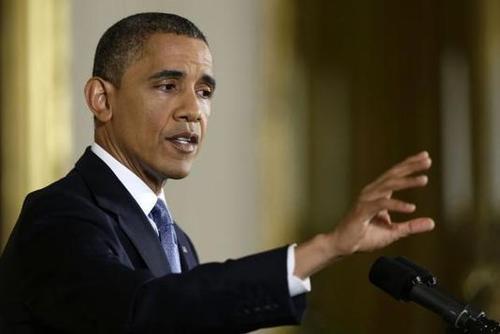
Despite the lack of attention paid to the issue during this year’s presidential campaign (at least, before Sandy came along), Barack Obama’s first term was a bit of a quiet revolution for climate change policy in America…

“More than 13 percent of the $700 billion American Recovery Act went to energy spending, most of it green. … the largest portion – $32 billion –went to energy efficiency and retrofitting projects. This was the biggest such investment in the history of history. It may even have finally heralded the arrival of a “Negawatt Revolution”….”

“Still, the right incentive structures to encourage the necessary investments in energy efficiency are not yet in place. Energy bills are still viewed by customers in terms of monthly costs that would go up because of short-term investments rather than yearly ones that will ultimately go down because of long-term savings….. The Negawatt Revolution may have begun in earnest during these past four years, but we can’t afford to wait until 2037 for it to finally reach its full potential. The possible benefits to the environment – and the economy – are too great for us to continue to forego.”

See on www.startribune.com