Boulder’s Smart Grid Leaves Citizens in the Dark : Greentech Media

See on Scoop.itGreen Energy Technologies & Development
Utilities have to engage with consumers and businesses to make the smart grid work.

Duane Tilden‘s insight:

“I had a smart meter, but I didn’t even know I had a smart meter,” said Dick.

Dick and a team of CU engineers are working on exactly this problem: how to inform people about their electricity use. The team is creating an online system called “EMPIRE” — EMpowering People In Reducing Energy consumption.  […]

Huston said that because Boulder’s smart grid was one of the first in the country, some of the technologies it used, such as fiber optic communication technology, turned out to be less ideal than hoped. The new two-way communication technology, installing smart meters for less than a quarter of the population and other features almost doubled the project’s cost within a year after it began. As of October 2012, the total costs were pushing $45 million.

See on www.greentechmedia.com
New Zero-Down, No-Risk Energy Efficiency Investment Fund Aims To Unlock $150 Billion In Savings

See on Scoop.itGreen Energy Technologies & Development

Double your money, create more than 1 million jobs and make a big dent in US carbon and greenhouse gas emissions – that’s what could be realized if the US were to double energy productivity by 2030, according to the Alliance Commission on National…

Duane Tilden‘s insight:

Looking to spur energy-efficiency gains across the US, CalCEF and Metrus Energy on March 13 launched a new financial intermediary service that could unlock the doors to a projected $150 billion in energy-efficiency savings by providing “otherwise hard-to-get financing for small and medium-sized businesses (SMBs).”

Added CalCEF managing director Paul Frankel:  “The Efficiency Resource Fund is a trail-blazing investment vehicle that taps a massive, underserved market opportunity.  We’re enabling a whole class of projects that would otherwise not be completed, while at the same time delivering not just savings for customers but also attractive returns for impact investors and generating capacity for utilities.”

See on cleantechnica.com

Stanford researchers map out an alternative energy future for New York

See on Scoop.itGreen & Sustainable News

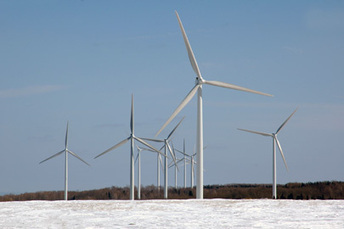
A study, co-authored by Stanford researcher Mark Z. Jacobson, outlines a path to statewide renewable energy conversion, and away from natural gas and imported fuel.

Duane Tilden‘s insight:

The study is the first to develop a plan to fulfill all of a state’s transportation, electric power, industry, and heating and cooling energy needs with renewable energy, and to calculate the number of new devices and jobs created, amount of land and ocean areas required, and policies needed for such an infrastructure change. It also provides new calculations of air pollution mortality and morbidity impacts and costs based on multiple years of air quality data.

To ensure grid reliability, the plan outlines several methods to match renewable energy supply with demand and to smooth out the variability of WWS resources. These include a grid management system to shift times of demand to better match with timing of power supply, and “over-sizing” peak generation capacity to minimize times when available power is less than demand.

The study’s authors are developing similar plans for other states, including California and Washington. They took no funding from any interest group, company or government agency for this study.

See on news.stanford.edu

Why HVAC Performance Gets Worse Over Time

See on Scoop.itGreen Energy Technologies & Development

HVAC systems in mid- to large-sized commercial buildings have increased in complexity steadily over the last 15 years. With the introduction of DDC controls and other building automation functions, even the most straightforward VAV systems are a compilation of components from multiple manufacturers, built by multiple contractors, that must be programmed and sequenced to work together seamlessly as intended.

Duane Tilden‘s insight:

[…] Considering the ultimate objective for HVAC systems — keeping building occupants safe, healthy and comfortable, while using the least amount of energy — it is no wonder HVAC has become so complex.

Beginning in 2013, […] the complexity of HVAC systems will increase yet again. […] new buildings and major renovations will be required to be designed and built with new technologies including demand-controlled ventilation, energy-recovery ventilation, daylight-harvesting controls, and economizer cycles for even small comfort cooling applications. […]

See on www.facilitiesnet.com

10 Key Data Center Energy Management Trends for 2013

See on Scoop.itGreen Building Operations – Systems & Controls, Maintenance & Commissioning

The ways data centers consume power will continue to undergo both subtle and substantive transformations in 2013. The first three trends identified here started in 2012, when organizations began struggling with increased power demands in the face of constrained capacity caused by both inefficient equipment and stranded power…

Duane Tilden‘s insight:

[…] For example, because rates for electricity are at their lowest at night when demand is low and baseload generating capacity is under-utilized, shifting the current workload to “follow the moon” can result in considerable savings.

[…] To eliminate the stranded power that exists in virtually every data center, capacity planning efforts will also begin to include power distribution and actual consumption as critical design factors.

[…] To eliminate the considerable overlap between the DCIM and other management systems used by the IT department and the Building Management System (BMS) used by the Facility department, organizations will begin migrating to DCIM as the primary platform for managing data centers, and will integrate other systems with it. …

See on www.energymanagertoday.com

Smart Grid May be Shortest Route to Obama’s Green Energy Goals – Forbes

See on Scoop.itGreen Energy Technologies & Development

President Obama’s inaugural address listed climate change and renewable energy as among his top priorities in his second term. But one of the most critical means by which to achieve those goals was never mentioned: the smart grid.

Duane Tilden‘s insight:

[…] Collaboration is instrumental, although Yeager warns that some interests can deflect progress because they are unable to set aside their agendas.

“We have to change policies to enable innovation,” he previously told this writer. “Utilities will not do this by themselves. They will want more power sources and to make more money. They have no incentive to empower consumers. Until the incentives for utilities change, they will block the door and the public utility commissions will keep the status quo.”

Yeager likened it to the days before telecommunications reform: Innovation will remain pent up in a regulatory model that has no motivation to change. And nothing will happen unless regulators force utilities to adopt those smart grid technologies. …

[…] Whereas energy conservation has typically been a back-burner subject, today it is up front. That awareness in combination with a difficult economy means that people will continue to search out ways to cut energy consumption, and costs.

“It will get there, but the smart grid really is still being defined,” says Nosbaum, […]

The smart grid supports the Obama’s administration’s green initiatives. As such, the president allocated $4.5 billion in the 2009 stimulus plan to various projects. […]

Over time, DNV KEMA says that a total of $16 billion in incentives will be targeted to the smart grid. That, in turn, will multiply and create a total of $64 billion in projects tied to the efficient production, transport and use of energy. The consultancy adds that such investments will produce 280,000 new jobs.

See on www.forbes.com

NREL: News – NREL Teams Up on Three ARPA-E Projects to Optimize Electric Vehicle Battery Management and Controls

See on Scoop.itGreen Energy Technologies & Development

Over the next three years, NREL engineers will work with teams led by Utah State University, Washington University, and Eaton Corporation to optimize utilization, life, and cost of lithium-ion (Li-ion) batteries for electric-drive vehicles (EDVs) through improved battery management and controls. The three projects are funded under the AMPED program with more than $7.4 million from DOE’s Advanced Research Projects Agency-Energy (ARPA-E).

Duane Tilden‘s insight:

The ultimate goal of these projects is to make EDVs viable options for a larger and wider population of drivers. The projects for each team are:

Power Management of Large Battery Packs – Utah State University ($3 million)

Objectives:    Reduction in battery size, 20% longer battery pack lifetime or 20% reduction in battery pack energy content and 50% increase in cold temperature charge rate […]
Battery Management System Design – Washington University ($2 million)

Objective:     20% increase in utilization of untapped Li-ion battery capacity at the cell level […]
Predictive Battery Management for Hybrid Vehicles -Eaton Corporation ($2.4 million)

Objective:    50% improvement in fuel economy of heavy-duty HEVs without sacrificing battery life […]

See on www.nrel.gov

Commercial, institutional and federal buildings | Office of Energy Efficiency

See on Scoop.itGreen Building Operations – Systems & Controls, Maintenance & Commissioning

ENERGY STAR Portfolio Manager, developed by the U.S. Environmental Protection Agency, is being adapted for the Canadian buildings sector.

Duane Tilden‘s insight:

Portfolio Manager is a free, interactive energy management tool that allows you to track and assess energy and water consumption across your entire portfolio of buildings in a secure online environment.

See on oee.nrcan.gc.ca

Dynamic Energy – A Leader in Energy Solutions | Combined Heat & Power

See on Scoop.itGreen Building Design – Architecture & Engineering

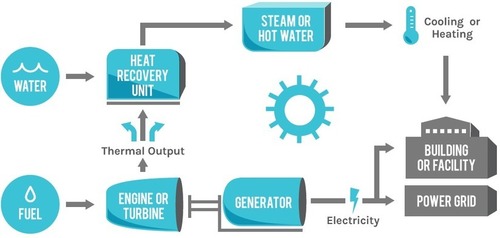
Dynamic Energy develops energy projects that reduce customers’ expenses, improve operating efficiency, provide an attractive return on investment, and help achieve sustainability goals.

Duane Tilden‘s insight:

CHP Financing – Direct Purchase

There are many reasons why now is a great time for CHP. Dynamic can provide multiple financing options including:

Purchasing a CHP system provides many benefits including:
• Traditional bank financing
• Federal 10% Investment Tax Credit
• Accelerated depreciation (MACRS)
• Aggressive state level incentives
• Locked forward natural gas contracts
• Significant thermal & electrical savings

Power Purchase Agreement
A Power Purchase Agreement (PPA) provides the host customer power and heat at a discounted rate, with no capital requirement. A third party investor owns the CHP system and eneters into a long term power contract with the host. PPAs provide the following benefits to host customers:

• No upfront cost or capital required
• Projects are cash flow positive from day one
• Predictable energy pricing & hedge against electricity prices
• No system performance or operating risk and no maintenance
• Align with organizational sustainability goals
• Press and media outreach

[For example of financing options, not intended as a corporate endorsement.]  DT

See on dynamicenergyusa.com

Guest Post: The Future of Energy Management in Commercial Buildings : Greentech Media

See on Scoop.itGreen Building Operations – Systems & Controls, Maintenance & Commissioning

Industry experts make predictions for 2013.

Duane Tilden‘s insight:

…the developments of 2012 are indicative of longer trends affecting how we will occupy and operate commercial buildings in 2013.

Policy and Disclosure

2012 saw a number of industry “firsts.” Perhaps none is more significant than the adoption of energy disclosure laws, which require residential and commercial buildings to reveal — sometimes publicly — the energy performance of the buildings. To date, six cities have passed such laws, which require the use of EPA’s Energy Star Portfolio Manager for buildings…

Utilities and the Green Button

Another major trend of 2012 has been the adoption by 35 electric and gas utilities of the “Green Button,” a voluntary, standardized data format for energy data. Green Button, a data standard developed by industry along with the National Institute of Standards and Technology (NIST), and ratified by the North American Energy Standards Board (NAESB), is meant to provide customer data in a computer-readable format so that software applications can uniformly tackle energy problems and identify opportunities for savings.

Civic Government

2012 was also a major year for civic and federal governments, as energy efficiency was a focus for large portfolios of public buildings. While some cities have already made strides in improving their own building performance, there has been a faster adoption of new technologies and operations strategies, and more vocal public acknowledgement of their goals to reduce energy and save taxpayer money.

See on www.greentechmedia.com