Learn How New York City Is Cleaning the Air With Just One Change | Sustainable Products and Practices

See on Scoop.itGreen & Sustainable News

Want clean air? Sometimes it takes just a few simple changes. New York City, in partnership with the Environmental Defense Fund, has a great story to tell about

Duane Tilden‘s insight:

>… Just recently, New York City and EDF through the city’s Clean Heat Program converted over 1,200 boilers to the cleanest available fuels reducing over 150 tons of soot pollution, or particulate matter (PM2.5), from the air.<

See on thegreenregister.com

Environmental Protection – Landfill Gas Management Regulation

See on Scoop.itGreen Energy Technologies & Development

Duane Tilden‘s insight:

The regulation requires that municipal solid waste landfills with 100,000 tonnes or more of waste in place or with an annual waste acceptance rate exceeding 10,000 tonnes to undertake an assessment of landfill gas generation and to submit the results to the Ministry in a report by January 1, 2011.  […]

If according to Landfill Gas Generation Assessment Procedure a regulated landfill site is estimated to generate 1000 tonnes or more of methane, the owner or operator of that site is required to complete a LFG management facilities design plan and to install the designed facilities at the landfill site.  The Landfill Gas Management Facilities Design Guidelines (PDF/9.3 MB)  […]  The performance standards prescribed in the document are intended to implement high-efficiency LFG collection systems. This Guideline must be used by landfill owners, operators, and qualified professionals in the preparation of LFG facilities design in accordance with the Landfill Gas Management Regulation.

See on www.env.gov.bc.ca

CanSIA 2012-Smart Grid Breakout Session

CanSIA 2012-Smart Grid Breakout Session.

“At CanSIA Solar Canada in Toronto I [Joshua LaForge] attended a breakout session that focused on developing grid technologies for the integration of solar PV and other renewables. The speakers covered a broad range of topics, including weather forecasting for solar load balancing (Rhonda Wright-Hilbig, IESO), economic modelling of renewable penetration (Justin Malecki, Clearsky Advisors), and PV-pilot projects in isolated communities (PJ Fernandex, ABB and Scott Henneberry, Schneider Electric).”

EU faces fresh calls to strengthen biofuel rules

See on Scoop.itGreen Energy Technologies & Development

Greenpeace-backed report argues EU can meet green transport targets without relying on controversial land-based biofuels

Duane Tilden‘s insight:

NGOs are increasingly fearful that member states’ efforts to meet the targets through an increase in the use of biofuels will have a negligible impact on greenhouse gas emissions and in some cases could lead to increased emissions as companies source biofuels made from food and energy crops that are alleged to have contributed to deforestation and food price inflation.

The EU Commission has acknowledged the risk and last year proposed a new limit on the use of biofuels made from food crops that would ensure such fuels could only count towards half of the 10 per cent target for renewable fuel use.

The proposals have encountered lobbying from some member states who have argued the binding 10 per cent goal cannot be met if limits are placed on the use of biofuels made from food crops.

But the CE Delft report argues the targets can be met through greater investment in fuel efficiency measures, waste and residue-based biofuels, and electric vehicles, alongside tighter rules to phase out the use of biofuels made from land-based food or energy crops.

See on www.businessgreen.com

Why Frack When You Can Grow Biofuel? USDA Has $25 Million In Answers

See on Scoop.itGreen & Sustainable News

The U.S. Department of Agriculture has just embarked on a new round of $25 million in funding for four new biofuel research and development projects, offering farmers and other rural property owners the potential for new alternatives to selling or…

Duane Tilden‘s insight:

One of USDA’s new projects addresses this approach through a new cropping system, in which the weedy biofuel plant camelina will be rotated with wheat-based plants. The $5 million project, through Kansas State University, will study the commercial feasibility of converting camelina to biobased adhesives and coatings as well as biofuel.

Another $6.5 million will go to Ohio State University to demonstrate an innovative anaerobic digestion system (anaerobic refers to bacteria that thrive without oxygen) that can handle multiple feedstocks. The new system will use natural decomposition to break down manure, agricultural waste, woody biomass and biofuel crops.

There is no such thing as impact-free energy production, but all of these biofuel projects are designed to fit sustainably into the core business of the farmer, which all boils down to long term land stewardship.

See on cleantechnica.com

IRENA: Fossil fuel subsidies cause everlasting expenses and pollution

See on Scoop.itGreen & Sustainable News

Abu Dhabi: Decreasing costs of renewable energy sources may convince the world governments to minimise subsidies on polluting fossil fuels, a senior official of International Renewable Energy Agency (Irena) said here on Sunday.

Duane Tilden‘s insight:

World governments were ignoring the fact that although renewable energy sources require big initial investments, their long-term operational and maintenance costs are minimal, he [Frank Wouters, Deputy Director General of Irena] pointed out.

Effective policies are more important than subsidies for countries to scale up renewable energy on a large scale, experts participating in the assembly also pointed out.

Anywhere in the world, investment in renewable power generation depends on stable regulatory frameworks, transparent planning processes and clear procedures for connection to the grid, said the participants at a workshop as part of the assembly.

See on gulfnews.com

Pioneering Global Atlas for Renewable Energy Goes Online

See on Scoop.itGreen Energy Technologies & Development

The world’s first open-access Global Atlas of renewable energy resources goes live today, announced at the annual general assembly of the International Renewable Energy Agency (IRENA).

Duane Tilden‘s insight:

–  “In the next 10 years we expect a huge rise in the investments in renewable energy. The Global Solar and Wind Atlas will help us make the right decisions,” says Martin Lidegaard, Danish Minister of Climate, Energy and Building, and President of the 3rd session of the IRENA Assembly.

–  Note to Editors

IRENA is mandated by 159 countries and the European Union to promote the sustainable use of all forms of renewable energy, and to serve as the global hub for renewable energy cooperation and information exchange. Formally established in 2011, IRENA is the first major international organization to be headquartered in the Middle East.

See on www.financialpost.com

The Negawatt Revolution — Solving the CO-2 [& Energy] Problem —

See on Scoop.itGreen Energy Technologies & Development

Introduction

“My 1976 article entitled “Energy Strategy: The Road Not Taken?” which appeared in Foreign Affairs, suggested two ways in which the energy system could probably evolve over the next fifty years or so, using the United States as an example. If you divided by something like a factor of nine or ten, you would get Canada.”…

“If the U.S. spent only enough on efficiency to keep up with growth and demand for electric services, plus the net retirement of generating capacity, we would have almost enough capital left in surplus to double our rate of investment in durable manufacturing industries.”

The Importance of Electrical Efficiency

“Why do I concentrate on electricity? First, because it is by far the costliest form of energy. Each cent per kilowatt-hour is equivalent in heat content to oil at $17 dollars a barrel, roughly the world oil price. So the electricity we buy, even in Canada where it is quite cheap, is equivalent to heat at many times the world oil price. Therefore saving electricity is more financially rewarding than saving direct fuels. In addition, electricity has enormous capital leverage because central electric systems — the whole systems — are about 100 times as capital intensive as the traditional direct fuel systems (you know, Texas and Louisiana and Alberta oil and gas — the sorts of things on which our economies were built). In fact a quarter of all the development capital in the world goes to electrification.

“Also electricity has huge environmental leverage. Power plants burn a third of the fuel in the world. They account for a third of the CO2, therefore, released from the burning of fossil fuel. In my own country they release two thirds of the sulphur oxides and a third of the nitrogen oxides. What’s more, every unit of electricity you save at the point of use saves typically three or four units of fuel, namely coal at the power plant. And in socialist or developing countries that ratio is more like five or six to one.

So you get the most environmental benefit from saving electricity, as well as the most financial benefit.”

See on www.ccnr.org

Taking energy efficiency seriously

See on Scoop.itGreen Building Operations – Systems & Controls, Maintenance & Commissioning

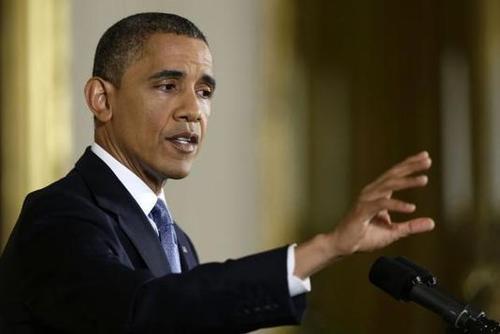
Despite the lack of attention paid to the issue during this year’s presidential campaign (at least, before Sandy came along), Barack Obama’s first term was a bit of a quiet revolution for climate change policy in America…

“More than 13 percent of the $700 billion American Recovery Act went to energy spending, most of it green. … the largest portion – $32 billion –went to energy efficiency and retrofitting projects. This was the biggest such investment in the history of history. It may even have finally heralded the arrival of a “Negawatt Revolution”….”

“Still, the right incentive structures to encourage the necessary investments in energy efficiency are not yet in place. Energy bills are still viewed by customers in terms of monthly costs that would go up because of short-term investments rather than yearly ones that will ultimately go down because of long-term savings….. The Negawatt Revolution may have begun in earnest during these past four years, but we can’t afford to wait until 2037 for it to finally reach its full potential. The possible benefits to the environment – and the economy – are too great for us to continue to forego.”

See on www.startribune.com