5 Biofuel Trends to Watch Out for in 2013

See on Scoop.itGreen & Sustainable News

2012 saw the introduction of next generation, advanced biorefineries. Here we look at the trends that will hit the biofuel market in 2013, including; Green Diesel, Decline of Oil,

Duane Tilden‘s insight:

The Retreat of Oil Majors

Trend: Oil Majors double down on “Golden Age of Gas” while narrowing investments across the advanced biofuel space.

An early strategic investor in the advanced biofuels industry, global oil majors have begun trimming excess fat from their biofuel investment portfolios over the past couple of years. BP, a leading investor in the biofuels industry, pulled out of its commercial Highlands Park project in Florida in October 2012 to refocus on R&D efforts. Shell, meanwhile, has dropped a number of investments across the advanced biofuels landscape, concentrating its commercialization efforts on its Raizen joint venture with Cosan in Brazil.

See on oilprice.com

Lower nitrogen losses with perennial biofuel crops

See on Scoop.itGreen & Sustainable News

Perennial biofuel crops such as miscanthus, whose high yields have led them to be considered an eventual alternative to corn in producing ethanol, are now shown to have another beneficial characteristic — the ability to reduce the escape of…

Duane Tilden‘s insight:

In the study, funded by the Energy Biosciences Institute, miscanthus, switchgrass, and mixed prairie species were compared against a typical corn-corn-soybean rotation. Harvested biomass and nitrogen, nitrous oxide emissions, and nitrate leaching in the mid-soil profile and through tile drainage lines were all measured.

The researchers found that the perennial crops quickly reduced nitrate leaching in the mid-soil profile as well as from tile lines. “By year four each of the perennial crops had small losses,” Smith said. “Nitrous oxide emissions also were much smaller in the perennial crops–including switchgrass, which was fertilized with nitrogen, while prairie and miscanthus were not. Overall, nitrogen levels were higher for the corn and soybean treatment as well as switchgrass, but were lower for prairie and miscanthus. Prairie and miscanthus levels were lower due to harvest of the plant biomass (and nitrogen) each winter, with no fertilizer nitrogen additions to replace it, as occurred in corn and switchgrass,” she said.

See on www.sciencedaily.com

Why Frack When You Can Grow Biofuel? USDA Has $25 Million In Answers

See on Scoop.itGreen & Sustainable News

The U.S. Department of Agriculture has just embarked on a new round of $25 million in funding for four new biofuel research and development projects, offering farmers and other rural property owners the potential for new alternatives to selling or…

Duane Tilden‘s insight:

One of USDA’s new projects addresses this approach through a new cropping system, in which the weedy biofuel plant camelina will be rotated with wheat-based plants. The $5 million project, through Kansas State University, will study the commercial feasibility of converting camelina to biobased adhesives and coatings as well as biofuel.

Another $6.5 million will go to Ohio State University to demonstrate an innovative anaerobic digestion system (anaerobic refers to bacteria that thrive without oxygen) that can handle multiple feedstocks. The new system will use natural decomposition to break down manure, agricultural waste, woody biomass and biofuel crops.

There is no such thing as impact-free energy production, but all of these biofuel projects are designed to fit sustainably into the core business of the farmer, which all boils down to long term land stewardship.

See on cleantechnica.com

IRENA: Fossil fuel subsidies cause everlasting expenses and pollution

See on Scoop.itGreen & Sustainable News

Abu Dhabi: Decreasing costs of renewable energy sources may convince the world governments to minimise subsidies on polluting fossil fuels, a senior official of International Renewable Energy Agency (Irena) said here on Sunday.

Duane Tilden‘s insight:

World governments were ignoring the fact that although renewable energy sources require big initial investments, their long-term operational and maintenance costs are minimal, he [Frank Wouters, Deputy Director General of Irena] pointed out.

Effective policies are more important than subsidies for countries to scale up renewable energy on a large scale, experts participating in the assembly also pointed out.

Anywhere in the world, investment in renewable power generation depends on stable regulatory frameworks, transparent planning processes and clear procedures for connection to the grid, said the participants at a workshop as part of the assembly.

See on gulfnews.com

Western Wind Energy | Western Wind Energy Corp. – Update on process with Brookfield

See on Scoop.itGreen & Sustainable News

TSX.V Symbol: “WND”
OTCQX Symbol: “WNDEF”
Issued and Outstanding: 69,820,125

VANCOUVER, Jan. 14, 2013 /CNW/ – Western Wind Energy Corp. – (the “Company” or “Western Wind”) (TSX Venture Exchange – “WND”) (OTCQX – “WNDEF”) wishes to announce an update to its efforts with both Brookfield Renewable Energy Partners L.P. (“Brookfield”) and Western Wind’s sales process.

Duane Tilden‘s insight:

ABOUT WESTERN WIND ENERGY CORP.

Western Wind is an independent vertically integrated renewable energy production company that owns and operates wind and solar generation facilities with 165 net MW of rated capacity operating in the States of California and Arizona.  Western Wind further owns substantial development assets for both solar and wind energy in the U.S. The Company is headquartered in Vancouver, BC and has branch offices in Scottsdale, Arizona and Tehachapi, California.  Western Wind trades on the TSX Venture Exchange under the symbol “WND”, and in the United States on the OTCQX under the symbol “WNDEF”.

Western Wind owns and operates three wind energy generation facilities in California, and one fully integrated combined wind and solar energy generation facility in Arizona.  The three operating wind generation facilities in California are comprised of the 120MW Windstar, the 4.5MW Windridge, both in Tehachapi, and the 30MW Mesa facility near Palm Springs.  The facility in Arizona is the Company’s 10.5MW Kingman integrated solar and wind facility.  The Company is further developing wind and solar energy projects in California, Arizona, and Puerto Rico.

Disclaimer:  This memo is not an offering or endorsement and any actions made by others based upon the information contained herein are wholly their own.  No Liability will be assumed by the author.

See on www.newswire.ca

www.esi-africa.com | Funding for renewable energy projects in Africa and Asia

See on Scoop.itGreen & Sustainable News

14 January 2013 – The Renewable Energy and Energy Efficiency Partnership (REEEP) will fund 28 new projects that aim to scale up renewable energy and energy efficient solutions in key emerging markets and in selected developing countries in Africa and Asia.

Duane Tilden‘s insight:

“The nexus between clean energy, food production and water provision is one of the exciting new areas we are looking at,” Eva Oberender, REEEP’s programme director, says. “This includes developing solar-powered cold-storage for fishing communities in Indonesia, solar-powered pumps for irrigation in Kenya and Burkina Faso, and improvements in energy efficiency in Chinese agriculture.”


Several of the 28 selected projects replicate or scale up successful initiatives previously funded by REEEP.

See on www.esi-africa.com

Pioneering Global Atlas for Renewable Energy Goes Online

See on Scoop.itGreen Energy Technologies & Development

The world’s first open-access Global Atlas of renewable energy resources goes live today, announced at the annual general assembly of the International Renewable Energy Agency (IRENA).

Duane Tilden‘s insight:

–  “In the next 10 years we expect a huge rise in the investments in renewable energy. The Global Solar and Wind Atlas will help us make the right decisions,” says Martin Lidegaard, Danish Minister of Climate, Energy and Building, and President of the 3rd session of the IRENA Assembly.

–  Note to Editors

IRENA is mandated by 159 countries and the European Union to promote the sustainable use of all forms of renewable energy, and to serve as the global hub for renewable energy cooperation and information exchange. Formally established in 2011, IRENA is the first major international organization to be headquartered in the Middle East.

See on www.financialpost.com

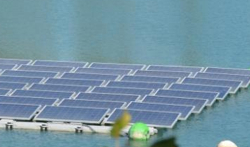
French Firm Launches Floating Solar Power System to Market

See on Scoop.itGreen Energy Technologies & Development

The Hydrélio system will be best used in unused stretches of water, such as quarry lakes, irrigation ponds, water treatment plant lagoons and dams, Ciel et Terre said. “This new floating solar power generation concept addresses the problems of land availability and landscape impacts that large-scale land-based solar power generation projects come up against,” it said. “It makes it possible to conserve land that can be put to other uses, and to convert unused stretches of water into spaces dedicated to renewable electricity production. These stretches of water cover substantial areas.”

See on thegreenenergyblog.com

Energy Managers Also Manage People

See on Scoop.itGreen Building Operations – Systems & Controls, Maintenance & Commissioning

It takes three specifically-trained professionals to run a successful energy-management program at a large facility, according to a column in Chemical Processing

Duane Tilden‘s insight:

While the energy manager assumes responsibility for the company’s energy program, he or she can can get help from energy consultants & energy auditors.

See on www.energymanagertoday.com

China’s Energy Market Forecast: “Contrary to observations of recent coal-electricity negotiations, views expressed on the China Coal Market Summit, held on Dec. 21, 2012, generally predicted 2013 a better year for coal-fired power generation.”