China’s Coal-Fired Economy Dying of Thirst as Mines Lack Water

See on Scoop.itGreen & Sustainable News

Coal industries and power stations use as much as 17 percent of China’s water, and almost all of the collieries are in the vast energy basin in the north that is also one of the country’s driest regions.

Duane Tilden‘s insight:

>About half of China’s rivers have dried up since 1990 and those that remain are mostly contaminated. Without enough water, coal can’t be mined, new power stations can’t run and the economy can’t grow. At least 80 percent of the nation’s coal comes from regions where the United Nations says water supplies are either “stressed” or in “absolute scarcity.” […]

Geneva-based Pictet Asset Management’s $3.17 billion global water fund doubled its exposure to stocks offering water services in China to 10 percent since 2007.  […]

Beijing Enterprises has risen 55 percent this year to HK$3.10 and Deutsche Bank sees it reaching HK$3.20 within a year. China Everbright is up 81 percent to HK$7.10 and JPMorgan Chase & Co. estimates it will reach HK$7.60 by mid-October.

Severe Pollution  “The best opportunity is in industrial water re-use, and for the mining industry, it is of the utmost urgency,” said Junwei Hafner-Cai, a manager of RobecoSAM’s Sustainable Water fund. “Water that has been released from the coal mines and from petrochemical plants has resulted in severe pollution on top of the water scarcity.”

A shortage of coal because of the lack of water to mine and process the fuel may force China to increase imports, pushing up world prices, according to Debra Tan, director at research firm China Water Risk in Hong Kong. China, which mines 45 percent of the world’s coal, may adopt an aggressive “coal-mine grab” to secure supplies, said Tan.<

See on www.moneynews.com
Water Stress Threatens Future Energy Production

See on Scoop.itGreen Building Design – Architecture & Engineering

When we flip on a light, we rarely think about water.  But electricity generation is the biggest user of water in the United States.  Thermoelectric power plants alone use more than 200 billion gallons of water a day – about 49 percent of the…

Duane Tilden‘s insight:

>Large quantities of water are needed as well for the production, refining and transport of the fuels that light and heat our homes and buildings, and run our buses and cars.  Every gallon of gasoline at the pump takes about 13 gallons of water to make.

And of course hydroelectric energy requires water to drive the turbines that generate the power.  For every one-foot drop in the level of Lake Mead on the Colorado River, Hoover Dam loses 5-6 megawatts of generating capacity – enough to supply electricity to about 5,000 homes.

In short, energy production is deeply dependent on the availability of water.  And, as a report released last week by the U.S. Department of Energy (DOE) makes clear, as climate change brings hotter temperatures, more widespread and severe droughts, and lower river and lake levels, the nation’s energy supply is becoming more vulnerable. […]

One particularly interesting figure in the report compares the water requirements of seven different types of electric power facilities – nuclear, coal, biopower, natural gas combined-cycle, concentrated solar, photovoltaic solar and wind.  The last two come out as by far the most water-conserving electricity sources.  In contrast to the 20,000-60,000 gallons per megawatt-hour needed for nuclear and coal plants with “once-through” cooling systems, PV solar and wind require only negligible quantities.<

See on newswatch.nationalgeographic.com

Nuclear Plant Closures Forecast for New York and Chicago regions

See on Scoop.itGreen & Sustainable News

Nuclear reactors that light New York City and Chicago with carbon-free electricity face possible extinction before they can reap the benefits of President Barack Obama’s proposed climate rules.

Duane Tilden‘s insight:

>A slump in power prices, increasing maintenance expense as plants age and stricter safety regulations following Japan’s 2011 Fukushima nuclear disaster may prompt the industry to retire as many as five plants before the end of the decade, according to research firm UBS Securities LLC. That would eliminate enough generating capacity to power 2.4 million U.S. homes. […]

Reactors such as Indian Point are combating critics that want to shut them down over safety concerns. New York, for example, has solicited bids to replace the plant with natural gas-fired generators and authorized a transmission line to deliver hydropower from Quebec.

Retired nuclear units would likely be replaced by gas plants built by operators such as NRG Energy Inc. (NRG), which would have the result of increasing overall greenhouse gas emissions. That may complicate Obama’s longstanding goal of slashing U.S. emissions 17 percent from 2005 levels by 2020, and echo challenges faced by countries such as Japan and Germany as they phase out nuclear power, said Chris Gadomski, an analyst for Bloomberg New Energy Finance.<

See on www.bloomberg.com

Council plans ambitious geothermal energy facility in Crewe

See on Scoop.itGreen Energy Technologies & Development

PLANS to extract geothermal energy from beneath Crewe are being explored by Cheshire East Council (CEC). The town has been identified as one of only six sites in the UK with the potential to deliver the renewable energy source.

Duane Tilden‘s insight:

>The council point to independent studies that show parts of the borough are sitting on enough natural energy supplies to heat every home in Cheshire East for centuries.

Boreholes 4km deep will be drilled to access 100c hot water beneath the Cheshire Basin. The water could then be extracted and the steam used to drive turbines for electricity generation.

An independent study will now be commissioned to report on both the suitability of the site and how the extraction could take place.<

See on www.creweguardian.co.uk

Renewables & Energy Efficiency Can Cut Power Plants’ Water Use 97% by 2050

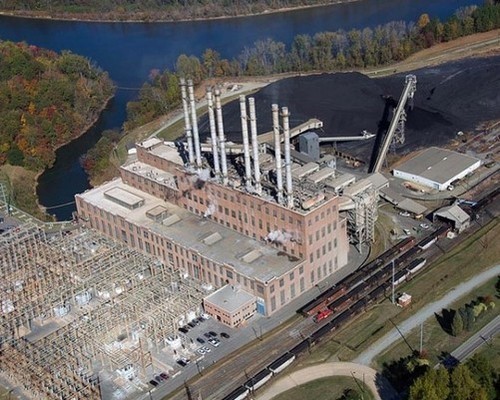
wupt-plantscherer-Coal-Fired-plantSee on Scoop.itGreen & Sustainable News

Investing in renewables and energy efficiency could reduce power plants’ water withdrawals by 97 percent from current levels by 2050 and cut carbon emissions 90 percent from current levels, according to a study by the Union of Concerned Scientists…

Duane Tilden‘s insight:

>The report warns that a “business-as-usual” approach would keep emissions within 5 percent of current levels and water withdrawals would not drop significantly until after 2030. And while utilities’ ongoing shift to natural gas would decrease water use in the coming decades, the study says its ongoing requirements could still harm water-strained areas. This shift to natural gas also would do little to lower the power sector’s carbon emissions.

More than 40 percent of US freshwater withdrawals are used for power plant cooling, the report says. These plants also lose several billion gallons of freshwater every day through evaporation.

Further, increasing demand and drought are putting a greater strain on water resources. Low water levels and high water temperatures can cause power plants to cut their electricity output in order to avoid overheating or harming local water bodies. Such energy and water collisions can leave customers with little or no electricity or with added costs because their electric supplier has to purchase power from elsewhere, as occurred during the past two summers.<

See on www.environmentalleader.com

It’s Time Our Policies Reflect The Fact That Energy And Water Are Fundamentally Intertwined

See on Scoop.itGreen & Sustainable News

For a long time, we’ve overlooked the inextricable relationship between water and energy use.  Coal, nuclear and natural gas plants use enormous amounts of steam to create electricity.  Producing all of that steam requires 190,000 million gallons of water per day, or 39% of all freshwater withdrawals in the nation.

Duane Tilden‘s insight:

>The longstanding division between energy and water considerations is particularly evident in the case of energy and water management.  These resources are fundamentally intertwined: Energy is used to secure, deliver, treat and distribute water, while water is used (and often degraded) to develop, process and deliver energy.

Despite the inherent connection between the two sectors, energy and water planners routinely make decisions that impact one another without adequately understanding the scientific or policy complexities of the other sector.  This miscommunication often hides joint opportunities for conservation to the detriment of budgets, efficiency, the environment and public health, and inhibits both sectors from fully accounting for the financial, environmental or social effects they have on each other.

This lack of collaboration between energy and water planners is especially dire considering Texas is in midst of an energy shortage that is exacerbated by the multi-year drought.  Without adequate planning, we could someday have to choose between keeping our lights on and turning on the faucet.<

See on blogs.edf.org

Water kit to be added to JEA home evaluation program – Jacksonville Public Libraries

See on Scoop.itGreen & Sustainable News
The popularity of JEA’s Home Energy Evaluation Kit Backpack program has spurred the utility to add a water-use evaluation kit to the tools offered to homeowners to help them reduce their utility bills

Duane Tilden‘s insight:

>The kits have been checked out 2,143 times since the pilot program started in 2010.  The backpacks are available at all Jacksonville public libraries and the Bartram Trail Library in St. Johns County, because it is in the JEA service area.

“Prior to the backpack program, customers would have to schedule an appointment with a technician who would visit the home, but the backpack allows them to get started with conservation on their own, … The hardest part about developing the kit was the instruction manual, … “We wanted to make sure it was functional, yet understandable,” said Reed.

Kits can be checked out for three weeks and are available on a first-come first-served basis, unless customers attend a JEA workshop.<

See on ht.ly

Commercial, institutional and federal buildings | Office of Energy Efficiency

See on Scoop.itGreen Building Operations – Systems & Controls, Maintenance & Commissioning

ENERGY STAR Portfolio Manager, developed by the U.S. Environmental Protection Agency, is being adapted for the Canadian buildings sector.

Duane Tilden‘s insight:

Portfolio Manager is a free, interactive energy management tool that allows you to track and assess energy and water consumption across your entire portfolio of buildings in a secure online environment.

See on oee.nrcan.gc.ca