ETI | ETI seeks proposals for a project to reduce district heat network costs

See on Scoop.itGreen Energy Technologies & Development

The Energy Technologies Institute (ETI) is seeking proposals from organisations to deliver a new project to identify novel ways of reducing the capital costs of district heat network infrastructure.

Duane Tilden‘s insight:

>District heat networks supply heat to homes and businesses through pipes carrying hot water. They have great potential to deliver CO2 emissions reductions and cost benefits through the use of low carbon heat, waste heat (from power stations, industry and other sources), combined heat and power  and large-scale heat pump deployment.

The ETI’s project will assess innovative solutions to reduce the capital and total lifetime costs of heat network pipes, and to reduce any disruption caused during their installation.

The Request for Proposals (RfP) announced today (11 December) is focused on identifying innovative solutions. These may include advanced installation approaches; tunnelling, drilling and excavation techniques; alternative pipework and insulation materials; jointing techniques; pipe routing and novel system designs; planning; sub-surface detection technologies; plus other areas to be proposed.

It is expected that the project team selected will need to be made up of a number of organisations with experience and insight into district heat network delivery.<


See on www.eti.co.uk

Geothermal Energy Association honors leaders in Innovation & Renewable Energy

See on Scoop.itGreen Energy Technologies & Development

The Geothermal Energy Association (GEA) in the US announced the winners for the GEA Honors, which recognize companies and individuals that have made significant contributions to advancing technology, spurring economic development and protecting the environment during the past year. 


Duane Tilden‘s insight:

>US Geothermal’s 22 MW Neal Hot Springs Power Plant took the technical advancement prize. The facility, near Vale, Oregon, is considered the first commercial, supercritical Organic Rankine Cycle (ORC) binary power plant.

TAS Energy designed, manufactured and installed the supercritical ORC binary power plant employing R134a, an organic working fluid that is non-toxic and non-flammable.

GeothermEx was recognized for its role in economic development and its "substantial contribution to the development of local, regional or national markets through the development of geothermal systems."

According to the GEA, the company excels in the facilitation of common understanding between developers and financiers. To date, GeothermEx’s evaluations have enabled the development of more than 7,000 MW of geothermal power, the total financed to date exceeding $12 billion.

Dale Merrick of Canby Geothermal received the Environmental Stewardship award, which was presented in conjunction with the Environmental and Energy Study Institute (EESI).

" Dale Merrick has been a leader and visionary working to implement a community-based geothermal development project at Canby , California," the GEA said in a written statement. "The project would produce power and cascade the remaining energy to support an existing geothermal district heating system and future greenhouse and aquaculture businesses.

"If successful, Canby would be the first net-zero community in California and a model to the 71 communities in the state identified by the CEC as having a co-located geothermal resource. Projects like the Canby Geothermal System take many different types of support, and an advocate and visionary, like Dale Merrick, is essential. Canby Geothermal is a classic example of what a geothermal ‘champion’ and a supportive community can do, the industry association said.<

See on www.renewableenergymagazine.com

Asbestos – Best Practice Approach To Roof Refurbishment

Excellent article on legacy asbestos insulated roofing systems and remediation methods.

Specifier Review's avatarArchitecture, Design & Innovation

For any demolition, refurbishment or repair project, the presence of asbestos in the building can have far reaching cost and health & safety implications. And it’s not an uncommon problem. Asbestos was widely used as a roofing material right the way through to the 1970s thanks to its durability and fire resistance benefits at low cost.

The use of asbestos as a building material is a legacy of the built environment that today’s roofing contractors are often tasked with tackling, as those roofs originally specified in the 1950s, 60s and 70s fail and need to be replaced.  Sometimes, there may be no other option than to remove the asbestos roof and incur the project delays and added costs that specialist remediation involves. However, while the Control of Asbestos regulations 2012 ensures that building owners are accountable for preventing any risk of exposure to asbestos fibres from their building, contractors do…

View original post 747 more words

Critical lack of long-term radioactive waste storage as Japan finalizes energy policy

See on Scoop.itGreen & Sustainable News

The United States’ top nuclear regulator said Friday that atomic energy users, including Japan, must figure out how to ultimately store radioactive waste.

Duane Tilden‘s insight:

>Japan has no final waste repository, not even a potential site. The U.S. government’s plan for building a repository at Yucca Mountain in Nevada has been halted by strong local opposition due to safety concerns.

“In the nuclear community, we of course have to face the reality of the end product — spent fuel,” Macfarlane told reporters.

She urged countries that are contemplating or embarking on a nuclear power program to formulate back-end plans at an early stage.

The new policy under Prime Minister Shinzo Abe’s pro-nuclear government is pushing to restart as many reactors as possible if deemed safe under the new, stricter safety standards that took effect this past summer. The new policy, whose draft was discussed Friday by a government panel, is also expected to stick to Japan’s shaky fuel cycle program despite international concerns about the country’s massive plutonium stockpile.

Japan is stuck with 44 tons of plutonium at home and overseas after unsuccessfully pushing to establish a fuel cycle, with its fast breeder reactor and a reprocessing plant never fully operated. Experts say Japan’s plutonium stockpile poses a nuclear security threat and raises questions over whether Japan plans to develop a nuclear weapon, which Tokyo denies.

Japan also has more than 14,000 tons of spent fuel in cooling pools at its 50 reactors, all of which are offline. Some pools are expected to be full in several years, and are expected to be moved to a dry cask facility just completed in northern Japan.<

See on www.ctvnews.ca

A different kind of pipe

Boston Housing Authority to invest $11m in energy efficiency and infrastructure upgrades for Public Housing

See on Scoop.itGreen Building Operations – Systems & Controls, Maintenance & Commissioning

The Malden Housing Authority will spend more than $11 million to make its public housing units more energy efficient, work officials believe will pay for itself.

Duane Tilden‘s insight:

>The 250-unit complex has a central power plant with utilities distributed to each building through pipes installed in the 1950s. The pipes are in poor condition, Finn said, which results in uneven distribution of heat and water pressure. “Those pipes are a problem; they are aging in place,” he said.

The new system will feature one energy-efficient boiler for every two units in the 58 Housing Authority buildings on Newman Road, Finn said. The old pipes will remain and could be used by the authority or the city as underground electricity conduits, he said. The work on Newman Road is expected to cost $4.3 million.

The Housing Authority received the 20-year $11.27 million bond through MassDevelopment , an entity created by the Legislature in 1998 to act as a finance and development authority.

“We’re pleased to support the Malden Housing Authority with this low-cost financing to improve homes for low-income families, reduce the cost of utilities for the authority’s developments, and to support the Commonwealth’s goal of improving energy technologies and efficiencies, resulting in reduced cost,” MassDevelopment chief executive Marty Jones said in a prepared statement.

For the bond financing agreement, the authority will pay a fixed interest rate of 4.12 percent to East Boston Savings Bank, which is loaning the funds. But the bank was only able to do that by entering into an interest-rate swap agreement with another institution, PNC Bank.

The move allowed East Boston Savings Bank to offer a fixed-rate loan, which the Housing Authority needed in order to comply with federal housing standards, said Joseph Leary, vice president of East Boston Savings Bank.<

See on www.bostonglobe.com

Fuel cell switched on at Cal State San Bernardino

See on Scoop.itGreen Energy Technologies & Development

A new 1.4 MW utility-owned a fuel cell is now in full operation at Cal State San Bernardino.

Duane Tilden‘s insight:

>”Electricity generated by the fuel cell is going straight into the Edison grid, and the university will be able to utilize the waste heat it produces to preheat the campus heating system, resulting in an estimated annual savings of $120,000 from avoided natural gas costs,” said Tony Simpson, senior director of facilities services at Cal State San Bernardino.

The combined heat and power configuration —known as cogeneration — of the fuel cell will reduce the campus’s carbon dioxide emissions by lessening reliance on the high temperature hot water generators currently in operation. The fuel cell will continue to use natural gas to generate ultra-clean electricity through an electrochemical reaction, but because there is no combustion, unhealthful emissions are reduced.

Additionally, the fuel cell is highly efficient, generating more power from a given unit of fuel and lower greenhouse gas emissions compared to combustion-based power sources in a similar size range. Cogeneration DFC power plants can achieve total thermal efficiencies up to 90 percent, depending on the application.<

See on www.elp.com

Mining, Fracking, And Drilling Exploitation of Public Lands Exceed Natural Carbon Sink Processes

See on Scoop.itGreen Energy Technologies & Development

A report released Thursday by the Center for American Progress finds that public lands in the continental United States are the source of 4.5 times more carbon pollution than they are able to naturally absorb.

Duane Tilden‘s insight:

>This imbalance is primarily due to the large quantities of coal, oil, and natural gas that are extracted from public lands. 42.1 percent of the country’s coal, 26.2 percent of its oil, and 17.8 percent of its natural gas are currently sourced from public lands both onshore and offshore.

Using data from the United States Geological Survey and Stratus Consulting, the CAP analysis determined that when combusted, fossil fuels extracted from public lands are the source of 1,154 million metric tons of carbon dioxide annually, while those same lands absorb only 259 million metric tons every year. As the authors wrote, the carbon sink that should be our national parks, forests, and other public lands is now “clogged.”

These findings are important considering that the first tenet of President Barack Obama’s Climate Action plan is to “cut carbon pollution in America.” The president’s “all of the above energy” plan, however, calls for continued expansion of mining and drilling on the 700 million acres of public lands managed by the federal government — contributing to high levels of carbon pollution.<

See on thinkprogress.org

US Federal Government to Triple Use of Renewable Energy by 2020

See on Scoop.itGreen Energy Technologies & Development

Obama is set to announce plans for the federal government to source 20 percent of its electricity from renewables such as solar and wind by 2020.

Duane Tilden‘s insight:

>According to the AP, the “federal government occupies nearly 500,000 buildings, operates 600,000 vehicles and purchases more than $500 billion per year in goods and services,” which amounts to some pretty substantial emissions. Currently the government sources 7.5 percent of it’s electricity from renewable energy, but today’s announcement looks for that amount to triple to 20 percent within just seven years. (It is not presently clear how this ties into President Obama’s 2010 goal that the federal government cut carbon emissions by 28 percent by 2020).

So far there are few details as to how this goal is to be accomplished, but more optimistic onlookers might view this as one of the more promising developments in Obama’s oft-confusing “all-of-the-above” strategy for U.S. energy independence. Indeed, it follows an emerging trend towards renewable energy within individual sectors of federal government. The Department of Defense already has goals to meet 25 percent of its energy needs from renewable sources by 2025, while the government has invested $4 billion in making its buildings more efficient. These changes, among others, have seen federal agencies reduce their greenhouse gas emissions by 15 percent since 2009.<

See on inhabitat.com

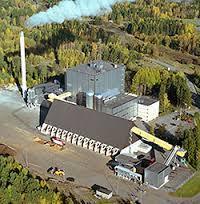
Fortum inaugurates new waste-to-energy CHP plant in Sweden

See on Scoop.itGreen Energy Technologies & Development

The new power plant unit, Brista 2, produces district heat for local residents and electricity for the Nordic power market from sorted municipal and industrial waste.

Duane Tilden‘s insight:

>”Brista 2 is already the fourth CHP plant we have commissioned this year in the Nordic and Baltic countries. Combined heat and power production is at the core of our strategy, and whenever possible we utilise renewable and local fuels,” says Per Langer, Executive Vice President of Fortum’s Heat Division.

Production capacity of the new Brista plant unit is 60 megawatts (MW) heat and 20 MW electricity. The annual heat production, about 500 gigawatt-hours (GWh), corresponds to the annual heating needs of about 50,000 mid-sized homes. The estimated annual electricity production of Brista 2 is 140 GWh. Fortum co-owns the plant (85%) together with the municipal energy company Sollentuna Energi (15%). <

See on online.wsj.com