Drilling Companies Cheating Landowners and Government Out of Royalty Payments

See on Scoop.itGreen & Sustainable News

Don Feusner ran dairy cattle on his 370-acre slice of northern Pennsylvania until he could no longer turn a profit by farming.

Duane Tilden‘s insight:

>Like every landowner who signs a lease agreement to allow a drilling company to take resources off his land, Feusner is owed a cut of what is produced, called a royalty.

In 1982, in a landmark effort to keep people from being fleeced by the oil industry, the federal government passed a law establishing that royalty payments to landowners would be no less than 12.5 percent of the oil and gas sales from their leases.

From Pennsylvania to North Dakota, a powerful argument for allowing extensive new drilling has been that royalty payments would enrich local landowners, lifting the economies of heartland and rural America. The boom was also supposed to fill the government’s coffers, since roughly 30 percent of the nation’s drilling takes place on federal land.

Over the last decade, an untold number of leases were signed, and hundreds of thousands of wells have been sunk into new energy deposits across the country.

But manipulation of costs and other data by oil companies is keeping billions of dollars in royalties out of the hands of private and government landholders, an investigation by ProPublica has found.

An analysis of lease agreements, government documents and thousands of pages of court records shows that such underpayments are widespread. Thousands of landowners like Feusner are receiving far less than they expected based on the sales value of gas or oil produced on their property. In some cases, they are being paid virtually nothing at all.

In many cases, lawyers and auditors who specialize in production accounting tell ProPublica energy companies are using complex accounting and business arrangements to skim profits off the sale of resources and increase the expenses charged to landowners.<

See on insideclimatenews.org
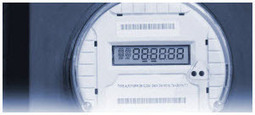
Smart Grid: Utility sued due to Smart Meter opt-out program

See on Scoop.itGreen Energy Technologies & Development

Smart Grid – BC Hydro offered customers who didn’t want to participate in its smart meter program the choice of opting out in mid-July. But that didn’t protect the utility from a lawsuit

Duane Tilden‘s insight:

>Just days after BC Hydro finally agreed to an opt-out program for smart meters, a customer is suing the utility for installing a smart meter last year even though she didn’t want one on her property. […]

The suit claims the installations caused the plaintiff “emotional distress,” because it “interfered with the quiet enjoyment of her property,” which she used to host yoga and meditation retreats. Opponents of smart meters believe the devices’ radio waves have health risks. The lawsuit further alleges that BC Hydro unlawfully leveraged its monopoly powers by imposing a smart meter on the plaintiff.

[…] The utility says that smart meters only broadcast several times a day, and that living next to a smart meter for 20 years would expose a resident to the same level of radiation as a 30-minute cell phone call.<

See on www.smartgridnews.com

US Senators back new bill pushing Energy Efficiency Legislation

See on Scoop.itGreen & Sustainable News

By SEN. JEANNE SHAHEEN and SEN. ROB PORTMAN | 7/29/13 9:25 PM EDT

For the past three years, we have worked together to develop the Energy Savings and Industrial Competitiveness Act, legislation that will go a long way toward making the United States more energy efficient and more economically competitive.

Duane Tilden‘s insight:

According to the Sen. Shaheen & Portman:

>Our bill curbs inefficient energy practices that cost the U.S. economy billions of dollars and millions of jobs every year. According to a recent study by the Emily Hall Tremaine Foundation, we waste an astonishing 86 percent of the energy we consume. Upgrading the energy efficiency of U.S. buildings alone could save $1 trillion over the next decade. Cutting down on energy waste represents an untapped resource that we have long ignored. Our legislation helps to change that.

Our bill promotes energy savings that Americans across the political spectrum can get behind. Energy efficiency has broad, bipartisan support from business, energy and environmental advocates alike, and the legislation we have developed helps to promote energy efficiency through a smart, pragmatic plan that can be implemented immediately.

There is one mandatory component to the bill: We are going to make Washington practice what it preaches. We’re going to make the federal government — the largest energy user in the country — adopt energy-saving techniques and best practices that make its operations more efficient. […]

These provisions will save money, make America more energy-independent and lower harmful emissions. For the private sector, the tools our bill deploys are entirely voluntary. This legislation will also not add to the deficit and its costs are fully offset.<

See on www.politico.com

Companies Fined for Greenhouse Gas (GHG) Emissions Reporting Errors | The National Law Review

See on Scoop.itGreen & Sustainable News

Nine companies were issued fines by the California Air Resources Board (ARB) for violating the State of California’s Mandatory Greenhouse Gas Reporting rule. The ARB adopted the reporting rule in 2007.

Duane Tilden‘s insight:

>The companies cited for violations were not concentrated in one industry sector.  Sources receiving fines included a refinery, a biomass generating plant, an oil and gas production company, a utility company, a lime manufacturing company, and a cement company, among others. <

See on www.natlawreview.com