Unknown's avatar

About duanetilden

Engineer, Entrepreneur, Blogger, Farmer, Traveler and Nature Lover. I love music, quotes and blog about Green Building & Energy.

SEC Rule Changes – Small Businesses Get Funding Cap Raise to $50 Million

Nearly three years after the law was signed, the Securities and Exchange Commission has taken an important step toward implementing the so-called JOBS Act, making it easier for small and mid-sized businesses to raise capital through small public offerings.

Source: www.washingtonpost.com

>” […] Commissioners on Wednesday approved rule changes that allow companies to raise up to $50 million a year, up from a longstanding cap of $5 million, through what’s known as Regulation A offerings. Under Reg A offerings, as they’re commonly called, companies looking to raise relatively small amounts of money through a public offering are subject to a much simpler SEC registration process, putting fewer bureaucratic hoops between them and investors.

Until now, the Reg A path, which is nearly as old as the SEC itself, has been sparingly used. Congress voted to lift the cap as part of the Jumpstart Our Business Startups (JOBS) Act, which was signed into law in April 2012, largely to encourage more small and mid-sized companies to consider that option. […]

The finalization of the rules was the latest step in what has become an exceptionally long process to breathe life into the JOBS Act. Now on the cusp of its third birthday, only about half of the provisions in the statute – which, by providing better access to capital to new and growing businesses, was touted as a potentially powerful gust of wind in the economy’s sails – have been put in place by the SEC.

Among the most highly anticipated changes mandated by Congress but not yet implemented by the SEC are rules allowing companies to raise small amounts of money from mom-and-pop investors via what are known as online crowdfunding portals. Initially, the SEC was to give that process the green light by the end of 2013; however, the agency has been slow to move on the rule-making process. The SEC put forth proposed rules in October 2013, but it isn’t clear when they will be finalized.

While the crowdfunding rules, which are outlined in Title III of the JOBS Act, have drawn most of the JOBS Act’s spotlight, Paul explained that the Reg A changes (contained in Title IV of the legislation) will likely have a much more significant impact for certain companies.

“With Reg A, we’re talking about businesses that are going to be much further along in their life cycle than the ones that would benefit from Title III,” Paul said, noting that the online crowdfunding rules will limit entrepreneurs to raising no more than $1 million from non-accredited investors. “Obviously, a company raising $1 million is in a very different place than a company raising $40 million, or even $10 million.”

“It’s all part of a continuum,” Paul added. “While crowdfunding will be important for getting capital to genuine start-ups – ones that have three people working for them – this will help those that have 300 people working for them and are still looking to grow.” […]”<

See on Scoop.itSocial Media, Crypto-Currency, Security & Finance

France now requires all new buildings to have green roofs or solar panels

Susan Davis Cushing's avatarPr0jectClimate

France just passed atrailblazing new lawthat requires that all new buildings constructed in commercial areas to be partially-covered by either solar panels orgreen roofs. Not only will this bring dramatic changes to the nation?s skylines and bolster the efficiency of all new commercial construction, but the law will help France pick up the pace the solar adoption?which has lagged behind other European nations in recent years.

Read more:France requires all new buildings to have green roofs or solar panels | Inhabitat – Sustainable Design Innovation, Eco Architecture, Green Building


Source: inhabitat.com

“Here’s hoping that other nations can soon follow suit.” I had to go back and dig through my sources to make sure I hadn’t dreamed this!

View original post

CloudSolar Helps Renewable Energy Fans Who Can’t Install Their Own Solar Panels

The 50 Year Underground Coal Mine Fire

By the early 1980s, the mine fire in Centralia, Pennsylvania was growing worse and increasingly threatening the people who lived there. GAI, Inc., a private geotechnical engineering company, was hired to review the situation and propose a solution to finally contain the fire. What they eventually came up with was so drastic, it might easily have been called Centralia’s “Nuclear Option.”

Source: www.centraliapa.org

Additional Information:  Zip Code 00000 (Washington Post) http://wapo.st/1eMhdGq

>” […]

GAI’s review and associated containment plan took months to complete. It analyzed mountains of data about Centralia PA, its abandoned mines, and the geology of the surrounding area. GAI also explored the beginnings of the fire, the current location of the burn, and the previous, failed attempts to stop it.

Finally on July 12, 1983 the findings were announced to the public. At that time, the mine fire was determined to be under 195 acres and burning in the Skidmore, Seven Foot, and Buck Leader coal veins. It was suggested that the fire could eventually grow to a maximum size of 3,700 acres of land.

GAI’s report made it clear that containing the Centralia mine fire would neither be easy nor cheap. The plan to contain the fire would require excavating a trench of massive proportions. This would need to be 3,700 feet long and 450 feet in depth – deep enough to hold a 45 story office building!

Worse yet, the trench would cut through the middle of the town. Although it would eventually be filled in with incombustible material to prevent the mine fire from moving further west, half of the borough of Centralia Pennsylvania would be destroyed while excavating it. The whole project would take years to complete.

If the damage caused by GAI’s plan wasn’t “nuclear” enough, there was always the price tag. GAI estimated it would cost a jaw-dropping $660 million to complete the project. This was over 100 times more expensive than the 1965 rejected plan to contain the mine fire. According to the Bureau of Labor and Statistics, $660 million in 1983 is roughly equivalent to $1.5 billion in 2015. Today these cost estimates are still shocking.

It is no wonder that in August of 1983 the majority of Centralia PA’s residents voted to be relocated. After years of struggling with the mine fire, the “nuclear option” proposed by GAI to stop the fire and level half of the town was more than most could bear.”<


See on Scoop.itGreen & Sustainable News

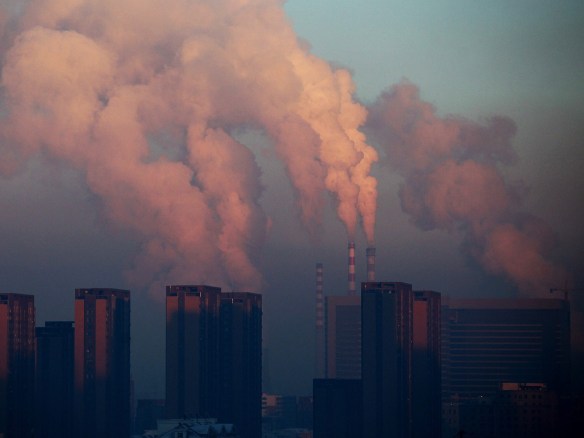
China’s Capital City to Shut Major Coal Power Plants due to Excessive Pollution

(Bloomberg) — Beijing, where pollution averaged more than twice China’s national standard last year, will close the last of its four major coal-fired power plants next year.

Source: www.bloomberg.com

>” […]

The capital city will shutter China Huaneng Group Corp.’s 845-megawatt power plant in 2016, after last week closing plants owned by Guohua Electric Power Corp. and Beijing Energy Investment Holding Co., according to a statement Monday on the website of the city’s economic planning agency. A fourth major power plant, owned by China Datang Corp., was shut last year.

The facilities will be replaced by four gas-fired stations with capacity to supply 2.6 times more electricity than the coal plants.

The closures are part of a broader trend in China, which is the world’s biggest carbon emitter. Facing pressure at home and abroad, policy makers are racing to address the environmental damage seen as a byproduct of breakneck economic growth. Beijing plans to cut annual coal consumption by 13 million metric tons by 2017 from the 2012 level in a bid to slash the concentration of pollutants.

Shutting all the major coal power plants in the city, equivalent to reducing annual coal use by 9.2 million metric tons, is estimated to cut carbon emissions of about 30 million tons, said Tian Miao, a Beijing-based analyst at North Square Blue Oak Ltd., a London-based research company with a focus on China.  […]

Closing coal-fired power plants is seen as a critical step in addressing pollution in China, which gets about 64 percent of the primary energy it uses from the fossil fuel. Coal accounts for about 30 percent of the U.S.’s electricity mix, while gas comprises 42 percent, according to Bloomberg New Energy Finance data.  […]

Air pollution has attracted more public attention in the past few years as heavy smog envelops swathes of the nation including Beijing and Shanghai. About 90 percent of the 161 cities whose air quality was monitored in 2014 failed to meet official standards, according to a report by China’s National Bureau of Statistics earlier this month.

The level of PM2.5, the small particles that pose the greatest risk to human health, averaged 85.9 micrograms per cubic meter last year in the capital, compared with the national standard of 35.

The city also aims to take other measures such as closing polluted companies and cutting cement production capacity to clear the air this year, according to the Municipal Environmental Protection Bureau. […]”<


See on Scoop.itGreen & Sustainable News

State and Solar Advocates Complete Legal Agreement for Full Net Metering Credit to Utilities

The Act 236 agreement also settles rules for legal solar leasing.

Source: www.utilitydive.com

>”[…]  The South Carolina Public Service Commission last week approved a settlement agreement between Duke Energy Carolinas, South Carolina Electric & Gas (SCE&G) and major environmental groups that allows rooftop solar owners to get full retail value for electricity their systems send to the grid.The agreement on net energy metering (NEM) is part of Act 236, passed in 2014 after a consultation process involving renewable energy-interested stakeholders. Solar systems installed before the end of 2020 will earn full retail value bill credit for each kilowatt-hour that goes to the grid.Act 236 also legalizes third party ownership of solar, more widely known as solar leasing, and sets up rules by which leasing companies like SolarCity and Sunrun must operate.

Dive Insight:  To study the emerging solar opportunity, a South Carolina General Assembly-created oversight group organized a coalition of environmentalists, solar advocates, and utilities and electric cooperatives into an Energy Advisory Council in 2013. Act 236 was formulated out of its report.

The NEM settlement also raises the size limit of eligible systems from 100 kW to 1 MW and raises the cap on NEM systems from 0.2% of each utility’s peak capacity to 2%.

Act 236 requires leasing companies to be certified by the state and limits the size of leased residential systems to 20kW and leased commercial systems to 1000kW. Leased systems can only serve one customer and one location and cannot sell electricity to third parties. The total of leased solar is capped at no more than 2% of a utility’s residential, commercial, or industrial customers average retail peak demand.

Groups that led the settlement with the utilities include the Coastal Conservation League, the Southern Environmental Law Center, and the Southern Alliance for Clean Energy. […]”<


See on Scoop.itGreen Building Operations – Systems & Controls, Maintenance & Commissioning

Industrial Plant to be Re-Developed into Mega-Indoor Vertical Farm Factory

AeroFarms, a leading commercial grower for vertical farming and controlled agriculture, together with property management firm RBH Group, a slew of investment partners along with the City of Newark and the New Jersey Economic Development Authority (NJEDA) announced the intent to redevelop a former industrial site in Newark’s Ironbound district into a state-of-the art 69,000 square foot indoor vertical farm.

Source: archinect.com

>” […] Currently under construction, the first phases will open in the second half of 2015, creating approximately 78 jobs in a local community with an unemployment rate that is twice the national average. Additionally, AeroFarms has partnered with the Ironbound Community Corporation to create a recruiting and job training program targeting local residents.

The building is located on a 3-acre industrial site in the center of the Ironbound community in Newark, NJ. It is adjacent to elevated truck Route 1 and 9, a freight rail right of way, and to other industrial businesses along Rome and Christie Streets.

When completed, AeroFarms will have the capacity to grow up to 2 million pounds per year of baby leafy greens and herbs in an environmentally controlled, safe, and sanitary facility. It will provide healthy foods to the local community as well as to other markets. AeroFarms is a model for successful, sustainable farming offering 75 times more productivity per square foot annually than a traditional field farm while using no pesticides and consuming over 95% less water. […]”<

See on Scoop.itGreen & Sustainable News

Global Distributed Energy Storage Capacity Expected to Increase Nearly 10-Fold

The worldwide capacity of distributed energy storage systems is expected to increase nearly 10-fold over the next 3 years, according to a new report from Navigant Research, which analyzed the global market for distributed energy storage systems through 2024.

Source: cleantechnica.com

>” […] The primary conclusion of the report is that distributed storage is one of the fastest-growing markets for energy storage globally, thanks to the focus of rapid innovation and intense competition, causing the market to greatly exceed market expectations. This growth and subsequent demand has led to grid operators, utilities, and governments looking to encourage storage installations that are physically situated closer to the retail electrical customer.

According to the report from Navigant Research, worldwide capacity of distributed energy storage systems (DESSs) is expected to grow from its current 276 MW, to nearly 2,400 MW in 2018.

“Distributed storage is among the fastest-growing markets for energy storage globally,” says Anissa Dehamna, senior research analyst with Navigant Research. “In particular, residential and commercial energy storage are expected to be the focus of technological advances and market activity in the coming years.” […]

Two specific types of DESS are classified in the report: Community energy storage refers to systems installed at the distribution transformer level; Residential and commercial storage, on the other hand, refer to “two behind-the-meter applications targeted at either homeowners or commercial and industrial customers.” Together, these two technologies include lithium ion (Li-ion), flow batteries, advanced lead-acid, and other next-generation chemistries, such as sodium metal halide, ultracapacitors, and aqueous hybrid ion.

Similarly, the two categories of DESS each have specific market drivers. Community energy storage is being driven by the improved reliability yielded in case of outages, load leveling and peak shifting, and improved power quality. Almost as importantly, community energy storage systems can communicate with a grid operator’s operating system, allowing the operator to mitigate disruptions to the grid.

Given its primary use as an energy cost management solution, the prime driver behind commercial storage systems is the rate structure for customers. “<

See on Scoop.itGreen Energy Technologies & Development

European Pioneers Energy Efficient Glass Recycling Solution

With ever increasing recycling targets to meet, manufacturers of glass bottles and jars need to make sure that they can feed their furnaces with the highest quality of cullet (recycled glass) and maximise the energy and carbon saving benefits that this offers.

Source: www.packagingeurope.com

>"[…] When it is delivered to the glass plant, cullet is typically stored in outdoor bunkers, where it is subject to variations in the climate, particularly during winter months. If it has accumulated significant levels of water, snow and ice, it will require higher temperatures, and thus more energy, to remelt it in the furnace.

The task facing the operations team at Ardagh’s Nienburg plant in Germany was to find a simple and environmentally effective solution. The obvious approach is to pre-heat the “frozen” cullet prior to feeding it into the furnace. But because a traditional preconditioning process can use a lot of energy, an alternative approach of capturing heat already  generated elsewhere in the plant was sought.

Investigations showed that the most likely source of waste heat was around the furnaces. The challenge would be to find the best way of recovering and transporting this hot air to the cullet. It was met by drawing hot air at 80°C across the furnace, blowing it into a specially developed heat exchanger charged with energy to raise the temperature to 120°C and piping it to the bunkers. 

This approach has proved the most energy efficient means of defrosting, drying and preheating the cullet. Annual energy savings of 116,000 Euros have been achieved at Nienburg, together with an annual  CO2  reduction of 334 tonnes. 

Johan Gorter, Ardagh Group CEO, Glass, Europe, commented: “This is one of many planned actions we are taking throughout our European plants as we strive to meet the very highest sustainability performance standards. “ […]"<

See on Scoop.itGreen Energy Technologies & Development

New California Housing Community Goes Zero Net Energy

California has set a goal for all new residential construction in the state to be ZNE by 2020 and all new commercial construction to be zero net energy by 2030. Spring Lake uses no natural gas and receives most of its power from photovoltaics.

Source: www.calenergycommission.blogspot.ca

>”The $13 million Spring Lake project in Woodland has 62 affordable apartments and townhomes for agricultural workers and their families.  […]

“The community will generate at least as much energy as it consumes,” says Vanessa Guerra, a project manager with Mutual Housing California, a Sacramento-based non-profit that develops sustainable affordable housing communities.

The California Energy Commission adopted zero net energy goals in its 2007 Integrated Energy Policy Report (IEPR). It further defined what ZNE buildings are and laid out the necessary steps and renewables options for achieving the ZNE 2020 goals in the 2013 IEPR.

The project was financed by the U.S. Department of Agriculture, Citibank, Wells Fargo Bank, the California Department of Housing and Community Development and the City of Woodland.”<

See on Scoop.itGreen Energy Technologies & Development