Pioneering Global Atlas for Renewable Energy Goes Online

See on Scoop.itGreen Energy Technologies & Development

The world’s first open-access Global Atlas of renewable energy resources goes live today, announced at the annual general assembly of the International Renewable Energy Agency (IRENA).

Duane Tilden‘s insight:

–  “In the next 10 years we expect a huge rise in the investments in renewable energy. The Global Solar and Wind Atlas will help us make the right decisions,” says Martin Lidegaard, Danish Minister of Climate, Energy and Building, and President of the 3rd session of the IRENA Assembly.

–  Note to Editors

IRENA is mandated by 159 countries and the European Union to promote the sustainable use of all forms of renewable energy, and to serve as the global hub for renewable energy cooperation and information exchange. Formally established in 2011, IRENA is the first major international organization to be headquartered in the Middle East.

See on www.financialpost.com
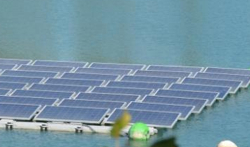
French Firm Launches Floating Solar Power System to Market

See on Scoop.itGreen Energy Technologies & Development

The Hydrélio system will be best used in unused stretches of water, such as quarry lakes, irrigation ponds, water treatment plant lagoons and dams, Ciel et Terre said. “This new floating solar power generation concept addresses the problems of land availability and landscape impacts that large-scale land-based solar power generation projects come up against,” it said. “It makes it possible to conserve land that can be put to other uses, and to convert unused stretches of water into spaces dedicated to renewable electricity production. These stretches of water cover substantial areas.”

See on thegreenenergyblog.com

Energy Managers Also Manage People

See on Scoop.itGreen Building Operations – Systems & Controls, Maintenance & Commissioning

It takes three specifically-trained professionals to run a successful energy-management program at a large facility, according to a column in Chemical Processing

Duane Tilden‘s insight:

While the energy manager assumes responsibility for the company’s energy program, he or she can can get help from energy consultants & energy auditors.

See on www.energymanagertoday.com

China’s Energy Market Forecast: “Contrary to observations of recent coal-electricity negotiations, views expressed on the China Coal Market Summit, held on Dec. 21, 2012, generally predicted 2013 a better year for coal-fired power generation.”

Regulatory change and the smart grid | Intelligent Utility

See on Scoop.itGreen Energy Technologies & Development

Phil Carson, columnist for Intelligent Utility Daily, interviews a David O’Brien from Bridge Energy Group on regulatory changes to support grid modernization.

Duane Tilden‘s insight:

The knottiest issue is how to balance risk between ratepayers and shareholders when you look at smart grid investments. […] We’re not going to let ratepayers bear this risk.

It’s a conundrum for the industry as a whole. Traditional rate-making methodology is a cost-plus exercise in which the utility gets its investment back plus a rate of return set by regulators. It was established many decades ago and premised on investment in largely stable, known commodities (poles & wires as compared to digital switches and advanced IT).[…]

IU: Which stakeholders could or should drive these sorts of changes?

O’Brien: That is the question, the heart of the matter. […] I’ve given this some thought and the best I can come up is that industry—the smart grid industry—could probably do more, along with the investor-owned utilities, to find some way to be more constructively engaged with the regulatory community.

See on www.intelligentutility.com

Wind and solar power paired with storage could power grid 99.9 percent of the time

See on Scoop.itGreen Energy Technologies & Development

Renewable energy could fully power a large electric grid 99.9 percent of the time by 2030 at costs comparable to today’s electricity expenses, according to new research.

Duane Tilden‘s insight:

“A well-designed combination of wind power, solar power and storage in batteries and fuel cells would nearly always exceed electricity demands while keeping costs low, the scientists found.”

“The study sheds light on what an electric system might look like with heavy reliance on renewable energy sources. Wind speeds and sun exposure vary with weather and seasons, requiring ways to improve reliability. In this study, reliability was achieved by: expanding the geographic area of renewable generation, using diverse sources, employing storage systems, and for the last few percent of the time, burning fossil fuels as a backup.”

“The study used estimates of technology costs in 2030 without government subsidies, comparing them to costs of fossil fuel generation in wide use today. The cost of fossil fuels includes both the fuel cost itself and the documented external costs such as human health effects caused by power plant air pollution. The projected capital costs for wind and solar in 2030 are about half of today’s wind and solar costs, whereas maintenance costs are projected to be approximately the same.”

Study available at:  http://www.sciencedirect.com/science/article/pii/S0378775312014759

See on www.sciencedaily.com

Ontario electricity: Wind out-produces coal

See on Scoop.itGreen Energy Technologies & Development

Wind turbines have out-produced coal plants in generating electricity in Ontario for the first time

Duane Tilden‘s insight:

The Ontario Power Authority has said that Ontario has close to 2,000 megawatts of wind power in operation with another 3,800 megawatts under development. …

That meant wind supplied 3 per cent of the province’s power last year, out-producing coal at 2.8 per cent. …

But wind’s increase presents some challenges to the province’s power system, which sometimes has too much power flowing onto the grid.

… when there’s a surplus, wind turbines continue producing power but the system operators throttle back production at Bruce Power’s nuclear plants – while still paying them for the lost production.

Meanwhile, Ontario Power Generation also spills water at some of its hydro-electric stations to make room for the wind power on the grid. In effect, he said, that replaces low-cost hydro power with higher-priced wind power.

Nuclear power is still the mainstay of Ontario’s power supply, making up almost 57 per cent of last year’s supply compared with 55 per cent the year before.

See on www.thestar.com

Distributed Energy Storage is the Game Changer, and Renewables Drive the Economic Case | AltEnergyMag Press Release

See on Scoop.itGreen Energy Technologies & Development

High amounts of intermittent energy generation such as wind and solar is being attached to the grid, driving high electricity price volatility, peak spreads and negative electricity prices in some markets.

Duane Tilden‘s insight:

….Italy represents a good case in point, as Lane explains that the country has some of the highest electricity prices in the world, owing to its almost complete reliance on imported natural gas for power generation, the price of which is mostly indexed to oil and oil products. This combined with a good solar yield means that solar PV is close to grid parity […]

Lane states: "This has led to a dramatic drop in the electricity flowing from the transmission grid into the distribution grid, especially during daytime ‘solar hours’ […] This is starting to move Italy into negative pricing territory where the economics for storage are given a major boost."

This has in turn led Enel to instigate six separate storage projects in several MV/HV distribution centres based on electrochemical and lithium-ion battery technologies […]


Lane also believes that energy storage could be tailored to suit geographical locations, suggesting that, "in countries where solar yields are lower, such as Northern Europe, virtual storage systems using thermal storage plus heatpumps or micro-CHP could be more effective."  […]

See on www.altenergymag.com

ZBB Energy Ships Zinc Flow Battery to U.S. Navy Microgrid Project | Green Energy News

See on Scoop.itGreen Energy Technologies & Development

ZBB Energy Corporation has provided a 1000kWh / 500kW-rated energy storage system for use in a microgrid application at the San Nicolas Island Naval Facility, located in the Catalina Island group, just west of Los Angeles, California.

Duane Tilden‘s insight:

During the next two years, ZBB’s EnerSystem will be tested and certified to maintain power quality and perform load management for off-peak power produced from the wind turbine and diesel electric power delivery system at the Navy facility on San Nicolas Island. […]

The ZBB EnerSystem will be used continuously in an ongoing operational mode to minimize diesel gen set runtime in favor of power generated from wind turbines and future photovoltaic (PV) arrays on the island. The base’s overall system will focus on the power control for microgrid stability, quality, and load leveling needs on the base. […]

ZBB Energy Corporation designs, develops, and manufactures advanced energy storage, power electronic systems, and engineered custom and semi-custom products targeted at the growing global need for distributed renewable energy, energy efficiency, power quality, and grid modernization. (12/17/12)


See on www.green-energy-news.com

Google Keeps Its Renewable Energy Investments Going

See on Scoop.itGreen Energy Technologies & Development

With a new wind investment, the company has enabled two gigawatts of clean power to come online.

Duane Tilden‘s insight:

“… I’ll add a couple more numbers: until 1999, the U.S. had less than 2 gigawatts of wind and solar total. That’s the good number. The bad number is that American generating capacity stands at roughly 1,054 gigawatts, so two GW is a rounding error at the national level. (The boring lesson? Transforming an energy system is hard, and it takes a lot of money, time, and effort.)”

Wind power is only a part of the total answer to power the grid. Sometimes the wind does not blow or is not near populations and as such is not considered a capable primary energy source. Often wind power (and solar) must be coupled with a properly sized storage system and/or supplementary sources (emergency fuel-fired generator or with other co-generation projects, as examples). – DT

See on www.theatlantic.com