Waste to Energy – Incinerator Operations threaten Community recycling programs

See on Scoop.itGreen Building Design – Architecture & Engineering
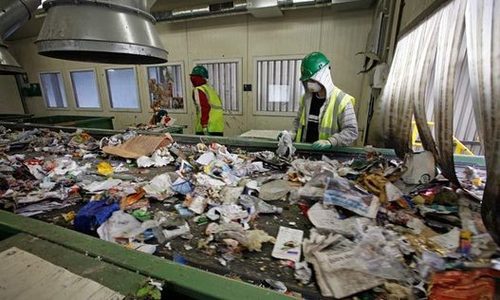
Rise in number of plants burning waste may be disincentive to greener methods of disposal

Duane Tilden‘s insight:

>Experts said the use of incinerators had consequences for recycling as local authorities were forced to divert waste to feed the plants. “The choice to invest in thermal treatment can hold back recycling efforts,” Adam Baddeley, principal consultant at Eunomia, said. “At one level, the money invested in such plant simply isn’t available to put into building recycling plants or collection infrastructure. And once you’ve built an incinerator or gasifier, there’s a strong incentive to keep it fed with waste, even if that means keeping on collecting as ‘black bag’ rubbish, material that would be economically practicable to collect separately for recycling.”

Charmian Larke, technical adviser for Cornwall Waste Forum, which unsuccessfully opposed a large incinerator in the south-west, questioned the planning process that resulted in incinerators being approved. “Some of them [planning officers] have spent their entire careers trying to get this incinerator so they are wedded to the idea,” Larke said. “But if the council members understood how bad these contracts were, the officers would lose their jobs.”

Larke claimed that many of the incinerators were built in poorer areas. “There’s a feeling that people who are downtrodden have a harder time getting their act together to object, and hence it’s easier to place nasty things next to them.”<

See on www.theguardian.com

MHI Completes Acquisition of Pratt & Whitney Power Systems

See on Scoop.itGreen Energy Technologies & Development

Tokyo, May 20, 2013 – Mitsubishi Heavy Industries, Ltd. (MHI) has completed its acquisition of Pratt & Whitney Power Systems, the small and medium-size gas turbine business unit of Pratt & Whitney (P&W), an aeroengine manufacturer.

Duane Tilden‘s insight:

>MHI has traditionally focused its gas turbine business on large-capacity, high-efficiency systems. With the addition of PWPS’s small and medium-size aero-derivative engines, MHI has expanded its power generation product portfolio and is able to offer customers a full product lineup.

PWPS’s aero-derivative gas turbines are highly acclaimed, especially for their emergency power generation applications, compact design, and rapid start-up time. More than 1,700 aero-derivative turbines have been delivered worldwide. Significant growth is anticipated in applications that require a flexible power source complementary to a renewable-energy power source. Robust market demand is also expected as small power sources for applications in emerging markets. PWPS’s main product has been the 30MW (megawatt) class machine. The company is developing an innovative 60MW class model, which is expected to significantly boost PWPS’s market share.

Turboden’s ORC turbines have the capability to generate power or supply hot water using a relatively low-temperature heat source such as biomass, factory waste heat or geothermal energy. The company has sold more than 300 units in 20 countries, primarily in Europe. In Japan, increasing opportunities are emerging to use ORC technology in biomass and geothermal applications, and MHI plans to significantly increase sales in those expanding markets.

MHI and P&W have been in a collaborative relationship in aeroengine production for many years. After the acquisition of PWPS, MHI will continue to collaborate with P&W in the supply of engine parts for gas turbines and development of new machines.<

See on www.mhi.co.jp