The Negawatt Revolution — Solving the CO-2 [& Energy] Problem —

See on Scoop.itGreen Energy Technologies & Development

Introduction

“My 1976 article entitled “Energy Strategy: The Road Not Taken?” which appeared in Foreign Affairs, suggested two ways in which the energy system could probably evolve over the next fifty years or so, using the United States as an example. If you divided by something like a factor of nine or ten, you would get Canada.”…

“If the U.S. spent only enough on efficiency to keep up with growth and demand for electric services, plus the net retirement of generating capacity, we would have almost enough capital left in surplus to double our rate of investment in durable manufacturing industries.”

The Importance of Electrical Efficiency

“Why do I concentrate on electricity? First, because it is by far the costliest form of energy. Each cent per kilowatt-hour is equivalent in heat content to oil at $17 dollars a barrel, roughly the world oil price. So the electricity we buy, even in Canada where it is quite cheap, is equivalent to heat at many times the world oil price. Therefore saving electricity is more financially rewarding than saving direct fuels. In addition, electricity has enormous capital leverage because central electric systems — the whole systems — are about 100 times as capital intensive as the traditional direct fuel systems (you know, Texas and Louisiana and Alberta oil and gas — the sorts of things on which our economies were built). In fact a quarter of all the development capital in the world goes to electrification.

“Also electricity has huge environmental leverage. Power plants burn a third of the fuel in the world. They account for a third of the CO2, therefore, released from the burning of fossil fuel. In my own country they release two thirds of the sulphur oxides and a third of the nitrogen oxides. What’s more, every unit of electricity you save at the point of use saves typically three or four units of fuel, namely coal at the power plant. And in socialist or developing countries that ratio is more like five or six to one.

So you get the most environmental benefit from saving electricity, as well as the most financial benefit.”

See on www.ccnr.org

Overwhelmed By Social Media? Here Are 7 Ways to Keep Up

See on Scoop.itTwitter & Social Media

This a timely and important piece from Mark Schaefer of {grow} in which he touches upon several issues which confront all of us who are trying to keep our heads above water in the ever-evolving world of Social Media.


To quote: “Not only do the platforms shift every day, the rules of engagement change constantly, too. Can anybody keep up with the real (and rumored) changes just to Facebook’s EdgeRank formula? What we considered best practices six months ago are passé today. Social media is overwhelming, especially when there is pressure to master every new platform that comes along  How do you keep up?.”


Remember:


** Platforms may change but marketing fundamentals remain the same


** Absolutely nobody can navigate this changing world alone as there are too many facets to it, so form a mutually beneficial support group.


** There’s too much informationfor any one person to keep on top of all of it, so pick a main focus and try really hard to keep mainly to that.


** Know your audience and go where you will find them. This might mean giving up on one of the major platforms.  Swallow hard and do it!


** The more successful you become and the more your reach grows, the less time you will have to engage one-on-one with people. Don’t let yourself feel guilty about this as it is inevitable.


** Go to a trusted source for information but be warned: Such a place may not (yet) exist.


Curated by Jan Gordon covering “Curation, Social Business and Beyond”


See article here: [http://bit.ly/VcYLb]


See on www.ragan.com

Has the term “sustainability” been coopted to mean: “sustaining industrial civilisation” business-as-usual?

See on Scoop.itGreen & Sustainable News

“Sustainability does not mean defending the non-human world from human expansion. Instead, it has come to mean sustaining human civilisation at the comfort level which the world’s rich people feel is their right.”

See on www.abc.net.au

Smart Grid: Sandy fallout: Utility exec resigns, NY governor demands answers, lawsuit filed

See on Scoop.itGreen Energy Technologies & Development

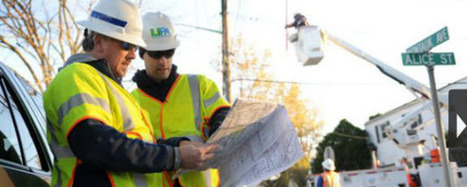
Smart Grid – Hurricane Sandy continues to take a toll in the Northeast – long after the winds stopped blowing.


““From Hurricane Irene, Tropical Storm Lee, to Hurricane Sandy, over the past two years New York has experienced some of the worst natural disasters in our state’s history,” Cuomo said in a statement. “As we adjust to the reality of more frequent major weather incidents, we must study and learn from these past experiences to prepare for the future.” “

See on www.smartgridnews.com