The Smart Grid and Natural Disasters | The Energy Collective

See on Scoop.itGreen & Sustainable News

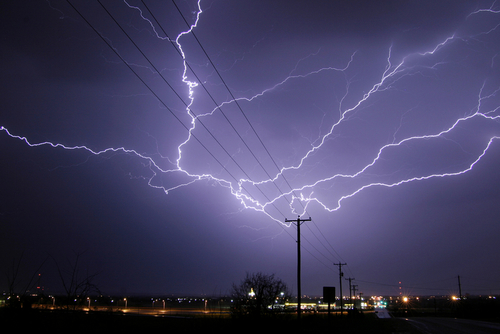
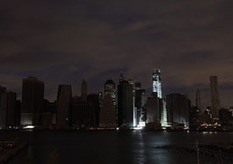
Image Each new large-scale natural disaster delivers its own unique cocktail of heartache and damage, but the need to modernize the electrical grid is a common denominator—growing only more glaring with each new setback.More than 8 million people…

Duane Tilden‘s insight:

"Fuel cells, solar thermal generating stations, photovoltaic fields, wind farms, diesel, natural-gas-fired turbines, microturbines and other renewable and non-renewable sources of energy can be aggregated in a microgrid….. a microgrid could automatically detach from the greater grid and continue to deliver power to sectors of customers in abnormal conditions. And this would enable utilities, too, to more strategically and efficiently deploy resources to damaged areas of the grid to make repairs and restore service."

See on theenergycollective.com

Smart Grid: Solar gets a $29 million shot in the arm from DOE

See on Scoop.itGreen & Sustainable News

Smart Grid – The Energy Department announced a $29 million investment in four projects to advance solar energy.

Duane Tilden‘s insight:

"…$21 million investment will be used over five years to design plug-and-play photovoltaic systems that homeowners can purchase, install and make operational in one day. "


"The price of solar panels has fallen dramatically in recent years, but we also need to reduce the cost and time required to actually install them in homes and businesses, and help utility companies better integrate renewable energy into the grid." said Energy Secretary Steven Chu.

See on www.smartgridnews.com

Electric heaters – a way of storing excess renewable power? – 100% renewable – Renewables International

See on Scoop.itGreen Energy Technologies & Development

Germany apparently still has 1.4 million electric heaters spread across roughly 40 million households, putting the percentage of electric heating at around 3.5 percent. Nonetheless, RWE estimates that these electric heaters could add the equivalent of around 10 gigawatts of pumped storage – equivalent to an eighth of peak German power capacity and a sixth of peak demand on a normal workday.
See on www.renewablesinternational.net

Get Ready, Utilities: Solar is Coming

See on Scoop.itGreen Building Design – Architecture & Engineering

Quick question.  Your state has good sunshine, lots of open rooftops, and the cost of solar energy has been falling by 10% per year.  Do you think it will take 13 years to double the 10 megawatts (MW) of installed solar power?

Duane Tilden‘s insight:

"…in a new report from the Institute for Local Self-Reliance (ILSR), Commercial Rooftop Revolution … By 2016, over 100,000 MW of unsubsidized rooftop solar will able to match grid electricity on price.  Within 10 years, it will be 300,000 MW, enough to provide 10% of the nation’s electricity.  This affordable solar future presents a stark challenge to traditional utility planning and a clarion call for better electricity policy."

See on www.renewableenergyworld.com

How Energy Leveraging has Increased Global Unemployment

See on Scoop.itGreen & Sustainable News

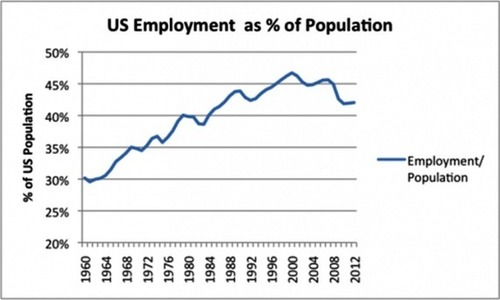
Leveraging energy is a great way to ensure success and growth. Here we look at how China has leveraged its energy in a much more efficient manner than the US, and what effects this

See on oilprice.com

Energy bill rises will outpace inflation next year, forecasters warn – Telegraph

See on Scoop.itGreen & Sustainable News

Households face more big rises in gas and electricity bills, Treasury forecasters have said.

Duane Tilden‘s insight:

"Robert Chote, chairman of the OBR, said the rise in prices next year will be “bigger than normal”. Consumer groups warned that the rises could be as much as 15 per cent over the next two years. "


‘“These network and environmental policy costs may persist in coming years, suggesting that further rises in retail gas and electricity prices may be likely in future.”’


"Most of the UK’s major domestic energy suppliers have announced electricity and gas price rises of between 6 and 11 per cent, to be implemented by the end of this year, the OBR noted."

See on www.telegraph.co.uk

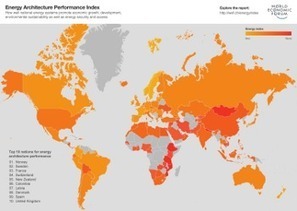
Global Energy Architecture Performance Index Report

See on Scoop.itGreen Building Design – Architecture & Engineering

High-income countries are leading the transition to a new energy architecture but still have work to do on environmental sustainability, according to the Global Energy Architecture Performance Index Report 2013, released today by the World Economic…

Duane Tilden‘s insight:

–  "Norway, Sweden and France top the ranking; OPEC countries and the USA languish outside the top 50"


-"The report, produced in collaboration with Accenture, adds that many developing countries still struggle to supply citizens with basic energy needs, with 12% of countries analysed providing electricity to less than 50% of their total population. The report also considers how issues around fossil-fuel subsidy, water use for energy production and effective management of resource wealth need addressing globally."


See on www.commodities-now.com

German energy coops hold first national meeting – 100% renewable | Renewables International

See on Scoop.itGreen & Sustainable News

Yesterday, German energy cooperatives met for the first time to coordinate their interests in the country’s energy transition. The meeting was the brainchild of conservative CSU politician Josef Göppel.


Perhaps the biggest difference between the way Germany is switching to renewables and the way many other countries are doing so (China, the US, the UK, France, etc.) is the focus on citizen involvement. Not only does the German solar market consists of a large number of small roof arrays, but the biogas market also consists of a large number of relatively small facilities on individual farms, and small investors are even the driving force behind large wind turbines in “energy cooperatives.”


Yesterday, German energy cooperatives met in Berlin to establish a network that will give these groups a coordinated voice in the energy transition. As the organizers explain in their press release, more than 80,000 German citizens have come together in some 600 energy cooperatives.


All parties support the energy transition in Germany, though they disagree on details. But there is no left-wing/right-wing divide for and against renewables in Germany. The meeting yesterday is a good example; conservative CSU politician Josef Göppel originally proposed to bring that Germany’s energy cooperatives together.


Click headline to read more and access hot links–

See on www.renewablesinternational.net

Twitter Expected to Offer Instagram-like Photo Filters by 2013

See on Scoop.itTwitter & Social Media

Expect to see Instagram-like photos services coming to Twitter. These new Twitter photo services are expected to be better than Instagram’s, too.


“…the Instagram and Twitter photos fight has intensified recently when Instagram was acquired by Facebook for $1 billion back in April of this year. The social network titan gave Instagram the financial backing needed to go against Twitter’s established following.”

See on socialmediaseo.net

ACEEE | How CHP Stepped Up When the Power Went Out During Hurricane Sandy

See on Scoop.itGreen Building Operations – Systems & Controls, Maintenance & Commissioning

While 8.5 million customers lost power during Sandy, a small number of facilities (including residential buildings, hospitals, universities, and public service facilities) kept their power, heat, and critical equipment running.

“These facilities were able to do this because they used a technology called combined heat and power (CHP), a suite of highly efficient technologies that can run on a variety of fuels. Unlike traditional backup generators, CHP systems typically provide heat and power to facilities during regular operations. They tend to use natural gas and highly efficient turbines and engines to serve their very local loads, but they can also use biomass or biogas, which can be equally as reliable in times of disaster.”


See on aceee.org