Show Me the Money – How Financial Innovations Can Accelerate Smart Grid Benefits | Smart Grid Library

See on Scoop.itGreen Energy Technologies & Development

One of the most intriguing innovations in finance uses crowd-sourced funds to encourage large groups of retail investors like Joe and Jane to participate in renewable energy generation projects – not just large institutional investors.

Duane Tilden‘s insight:

[…] PACE loans remove the substantial upfront costs of energy efficiency projects and enable owners to upgrade and enhance the value of existing structures, save on energy costs, and create local jobs during the deployment phases of those projects.  By some industry estimates, the market for commercial PACE projects could exceed $180B.

See on www.smartgridlibrary.com

In Praise of Soil: A Conversation with the Founder of Coyote Creek Farm

See on Scoop.itGreen & Sustainable News

Farmer Jeremiah “Jerry” Cunningham’s neighbors are talking. Not just because his ponds fill and drain better than theirs, or because he can walk across his field without mud clumping on his boots. It’s his compost tea.

Duane Tilden‘s insight:

My soil is so well flocculated that it is like a thatched roof. It allows a clump of my silver-tipped bluestem grass to have as much as 25 miles of root system, and for every 25 miles of root system, it probably has 50 miles of mycelia or fungi that bring nutrients to that grass. I feed the microorganisms compost tea, which I learned how to make when I studied with Elaine Ingham from the University of Oregon, and now scientific director at Rodale Institute. She built on the work of Sir Albert Howard, the father of organic farming, from the U.K. I have two 250-gallon tanks in a special barn called the Tea Barn. I pull out the protozoa and the fungi, all of the biology out of the compost into a solution, just like making tea, then spray that all over my pasture. I did that four times a year for seven years, believing that was the way to a healthy farm, and it was. Now we only have to spray compost tea every other year.

See on slowmoney.org

How to get real green from your green certifications

See on Scoop.itGreen & Sustainable News

It’s easy for a business to make green claims without really getting greener. Here’s how to do the right thing.

See on www.greenbiz.com

IPS – Biofuels Converting U.S. Prairielands at Dust Bowl Rates | Inter Press Service

See on Scoop.itGreen & Sustainable News

Biofuels Converting U.S.Prairielands at Dust Bowl Rates – The rush for biofuels in the United States has seen farmers converting the United States’ prairie lands to farms at rates comparable with deforestation levels in Brazil, Malaysia and Indonesia…

Duane Tilden‘s insight:

Numerous incentives have encouraged the ploughing of grasslands. The federal system of financial payments to grain farmers has long encouraged conversion of grasslands to farms, but in recent years new subsidies for corn ethanol and other biofuel production have significantly stepped up this inducement.


The resulting increase in crop prices encourages the owners of livestock to plough prairieland in order to grow crops in favour of using that land for grazing. This has lead to the growth of industrial farms and industrial confinement methods for meat production, while genetically modified seeds now allow corn and soy production in semiarid regions that before were suitable only for ranching.

See on www.ipsnews.net

UPS Expands Renewable Energy Output at New Jersey Facilities – Press Releases on CSRwire.com

See on Scoop.itGreen Energy Technologies & Development

[…] UPS (NYSE: UPS) has invested in two solar power projects at its distribution facilities in Parsippany and Secaucus, New Jersey that showcase the business benefits of owning and operating sustainable energy systems.

Duane Tilden‘s insight:

UPS’s initial venture into solar power development dates back to 2004 in Palm Springs, California, where solar panels were installed and are still generating approximately 110 kilowatts of sustainable energy. Since 2010, at UPS’s European regional air hub in Cologne, Germany, the company has operated a rooftop solar farm that was commissioned by the airport and is producing 1.2 million kilowatt hours of electricity per year. In 2011, UPS completed the installation of a 250 kilowatt system on the roof of its Lakewood, NJ distribution facility.

See on www.csrwire.com

Developing Yeast Strains for Biomass-to-Ethanol Production | Biomassmagazine.com

See on Scoop.itGreen Energy Technologies & Development

… to meet more ambitious targets will require alternative feedstocks. Lignocellulosic biomass from agricultural residues, municipal paper waste, dedicated energy crops and multiple other sources is projected to be a major renewable feedstock for sustainable production of biofuels.

Duane Tilden‘s insight:

According to Joseph Rich, leader of the USDA Bioproducts and Biocatalysis Research Unit in Peoria, Ill., "Industry is awaiting the microorganism that can produce high levels of ethanol in large-scale fermentation containing the hydrolysate consisting of both pentose and hexose sugars released by mechanical, enzymatic and chemical treatment of lignocellulosic feedstocks."


[…]

Enzyme Requirements for Lignocellulosic Feedstocks
Although S. cerevisiae is a proven industrial ethanol producer in traditional starch-based processes, it will be no easy task to provide this microorganism with the ability to convert lignocellulosic biomass to ethanol. The carbohydrate components of lignocellulose (cellulose and hemicellulose) are tightly bound to lignin, making the sugars largely inaccessible to enzymes. "Before enzymatic hydrolysis, pretreatment with acid or alkali is generally needed to fully maximize the release of sugars from any lignocellulosic biomass," says Badal


[…]

Developing New Biocatalysts
Producing a yeast strain with optimized sets of cellulases and hemicellulases requires screening thousands of combinations of these biomass-degrading enzymes for enzyme activity. Automation is essential in carrying out these operations. A team of scientists at the NCAUR laboratory has been successful in designing a robotic platform and creating the automated molecular biology routines necessary to screen for the most effective set of enzymes.

See on biomassmagazine.com

Biofuel production in sustainable land management in selected communities in the coastal and northern savannah zone of Ghana

See on Scoop.itGreen & Sustainable News

Socio-economic Characteristics

Agriculture is the predominant livelihood strategy for people in this area and it is the most important activity in terms of space employing about 90% of the labour force. Agriculture is not merely an economic activity; for most people, but it has been a way of life for many centuries. The economic base of the areas hinge on smallholder agriculture with over 98 percent of the population depending on agriculture for their livelihood. The crops grown include Guinea corn, maize, yams, vegetables, and beans.

Duane Tilden‘s insight:

Project Justification

The project has been formulated within the context of the United Nations Convention to combat desertification and climate change mitigation. It is also in line with the OP 4 strategy of the GEF-SGP in Ghana. The project also fulfils the National Poverty Reduction Strategy. Investment in biofuel will earn farmers ready cash which can be used to sustainable land management. The residues of jatropha and sunflower will be used as organic fertilizer to improve soil fertility. Farmers can maintain and farm on old farmlands for a long time without destroying new /virgin lands. They will be assisted. There is a guaranteed market for the products.

It is estimated that 1,000 hectares will be cultivated to grow sunflower and jatropha and agroforestry. In the short term (3 months), sunflower seeds will be used to produce crude sunflower oil for biodiesel. In the long term (18 months), jatropha will augment the biodiesel output.

See on sgp.undp.org
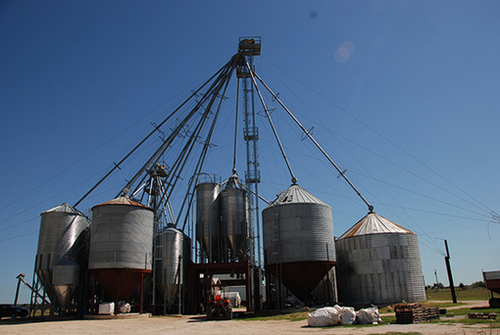
Biofuel rush is wiping out unique American grasslands – environment – 18 February 2013 – New Scientist

See on Scoop.itGreen & Sustainable News

Planting more crops to meet the biofuel demand is destroying grasslands and pastures in the central US, threatening wildlife

Duane Tilden‘s insight:

[…] The rate was fastest in South Dakota and Iowa, with as much as 5 per cent of pasture becoming cropland each year.


The trend is being driven by rising demand for the crops, partly through incentives to use them as fuels instead of food.


The switch from meadows to crops is causing a crash in populations of ground-nesting birds. […]

See on www.newscientist.com

Biofuel RIN fraud not a problem, says RINAlliance

See on Scoop.itGreen Energy Technologies & Development

If you know what renewable identification numbers (RIN) fraud is, and want to avoid it you a.) are most likely involved in biofuel production or an oil company…

Duane Tilden‘s insight:

Oil companies like Sunoco buy RINs from biofuel producers to earn credits to meet the federal Renewable Fuel Standard (RFS). RINs are used to track each gallon of a biofuel as part of the federal rule. […]


There is a need for audits and accountability in the marketplace. The biodiesel industry saw several distressing – and mysterious – episodes last year. Jeffrey David Gunselman, former CEO of Absolut Fuels, was arrested for pilfering more than $50 million in fake RIN credits without producing any of the biodiesel. Rodney Hailey, who headed Clean Green Fuel LLC, alledgedly made $9.1 million selling renewable fuel credits that were not delivered.  […]

See on green.autoblog.com

TESTER INTRODUCES NEW GEOTHERMAL ENERGY BILL – Power Engineering

See on Scoop.itGreen Energy Technologies & Development

Senator Jon Tester is introducing a bill to create jobs and increase America’s energy security by better utilizing Montana’s geothermal energy resources.


Duane Tilden‘s insight:

The bill also directs the Department of Energy to establish a revolving loan fund for energy developers to drill wells during the exploratory phase of geothermal energy projects.


Advances in geothermal technology have the potential to produce more than half of the current U.S. electricity production. […] Montana has more than 50 geothermal areas and at least 15 high-temperature sites.


Tester’s Geothermal Exploration and Technology Act is cosponsored by Senator Mark Begich (D-Alaska).

See on www.power-eng.com