Smart Grid and Energy Storage Installations Rising Worldwide

See on Scoop.itGreen Energy Technologies & Development
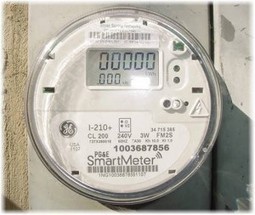
“Global investment in smart grid technologies rose 7 percent in 2012 from the previous year. On top of direct investments, numerous countries around the world are making headway on smart grid regulatory policies, development plans, and frameworks to support future grid infrastructure upgrades.  Smart grids consist of many different technologies serving different functions. Smart grids are commonly defined as an electricity network that uses digital information and communications technology to improve the efficiency and reliability of electricity transport.”

See on blogs.worldwatch.org

John Renehan's avatarThe Green Mien

Mother Jones has a succinct piece on the challenges facing offshore wind projects, challenges that explain why the U.S. still doesn’t have a single offshore wind turbine. The UK has 870, and Germany has 416, for comparison. Now that has Congress extended the wind Production Tax Credit (after a long battle detailed here and here) and outgoing Interior Secretary Ken Salazar said he is optimistic that the Cape Wind project in Nantucket Sound will begin construction in 2013, it is a good time to look at the roadblocks that remain.

Though offshore projects benefit from the Production Tax Credit, worth $1 billion a year, and the Incentive Tax Credit, which pays 30% of wind projects’ constructions, higher construction and transmission costs make electricity from offshore turbines twice the price of electricity from more traditional sources. While in the U.S., states and utilities are understandably hesitant to embrace it, Germany…

View original post 261 more words

BPL Global unveils next-gen substation automation solution for the Smart Grid – Pennenergy

See on Scoop.itGreen Energy Technologies & Development

BPL Global®, Ltd. (BPLG), a smart grid technology company, has announced its next generation Connected Energy® Substation Automation solution…

Duane Tilden‘s insight:

"Our deep understanding of complex protective schemes and, utility-specific SCADA requirements enables effective automation and management of substations as a center of intelligence within the grid," said Dermot O’Leary, EVP and GM of Substation Solutions for BPLG. "The substation is key to managing the growing complexity of distributed energy resources in the distribution grid and the connectivity of our distribution grid solutions with our substation automation offers unique value to utilities as they execute their intelligent grid roadmaps."

See on www.pennenergy.com

Government Regulations to Go a Long Way in Stemming Distribution Energy Losses in Brazil, Finds Frost & Sullivan

See on Scoop.itGreen Energy Technologies & Development

SAO PAULO, Feb. 28, 2013 /PRNewswire/ — Brazilian energy distribution companies are keen for…

Duane Tilden‘s insight:

Brazilian Distribution Energy Losses Management Market is part of the Energy & Power Growth Partnership Service program. Frost & Sullivan’s related research services include: European Micro-CHP Market, Energy Management Services in Brazil, Shale Gas Development in Argentina, and Peruvian and Uruguayan HV Transformer Market. All research services included in subscriptions provide detailed market opportunities and industry trends evaluated following extensive interviews with market participants.

See on www.prnewswire.com

US Solar energy sector to benefit from cutting-edge forecasts – Renewable Energy Magazine, at the heart of clean energy journalism

See on Scoop.itGreen Energy Technologies & Development

US Solar energy sector to benefit from cutting-edge forecasts – Renewable Energy Magazine, at the heart of clean energy journalism

Duane Tilden‘s insight:

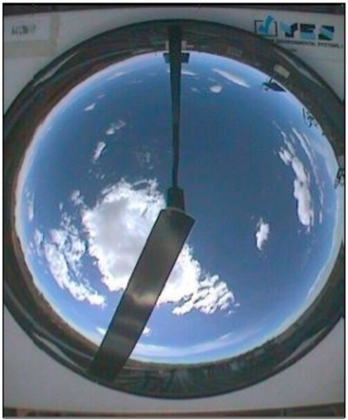
The research team behind the project is designing a prototype system which will forecast sunlight and solar power every 15 minutes over specific solar facilities thereby enabling utilities to continuously anticipate the amount of solar energy available. The project is funded with the help of a $4.1 million US Department of Energy (DOE) grant and will draw on cutting-edge research techniques at leading government labs and universities across the country, in partnership with utilities, energy companies and commercial forecast providers.


Much of the work will be focussed on generating detailed predictions of clouds and atmospheric particles that act to reduce incoming solar energy.

See on www.renewableenergymagazine.com

Wave and tidal energy: Government urged to act to secure UK’s global lead – Renewable Energy Focus

See on Scoop.itGreen & Sustainable News

The UK’s wave and tidal energy industries say they will only be able to grow successfully if they get the right level of support from Government – otherwise Britain risks surrendering its world lead in marine energy.

Duane Tilden‘s insight:

The initial strike price for the first generation of tidal arrays should be set at £280-300/MWh, RenewableUK says. For wave technology, the initial strike price should be £300-320/MWh. “This will catalyse the marine energy industry, leading to economies of scale and learning through experience, which will lower the strike price for the second generation of arrays in 2018.” Meantime, under EMR, contracts would only last for 15 years – the report says this should be extended to 20 years to give investors an adequate return – otherwise the strike price would have to be higher.


“The wave and tidal energy industry has reached an exciting period as it moves from single device demonstrator projects to the first small proving arrays,” says Krohn. “However, there are significant hurdles that need to be overcome to ensure the sustained growth of the industry. It’s time to get real about the potential risks so that we can work with Government and others to find the solutions as early as possible.”

See on www.renewableenergyfocus.com

China’s Offshore Wind Market Expected to Grow to US$16 billion

See on Scoop.itGreen & Sustainable News

SHANGHAI, Feb. 27, 2013 /PRNewswire/ –Despite the considerable challenges and bottlenecks faced by China’s…

Duane Tilden‘s insight:

Some industry analysts expressed concerns around the government’s goal of reaching an installed offshore wind power capacity of 5 gigawatts by 2015. Yi Yuechun, deputy general engineer at China’s Design General Institute of Hydropower and Water Resources Planning, dismissed these concerns, saying that in addition to concession projects, several demonstration and other projects are on the verge of going live. All that is needed is for the government to be clear about its policies and for the preparatory work in process to come to a state of completion, and the sector should see a huge acceleration in the development of the industry.

See on www.prnewswire.com

Alstom to close two wind power plants in Spain – Power Engineering

See on Scoop.itGreen & Sustainable News

Alstom recently proposed a restructuring plan for its Spanish onshore wind power business that would result in the closure of two plants and the loss of 373 jobs in the country.

Duane Tilden‘s insight:

The restructuring is necessary to adapt to the “profound crisis” in the wind power sector in Spain, according to the company. Citing an economic crisis and absence of a stable regulatory framework slowing down internal demand as well as limited exports to other markets because of local production requirements and global overcapacity, the company said the changes the changes will help its wind power energy business in Spain adapt to “the new market reality” and guarantee its future sustainability.

See on www.power-eng.com

Wind Power to Compete With Fossil Fuels by 2015, Make Says

See on Scoop.itGreen & Sustainable News

Onshore wind power will become competitive with traditional fossil fuels in Europe, the U.S. and Asia by 2015, Danish researcher Make Consulting said.

Duane Tilden‘s insight:

London-based analyst Bloomberg New Energy Finance estimates onshore wind currently has a global average levelized cost of energy of about $85.11 per megawatt-hour, a level similar to coal and about 10 percent higher than gas. It puts the cost of offshore wind at $225.80.


Offshore wind power, with its more expensive infrastructure, is still likely to be close to grid parity in the Asia-Pacific region in 2020, according to Make. In Europe, it may reach that benchmark in 2023, and in the U.S., it’ll take until 2026, Make said.

See on www.bloomberg.com

Biofuel Bust: Cooking-oil thieves caught on camera

See on Scoop.itGreen & Sustainable News

Florida firm reportedly catches two women diverting cooking oil to an alternative energy competitor

Duane Tilden‘s insight:

"We lost about 10-20 thousand (dollars) a month from people stealing this oil from behind our restaurant," Lesperance said.  Lesperance said the women use a special apparatus to siphon the used oil from the top of a barrel.  "We call it an octopus, which has small tubes that go in between the grates to then extract the oil," he said.

See on www.cbsnews.com