Coal’s Future Craters Because Of Cheap Gas

See on Scoop.itGreen & Sustainable News

BELLAIRE, Ohio — The four miners who gathered one blustery morning at the United Mine Workers of America hall know that, so far, they are lucky. Their coal mines along the West Virginia border are still working.

See on www.dispatch.com

Twitter Cheat Sheet: How to Increase Your Engagement

See on Scoop.itTwitter & Social Media

Are you getting the type of interaction and retweets you always hoped for on Twitter? Did you know you could basically double your engagement rates on Twitter just by including an image within your tweet?

See on dashburst.com

Walgreens Wagers on Net-Zero Energy – Forbes

See on Scoop.itGreen Building Design – Architecture & Engineering

Walgreens, the Deerfield, Ill.-based owner and operator of a whopping 8,000 retail pharmacy stores, is building America’s first net zero energy retail store.

Duane Tilden‘s insight:

… the new store is projected to consume an estimated 200,000 kWh and generate an estimated 256,000 kWh annually, according to engineering calculations. To make this possible, Walgreens will equip the new store with more than 800 roof-top solar panels, two wind turbines, geothermal wells , LED lighting and energy-efficient building materials.


This smacks of the standard net zero energy building strategy, which Lawrence Berkeley National Laboratory has characterized like so: “‘net zero energy’ buildings (ZEB) follow the strategy of first achieving very aggressive reductions in energy use needed to provide the desired energy services, and then providing the remaining energy requirements with on-site renewable energy.”

See on www.forbes.com

The Business Case for Green Building – Dexigner

See on Scoop.itGreen Building Design – Architecture & Engineering

The World Green Building Council (WorldGBC) has today released “The Business Case for Green Building: A Review of the Costs and Benefits for Developers, Investors and Occupants,” highlighting that there are a large number of compelling benefits…

See on www.dexigner.com

Facilities Management: University of Minnesota

See on Scoop.itGreen Building Operations – Systems & Controls, Maintenance & Commissioning

Facilities Management, a department of University Services, is responsible for the physical assets of the University of Minnesota to ensure a quality environment for students, faculty, staff and visitors in support of the University’s mission of…

Duane Tilden‘s insight:

Compared to replacing aging boilers with a traditional boiler, CHP generates $7M in annual savings and $176M of lifecycle savings over a 30 year horizon.  Another bottom line benefit CHP provides is partially shielding the University from increased electricity rates, which are expected to jump 10% in the near future. Because CHP allows the institution to generate some electricity, the U will not have to purchase as much from the utility company.

See on www.facm.umn.edu

Smart Grid: Energy storage: Why are we ignoring thermal?

See on Scoop.itGreen Energy Technologies & Development

Smart Grid – We call storage the game-changer and we bemoan the high cost of batteries, pumped hydro and other techniques. A story on a new electric “storage heater” introduced in the UK

Duane Tilden‘s insight:

Thermal energy storage generally requires considerable mass (volume of water) to store needed energy.  Phase change materials may hold some promise in energy storage.

See on www.smartgridnews.com

Microgrid Energy Storage > ENGINEERING.com

See on Scoop.itGreen Energy Technologies & Development

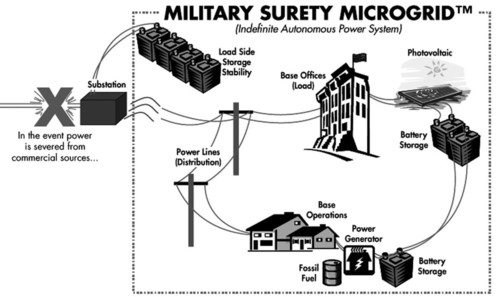
Primus Power, a manufacturer of grid-level energy storage solutions, has received a contract to develop an energy storage system that will be used with a microgrid at the United States Marine Corps Air Station (MCAS) in Miramar, California.

See on www.engineering.com

Energy Storage Technologies for the Smart Grid

See on Scoop.itGreen Energy Technologies & Development

Energy storage is a critical component of the future Smart Grid.

Duane Tilden‘s insight:

Peak Shaving

Peak shaving is another application of Smart Grid storage that witnesses rapid growth. Peak shaving represents the storage of energy generated or purchased in case of low demand time periods at lower prices, followed by the usage or selling of the stored energy at times of high prices and demand. Peak shaving is economically feasible if the cost of electrical grid storage is lower than that of local generation, which is the current peak shaving technique of choice for several industrial facilities.


Besides peak shaving, storage will also be the key for the efficient management of transmission capacity required for achieving global solar and wind energy goals. Energy storage will enable solar and wind power generators to supply electricity for maximum profit at peak usage periods and transfer the electricity to market through lower-capacity transmission lines. At present, sodium sulfur and lead-acid systems are widely used for peak shaving.

See on www.azom.com

Wind Power Opponents Fail to Deter Farmers

See on Scoop.itGreen & Sustainable News

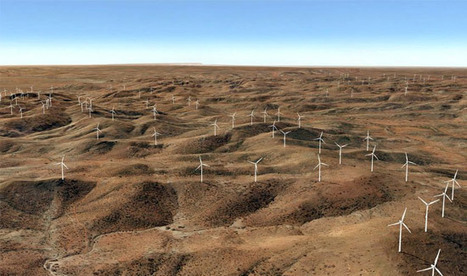
Epuron Wind Farm Rural landholders in the Southern Tablelands region of New South Wales are pushing to expand the development of solar and wind power farms by multinational energy companies despite the strident opposition of local detractors.

Duane Tilden‘s insight:

Many local farmers have jumped at the opportunity to collaborate with international players in the renewable energy sector. Prell is currently in negotiations with Spanish power company Union Fenosa to construct turbines on his farm, and told  Fairfax that he is highly optimistic about the  long-term prospects for wind power in the region.

See on designbuildsource.com.au

Why We’re So Far Behind On Biofuel Targets

See on Scoop.itGreen Energy Technologies & Development

A major cellulosic ethanol project is underway in Boardman, but the U.S. is hopelessly behind on reaching its targets for production nationwide.

Duane Tilden‘s insight:

Cellulosic ethanol is the new promised land for renewable biofuels in the U.S. It’s made from wood chips and farm waste – not food crops – so it doesn’t compete with businesses that need corn for livestock or food products. If they’re made from waste products, the Energy Information Administration says their lifecycle greenhouse gas emissions can be 80 to 90 percent less than petroleum products.


[…]

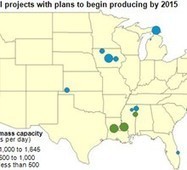
The EIA estimates output could grow to more than 5 million gallons by the end of this year, and up to 250 million gallons by 2015 as several plants ramp up production. That’s after admitting that previous projections "have proven to be "too optimistic."


According to the agency, delays and cancellations at production plants, cheap natural gas and the country’s debt crisis have all contributed to the missed targets. And then, of course, there’s also the fact that it costs more.

"Total production costs for many of

See on www.opb.org