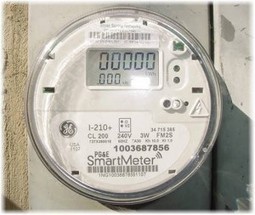
Secure integration of smart meters in the smart grid

Secure integration of smart meters in the smart grid.

How and why LinkedIn is becoming an engineering powerhouse

See on Scoop.itTwitter & Social Media

Five years ago, LinkedIn was a shell of the technology company it is today. Here’s an inside look at where it came from, what it’s become and where it’s going.

Duane Tilden‘s insight:

Next up, Hadoop

Thus far, LinkedIn’s biggest push has been in improving its nearline and online systems (“Basically, we’ve hit the ball out of the park here,” Ghosh said), so its next big push is offline — Hadoop, in particular. The company already uses Hadoop for the usual gamut of workloads — ETL, model-building, exploratory analytics and pre-computing data for nearline applications — and Ghosh wants to take it even further.


He laid out a multipart vision, most of which centers around tight integration between the company’s Hadoop clusters and relational database systems. Among the goals: better ETL frameworks, ad-hoc queries, alternative storage formats and an integrated metadata framework — which Ghosh calls the holy grail — that will make it easier for various analytic systems to use each other’s data. He said LinkedIn has something half-built that should be finished this year.

See on gigaom.com

US may face inevitable nuclear power exit

See on Scoop.itGreen & Sustainable News

In the third and final issue in a series focused on nuclear exits, the Bulletin of the Atomic Scientists, published by SAGE, turns its attention to the United States and looks at whether the country’s business-as-usual approach may yet lead to a…

Duane Tilden‘s insight:

Allowing existing reactors to simply run out their licensed lifetimes in the current scenario, nuclear power may simply disappear, he writes. "Absent an extremely large injection of government funding or further life extensions, the reactors currently operating are going to end their licensed lifetimes between now and the late 2050s," Bradford concludes. "They will become part of an economics-driven US nuclear phase-out a couple of decades behind the government-led nuclear exit in Germany."

See on www.sciencedaily.com

Shale Gas and Tight Oil: Boom? Bust? Petering Out? | The Energy Collective

See on Scoop.itGreen & Sustainable News

Governments and industry must recognize that shale gas and oil are not cheap or inex­haustible: 70% of US shale gas comes from fields that are either flat or in decline.

See on theenergycollective.com

Smart Grid and Energy Storage Installations Rising Worldwide

See on Scoop.itGreen Energy Technologies & Development

“Global investment in smart grid technologies rose 7 percent in 2012 from the previous year. On top of direct investments, numerous countries around the world are making headway on smart grid regulatory policies, development plans, and frameworks to support future grid infrastructure upgrades.  Smart grids consist of many different technologies serving different functions. Smart grids are commonly defined as an electricity network that uses digital information and communications technology to improve the efficiency and reliability of electricity transport.”

See on blogs.worldwatch.org

John Renehan's avatarThe Green Mien

Mother Jones has a succinct piece on the challenges facing offshore wind projects, challenges that explain why the U.S. still doesn’t have a single offshore wind turbine. The UK has 870, and Germany has 416, for comparison. Now that has Congress extended the wind Production Tax Credit (after a long battle detailed here and here) and outgoing Interior Secretary Ken Salazar said he is optimistic that the Cape Wind project in Nantucket Sound will begin construction in 2013, it is a good time to look at the roadblocks that remain.

Though offshore projects benefit from the Production Tax Credit, worth $1 billion a year, and the Incentive Tax Credit, which pays 30% of wind projects’ constructions, higher construction and transmission costs make electricity from offshore turbines twice the price of electricity from more traditional sources. While in the U.S., states and utilities are understandably hesitant to embrace it, Germany…

View original post 261 more words

BPL Global unveils next-gen substation automation solution for the Smart Grid – Pennenergy

See on Scoop.itGreen Energy Technologies & Development

BPL Global®, Ltd. (BPLG), a smart grid technology company, has announced its next generation Connected Energy® Substation Automation solution…

Duane Tilden‘s insight:

"Our deep understanding of complex protective schemes and, utility-specific SCADA requirements enables effective automation and management of substations as a center of intelligence within the grid," said Dermot O’Leary, EVP and GM of Substation Solutions for BPLG. "The substation is key to managing the growing complexity of distributed energy resources in the distribution grid and the connectivity of our distribution grid solutions with our substation automation offers unique value to utilities as they execute their intelligent grid roadmaps."

See on www.pennenergy.com

Government Regulations to Go a Long Way in Stemming Distribution Energy Losses in Brazil, Finds Frost & Sullivan

See on Scoop.itGreen Energy Technologies & Development

SAO PAULO, Feb. 28, 2013 /PRNewswire/ — Brazilian energy distribution companies are keen for…

Duane Tilden‘s insight:

Brazilian Distribution Energy Losses Management Market is part of the Energy & Power Growth Partnership Service program. Frost & Sullivan’s related research services include: European Micro-CHP Market, Energy Management Services in Brazil, Shale Gas Development in Argentina, and Peruvian and Uruguayan HV Transformer Market. All research services included in subscriptions provide detailed market opportunities and industry trends evaluated following extensive interviews with market participants.

See on www.prnewswire.com

US Solar energy sector to benefit from cutting-edge forecasts – Renewable Energy Magazine, at the heart of clean energy journalism

See on Scoop.itGreen Energy Technologies & Development

US Solar energy sector to benefit from cutting-edge forecasts – Renewable Energy Magazine, at the heart of clean energy journalism

Duane Tilden‘s insight:

The research team behind the project is designing a prototype system which will forecast sunlight and solar power every 15 minutes over specific solar facilities thereby enabling utilities to continuously anticipate the amount of solar energy available. The project is funded with the help of a $4.1 million US Department of Energy (DOE) grant and will draw on cutting-edge research techniques at leading government labs and universities across the country, in partnership with utilities, energy companies and commercial forecast providers.


Much of the work will be focussed on generating detailed predictions of clouds and atmospheric particles that act to reduce incoming solar energy.

See on www.renewableenergymagazine.com

Wave and tidal energy: Government urged to act to secure UK’s global lead – Renewable Energy Focus

See on Scoop.itGreen & Sustainable News

The UK’s wave and tidal energy industries say they will only be able to grow successfully if they get the right level of support from Government – otherwise Britain risks surrendering its world lead in marine energy.

Duane Tilden‘s insight:

The initial strike price for the first generation of tidal arrays should be set at £280-300/MWh, RenewableUK says. For wave technology, the initial strike price should be £300-320/MWh. “This will catalyse the marine energy industry, leading to economies of scale and learning through experience, which will lower the strike price for the second generation of arrays in 2018.” Meantime, under EMR, contracts would only last for 15 years – the report says this should be extended to 20 years to give investors an adequate return – otherwise the strike price would have to be higher.


“The wave and tidal energy industry has reached an exciting period as it moves from single device demonstrator projects to the first small proving arrays,” says Krohn. “However, there are significant hurdles that need to be overcome to ensure the sustained growth of the industry. It’s time to get real about the potential risks so that we can work with Government and others to find the solutions as early as possible.”

See on www.renewableenergyfocus.com